
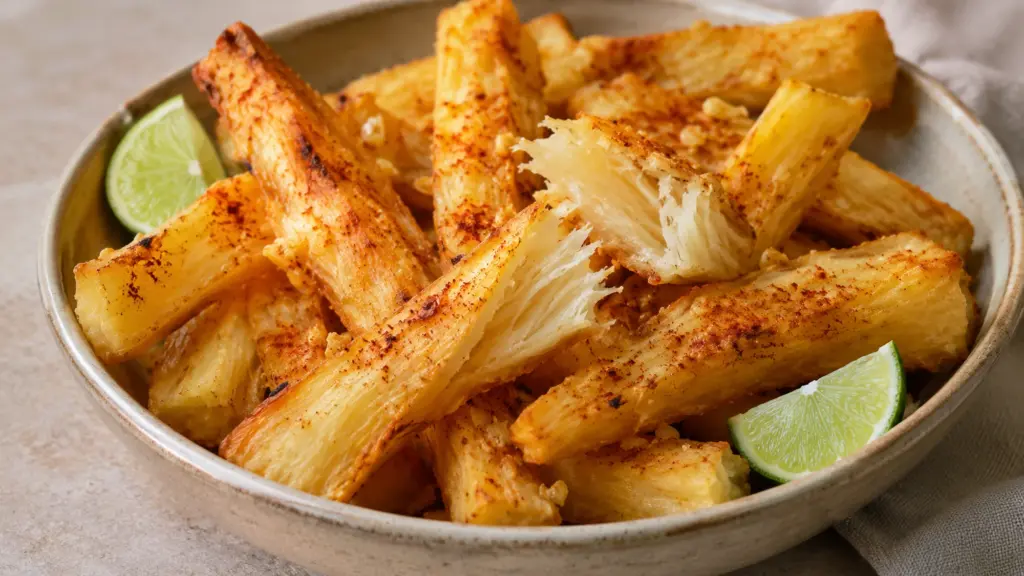
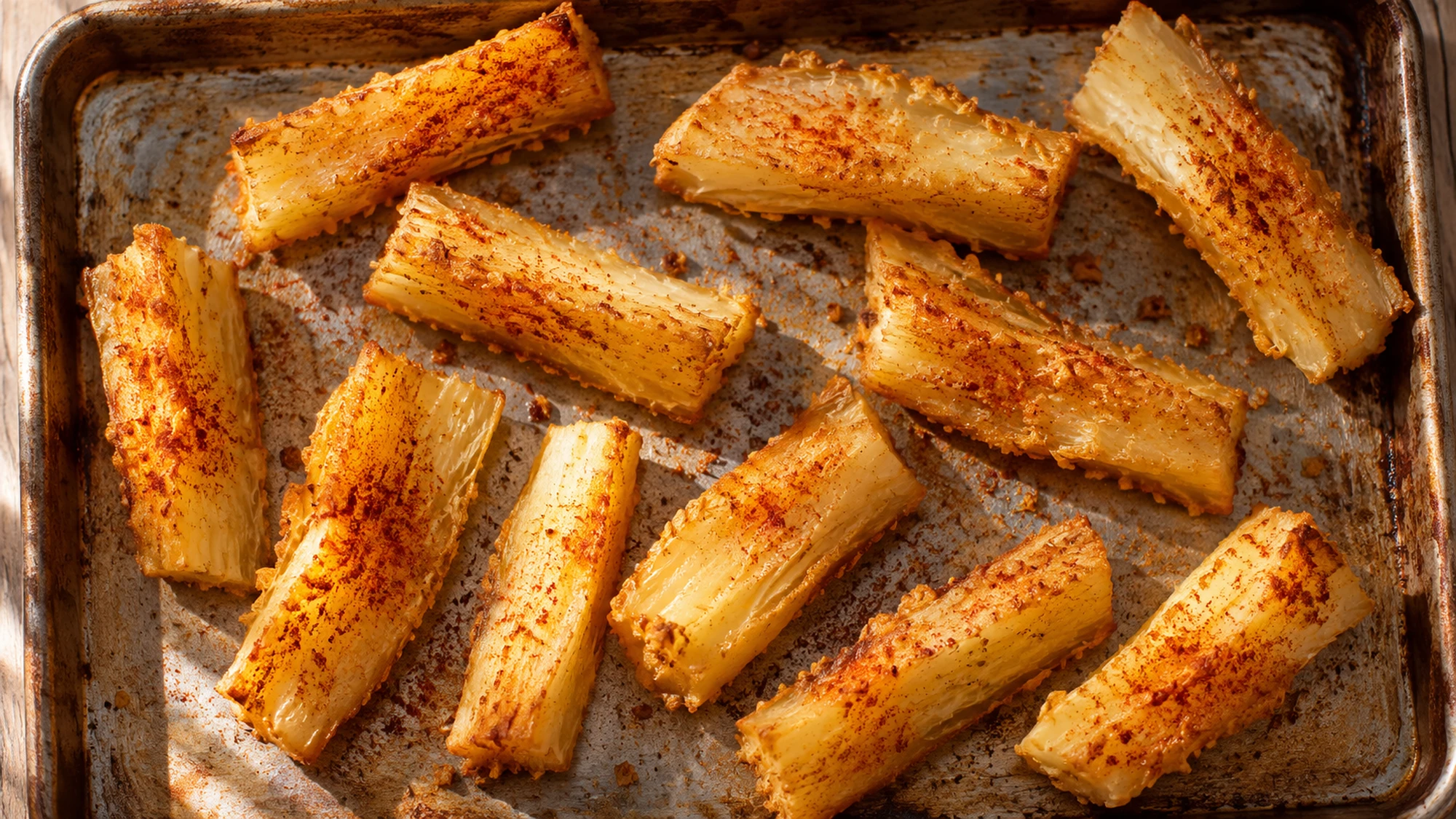
A good yuca fry has a craggy golden surface and a soft, substantial center. Getting there is not the same as cutting a potato into sticks and sliding it into the oven. These yuca fries start with commercially peeled frozen yuca, cooked thoroughly according to its package before the oven adds color and crisp edges.
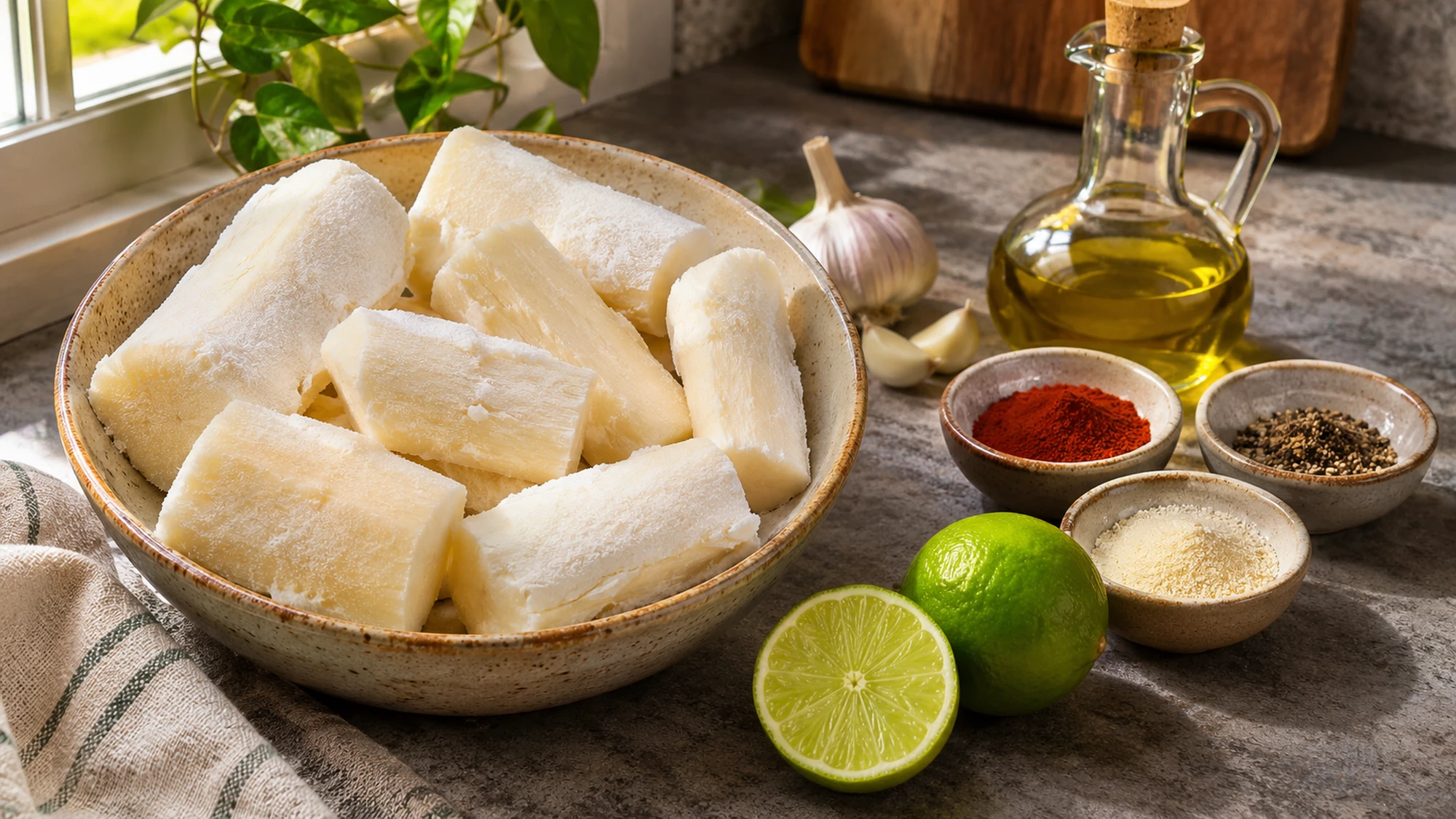
Choose a reputable food-grade frozen yuca product with clear boiling directions. Boil it fully, discard the water, remove the woody center and dry the pieces before roasting. This recipe does not make unknown fresh or bitter cassava safe, and roasting is not a substitute for the initial cooking.
Yuca, also called cassava, is a starchy root used in many Latin American and Caribbean dishes. I’d choose the packaged peeled version here for its convenience and clear preparation instructions, not because frozen automatically means cooked. Check the label before opening the bag.
Serving Yuca Fries While They Are Crisp
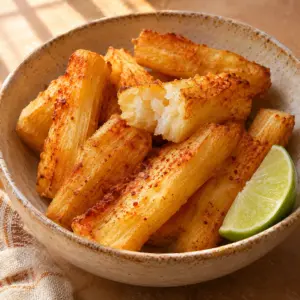
A squeeze of lime adds brightness without needing a heavy coating. Keep any dip on the side so the first handful and the last have the same chance of staying crisp.
- Alongside a main: Pair with citrusy cochinita pibil, grilled fish, or beans and a crunchy cabbage salad. Yuca provides the starchy part of the plate.
- For sharing: Use a wide platter rather than a deep bowl. Piling hot fries tightly traps steam and softens the surfaces you just browned.
- For a simple dip: Offer plain yogurt with lime and a little salt, or a prepared sauce you already enjoy. The yogurt option adds milk, so keep dietary needs in mind.
- For leftovers: Refrigerate promptly in shallow containers. USDA recommends refrigerating within two hours, or one hour above 90°F, and using leftovers within three to four days.
I’d serve the lime wedges separately. Readers who like a sharp finish can squeeze freely, while anyone chasing the driest crust can keep the juice off the fries.
Yuca Fries Variations and Useful Swaps
Once the yuca is fully cooked, the seasoning is flexible. The method is less flexible: thoroughly cook the product as directed, drain it and avoid a crowded tray. Different brands and chunk sizes take different amounts of time, so a fixed timer cannot replace the package instructions or a tender center.
| Choice | How to use it | What to expect |
|---|---|---|
| Sweet paprika | Use the amount in the card | Warm color with mild flavor |
| Smoked paprika | Replace sweet paprika equally | A noticeably smoky finish |
| Lemon wedges | Serve instead of lime | A different bright citrus note |
| Chopped parsley | Scatter on after roasting | Freshness without scorching the herbs |
- Prefer more heat? Add a small pinch of cayenne with the paprika. Start gently; it is easier to add heat at the table than remove it.
- Using fully cooked packaged yuca? Follow that product’s heating directions. It is a different starting point from the uncooked frozen chunks specified here.
- No suitable yuca available? Choose a potato recipe such as jacket potato in the air fryer instead of substituting an unidentified root.
- Pieces breaking apart? Handle the cooked yuca gently and use a broad spatula. A few broken edges are welcome; a tray of tiny crumbs can brown before the larger pieces.
Seasoning should support the mild center, not hide it. Garlic powder works well because it coats evenly without leaving fresh garlic pieces to scorch on the hot tray.
Health Benefits, Portions and Safe Preparation
Yuca supplies carbohydrate and can fit into a varied meal, but it is not a low-carbohydrate replacement for potatoes. Baking with measured oil controls the amount you add; it does not turn a generous pile of fries into a nutritionally complete dinner. Add vegetables and a protein food alongside.
- Take preparation seriously: Food Standards Australia New Zealand explains that cassava contains cyanogenic compounds and ordinary cooking methods are not reliable detoxification methods for all roots. Never taste raw cassava or use unknown bitter varieties.
- Use the right product: Follow every package instruction for commercially processed frozen yuca. The manufacturer’s directions are specific to that product; this recipe is not a universal safety treatment.
- Keep claims modest: Enjoy the flavor and texture without expecting yuca fries to treat inflammation, lower blood pressure or provide another medical benefit.
The practical benefit is a satisfying alternative starch with a different texture. Safe sourcing and preparation matter more than attaching a health halo to the ingredient.
Bottom Line
For golden yuca fries, begin with a suitable commercial frozen product, follow its full boiling instructions and discard the water. Then dry, season and roast with room between the pieces. The oven finishes the texture; it does not replace safe preparation. Serve promptly, with lime and your favorite main.
Yuca Fries Recipe

Ingredients
- 24 oz commercially peeled frozen yuca 680 g; choose a reputable food-grade product with boiling directions; not unidentified fresh or bitter cassava
- 2 tablespoons olive oil
- 0.5 teaspoon paprika
- 0.5 teaspoon garlic powder
- 0.5 teaspoon fine salt or to taste
- 0.25 teaspoon black pepper
- 1 lime cut into wedges, for serving
Equipment
- Large saucepan
- Colander
- Rimmed baking sheet
- Knife and cutting board
Instructions
- Read the yuca package before starting. Use commercially peeled frozen yuca intended for boiling and follow all its cooking directions. Do not taste it raw, use unknown or bitter cassava, or substitute oven roasting for the required initial cooking.
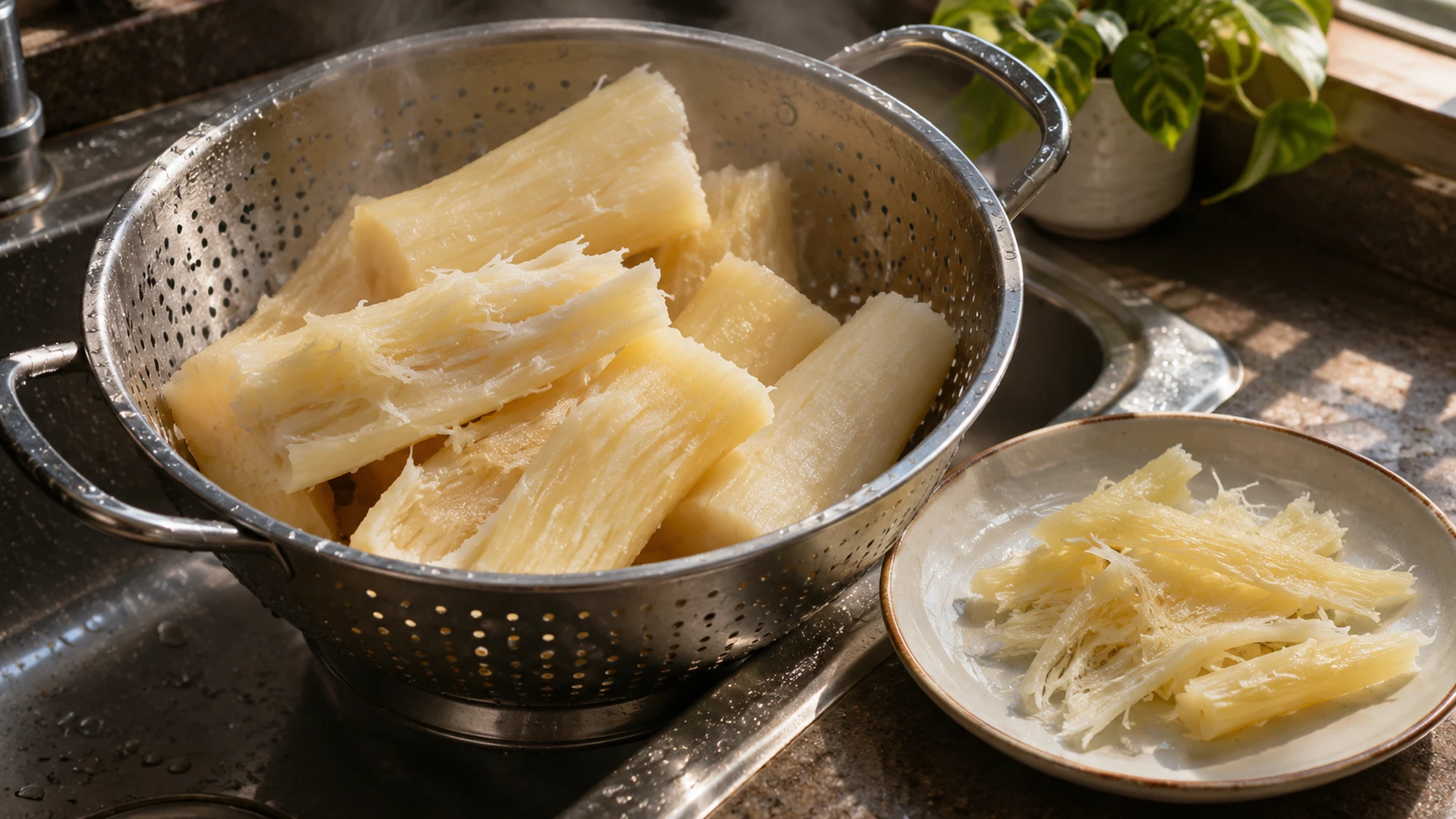
- Bring a large pot of water to a boil. Add the yuca from frozen, keeping it fully submerged. Follow the package’s boiling time and continue until thoroughly tender with no firm or chalky center; many products take about 20–30 minutes, but the package and doneness govern. Discard all cooking water.
- Heat the oven to 425°F (220°C). Drain the cooked yuca thoroughly and let it cool enough to handle, about 10 minutes. Split the pieces lengthwise, remove the tough central fibrous strands, and cut into roughly 1/2- to 3/4-inch-thick batons. Pat the surfaces dry.
- Toss gently with olive oil, paprika, garlic powder, salt and pepper. Spread on a rimmed baking sheet in one layer with gaps. Use a second tray if needed instead of crowding.
- Roast 25–35 minutes, turning carefully halfway through, until the surfaces are golden and crisp in places. The centers should already be tender from boiling. Serve immediately with lime wedges.
- Refrigerate leftovers within 2 hours, or 1 hour above 90°F, in a shallow covered container at 40°F (4°C) or below. Use within 3–4 days; reheat until steaming hot throughout. They will be less crisp after storage.