
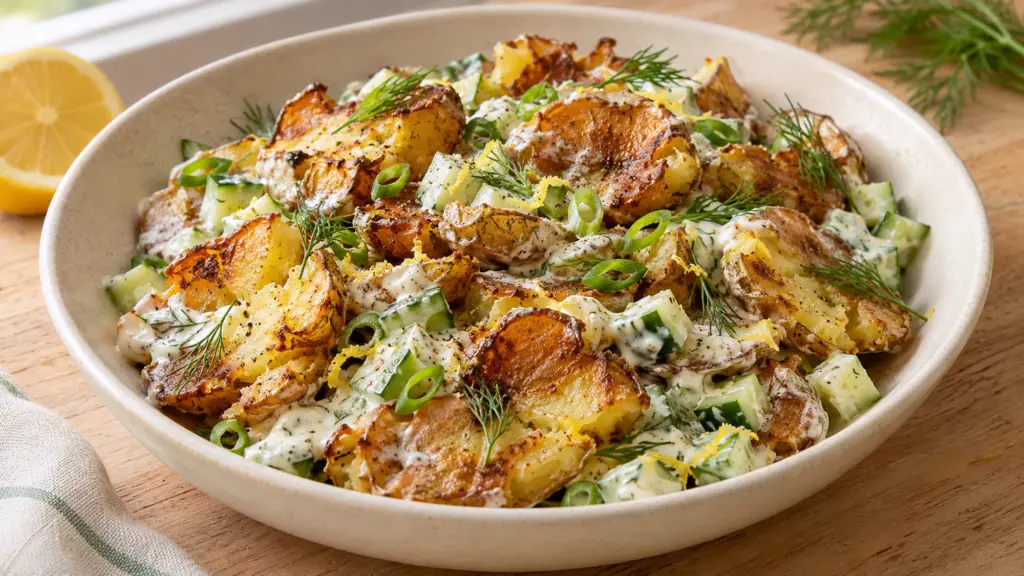
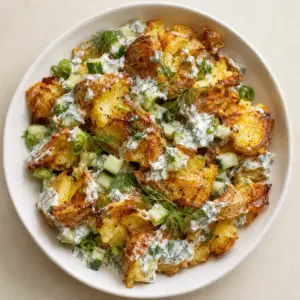
The best bite of potato salad can be the one with a browned, ragged edge. This crispy smashed potato salad starts with small potatoes roasted until deeply golden, then adds cucumber, dill and a tangy yogurt dressing. The important distinction is timing: bring the crisp potatoes and creamy vegetables together just before you eat, not hours beforehand.

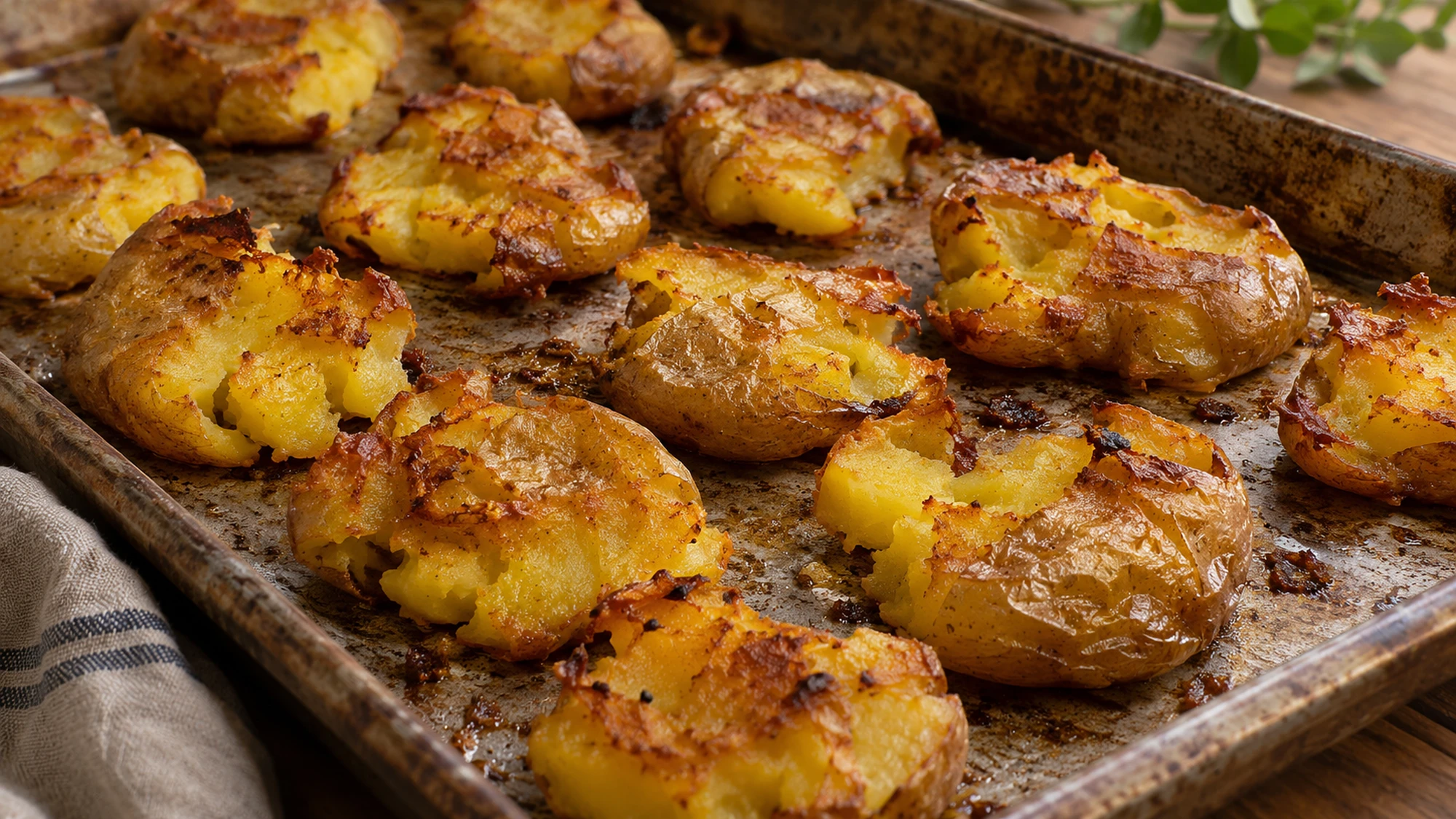
Boil the potatoes until tender, let their surfaces dry, then smash and roast them with space between each piece. Cool briefly before tossing with the dressing. You get tender centers, crisp edges and a cool, fresh contrast without asking one bowl to stay crunchy forever.
I’d keep the dressing light rather than coat every potato completely. A few undressed pieces scattered on top give the salad its best texture. Baby gold potatoes are a useful choice because their creamy centers hold together when pressed; aim for similarly sized pieces so the tray finishes evenly.
Serving Crispy Smashed Potato Salad
Think of this as a freshly assembled side rather than a refrigerator salad. It works alongside roast chicken, fish, a simple omelet or crispy baked tofu. With a bean dish and leafy greens, it can also become part of a generous meat-free plate.
- For the crispest result: Keep the roasted potatoes separate from the chilled dressing until everyone is ready to eat. Add the cucumber only after patting away excess water.
- For a potluck: Transport cold components in a cooler and assemble at the destination. A long warm buffet is not a shortcut to room-temperature salad.
- For a smaller meal: Dress only the amount you plan to serve. Refrigerate the remaining cooked potatoes and dressing separately; the roasted texture will still soften, but less quickly.
- For leftovers: Follow USDA leftover guidance: refrigerate within two hours, or one hour above 90°F, and use within three to four days.
A broad serving bowl leaves more crisp potato edges exposed. I prefer it to a deep bowl, where the bottom pieces end up doing all the dressing duty.
Variations That Keep the Contrast
The cucumber and dill give this version a fresh, almost dip-like character. Small changes can make it sharper, richer or more herb-forward, but try not to add several wet ingredients at once. The potatoes already have a short appointment with the dressing; extra liquid only shortens it.
| Change | Use instead | What changes |
|---|---|---|
| Fresh dill | Chopped parsley or chives | Milder herbal flavor; keep the same loose volume |
| Greek yogurt | Thick plain dairy-free yogurt | Different tang and richness; choose unsweetened |
| Cucumber | Finely diced celery | Less moisture and a firmer crunch |
| Lemon | A little cider vinegar to taste | Sharper acidity without lemon aroma |
- Want brininess? Add a spoonful of drained chopped pickles or capers, then taste before adding more salt. These are additions, not a reason to skip drying the cucumber.
- Want heat? Stir a small pinch of chili flakes into the dressing. Avoid a large splash of hot sauce unless you want a thinner coating.
- Working with larger potatoes? Cut them into similar chunks before boiling. Their broken surfaces may roast differently, so judge browning rather than treating the clock as a guarantee.
Choose one flavor change first, then taste. A clear lemon-and-herb direction gives the roasted potatoes more room to shine than a crowded list of add-ins.
Health Benefits and Everyday Balance
Potatoes provide carbohydrate, while yogurt contributes some protein and calcium; the amounts depend on the product and portion. Leaving the thin potato skins on also keeps their texture in the dish. None of that makes this salad a complete meal by itself or gives it a special health effect.
- Build the plate: Add a substantial protein food and another vegetable rather than relying on a spoonful of yogurt to carry the whole meal.
- Watch the additions: Oil helps the potatoes brown, but extra oil or salty toppings change the nutritional picture. Measure the oil before brushing it on.
- Check dietary needs: The written recipe contains milk. Mustard and packaged yogurt can have other allergen considerations; read the labels rather than assuming a substitution is suitable.
Enjoy the contrast and build the rest of the meal around it. There is no need to label a potato dish as either a miracle food or something to apologize for.
Bottom Line
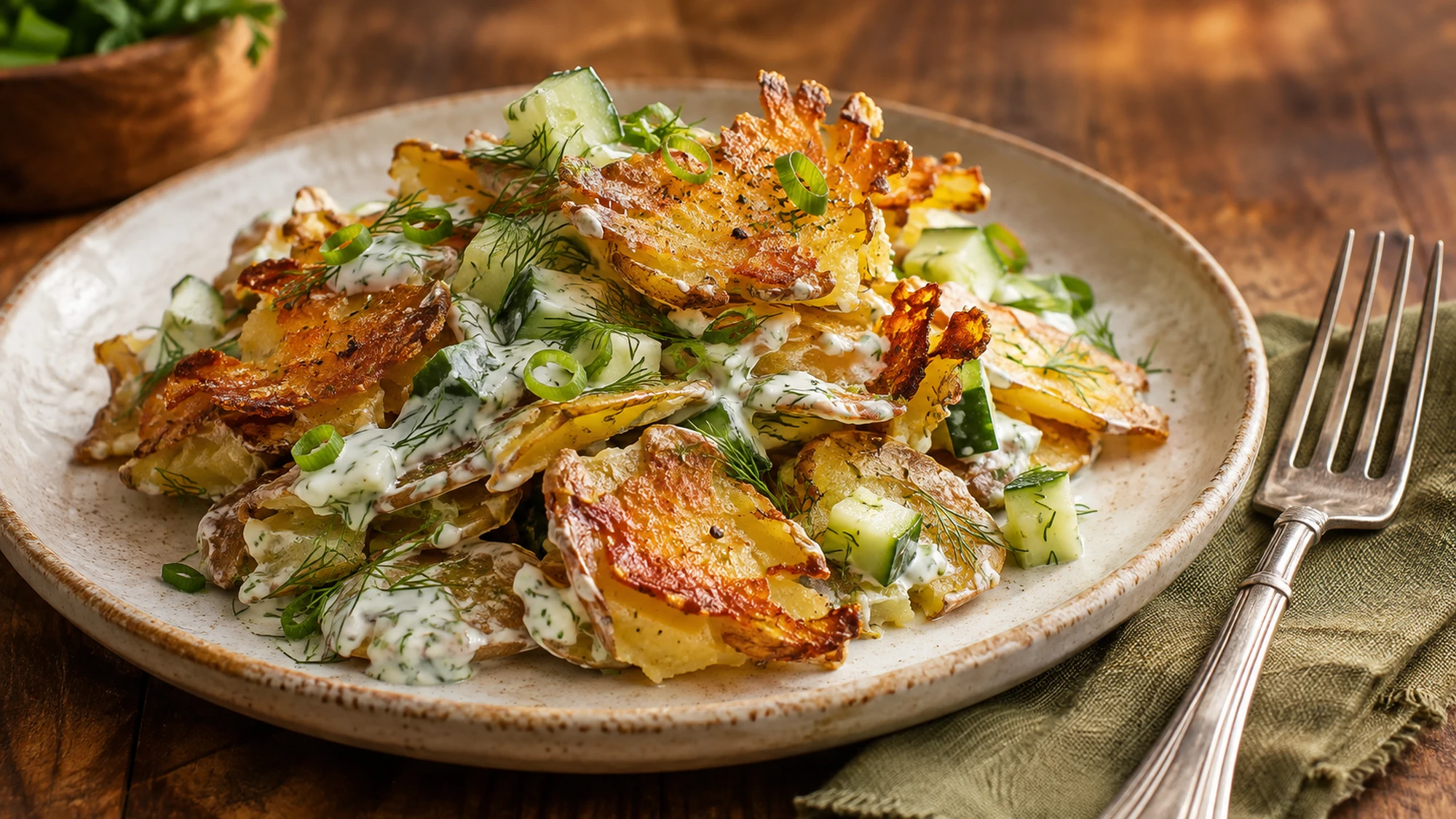
Crispy smashed potato salad is about protecting texture: thoroughly tender potatoes, dry surfaces, a roomy hot tray and dressing added at the last minute. Let the edges brown well, keep the cucumber dry and save a handful of crisp pieces for the top. That small pause before tossing is worth more than another topping.
Crispy Smashed Potato Salad Recipe

Ingredients
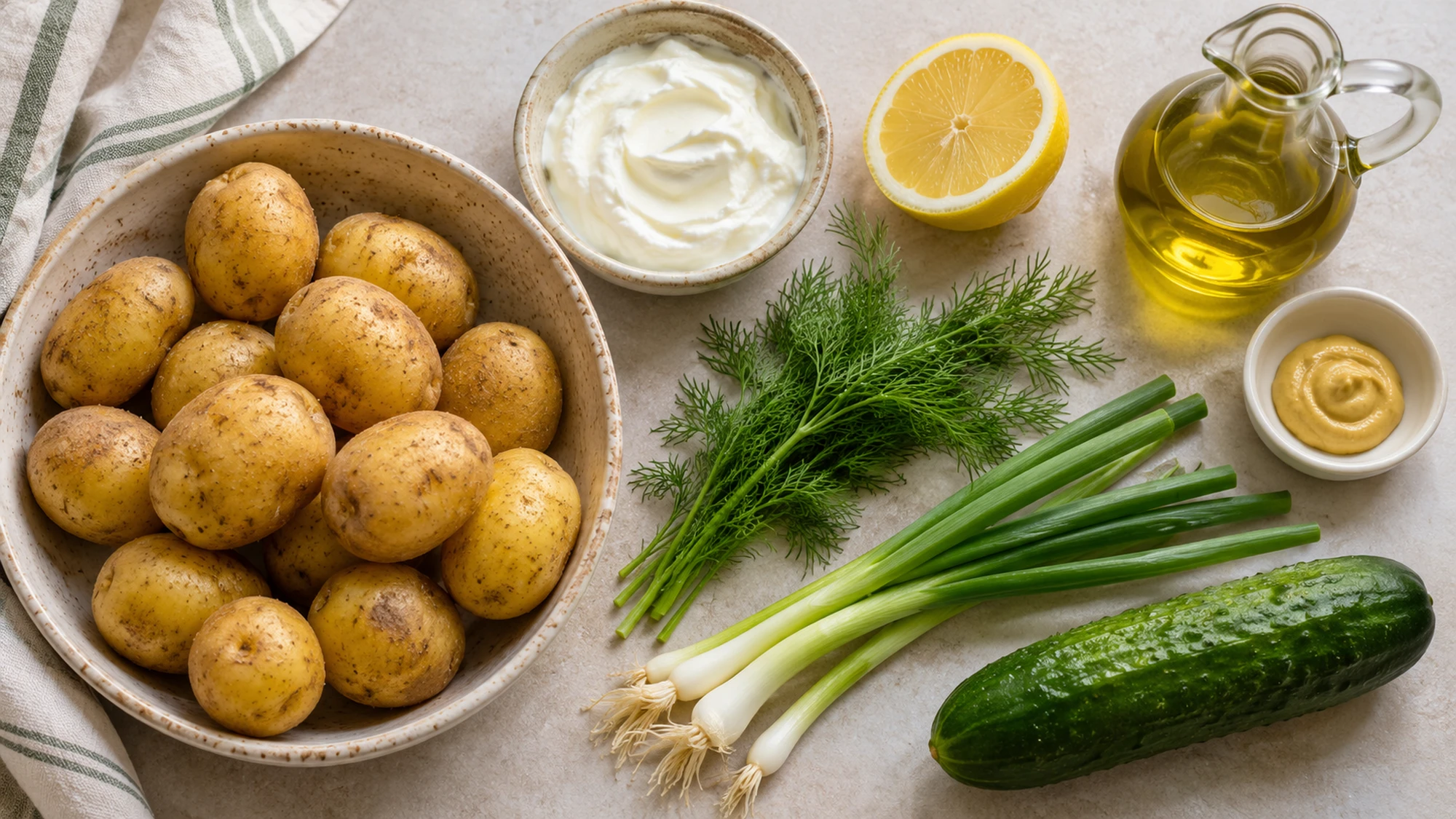
- 2 lb baby gold potatoes about 900 g, scrubbed
- 3 tablespoons olive oil
- 0.75 teaspoon fine salt divided; adjust to taste
- 0.25 teaspoon black pepper
- 1 cup diced cucumber about 150 g; remove watery seed core
- 3 scallions thinly sliced
- 0.25 cup chopped fresh dill
- 0.5 cup plain Greek yogurt 120 g
- 1 tablespoon Dijon mustard
- 1 tablespoon lemon juice
- 1 teaspoon finely grated lemon zest
- 1 small garlic clove finely grated
Equipment
- Large saucepan
- Two rimmed baking sheets
- Flat-bottomed glass
- Large mixing bowl
Instructions
- Heat the oven to 425°F (220°C). Put potatoes in a saucepan, cover with water by about 1 inch and bring to a boil. Simmer 18–25 minutes, until a knife passes easily through the centers. Drain thoroughly and let steam-dry 5 minutes.
- Brush two rimmed baking sheets with 1 tablespoon of the oil. Space the potatoes apart. Press each with a flat-bottomed glass to about 1/4 inch thick, keeping the pieces together where possible. Brush with the remaining oil and sprinkle with 1/2 teaspoon salt and the pepper.
- Roast 30–40 minutes, switching the trays between racks halfway through, until the undersides and ragged edges are deep golden and crisp. Let stand about 10 minutes, until warm rather than piping hot.
- Meanwhile, stir the yogurt, mustard, lemon juice, zest, garlic and remaining 1/4 teaspoon salt in a bowl. Pat the cucumber dry and add it with the scallions and dill. Taste and adjust lemon or salt if needed.
- Break large potatoes into bite-sized pieces. Fold most into the dressing just before serving. Scatter the remaining crisp pieces over the top and serve immediately.
- Refrigerate leftovers promptly in a shallow covered container at 40°F (4°C) or below; within 2 hours, or 1 hour above 90°F. Use within 3–4 days. Dressed potatoes soften in storage.