
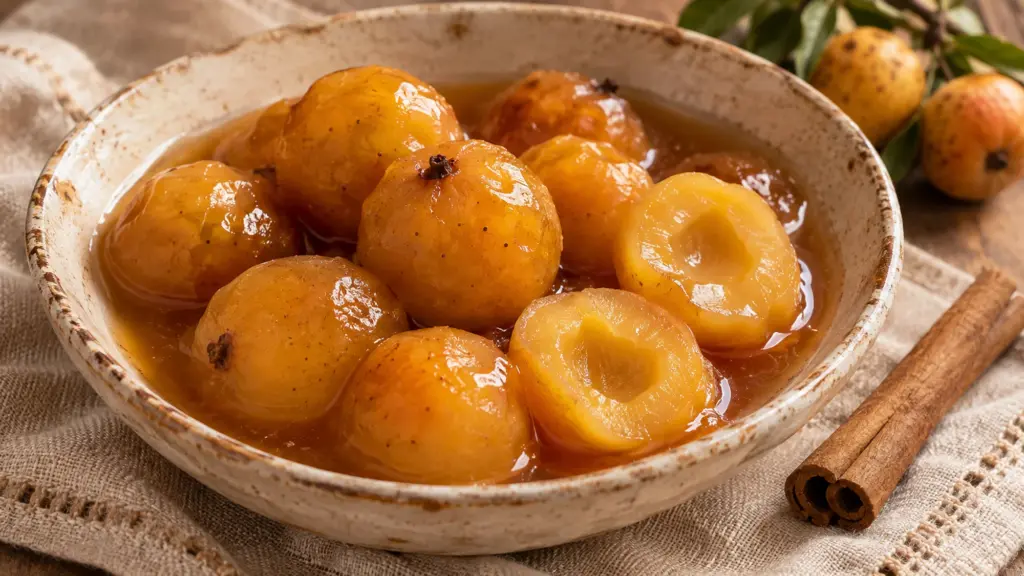
A bag of little golden tejocotes can look like a kitchen puzzle: too firm for an easy fruit salad, too pretty to ignore. Dulce de tejocote gives them a clear destination. A gentle simmer softens the tart fruit while cinnamon and piloncillo turn the cooking liquid into a fragrant amber syrup.
This dulce de tejocote is a Mexican fruit dessert, served warm or chilled in small bowls. Blanch the fruit to loosen its skin, remove the hard seeds, then cook it gently until tender. The goal is soft fruit and a spoonable syrup, not chewy candy.
Tejocote is Mexican hawthorn, not a miniature apple, although the resemblance is understandable. Mexico’s Agriculture Ministry describes its Mexican origin and traditional seasonal uses. Different households make the sweet with sugar or piloncillo; this version leans into piloncillo’s deeper flavor without piling on extra spices.
Serving Suggestions for Dulce de Tejocote
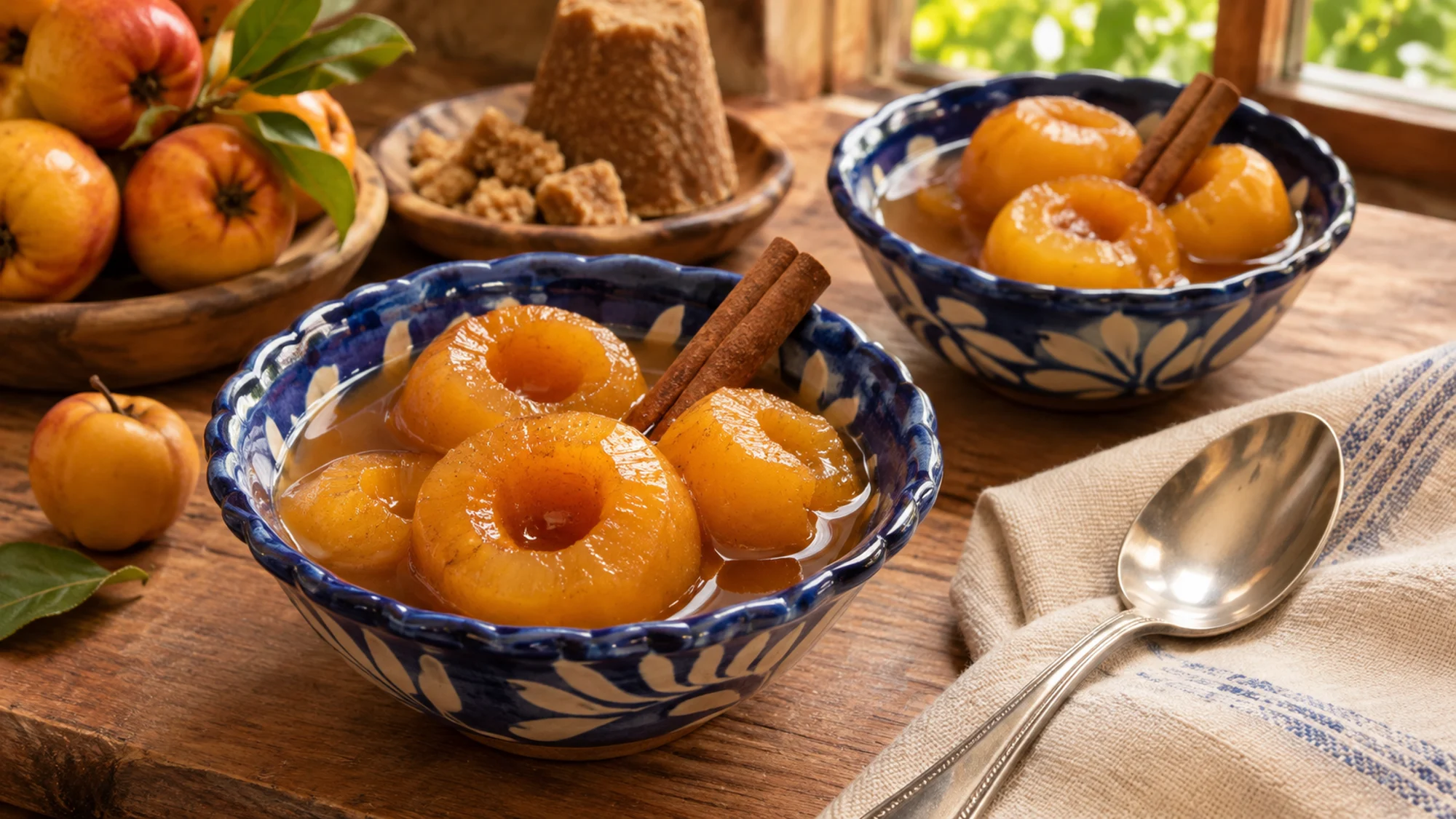
I’d start with a small bowl and only enough syrup to gloss the fruit. That lets the tejocote’s gentle tartness show through instead of turning every spoonful into sugar syrup. Serve it slightly warm for a cozy dessert, or chilled when you want something you can prepare ahead.
- Keep it simple: offer the fruit on its own with a small spoon. Remove the cinnamon stick and check carefully for any missed hard seeds before portioning.
- Add a cool contrast: a spoonful of unsweetened plain yogurt brings tang. Add it to individual bowls, not the storage container; this variation contains milk.
- Build a dessert spread: pair modest portions with creamy arroz con leche, rather than doubling the syrup on the fruit.
- Serve safely: use clean utensils and return the remaining dessert to the refrigerator promptly. A covered serving bowl is not a substitute for chilling.
For a make-ahead dessert, chill the fruit in its syrup and spoon out only what you plan to serve. The fruit stays the focus; the syrup is the supporting act.
Dulce de Tejocote Variations and Texture
Piloncillo is not the only traditional approach. A recipe shared by Mexico’s Agriculture Ministry uses white sugar and cinnamon. I prefer keeping the spice list short here, because the fruit already has a distinctive flavor. Change one element at a time so you can judge the result.
| Choice | What changes | Useful adjustment |
|---|---|---|
| Piloncillo | Deeper, caramel-like syrup | Chop it so it dissolves evenly |
| White sugar | Paler syrup and cleaner sweetness | Use the same weight; taste before adding more |
| Extra-firm fruit | Needs longer to soften | Add a splash of water if syrup reduces early |
| Soft fruit, thin syrup | Fruit may break if cooked longer | Lift it out while reducing the syrup |
Fresh tejocotes vary in size and firmness, so a knife slipping easily into the flesh matters more than an exact minute. Avoid vigorous stirring once they soften. Already-sweetened jarred fruit is not a straight swap: it starts cooked and brings its own sugar, so this fresh-fruit method would need reworking.
If the syrup looks thin while hot, give a spoonful a moment to cool before reducing it further. It should lightly coat the fruit, not set into a sticky shell.
Health Benefits and a Sensible Portion
This recipe offers fruit in a different, enjoyable form, but the finished dish is still a sweet dessert. Piloncillo contributes added sugar just as white sugar does; its darker color does not make the syrup sugar-free. I’d think about the amount of syrup in the bowl before attaching a health label to it.
- Keep claims modest: fruit contains nutrients, but the amounts in this cooked dessert depend on portion size and preparation. It is not a remedy or treatment.
- Use the right ingredient: buy food-grade tejocote fruit from a reliable grocer. Roots, supplements and unidentified foraged fruits are not substitutes.
- Chill leftovers: follow USDA leftover guidance: refrigerate within 2 hours, or 1 hour above 90°F, and use within 3–4 days.
- Skip pantry storage: sweetness alone does not make this a tested canning recipe. Keep it refrigerated at 40°F or below.
Enjoy a modest serving for its flavor and texture, not a promised health outcome. Removing the seeds and refrigerating leftovers matter more than whether the sweetener is light or dark.
Bottom Line
Dulce de tejocote rewards a little patient preparation: peel the fruit, remove the seeds and keep the simmer gentle. Let tenderness guide the timing and stop reducing before the syrup becomes candy-thick. If you enjoy this cinnamon-and-piloncillo combination, camotes en dulce takes a similar flavor direction with sweet potatoes.
Dulce de Tejocote Recipe

Ingredients
- 1 kg fresh tejocotes about 2.2 pounds, washed; use edible fruit, not roots
- 250 g piloncillo chopped; about 9 ounces
- 2 cups water plus more for blanching and thinning
- 1 Mexican cinnamon stick about 3 inches
Equipment
- Medium saucepan
- Slotted spoon
- Small paring knife
- Cutting board
Instructions
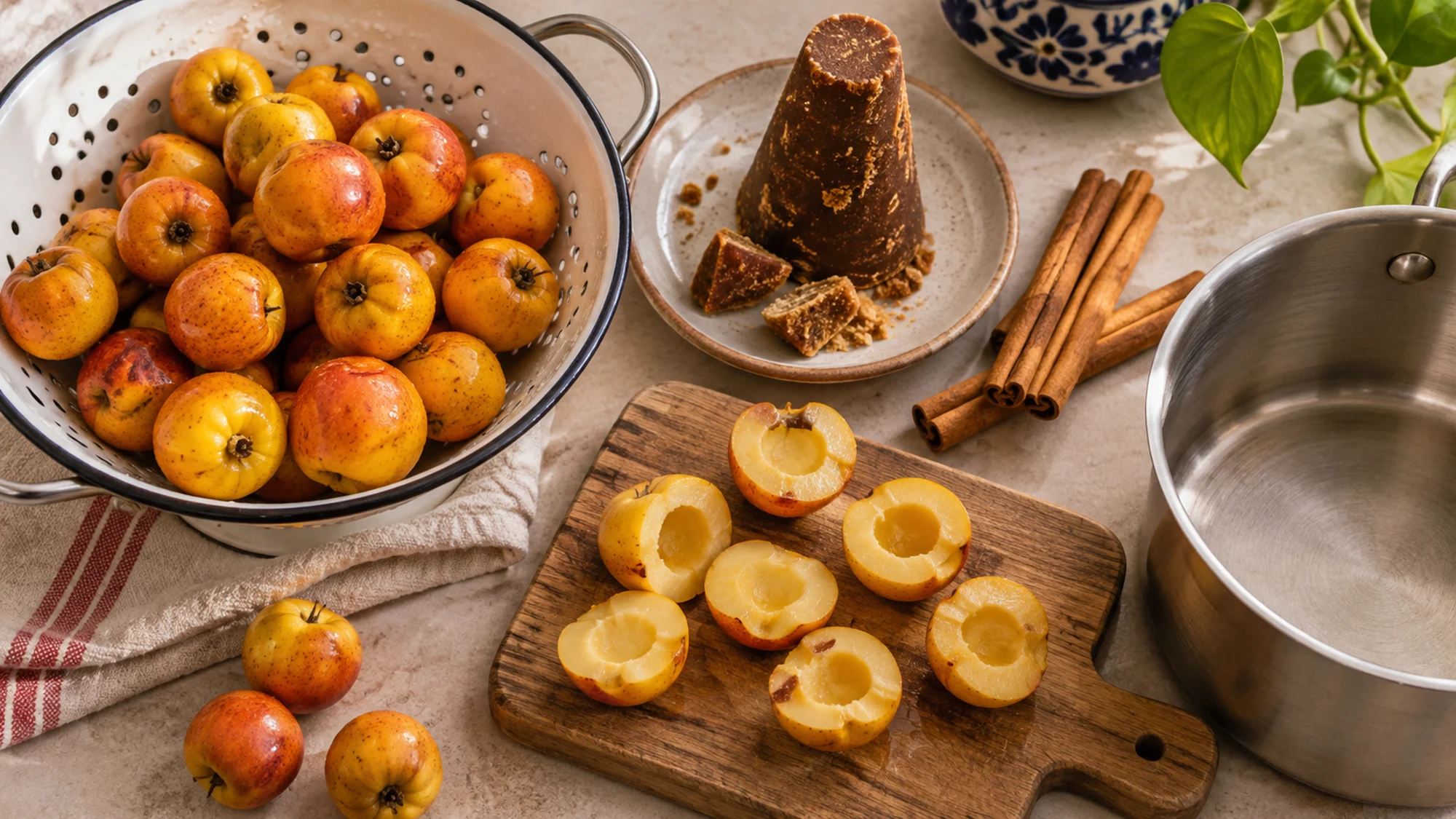
- Bring a saucepan of water to a boil. Add washed tejocotes, simmer 3–5 minutes until the skins loosen, then drain and cool until safe to handle.
- Peel off the loosened skins. Remove the stems, halve the fruit and carefully remove all hard seeds with a small knife or spoon. Discard seeds and stems.
- In a clean saucepan combine 2 cups water, piloncillo and cinnamon. Bring to a simmer, stirring until the piloncillo dissolves.
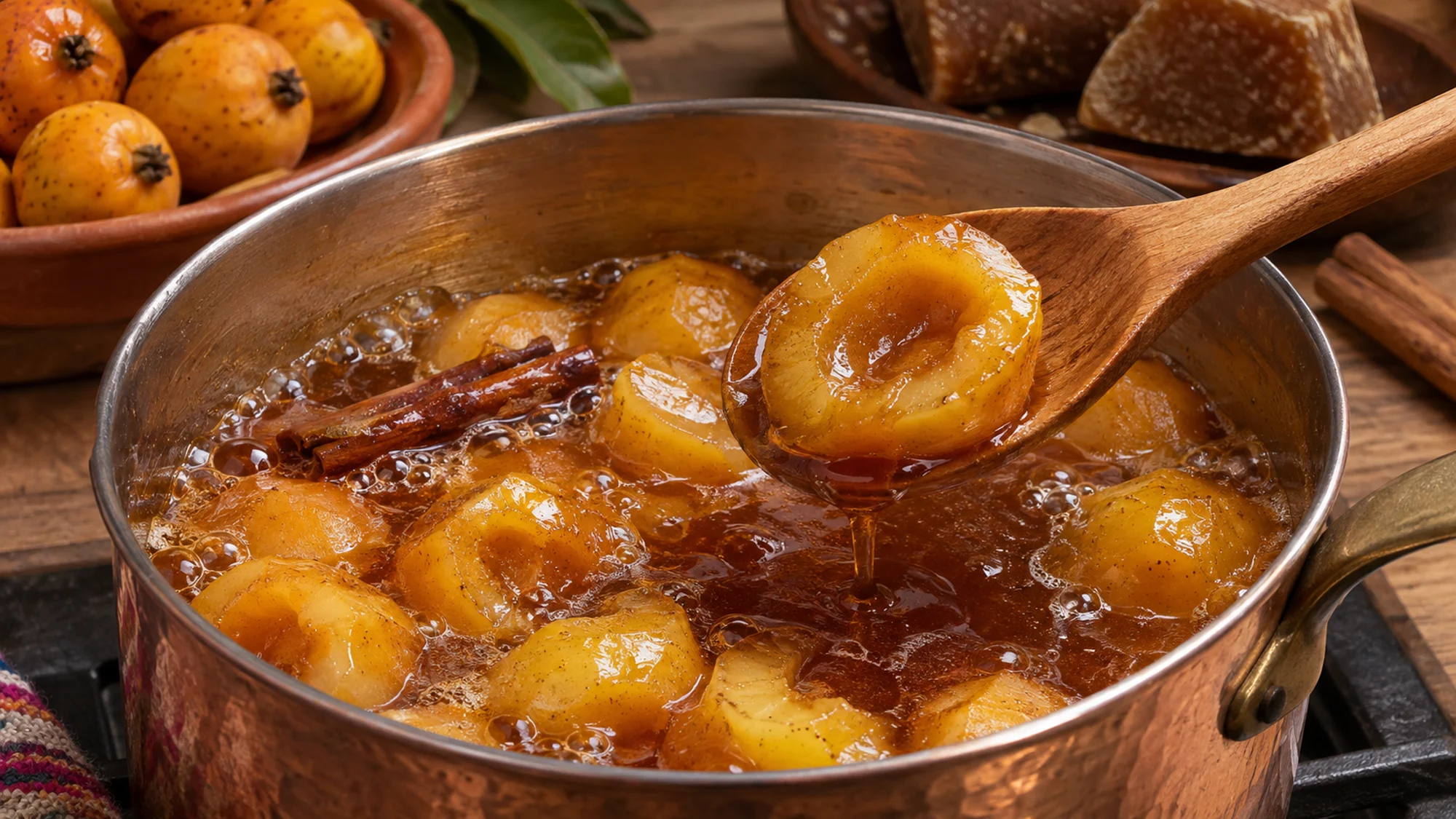
- Add prepared fruit. Simmer gently, partly covered, about 20–30 minutes, until a small knife enters the flesh easily. Stir gently so the fruit holds its shape. Add a splash of water if the syrup reduces before the fruit softens.
- Lift out the fruit if tender while the syrup is still watery. Simmer the syrup uncovered for a few minutes until lightly coating a spoon, then return the fruit. It thickens further as it cools; do not cook it into candy. Remove the cinnamon stick.
- Serve warm or chilled, dividing the fruit into 8 small portions with a little syrup. Refrigerate promptly in a shallow covered container at 40°F (4°C) or below; use within 3–4 days. This is a refrigerator dessert, not a shelf-stable canning recipe.