
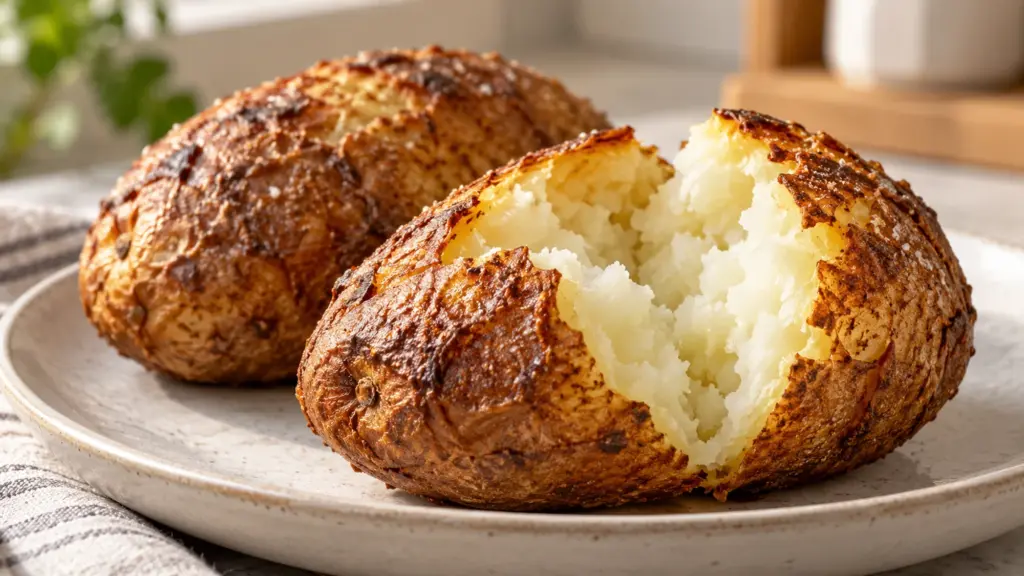
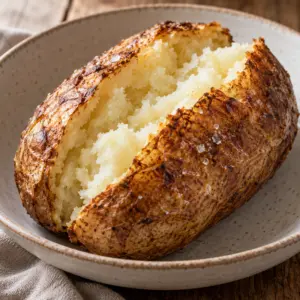
A baked potato can look ready long before its middle softens. For this jacket potato in air fryer, start with similarly sized russets, dry the skins thoroughly and cook them uncovered. The skin should feel crisp, but the deciding test is a knife sliding easily through the thickest part.

Give the potatoes space, skip the foil and use tenderness rather than the timer as your final check. Split them just before serving to release steam and reveal a fluffy center.
I prefer a plain, well-cooked potato to one buried under toppings before anyone checks the middle. This version keeps the cooking simple, then leaves the interesting decisions for the table. An air fryer suits a small batch particularly well; squeezing in extra potatoes is not much of a shortcut if some finish late.
Serving Suggestions for Jacket Potato in Air Fryer
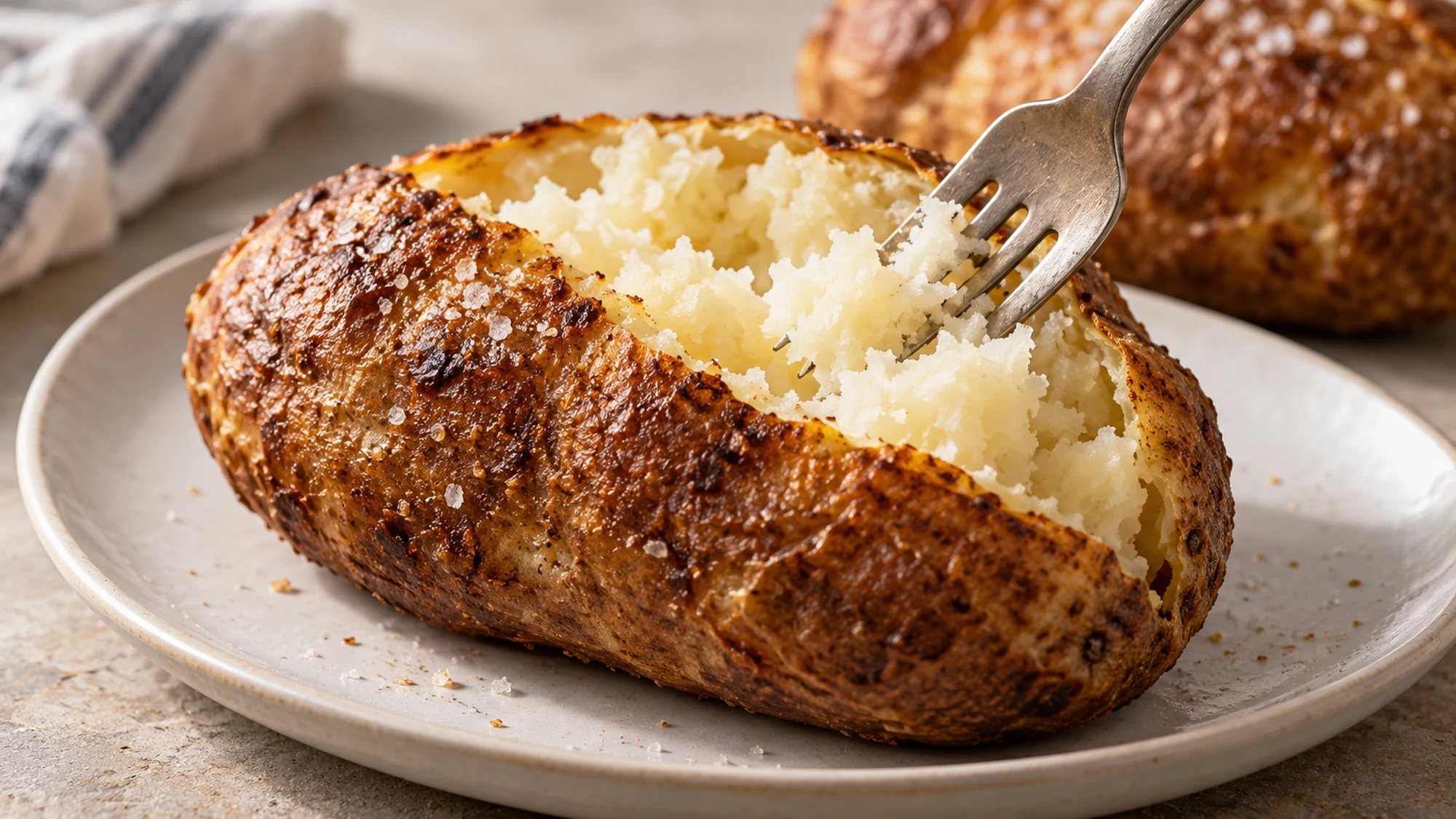
Open each hot potato with a careful lengthwise cut, then gently press the ends toward the middle with protected hands. Loosen the flesh with a fork before adding anything wet. That small pause helps butter or yogurt reach the fluffy interior instead of sitting on an unbroken surface.
- For a simple side: Add a little butter and black pepper. Serve alongside roasted vegetables, fish or chicken, keeping the toppings modest if the rest of the meal already has a rich sauce.
- For a substantial lunch: Spoon on cooked beans and salsa, or broccoli and grated cheddar. Warm cooked fillings separately rather than expecting the potato to heat them through.
- For a cool contrast: Choose plain yogurt, chopped chives and a squeeze of lemon. Put the yogurt on at the table so it stays distinct from the warm potato.
Serve promptly if crisp skin matters to you. A covered platter traps steam, and that steam softens the very jacket you worked to crisp.
Variations and Texture Fixes
Russets are my first choice here because their starchy flesh becomes pleasantly fluffy. Other potatoes can work, but expect a different interior rather than treating every variety as interchangeable. Keep the base method unchanged before experimenting with a heavily seasoned coating.
Choose a change by the result you want.
| Change | What to expect | Best approach |
|---|---|---|
| Yukon Gold potatoes | A denser, creamier middle | Choose similar sizes and test the center. |
| Smaller russets | An earlier finish | Begin checking before larger potatoes would be ready. |
| Garlic or smoked paprika | More surface flavor | Use a light coating; spices can darken before the center softens. |
| A crowded basket | Less even exposure to hot air | Cook in batches rather than stacking. |
- Pale or soft skin: Dry the potatoes well after scrubbing and avoid foil. Keep them in one layer with space around them.
- A firm center: Continue cooking in short intervals and test again. A large potato needs more time even when its skin looks browned.
Let size and texture guide the finish. The timer gets you close; the center tells you whether dinner is actually ready.
Health Benefits and Everyday Balance
Potatoes contribute carbohydrates, potassium and some fiber; the skin is worth keeping when you enjoy its texture. The USDA’s guide to fresh potatoes explains their place among starchy vegetables. Air frying changes how you cook them, not the need to consider the whole meal.
- Keep toppings in perspective: Cheese, butter and creamy sauces change the finished dish. Choose the amounts you enjoy rather than assuming an air-fryer meal automatically has a particular nutrition profile.
- Build around the potato: Add a protein source and another vegetable when serving this as a main course. Beans, chicken, broccoli and a crunchy salad offer different ways to do that.
- Cool leftovers promptly: Refrigerate cooked potatoes in shallow containers within two hours, or one hour above 90°F (32°C). Keep refrigerated leftovers for three to four days.
A potato can be a useful starting point, not a complete eating plan. Pair it with foods you like and keep any nutrition estimate separate from optional toppings.
Bottom Line
The best jacket is crisp because it starts dry and cooks uncovered. Choose evenly sized potatoes, leave room for hot air and split only when you’re ready to eat. For leftovers, follow USDA reheating guidance and check for 165°F (74°C) throughout; the skin may need a little uncovered heat to regain its texture.
Start with the simple potato below, then choose one topping combination rather than everything in the refrigerator. Crisp skin and a fluffy center deserve a little room of their own.
Jacket Potato in Air Fryer Recipe

Ingredients
- 2 russet potatoes about 8 oz (225 g) each, scrubbed
- 2 teaspoons olive oil
- 1/4 teaspoon fine salt
- 1/8 teaspoon black pepper
Equipment
- Air fryer large enough for two potatoes in one layer
- Tongs
- Small sharp knife
Instructions
- Preheat the air fryer to 400°F (200°C) if your model requires it. Scrub the potatoes under running water and dry thoroughly.
- Pierce each potato a few times with a fork. Rub the skins with olive oil, then sprinkle evenly with salt and pepper. Do not wrap in foil.
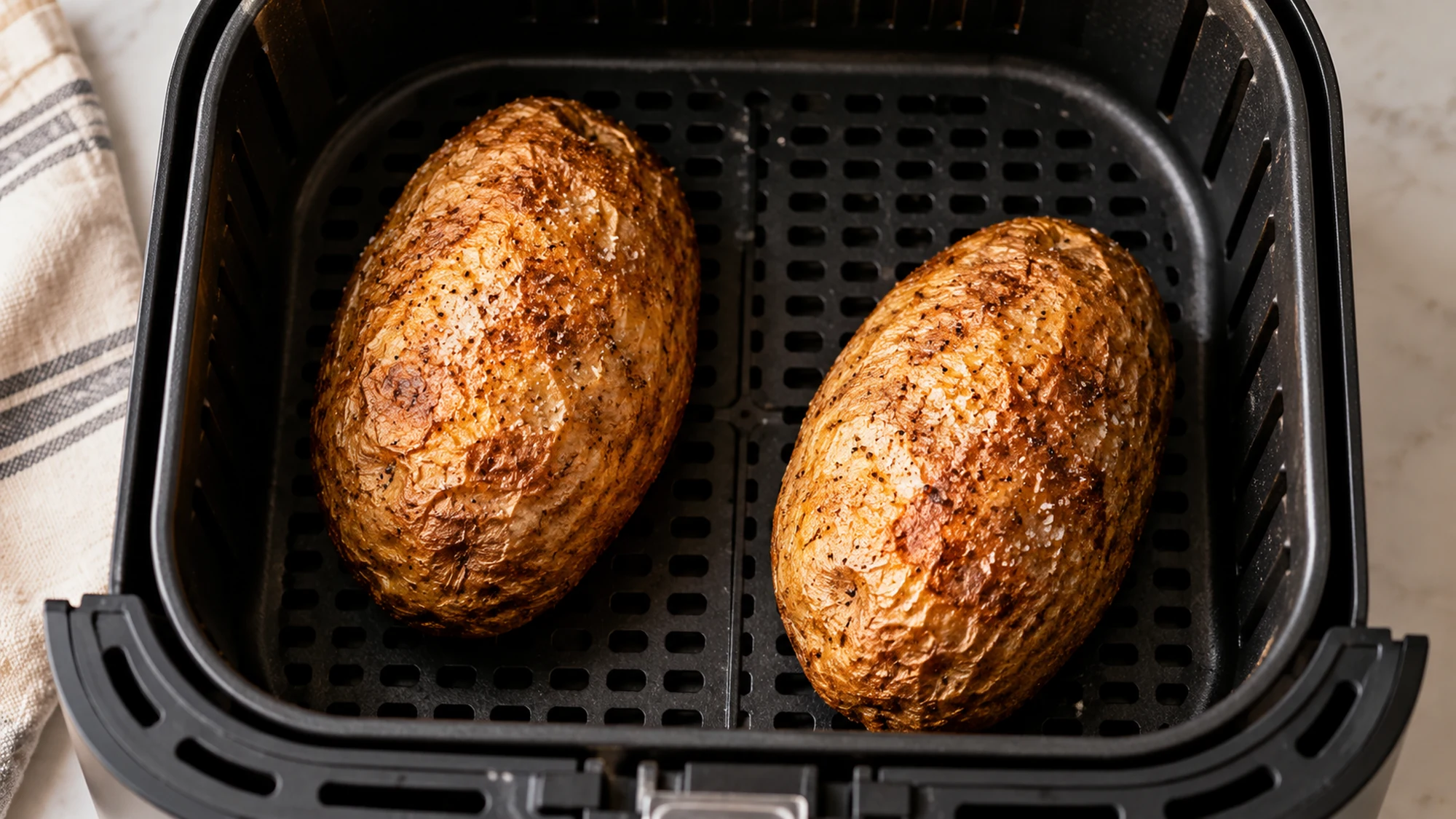
- Place in the basket in one layer with space between them. Air-fry for 40–50 minutes, turning halfway through. Start checking at 35 minutes if your potatoes are smaller.
- Insert a small sharp knife into the thickest part. It should slide in without a firm core. If needed, continue cooking in 5-minute intervals, checking again.
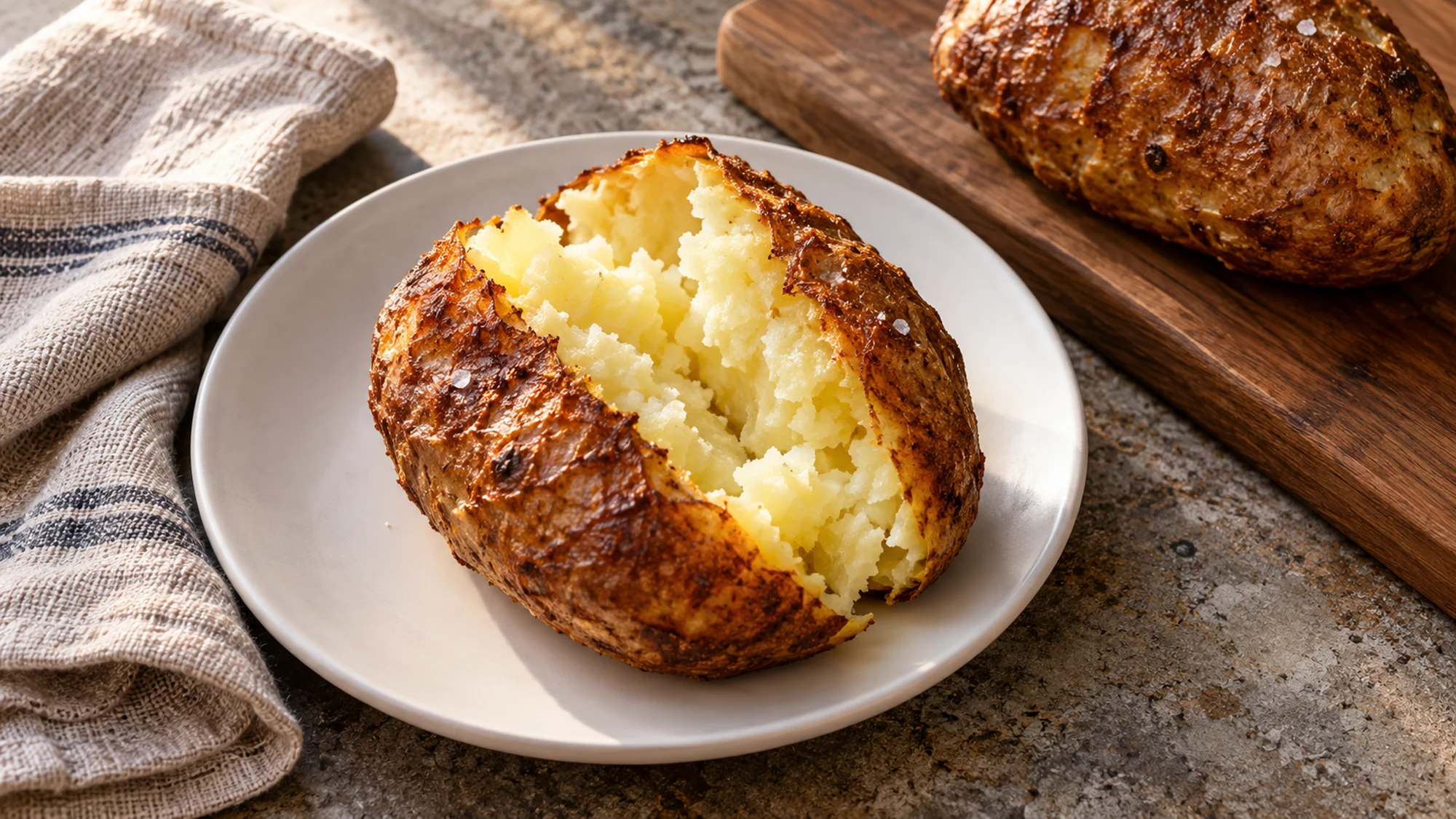
- Transfer with tongs, split lengthwise and fluff the centers with a fork. Serve promptly with any toppings added at the table.