
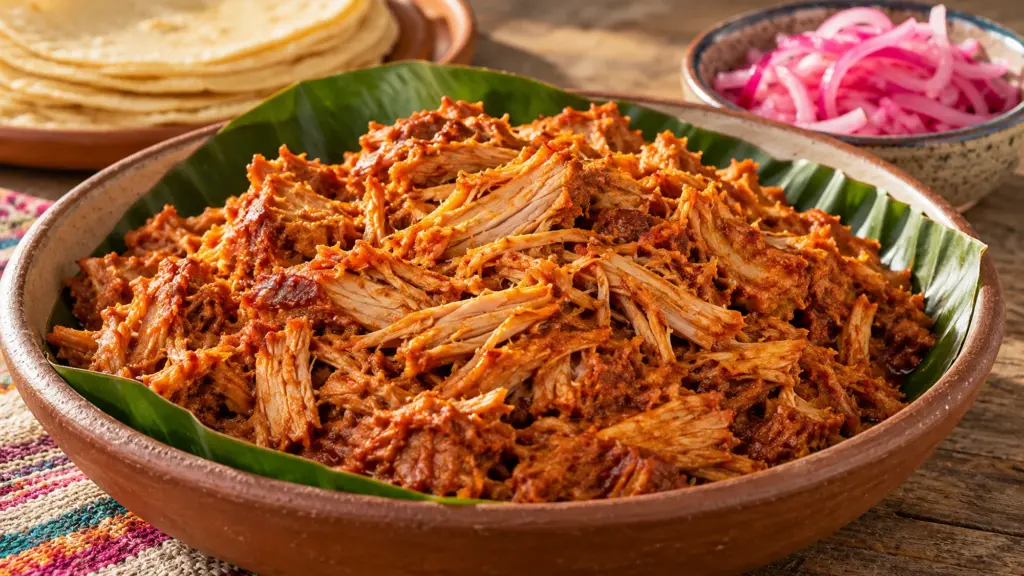
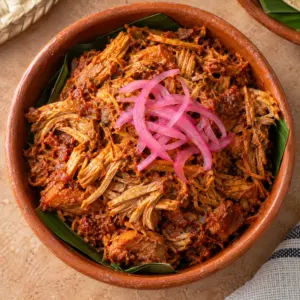
A pot of cochinita pibil can smell ready long before the pork is tender enough to pull apart. The red-orange achiote and citrus announce themselves early; the shoulder still needs a gentle, covered braise. This home-oven version keeps the seasoning bright and gives the meat time to turn into moist, fork-tender shreds.
Use pork shoulder, a citrus-achiote marinade and a tightly covered pot. Cook until a fork separates the meat easily, then spoon back just enough cooking liquid to keep the shreds juicy. Pink pickled onions supply the sharp contrast at the table.
This is an accessible oven adaptation of a Yucatecan dish, not a claim to reproduce an underground pit. Banana leaves contribute their own aroma when available. I’d prioritize the right pork cut and a snug lid over elaborate serving dishes: patience matters more than presentation while the meat cooks.
Serving Cochinita Pibil With Bright, Simple Sides
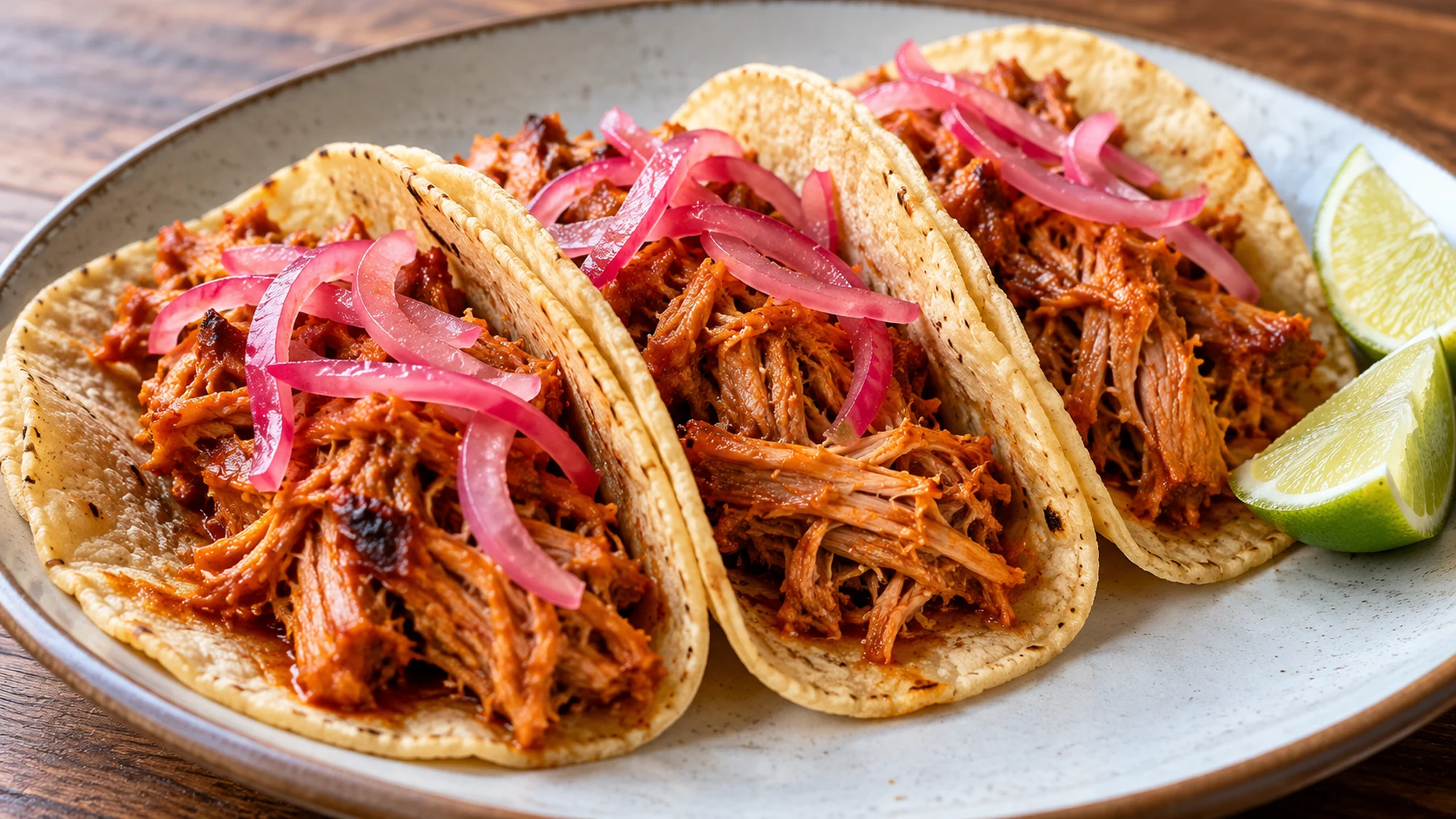
Warm corn tortillas, pickled red onions and a small bowl of hot salsa make a useful starting point. Lift the pork with tongs so a little sauce comes along without soaking the tortilla. Keep habanero heat separate, especially when people at the table prefer different levels of spice.
Black beans and a crunchy cabbage salad round out the meal without competing with the citrus. A bowl of chunky guacamole adds a cooler, creamy option. I prefer a modest spoonful rather than enough toppings to hide the pork.
- For tacos: Fill warm tortillas just before eating; overfilled tacos are awkward to fold and prone to tearing.
- For rice bowls: Add pork and juices over rice, then finish with onion and fresh vegetables.
- For next-day sandwiches: Reheat the meat with its juices and drain lightly before filling a toasted roll.
Let the pork carry the rich flavor and the onions provide the brightness. A few well-chosen accompaniments do more than a crowded topping bar.
Cochinita Pibil Variations and Ingredient Choices
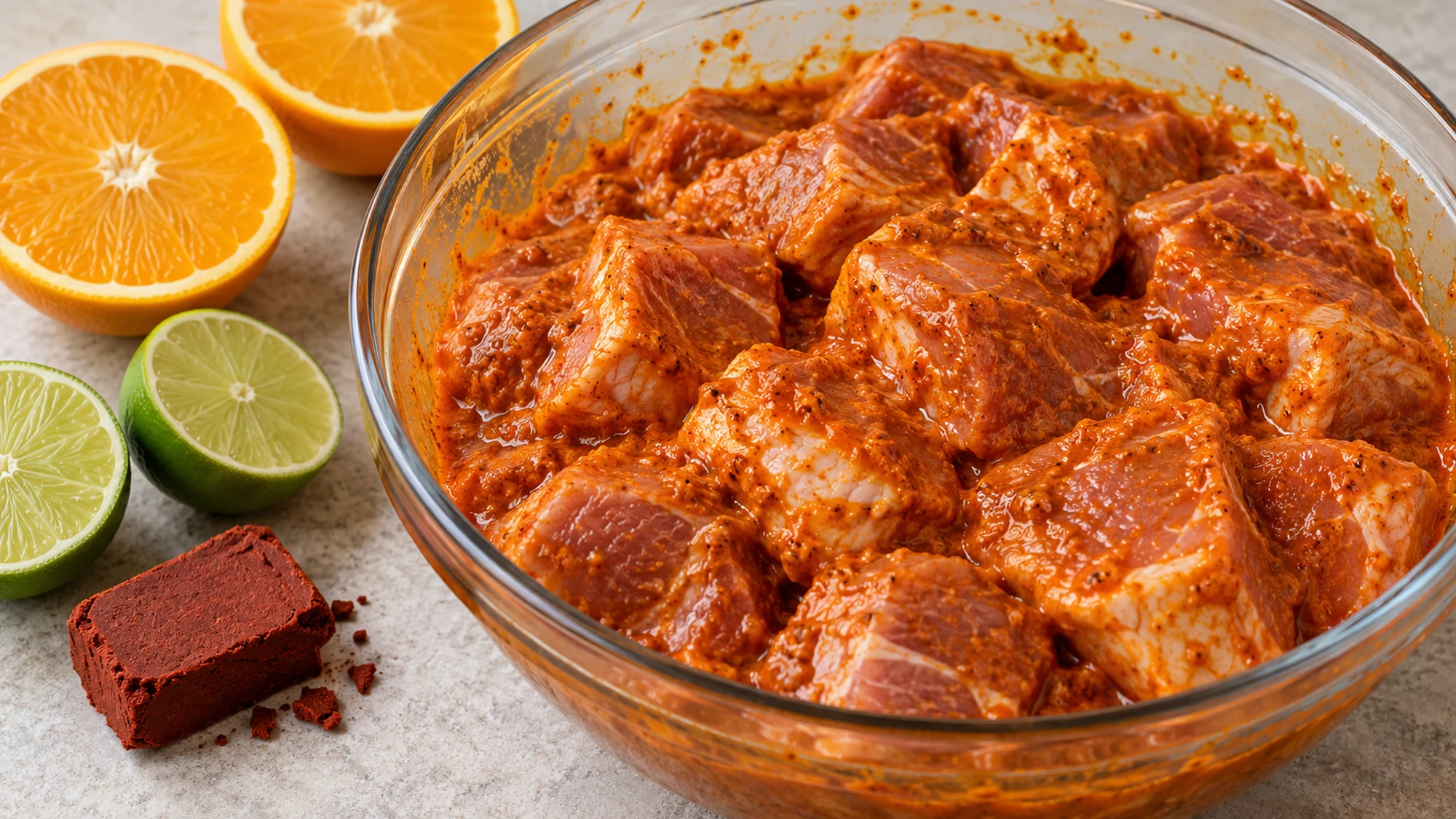
Achiote paste is a seasoned annatto preparation, not simply red food coloring or chile paste. Brands vary in salt and spices, so taste the cooked juices before adding more salt. Orange and lime juice provide a practical sour-orange alternative here, but the flavor is not identical to fresh bitter orange.
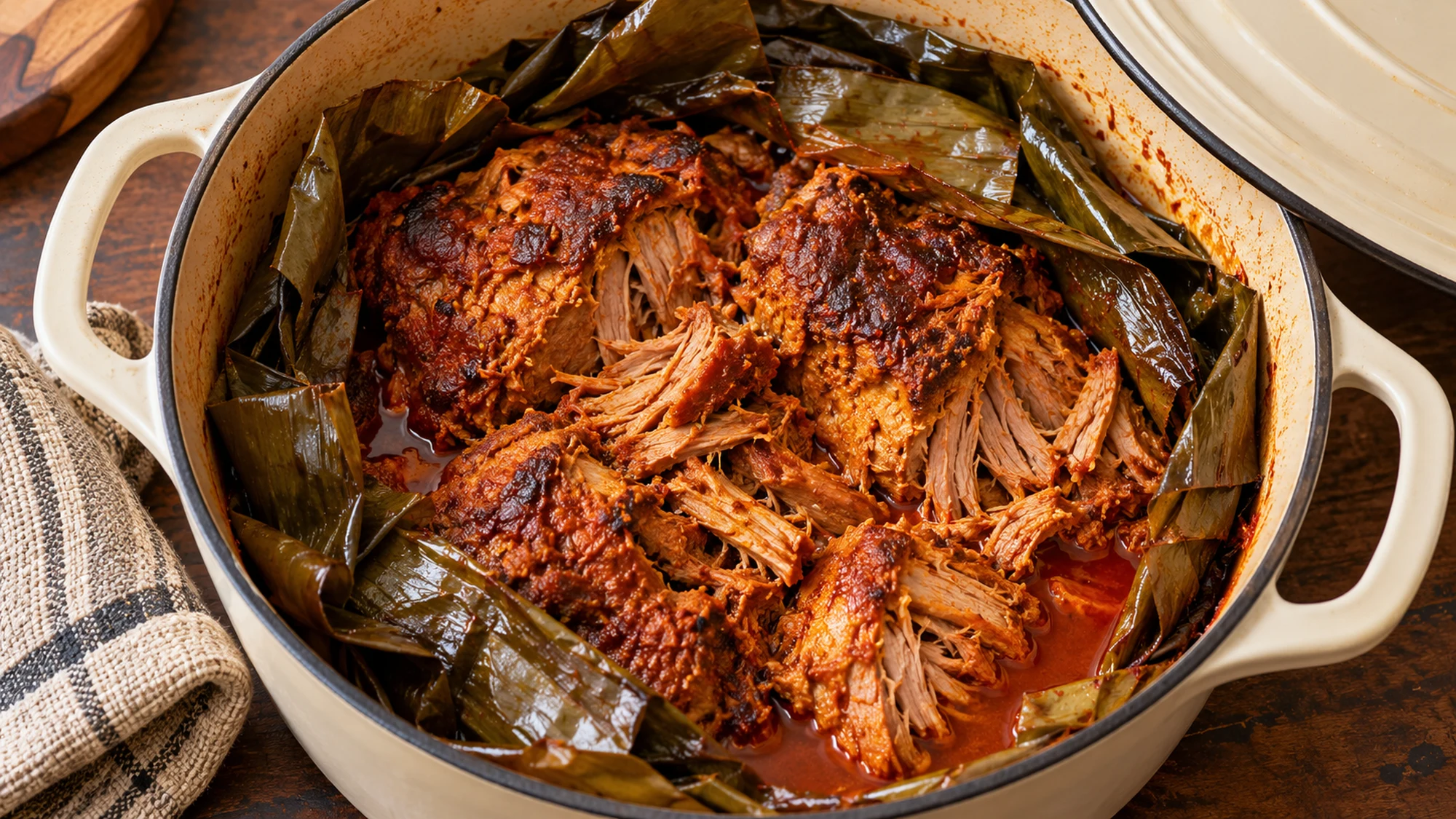
Shoulder contains the connective tissue and fat suited to a long braise. Lean tenderloin is not an equivalent swap. If the pork still resists two forks, keep it covered and cook longer, checking that a little liquid remains beneath the banana leaves.
| Choice | What changes | Useful adjustment |
|---|---|---|
| Banana leaves | Add an earthy aroma | Use clean, thawed leaves; they wrap the food but are not eaten. |
| No banana leaves | Less leaf aroma | Use the same tightly covered Dutch oven; do not leave the meat exposed. |
| Achiote paste brand | Salt and spice intensity | Start with the measured paste and season the finished juices. |
| Smaller pork pieces | May soften sooner | Check tenderness early instead of following time alone. |
If the sauce seems weak, reduce some cooking liquid separately after removing the pork. If it tastes salty already, skip reduction and moisten the meat sparingly.
Health Benefits and a Balanced Plate
Pork contributes protein, while the amount of fat depends on the shoulder and how it is trimmed. Skimming obvious fat from the cooking juices changes what reaches the plate, but it does not turn shoulder into a lean cut. The recipe’s nutrition estimate excludes tortillas, beans, onions and other optional accompaniments.
- Add beans and vegetables for a more varied meal rather than making the pork portion do every job.
- Check the achiote paste label for sodium and any allergens; seasoning blends are not all formulated alike.
- Keep raw pork and its utensils away from ready-to-eat toppings, and wash hands after handling the meat.
The most useful nutrition choice here is the whole plate: a reasonable pork portion, vegetables and a side you enjoy, with salt adjusted after cooking.
Bottom Line
Cool leftovers promptly in shallow containers and refrigerate within two hours, or one hour above 90°F (32°C). USDA leftover guidance recommends using safely refrigerated cooked food within three to four days. Reheat pork with its juices to 165°F (74°C).
Cochinita pibil is worth giving a clear afternoon in the oven. Keep the pot covered, judge the pork by tenderness and save its juices; those three choices make the filling easier to serve now and reheat later.
Cochinita Pibil Recipe

Ingredients
- 3 pounds boneless pork shoulder About 1.36 kg, trimmed of thick surface fat and cut into 3-inch chunks.
- 50 g achiote paste Check the label for salt and allergens.
- 0.75 cup fresh orange juice 180 ml.
- 0.25 cup fresh lime juice 60 ml.
- 4 cloves garlic Peeled.
- 0.5 teaspoon dried Mexican oregano Or ordinary dried oregano.
- 0.5 teaspoon fine salt Plus more only if needed after cooking.
- 1 medium white onion Sliced; about 150 g.
- 0.5 cup water Plus more if the pot becomes dry.
- 2 large pieces banana leaves Optional, thawed and rinsed; enough to line and fold over the pork.
- pickled red onions, warm corn tortillas and habanero salsa For serving; excluded from nutrition and cost.
Equipment
- 6-quart Dutch oven with lid
- Blender or small food processor
- Tongs and two forks
- Meat thermometer
Instructions
- Heat the oven to 300°F (150°C). Blend achiote paste, orange juice, lime juice, garlic, oregano and measured salt until the paste is dispersed. Toss the pork chunks with the marinade.
- Line the Dutch oven with the banana leaves, if using, leaving enough overhang to fold across the meat. Add onion and pork with all the marinade. Pour the water down the side. Fold the leaves loosely over the pork and fit the lid tightly.
- Braise on a middle rack for 3–3½ hours, checking at 2½ hours. Open carefully away from your face. The pork is ready when a fork turns easily and the pieces separate without resistance, commonly around 195–205°F (90–96°C) for shredding texture. If still firm, cover and continue in 20–30-minute intervals. Add a splash of hot water if the bottom is nearly dry.
- Rest covered for 10 minutes. Transfer the meat to a bowl and discard the banana leaves. Skim obvious fat from the juices. Shred the pork into coarse strands, removing any remaining tough pieces.
- Taste the juices. If thin and not already salty, simmer some separately to concentrate them; otherwise use as they are. Fold enough juices into the pork to moisten it, keeping the rest for serving. Add salt only if needed.
- Serve with the optional accompaniments. Refrigerate leftovers in shallow containers within 2 hours, or 1 hour above 90°F (32°C). Use within 3–4 days and reheat with the juices to 165°F (74°C).