
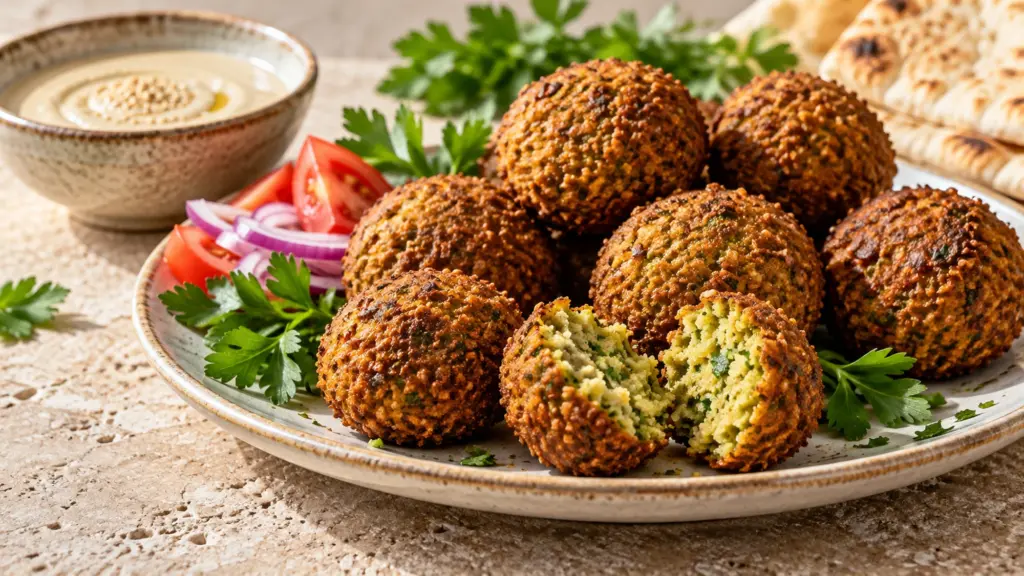
A falafel sandwich arrives wrapped in warm bread, with crisp brown fritters peeking out between tomatoes and herbs. But those little rounds are not meatballs, and they are not simply hummus with a crust. Understanding the bean mixture helps explain both their flavor and their texture.
What is falafel? It is a savory fritter made from ground chickpeas, fava beans or a combination, usually with herbs, onion, garlic and spices. It is commonly fried and served in bread, on a plate or with dips.
I’d start with the texture: a crisp outside and a tender, slightly grainy middle. A green interior usually reflects herbs, not a different kind of bean. The precise mixture varies, so the name alone cannot tell you every ingredient.
What Is Falafel Made From?
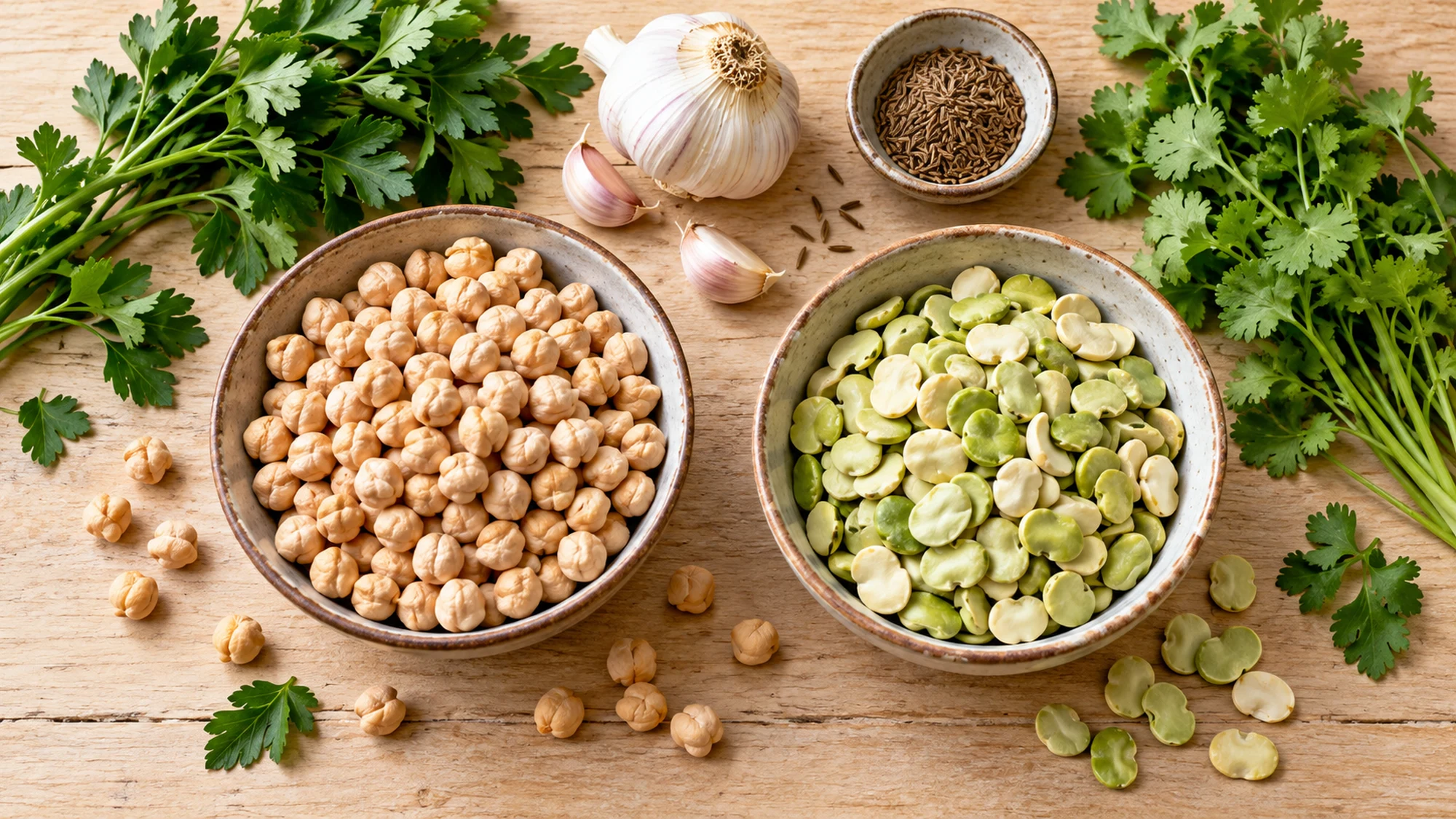
Suzy Karadsheh’s falafel explanation and demonstration describes the chickpea-or-fava base and herb-spice mixture. Falafel belongs to several Middle Eastern food traditions; it is more useful to ask which version a kitchen serves than to insist that every batch must be identical.
- Legumes: Chickpeas, favas or a blend provide the main structure. They are ground rather than left whole.
- Herbs and aromatics: Parsley, cilantro, onion and garlic are common, but recipes differ.
- Seasoning: Cumin and coriander often contribute warm, earthy flavor. Chili is optional, so falafel is not automatically hot.
- Extras: Some versions include sesame, flour or other ingredients. Ask rather than assuming a short ingredient list.
For a closer look at the second bean, our fava bean guide explains the fresh and dried forms. If you have G6PD deficiency, avoid fava beans and verify the falafel ingredients; MedlinePlus identifies favas as a trigger for red-blood-cell breakdown.
The Texture Matters More Than the Shape
Balls, slightly flattened patties and irregular rounds can all be falafel. Their shape does not determine the bean mixture. A useful first bite should reveal a contrast between the browned surface and the softer center, rather than a uniformly smooth paste.
| Food | Usual form | Main distinction |
|---|---|---|
| Falafel | Cooked fritter or patty | Ground legumes, herbs and spices |
| Hummus | Smooth dip | Cooked chickpeas blended with tahini and other ingredients |
| Meatball | Cooked ball or patty | Meat-based unless specifically labeled otherwise |
Traditional chickpea preparations commonly begin with soaked dried chickpeas, not canned cooked ones. That distinction affects how the mixture holds together. If you decide to cook falafel, follow a complete recipe designed for your chosen beans and cooking method rather than swapping cans into an unrelated formula.
I would choose freshly cooked falafel for the clearest crisp-and-tender contrast. Shape is a style choice; the ingredient list and cooking method tell you more.
How to Order or Build a Falafel Meal
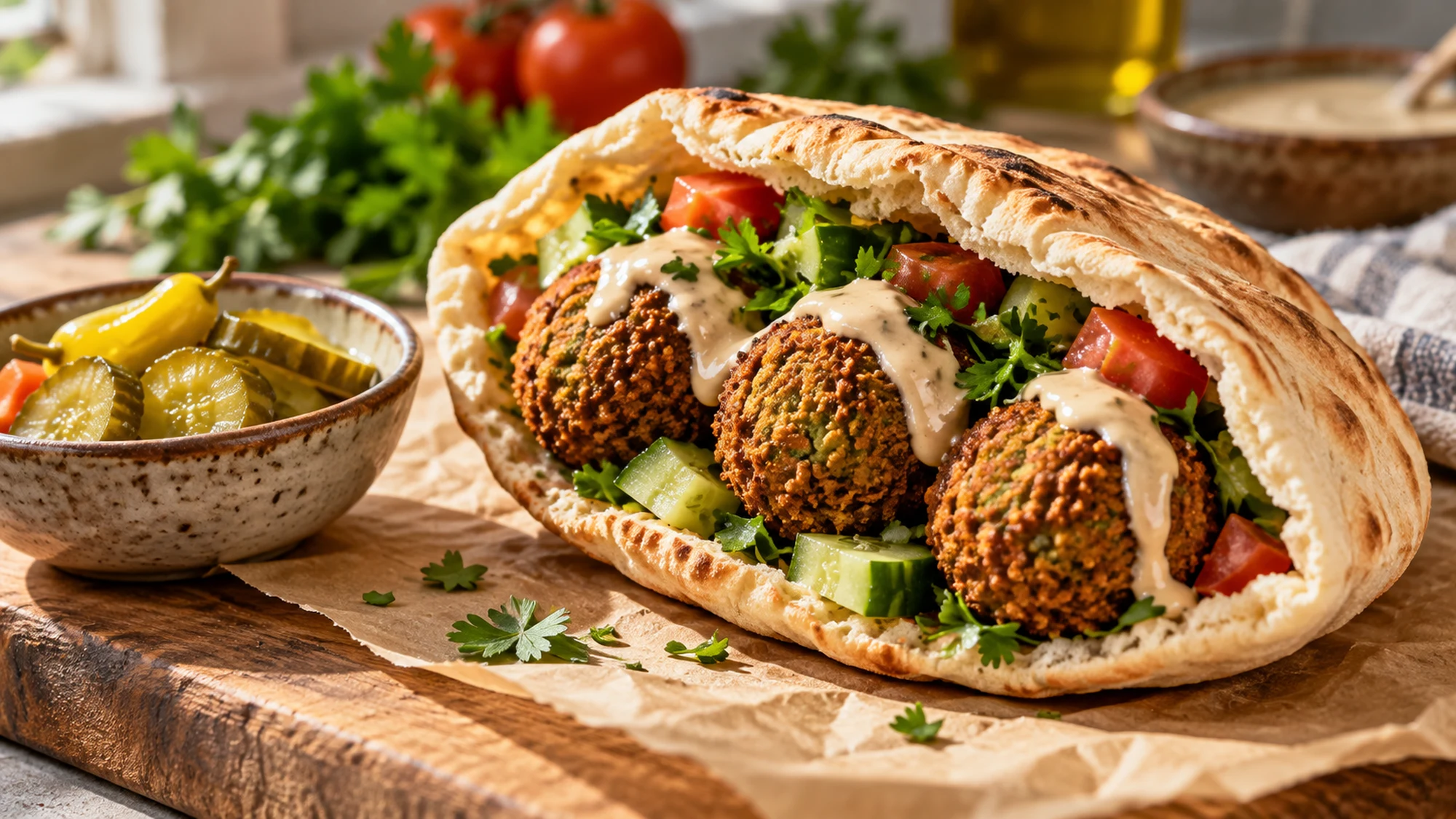
Think about balance rather than piling every topping into the same pocket. A crunchy vegetable, something creamy and a little acidity give the fritters company without hiding them. I would keep extra sauce on the side when the meal needs to travel.
- In a pita: Add tomato, cucumber and a sauce you enjoy. Pickles offer acidity; start modestly if the other ingredients are already salty.
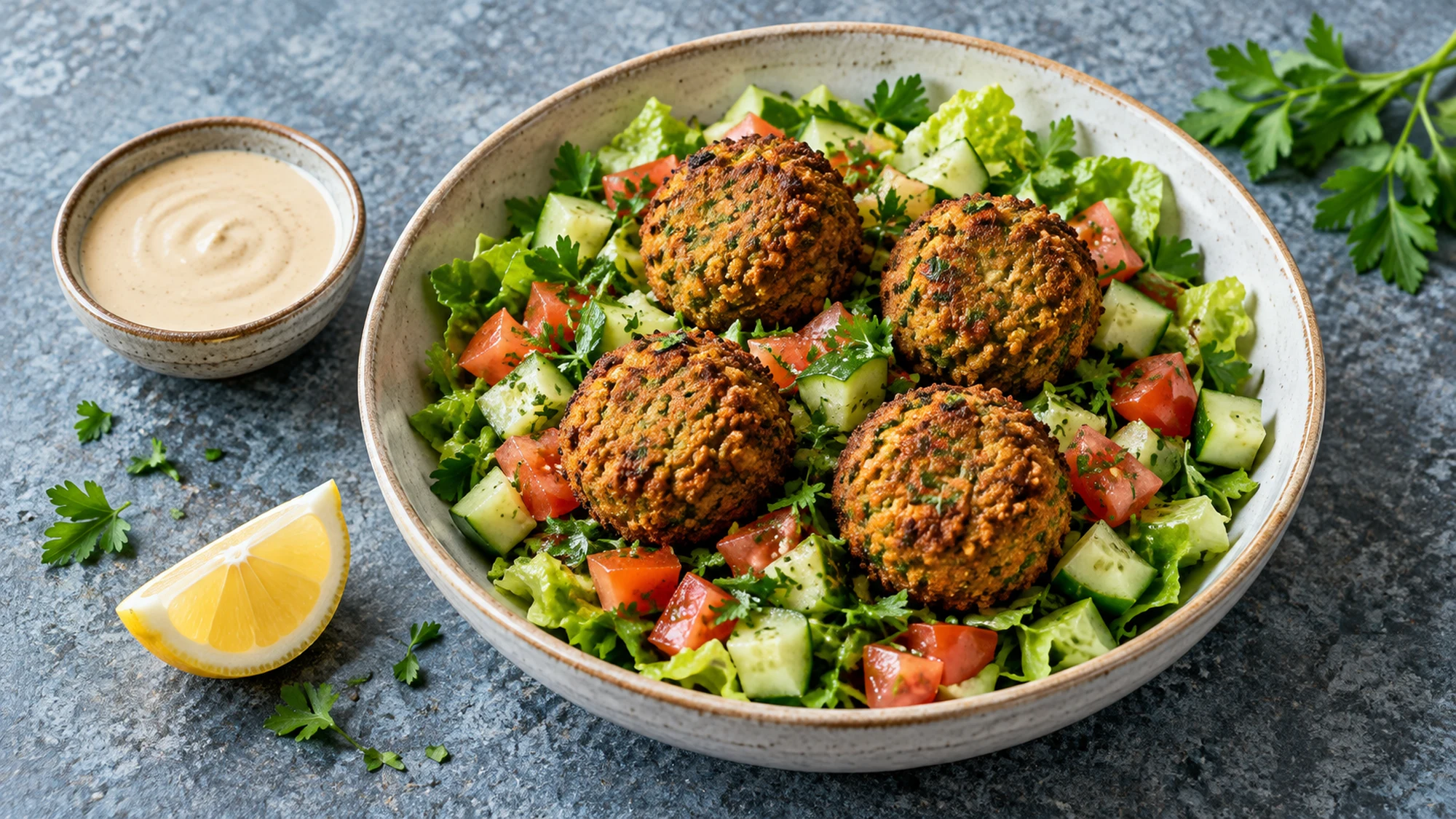
- On a salad: Let the falafel be the warm, substantial element and keep the vegetables crisp.
- As a small plate: Pair with dips and vegetables so everyone can choose their own combination.
- For takeaway: Ask whether bread and sauce can be packed separately. A tightly wrapped, heavily dressed sandwich will not retain the same crunch.
A useful serving choice preserves contrast: crisp fritters, fresh vegetables and enough sauce to bring them together, not drown them.
Dietary Labels and Leftovers
A basic bean-and-herb mixture can be vegan, but the whole meal may not be. Yogurt sauce, added binders and shared preparation equipment deserve a separate check. The FDA lists sesame and wheat among major food allergens; tahini contains sesame and ordinary pita usually contains wheat.
- For gluten avoidance, verify the fritter mixture, bread and shared fryer; a chickpea base is not a certification.
- For allergies, ask about all ingredients and cross-contact, including toppings and sauces.
- Compare packaged products using their stated serving sizes. Frying oil, salt and accompaniments change the meal; “plant-based” is not a complete nutrition assessment.
- Refrigerate perishable leftovers within two hours, or one hour above 90°F. USDA guidance allows three to four refrigerated days for safely handled leftovers.
Keep salad and sauce separate from leftover fritters when possible. Follow package reheating directions for packaged products. USDA’s takeaway guidance puts safe handling ahead of trying to rescue food that has sat out too long.
Bottom Line
Falafel is a legume-based fritter, not a meatball or a dip. Choose a version whose ingredients suit you, enjoy its crisp outside and tender center, and build the meal around contrasting vegetables and sauce. Ask about favas, allergens and preparation when those details matter.
For a visual explanation of the chickpea mixture and shaping, watch Suzy Karadsheh’s demonstration from The Mediterranean Dish below.