
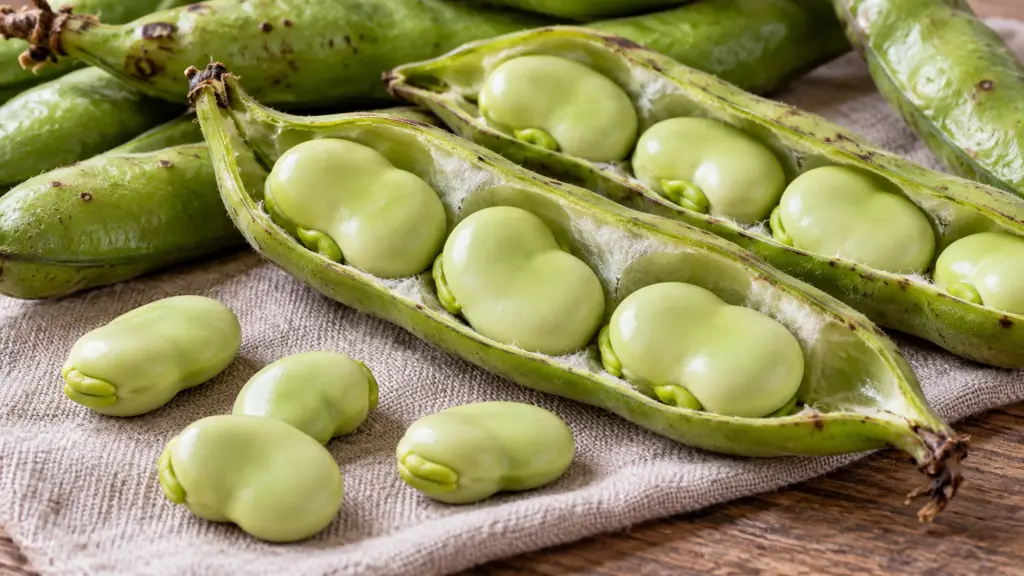
A bag of fresh fava beans looks generous until the pods come off. Then there may be another pale skin around each bean. That extra preparation explains why fresh, frozen and dried favas deserve different places in your shopping plan—not one universal set of cooking instructions.
Fava beans, also called broad beans or faba beans, are legumes sold fresh, frozen, canned and dried. Match the preparation to the form you buy. People with G6PD deficiency should avoid fava beans, because they can trigger serious red-blood-cell breakdown; cooking is not a reliable workaround.
I’d choose the format before choosing the dish. Fresh beans offer a green, tender bite when properly prepared, while cooked dried beans suit a heartier bowl or spread. Convenience counts, especially when dinner is not waiting patiently.
What Are Fava Beans?
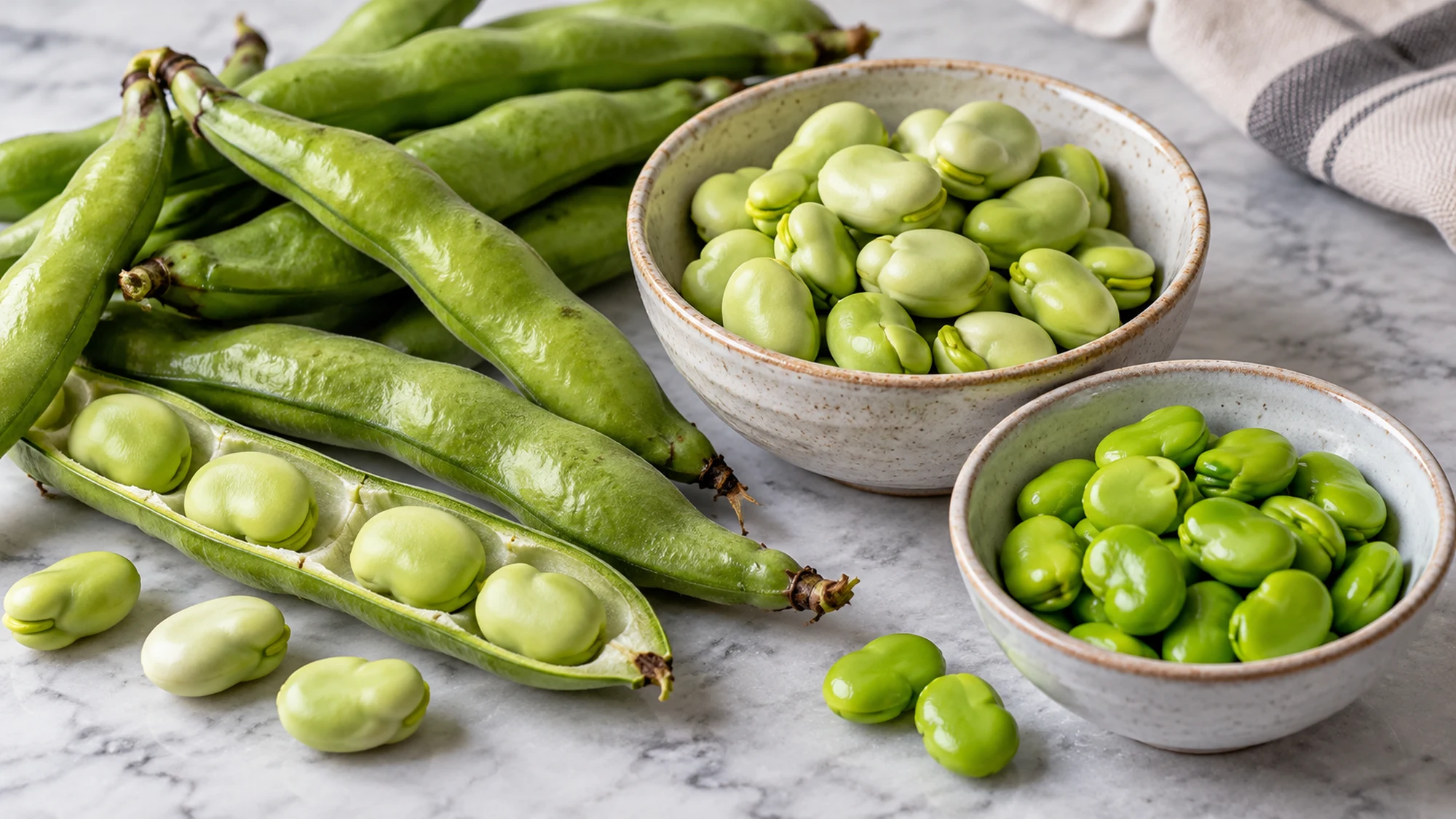
Virginia Cooperative Extension identifies fava beans as Vicia faba. The names broad bean and faba bean refer to the same species. They are not simply another name for green peas, and a recipe written for one may need adjustments if you substitute the other.
- Fresh beans: Usually sold in substantial green pods, with a skin around the individual bean.
- Dried beans: Mature beans sold whole or split, sometimes already peeled. Their preparation differs from fresh beans.
- Prepared products: Canned beans, dips and frozen bags can include different seasonings or levels of preparation. Read the actual package.
Protein and fiber are useful reasons to include legumes in a varied diet. But numbers for dry beans do not describe an equal weight of cooked beans, which contain more water. I would compare nutrition labels on the same serving basis rather than borrow an impressive percentage from a different form.
Choosing Fresh, Frozen, Canned or Dried
The most helpful question is how much preparation remains. “Shelled” can mean the pods have been removed; it does not always mean every individual bean has been peeled. Check the label or inspect the beans before planning a very smooth puree.
| Form | Check before cooking | Useful direction |
|---|---|---|
| Fresh in pods | Pod condition and amount of shelling | A vegetable side or a tender addition to pasta |
| Frozen | Peeled or unpeeled; required cooking instructions | Less pod preparation for a weeknight meal |
| Canned | Ingredients, sodium and whether ready to eat | A quick warm bowl or a seasoned mash |
| Dried | Whole or split; peeled or unpeeled | A slow-cooked dish, soup or spread |
For fresh pods, Oregon State Extension advises choosing green, succulent pods and keeping them refrigerated. Buy an amount you can use soon. For frozen or canned products, follow their storage and after-opening directions rather than applying fresh-pod advice.
My practical pick for a busy evening would be a clearly labeled prepared product. Fresh pods make sense when you actually have time for the shelling.
Preparing Fava Beans Without Guesswork
For fresh favas, removing the pod and removing the bean’s outer skin are separate jobs. A brief blanch can loosen that skin; it is a preparation step, not a universal cooking endpoint for every bean, size or recipe.
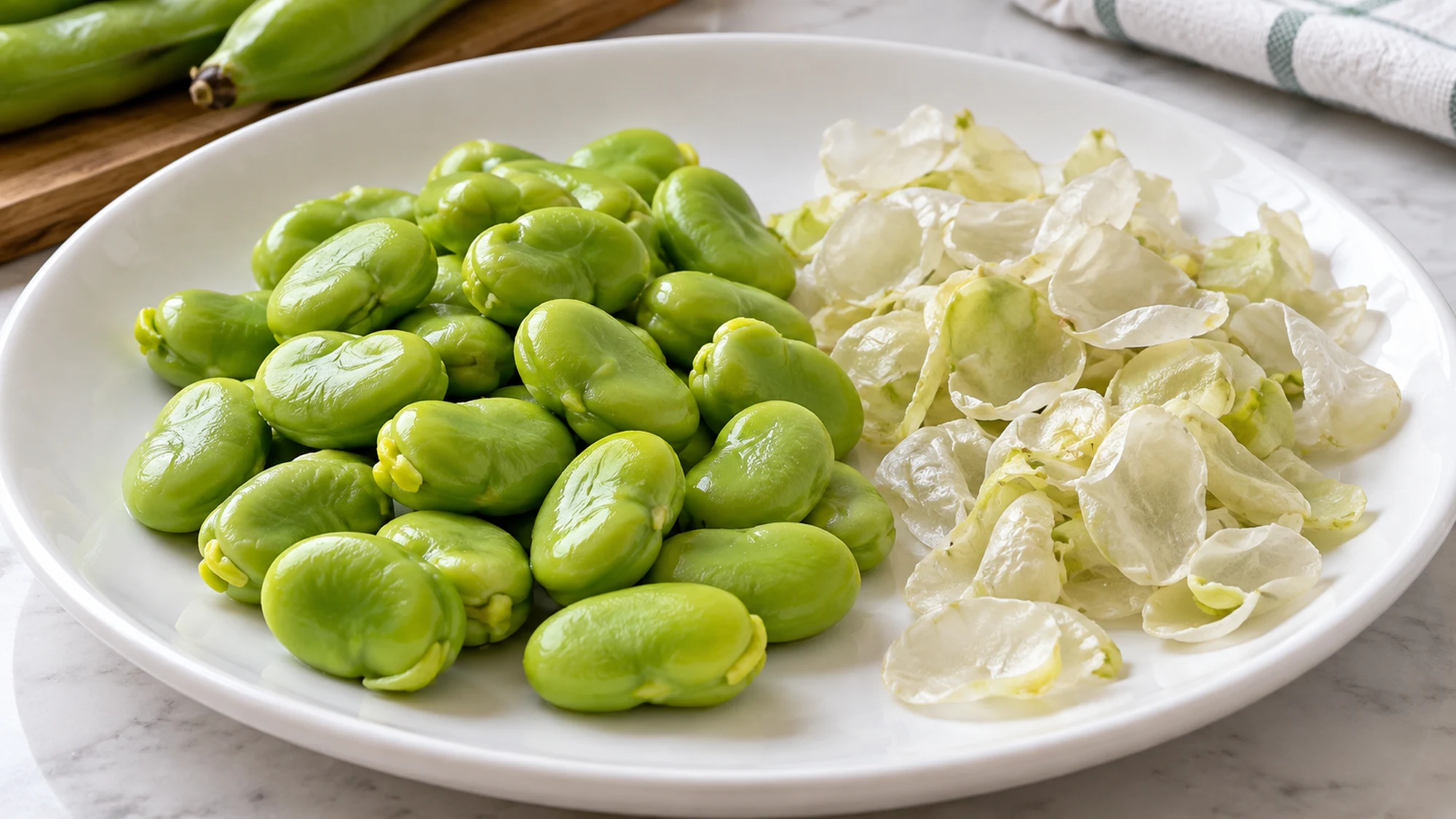
- Split the pod along its seam and remove the beans.
- For easier peeling, Oregon State describes blanching the shelled beans for a minute or two, then draining and cooling them in cold water.
- Open the pale membrane and gently slip out the green inner bean; continue with the cooking required by your recipe.
- For dried beans, use the package or a tested recipe matched to whole, split or peeled beans. Do not substitute the fresh-bean blanching time.
Once cooked, try a small portion with olive oil, lemon and herbs before building a more elaborate dish. For a spread, mash to the texture you want and add liquid gradually. Our olive oil guide explains the distinctions on the bottle if you are choosing a finishing oil.
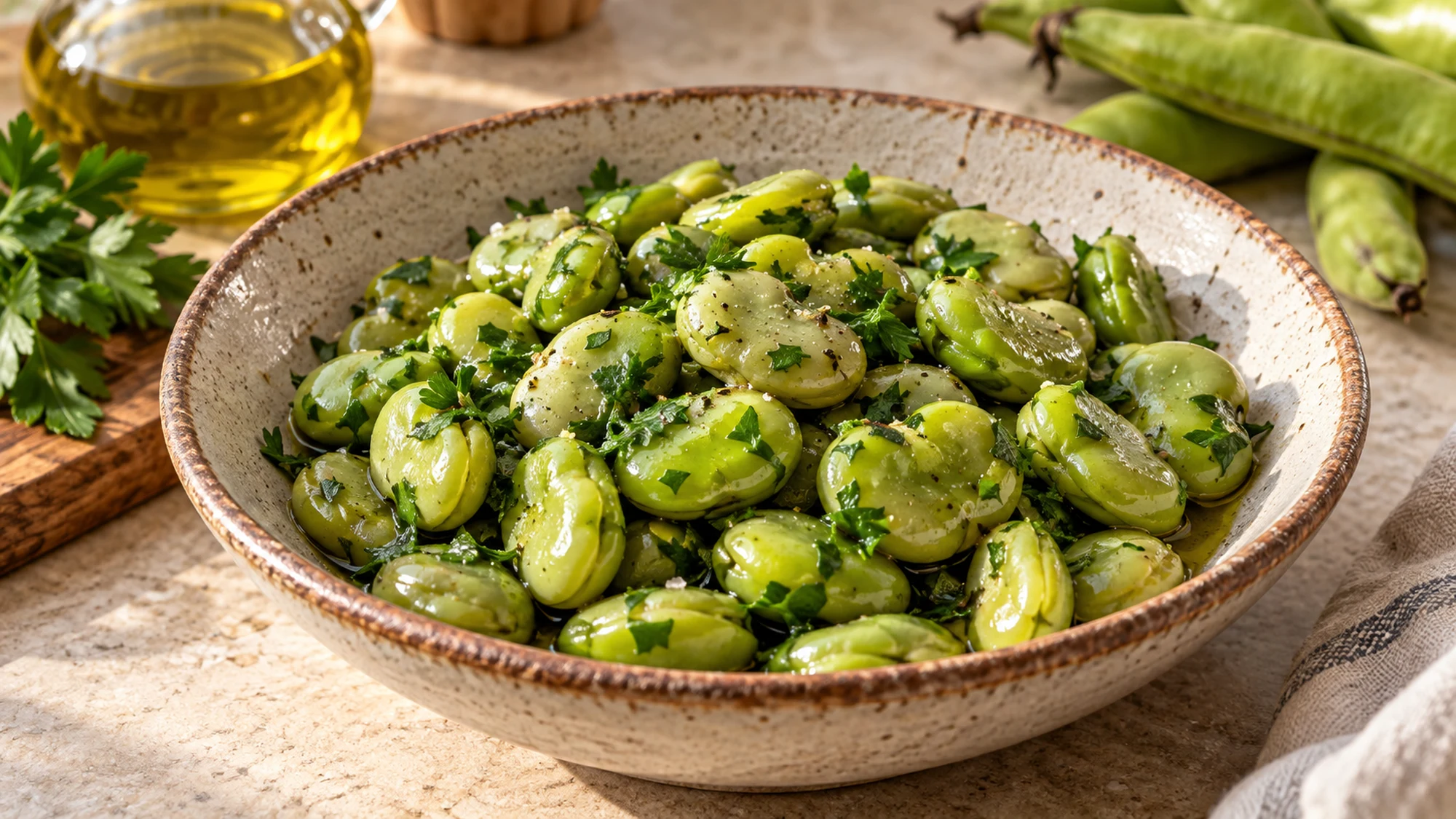
Let the beans finish cooking before adjusting the final texture. A rustic mash can be lovely; a chalky center is not the same thing.
Who Should Avoid Fava Beans?
MedlinePlus lists fava beans as a trigger for hemolysis in G6PD deficiency. This inherited enzyme condition affects red blood cells. If you have it, avoid favas and discuss food and medication triggers with your clinician; do not rely on peeling, soaking or cooking to make them suitable.
- Check mixed dishes and ingredient lists for fava, faba or broad beans.
- If you have a family history or uncertainty about G6PD deficiency, ask a clinician about evaluation rather than testing tolerance by eating beans.
- Seek prompt medical care for concerning symptoms after eating them, such as dark urine, yellowing skin or eyes, unusual weakness or shortness of breath.
This is a specific, important warning—not a claim that everyone must avoid legumes. Keep it separate from ordinary recipe preferences, and tell guests clearly when a dish contains fava beans.
Bottom Line
Choose fava beans by the form you need, read the preparation instructions, and allow time for fresh-bean peeling when appropriate. Use them as an ingredient, not a treatment. The G6PD warning comes first: anyone affected should avoid them, regardless of how they are cooked.