
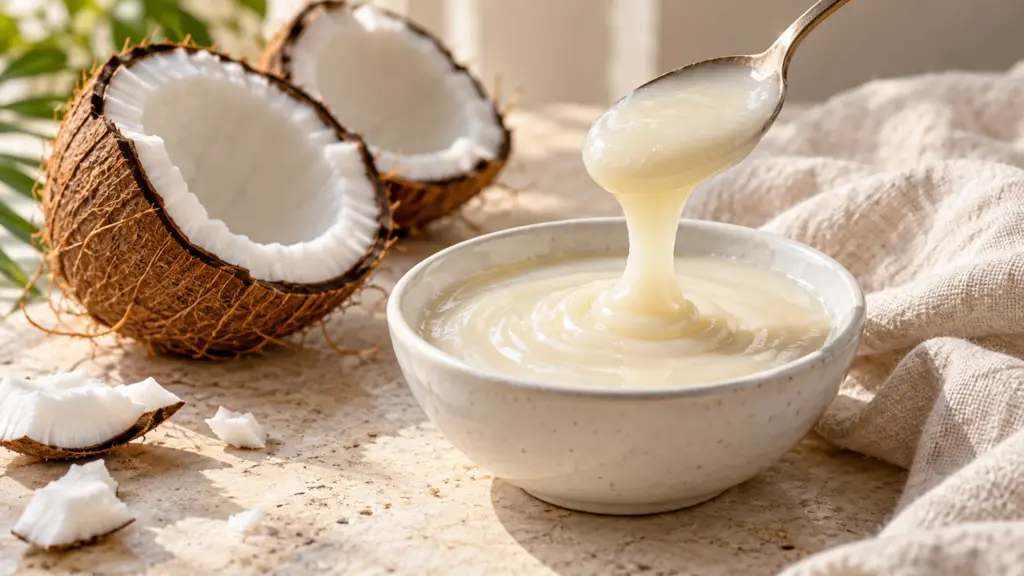
Two cans sit on the shelf: coconut cream and cream of coconut. The names look almost interchangeable, but choosing the wrong one can turn a savory sauce unexpectedly sweet—or leave a tropical drink missing its sweetness. The useful distinction is not the packaging. It is what the ingredient contributes.
Cream of coconut is a sweetened coconut ingredient used mainly in drinks and desserts. Coconut cream is generally unsweetened. Read the ingredient list before swapping them: similar names do not mean the same sugar content, thickness or job in a recipe.
I’d make the label the deciding factor, especially when a recipe uses loose wording. A glossy texture and a picture of a coconut are not enough to tell you which product you have.
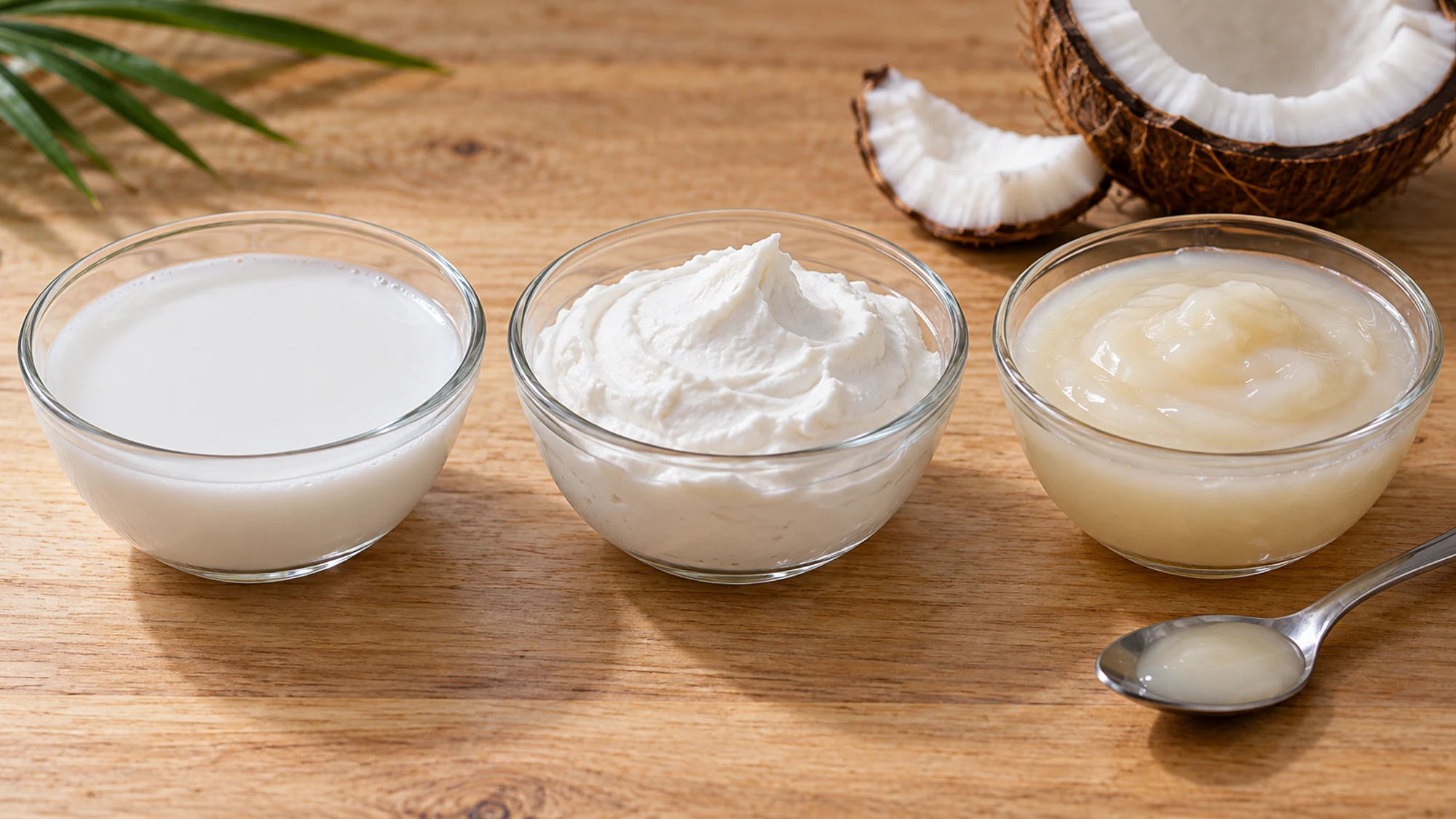
Cream of Coconut vs. Coconut Cream
GOYA’s cream of coconut lists coconut milk and sugar, along with ingredients that help its texture. Its coconut milk, by contrast, is unsweetened and intended for both sweet and savory cooking. Those manufacturer descriptions show why the extra words matter.
Think of cream of coconut as a combined coconut-and-sweetener ingredient, rather than plain coconut richness. Coconut cream usually gives you more control over sweetness because you add the sweetener separately. Products vary, so use this comparison as a shopping guide rather than a promise about every brand.
| Product | Main distinction | Practical use |
|---|---|---|
| Cream of coconut | Sweetened, thick coconut mixture | Sweet drinks, dessert sauces and specified baking recipes |
| Unsweetened coconut cream | Rich coconut ingredient without added sweetness | Savory sauces or desserts with separately measured sugar |
| Unsweetened coconut milk | Pourable coconut cooking liquid | Soups, curries and recipes calling for coconut milk |
For an unsweetened curry, do not grab cream of coconut simply because the recipe calls for something creamy. Start with the exact ingredient named.
How to Use Cream of Coconut Without Overdoing the Sweetness
Roland Foods describes Coco Lopez cream of coconut as thick, smooth and sweet, with uses in mixed drinks and desserts. It can supply both coconut flavor and sweetness, so adding another syrup automatically is an easy way to overshoot.
- Drinks: stir the product until uniform, then measure the amount specified. Taste the finished mixture before adding more sweetener.
- Fruit: use a modest drizzle over pineapple or another tart fruit rather than treating it like an unsweetened sauce.
- Baking: choose a recipe written for cream of coconut; its sugar and liquid affect more than flavor.
- Dessert bowls: add a little at a time to plain yogurt, remembering that the topping already brings sweetness.
I prefer tart fruit alongside sweet coconut because the contrast keeps each bite interesting. If you want a different cold dessert with a tangy center, these chocolate strawberry yogurt clusters use yogurt and berries instead; cream of coconut is not a direct replacement for their yogurt.
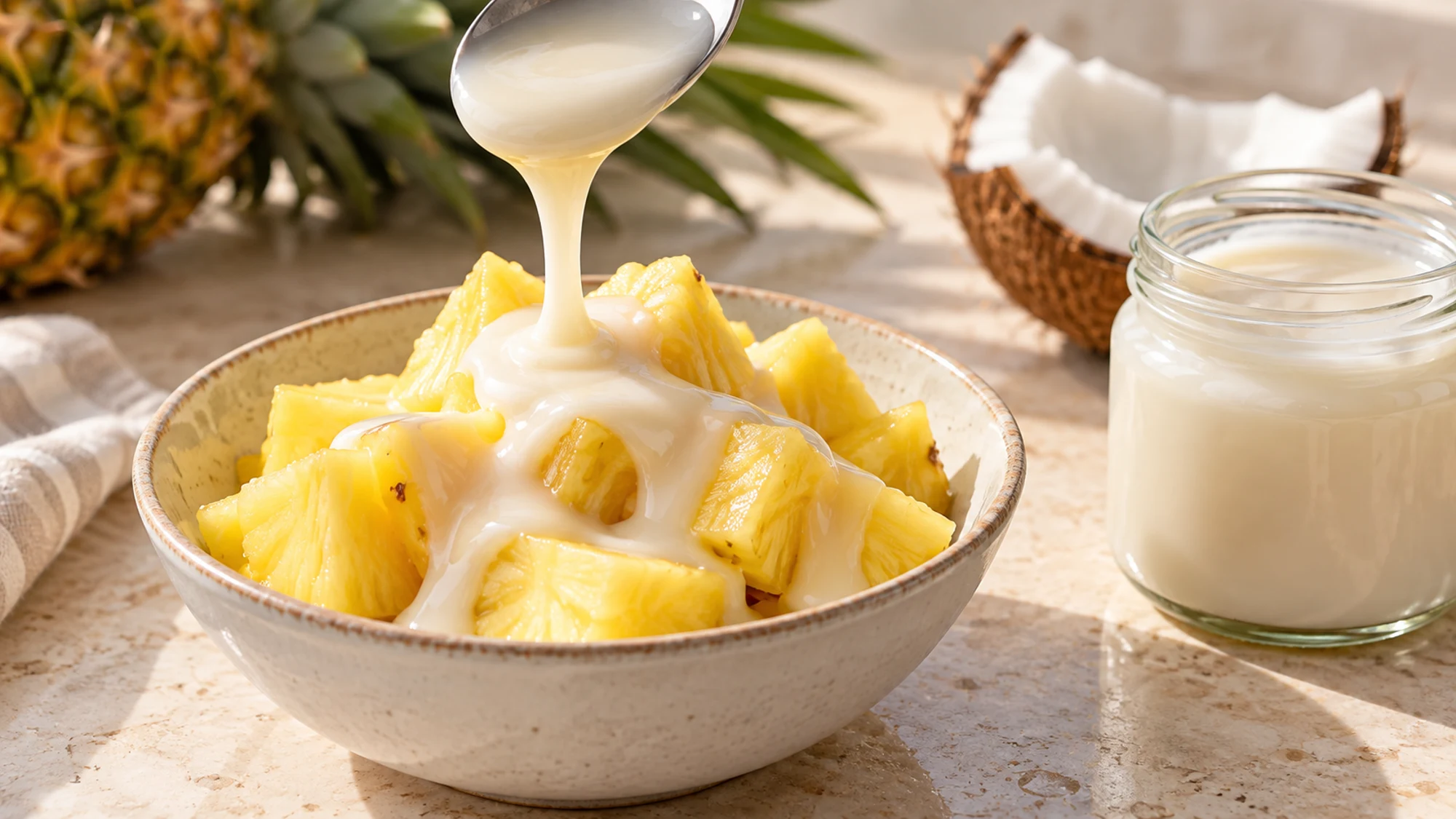
Let cream of coconut do the sweetening it already does. Adjust the rest of the dish around that contribution rather than adding it on top of an unchanged sugar allowance.
Substitutions, Labels and Nutrition
Plain coconut cream will not reproduce a sweetened product by itself. Adding sugar can move it toward the same flavor, but there is no universal spoon-for-spoon conversion: brands differ in coconut content, sweetness and consistency. In a blended drink you can adjust gradually; in a cake, use a tested substitution supplied by the recipe author.
- Need less sweetness? Choose a recipe developed with unsweetened coconut milk or cream instead of replacing the ingredient blindly.
- Shopping for a dairy-free option? Check the complete ingredient list and allergen information for the actual package.
- Comparing nutrition? Match the serving sizes first, then compare added sugar and saturated fat rather than relying on the word coconut.
As one product-specific example, Roland’s Coco Lopez listing gives 130 calories, 17 grams of added sugar and 5 grams of saturated fat per 2 tablespoons (39 grams). Those figures are not a universal value for every brand, and a larger pour changes the amount you consume.
Cream of coconut earns its place through flavor and texture. It does not need a health halo, and its coconut content does not make the added sugar disappear.
Storing Cream of Coconut After Opening
Bennett Opie’s Coco Lopez guidance says to refrigerate after opening and use within seven days. Treat that as advice for that listed product, not a deadline for every can or squeeze bottle. Follow your own label when instructions differ.
- Note the opening date and keep the product covered as directed.
- Use a clean spoon rather than dipping a used tasting spoon into the container.
- Stir or shake as the package directs before measuring; cold coconut mixtures can thicken.
- If storage history is uncertain or the product shows spoilage, discard it rather than tasting to investigate.
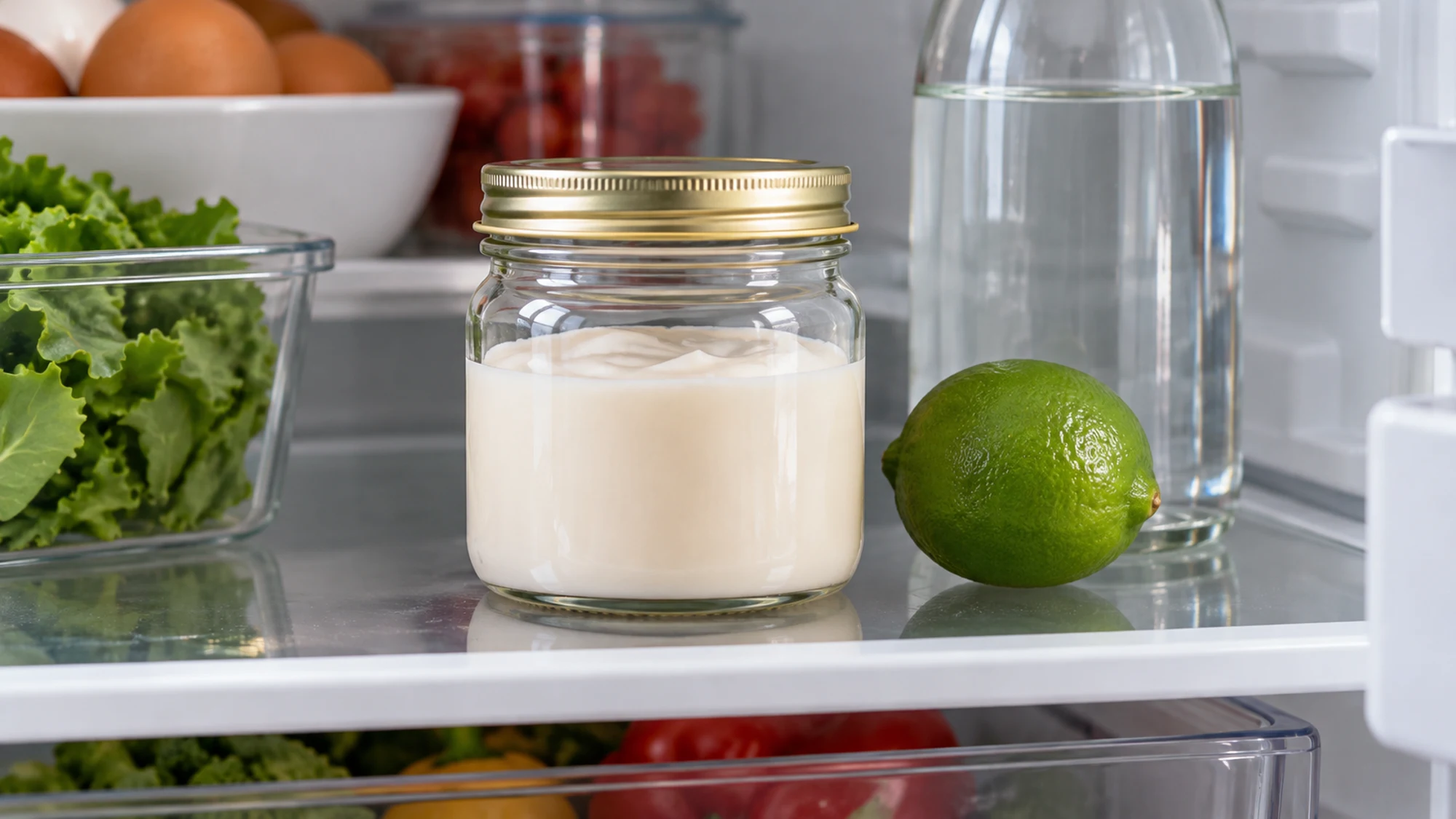
I’d buy a package size that fits the drinks or desserts already planned. A bargain-sized container is less useful when most of it has no next destination.
Bottom Line
Cream of coconut is the sweet option, not another name for plain coconut cream. Match the label to the recipe, account for its built-in sweetness and follow the package’s storage directions. That small check saves a much larger adjustment later.