
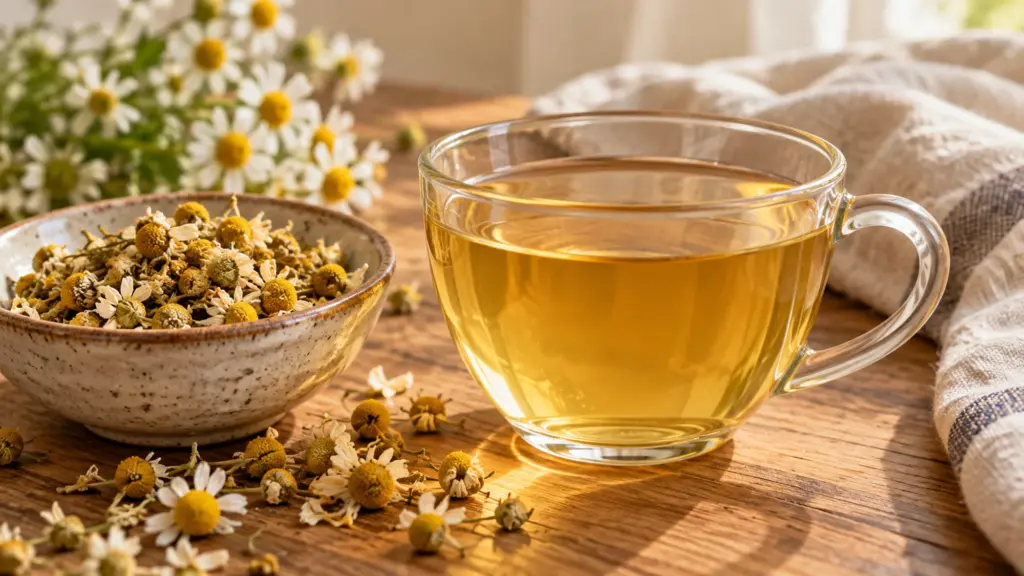
The kettle is on, the day is winding down, and the tea box promises a calmer evening. Chamomile tea benefits deserve a closer look: a pleasant, caffeine-free drink is one thing; a treatment for sleep or anxiety is quite another.
Chamomile tea can be an enjoyable evening drink, but evidence for treating insomnia is limited. Study results from concentrated extracts do not automatically apply to a brewed cup.
I’d choose it for its gentle floral flavor before choosing it for a health promise. Here is how to separate a useful everyday habit from claims that run ahead of the research.
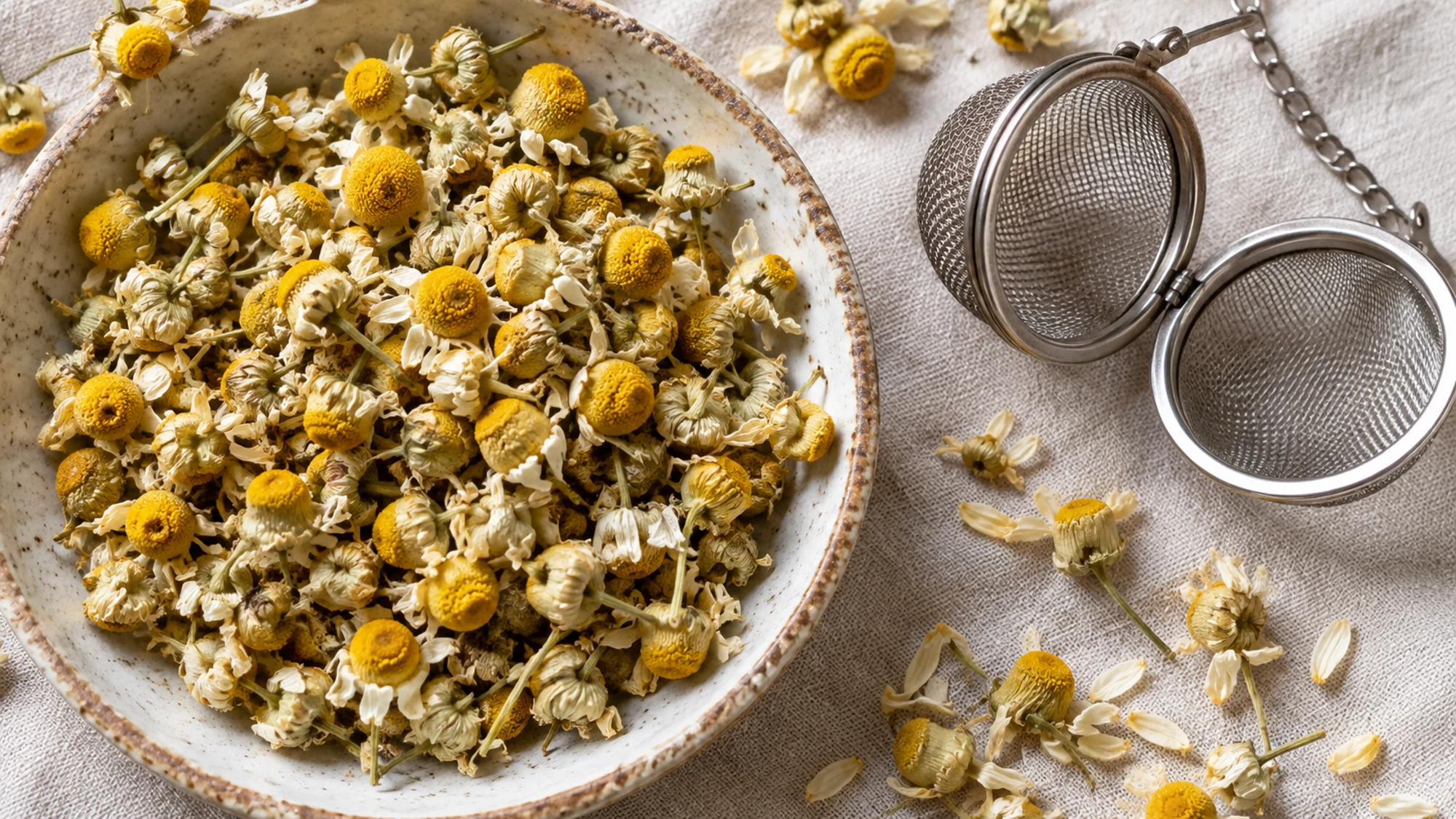
Chamomile tea benefits: what the research actually shows
A 2024 systematic review of 10 studies involving 772 adults found improvement in some sleep-quality measures, but not sleep duration or daytime functioning. The studies varied in participants and preparations, so their pooled findings do not establish that an ordinary tea bag treats insomnia.
- Sleep quality is not the same as longer sleep. A questionnaire score can improve without a meaningful change in hours asleep.
- Preparation matters. Tea, capsules and standardized extracts are different products; a benefit reported for one does not establish a benefit for the others.
- Anxiety findings remain preliminary. Research on chamomile supplements is not a reason to replace prescribed treatment with tea.
- Digestive claims need restraint. A comforting warm drink is not proof of treatment for a digestive condition.
The National Center for Complementary and Integrative Health says reliable evidence is insufficient to rate chamomile’s usefulness for many promoted conditions. I’d read “supports sleep” on a box as marketing to examine, not a guarantee.
Tea, extracts and blends are not interchangeable
A single-ingredient tea makes it easier to know what you are drinking. A bedtime blend may contain several herbs, while an extract concentrates selected compounds. Neither a longer ingredient list nor a stronger taste tells you that a product works better.
| Product | What to check | What not to assume |
|---|---|---|
| Plain chamomile tea | Flowers listed as the ingredient | A cup matches a trial extract |
| Herbal blend | Every herb and any caffeinated tea | All blends share the same safety profile |
| Concentrated supplement | Form, label and clinician advice | More concentrated means more beneficial |
- Read the full label. Check botanical ingredients rather than relying on the name printed across the front.
- Look beyond caffeine. Pure chamomile is an herbal infusion; blends containing black or green tea are a different choice.
- Keep the comparison honest. A tea bag is not a standardized dose of an active ingredient, and more bags do not turn it into one.
Enjoy the cup without turning it into a prescription
Chamomile often has a light floral aroma and a mild, haylike or applelike character. Those qualities are enough reason to enjoy it. Brew a packaged product according to its directions, then let it cool to a comfortable sipping temperature.
- Start simple. Taste it plain before adding sweetener; the flavor can be delicate.
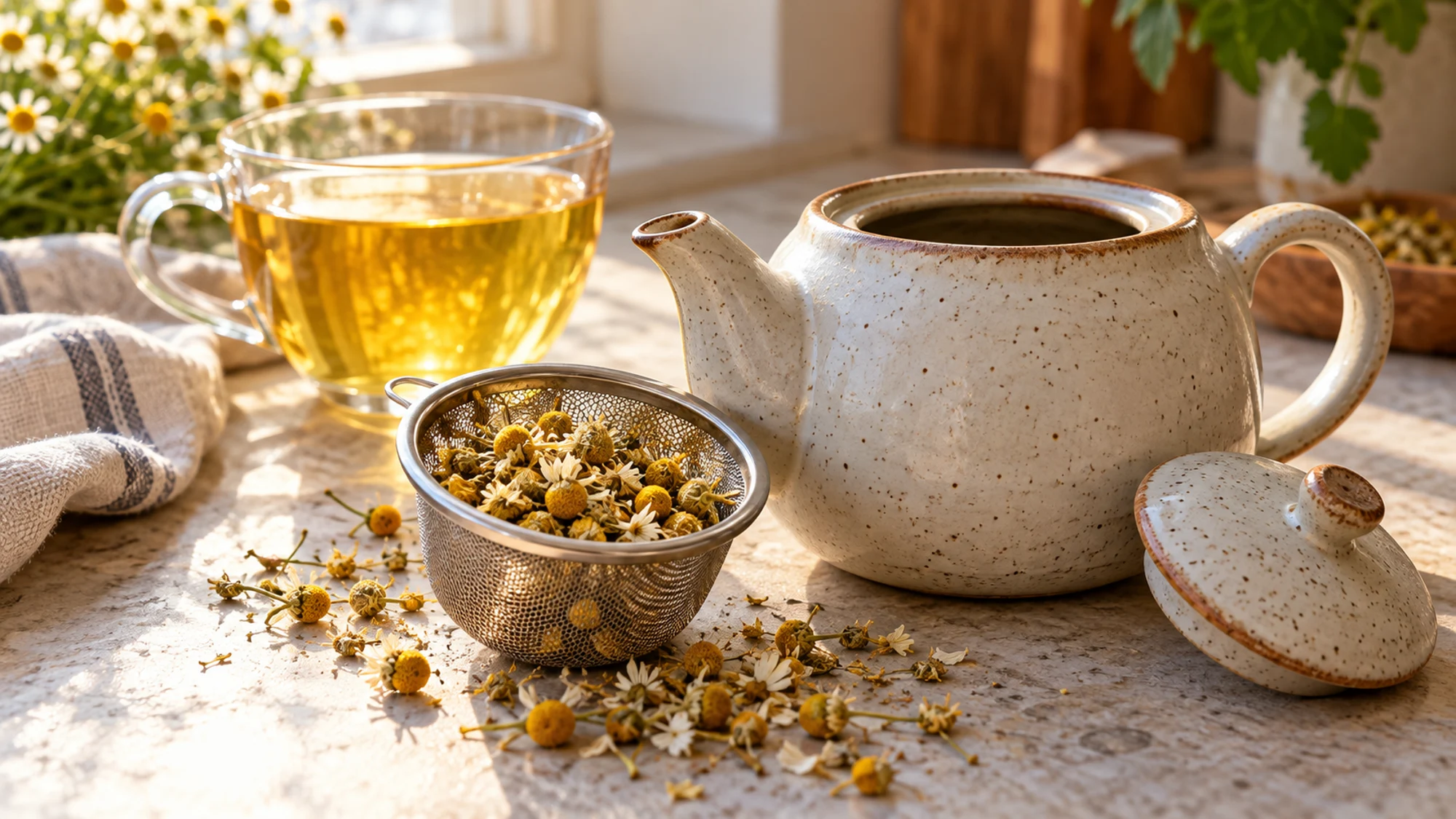
- Use an infuser for loose flowers. Remove the plant material before drinking rather than treating a decorative garnish as necessary.
- Choose a routine you like. Reading quietly with a warm drink may feel pleasant without proving a medicinal effect.
- Keep expectations realistic. Persistent trouble sleeping or anxiety that affects daily life deserves assessment, not progressively stronger tea.
Treat the cup as a drink you enjoy, not a dose you need to escalate. Comfort and clinical effectiveness are different questions.
Who should check before drinking chamomile tea?
According to NCCIH’s safety guidance, food-level use is generally considered likely safe, but allergic reactions can occur. Ragweed or related-plant allergies raise concern; serious reactions are possible.
- Medicines: Ask a pharmacist or clinician about interactions, especially with warfarin or sedatives, before making chamomile a regular habit.
- Pregnancy or breastfeeding: Safety information is limited; get individualized advice rather than assuming herbal means harmless.
- Hormone-sensitive conditions: Discuss chamomile with your clinician, including possible concerns around estrogen-related effects.
- New symptoms: Stop using a product that causes a reaction. Trouble breathing or throat swelling needs urgent medical help.
Keep the package available when asking about safety. A photo of the ingredient panel is more useful than saying “sleepy tea,” especially when a blend contains several plants.
Bottom Line
Chamomile tea benefits are best framed modestly: an appealing caffeine-free drink, with promising but limited research on some sleep outcomes. Enjoy the flavor, check personal risks, and do not use it in place of needed care.