
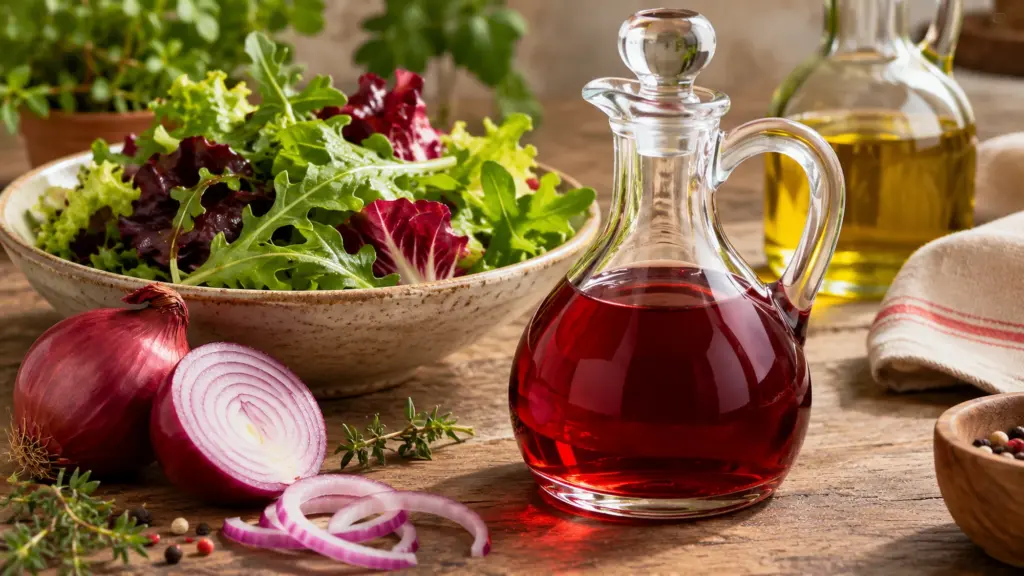
A bowl of beans can taste nicely seasoned yet still feel a little flat. Red wine vinegar brings the sharp, fruity lift that salt alone cannot provide, but a generous pour can quickly become the loudest thing in the bowl.
Red wine vinegar is vinegar made from red wine, with a tart flavor suited to dressings, marinades and savory finishing touches. Use it as an acidic seasoning, not as a direct replacement for drinking wine or an interchangeable ingredient in home-canning recipes.
I’d start with a small addition and taste the food it is seasoning. That simple pause is more useful than hunting for one perfect amount that supposedly works in every salad.
What Red Wine Vinegar Brings to the Bottle
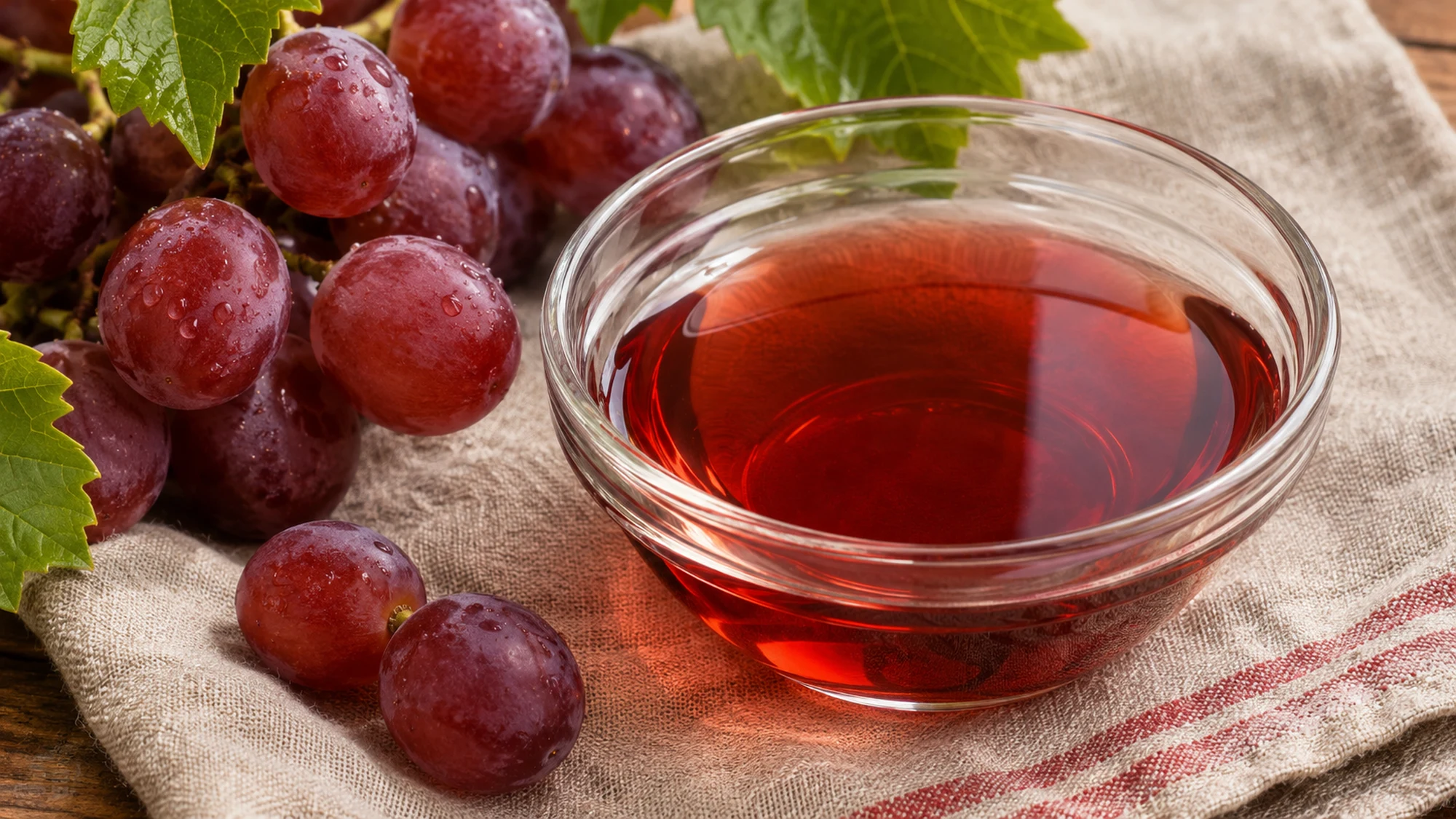
The FDA’s vinegar definitions describe wine vinegar as coming from grape juice through alcoholic fermentation followed by acetous fermentation, which produces its characteristic acidity. It is a different ingredient from the wine at the earlier stage, even though the names share a family resemblance.
Look at the actual label rather than treating all bottles alike. Ingredients, declared acidity and storage directions are the useful details; Pompeian’s product information, for example, identifies dressings, marinades and sauces as everyday uses. A brand’s nutrition panel describes that particular product and serving size, not every vinegar on the shelf.
- Vinegar versus wine: they have different jobs in a dish. Replacing a cup of red wine with a cup of vinegar can overwhelm the result.
- Plain versus flavored: added ingredients change the flavor and may change storage instructions.
- Food versus cleaning products: choose vinegar labeled for culinary use; do not use cleaning vinegar in food.
Use Red Wine Vinegar Where Brightness Helps
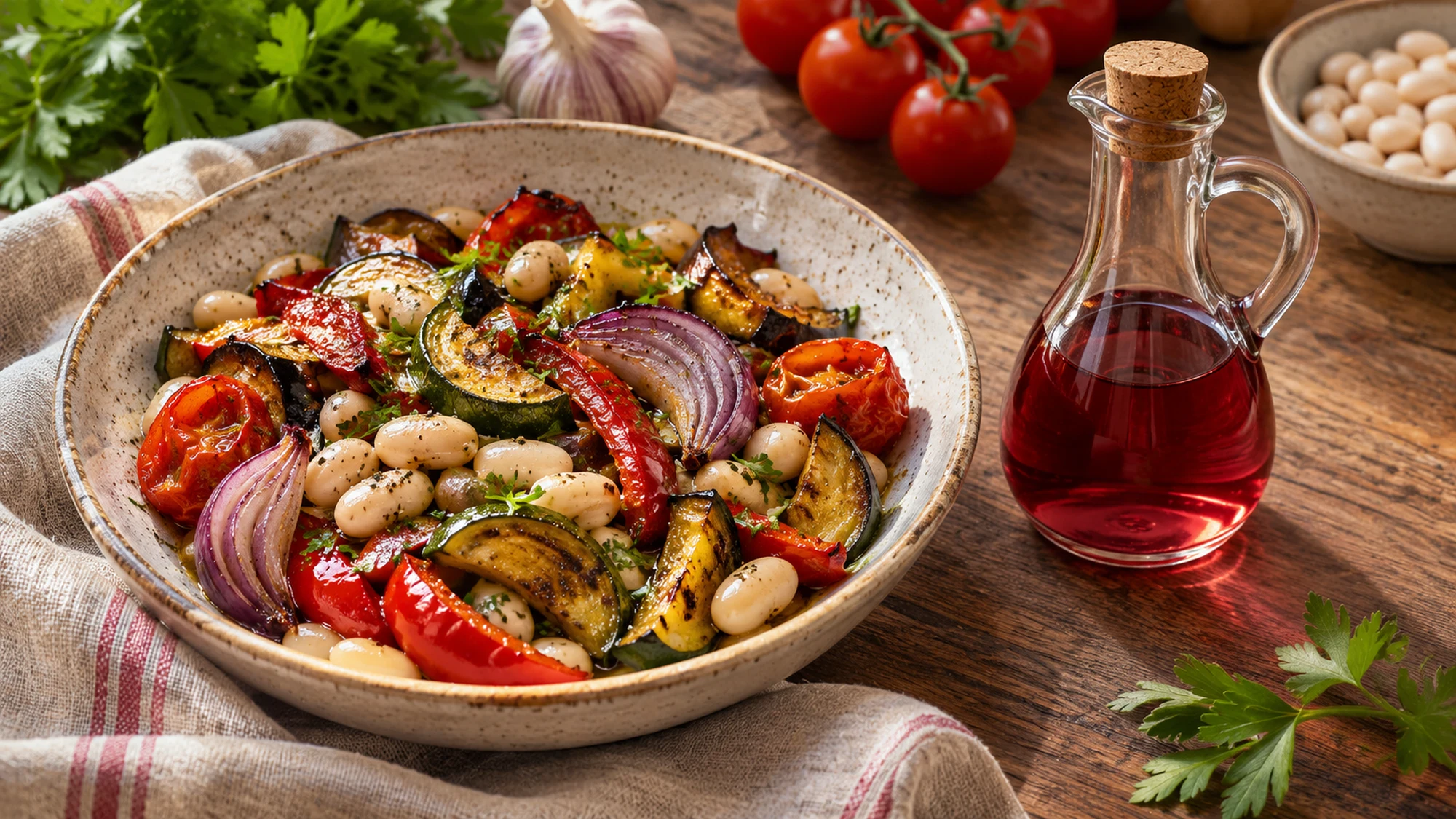
The best starting point is a dish that can welcome tang: crisp cucumbers, tomatoes, cooked beans or roasted vegetables. I like the contrast with earthy beans and browned vegetables because the sour edge keeps the finished bite from feeling heavy.
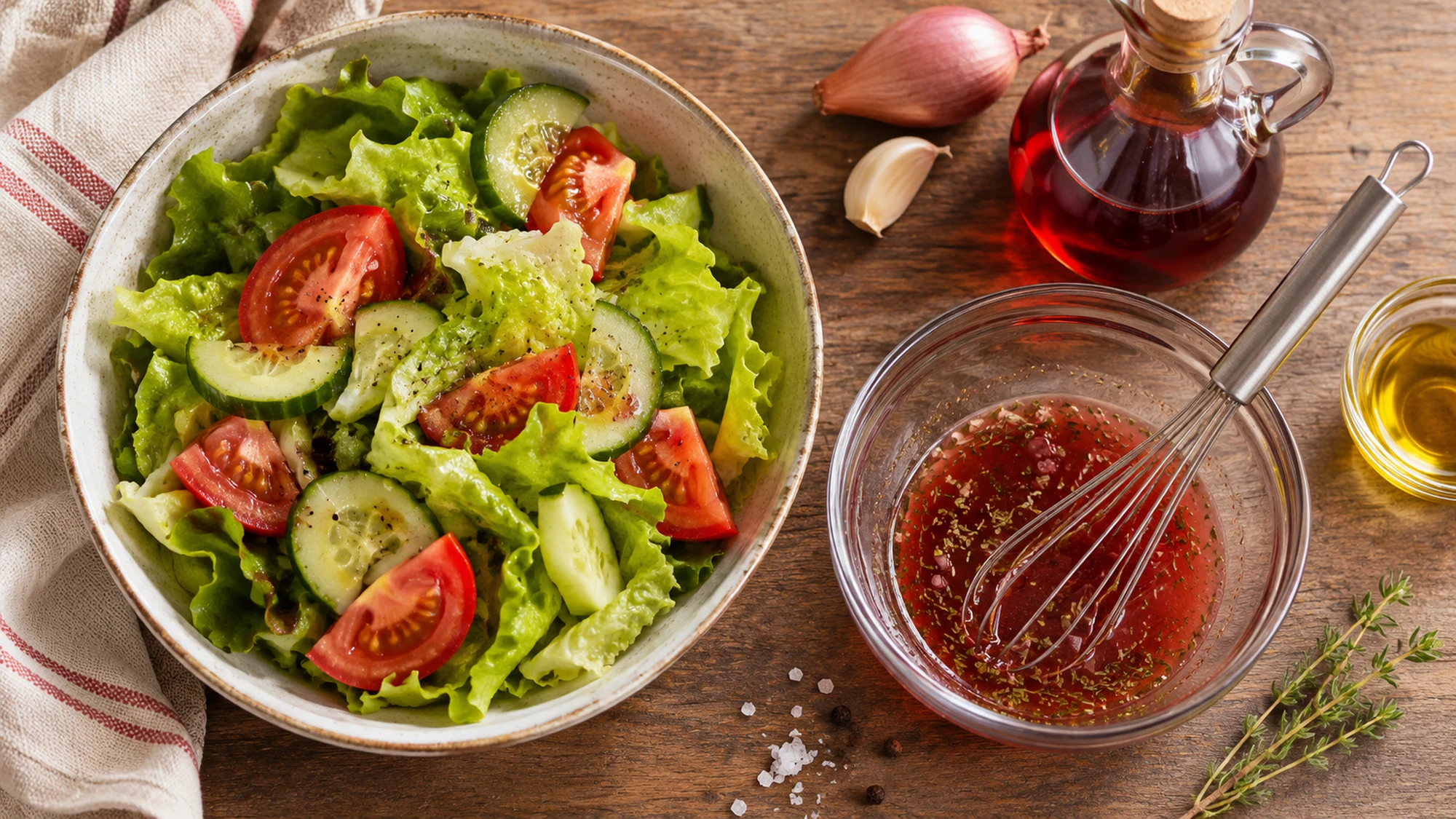
For a complete dressing rather than guesswork, Mississippi State Extension’s red wine vinaigrette combines vinegar with oil, mustard, garlic and herbs. Taste a dressed leaf or a spoonful of the finished food, not only the concentrated dressing; the food changes how strong it seems.
| Use | What it contributes | Practical check |
|---|---|---|
| Green salad | Tang in an oil-based dressing | Taste on a leaf before dressing the bowl |
| Bean or grain salad | Contrast with mild, earthy ingredients | Toss, then taste before adding more |
| Roasted vegetables | A sharp finishing note | Try a small portion first |
| Marinade | Acidity alongside oil and seasonings | Follow a recipe and keep food refrigerated |
Our dense bean salad uses lemon rather than vinegar for its bright dressing. It is a useful example of how acidity fits alongside beans, crunchy vegetables and herbs, without suggesting that every acidic ingredient tastes the same.
Choose a Substitute by the Dish, Not Just the Color
For a salad you will eat promptly, another culinary vinegar can provide sourness, but the aroma and sweetness may change. White wine vinegar keeps the wine-vinegar idea without the red tint; cider vinegar brings a different fruit character. I’d choose according to the other ingredients rather than chase an invisible perfect match.
Balsamic vinegar is not simply a darker version of red wine vinegar. Its sweetness and concentration vary, and a thick balsamic glaze is a particularly different product. Lemon juice offers citrus flavor instead of wine-vinegar character, which can be welcome but should be an intentional change.
- Start with less when the replacement tastes stronger or sweeter; adjust the finished dish rather than assuming an exact ratio.
- Check seasoned products for added sugar or salt before adding the recipe’s other seasonings.
- Keep these tasting adjustments separate from pickling and canning, where acidity is part of safety rather than just flavor.
Store the Bottle Carefully—and Keep Canning Separate
Iowa State Extension’s storage guidance recommends a tightly closed container in a cool, dark place away from heat. Properly stored commercial vinegar can develop changes in color or sediment over time, while flavor quality changes too; follow the manufacturer’s directions and do not dilute the bottle with water.
That pantry advice does not make a homemade dressing shelf-stable. The Extension vinaigrette above should be refrigerated within two hours and used within one week. Its instructions apply to that formula; use the directions for your own recipe when the ingredients differ.
For home canning, use a tested recipe and its specified vinegar, acidity and proportions. The National Center for Home Food Preservation warns against changing vinegar, food or water proportions or using unknown-acidity vinegar. Do not improvise with homemade vinegar or turn a refrigerator salad into a pantry preserve.
Bottom Line
Reach for red wine vinegar when a savory dish needs a clear, tangy lift. Taste on the food, keep substitutions deliberate, store the bottle as directed and follow tested recipes whenever preservation is involved.
Laura Fuentes of MOMables demonstrates a red wine vinaigrette in the video below. Her version includes lemon, honey and Dijon, illustrating a fuller dressing rather than plain vinegar alone.
Pingback: Fire Cider With Ginger, Horseradish and a Savory Kick