
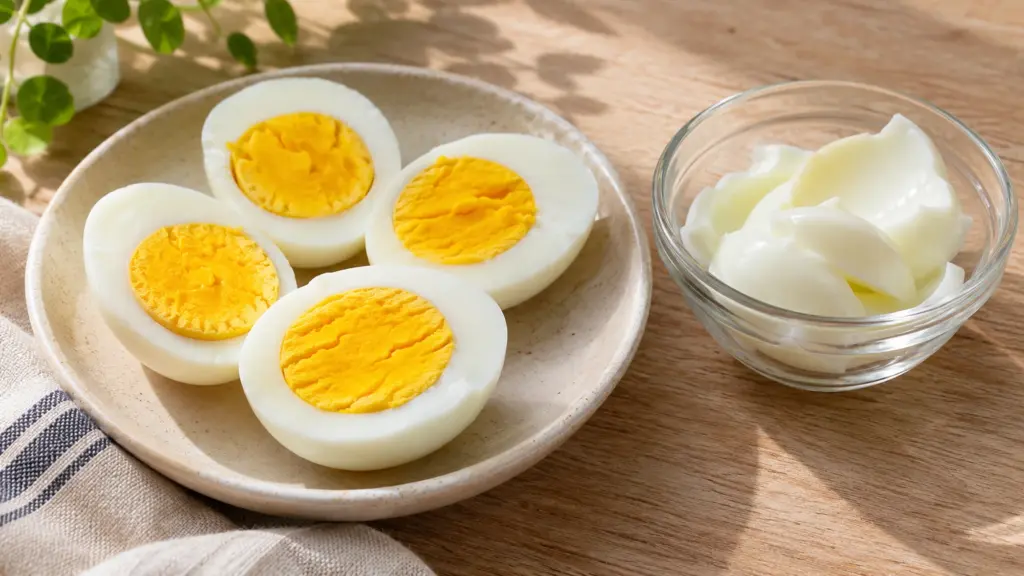
A carton of egg whites and a tub of egg-white powder can look like two versions of the same shortcut. They are related, but the serving sizes are not interchangeable—and neither is simply a whole egg without the color.
Egg albumin nutrition usually refers to egg white, more precisely called albumen. The white of one large egg provides about 3.6 grams of protein, with very little fat. Liquid whites, dried powder and whole eggs need separate comparisons.
I’d start with the form you actually plan to eat, then check the portion. That small step is more useful than deciding that the whitest breakfast automatically wins.

Egg Albumin Nutrition Starts With the Name
The USDA calls the white albumen: the liquid surrounding the yolk, containing more than half of an egg’s total protein. “Albumin” is often used in food searches and ingredient language, but egg white is a mixture, not one purified protein. Ovalbumin is one of its proteins.
This matters when shopping. According to the American Egg Board’s product guide, liquid whites are mostly water, while dried whites have had most moisture removed. A scoop of dry powder and a spoonful of liquid therefore cannot share a nutrition number just because both come from whites.
- Shell egg white: The separated white, with the yolk removed.
- Liquid egg whites: A packaged product; check ingredients, serving size and storage instructions.
- Dried albumen: Egg-white solids or powder, measured and reconstituted according to its package.
Compare the Portion, Not Just the Protein Claim
The USDA protein reference lists 3.6 grams for one large raw egg white and 6.28 grams for one large raw whole egg. These reference portions describe the ingredient before cooking, not a recommendation to eat it raw. Two whites supply approximately 7.2 grams by simple multiplication.
| Ingredient | Comparison portion | Protein |
|---|---|---|
| Fresh egg white | 1 large white | About 3.6 g |
| Fresh egg whites | 2 large whites | About 7.2 g |
| Whole fresh egg | 1 large egg | About 6.3 g |
| Liquid or dried packaged whites | Package serving | Use that product’s label |
Whites contribute protein without much fat, but removing the yolk also removes part of the egg’s protein and changes its overall composition. Our guide to protein in a whole egg explains how egg size changes the count. I prefer keeping that distinction visible rather than presenting whites as a universal upgrade.
Make Whites Work in an Actual Meal
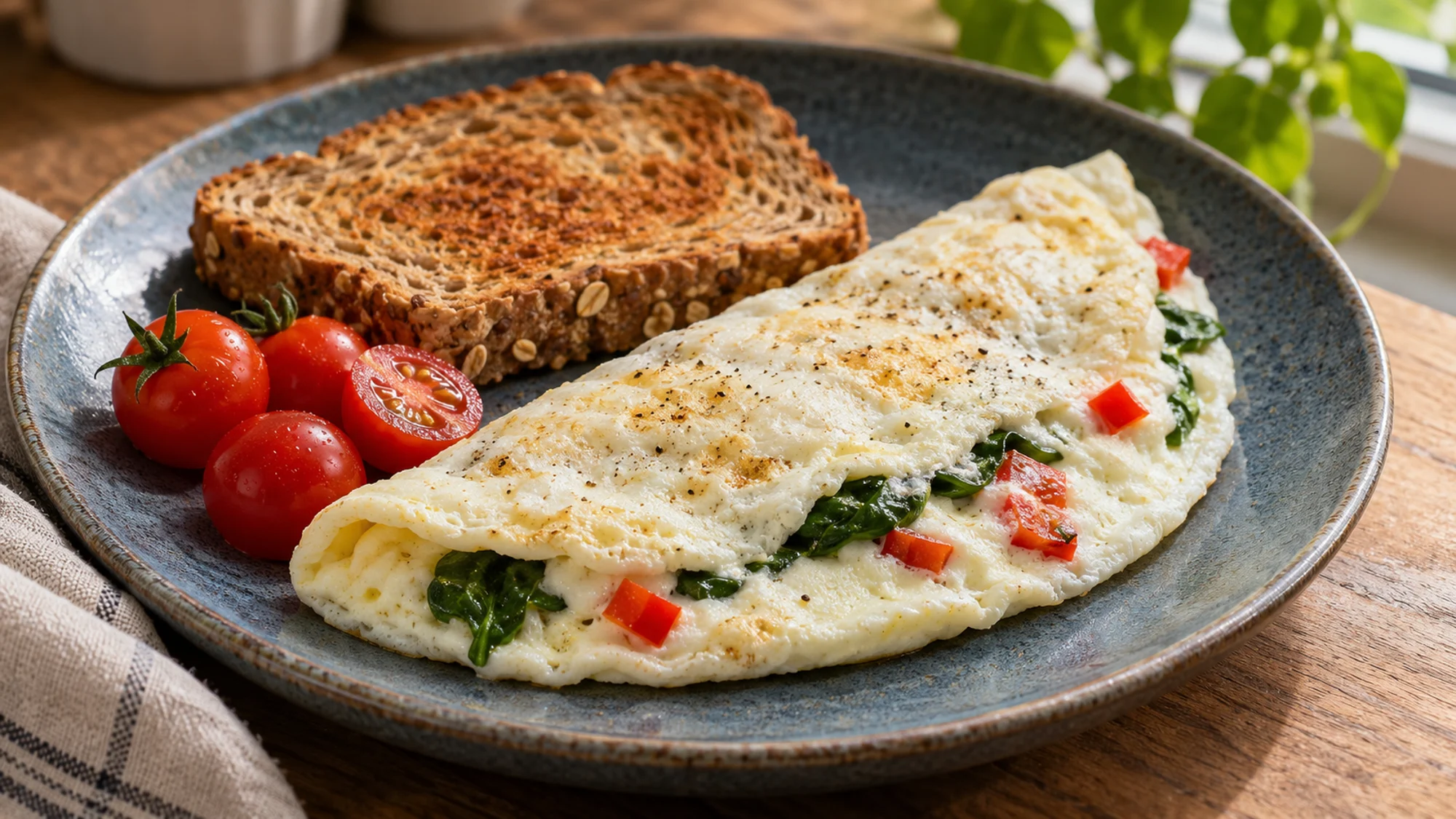
An egg-white omelet can be a useful choice when you want whites specifically, but the rest of the plate still matters. Vegetables add texture; toast, potatoes or fruit make it a different meal from a bowl of plain whites. Count added cheese, oil and other ingredients when comparing finished dishes.
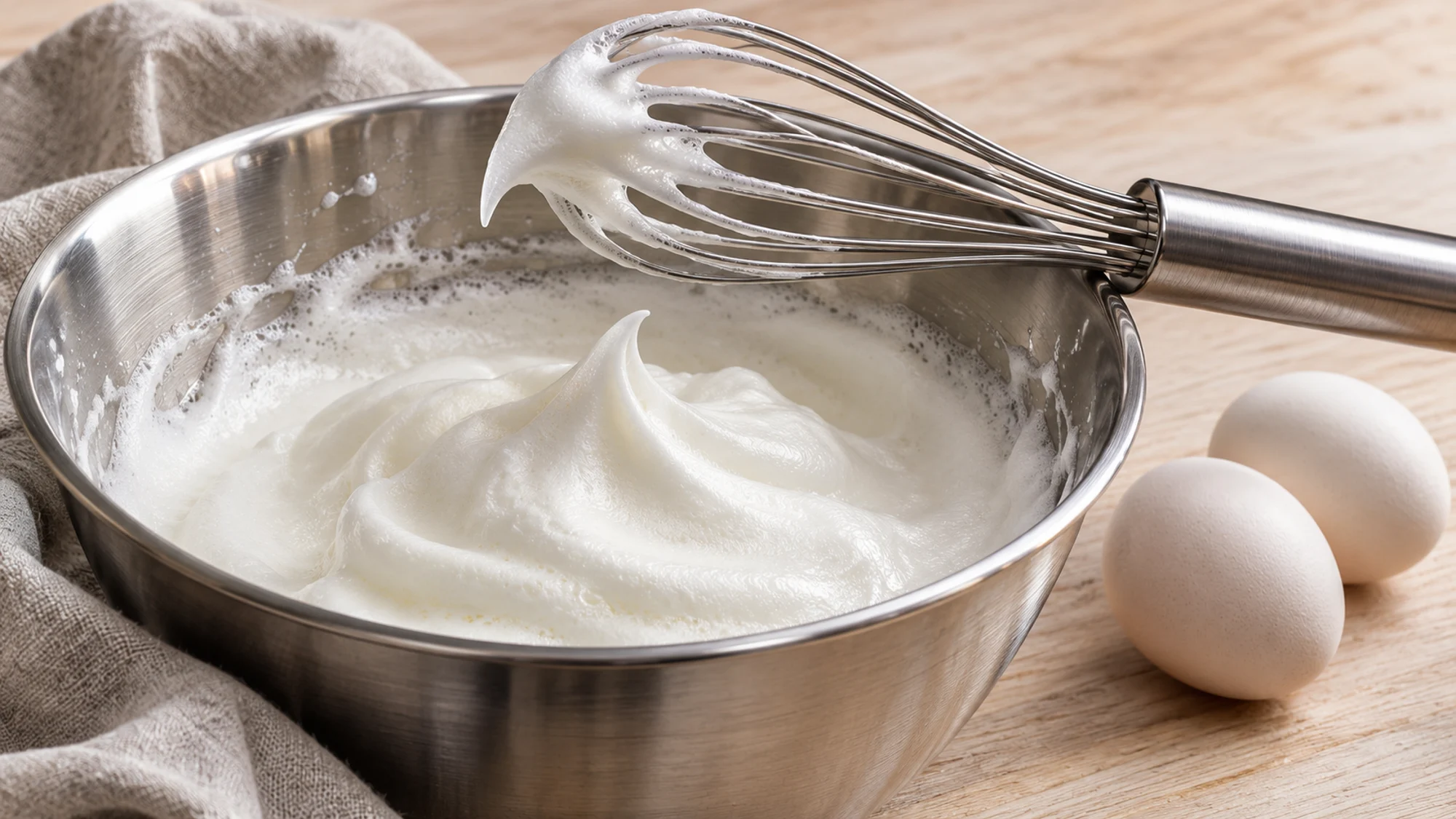
In baking, protein grams cannot tell you whether a substitution will work. Whites can form foams and help set a structure; yolks bring different properties. I’d use a recipe written for whites rather than swapping them freely into a custard and hoping for the same silky result.
- For breakfast, choose plain liquid whites if convenient, then measure the stated serving rather than estimating from the carton.
- For whipping, check whether the particular packaged white is recommended for that use; products differ.
- For powder, follow the manufacturer’s water ratio and use its nutrition panel. A dry scoop is not a standardized egg.
- For a mixed whole-egg-and-white dish, calculate each component separately.
Cook the Whites, and Keep Allergy Advice Separate
Raw whites are not a nutritional shortcut. In a 1999 study of ten healthy volunteers, more of the protein from a raw egg test meal escaped digestion and absorption in the small intestine than from its cooked counterpart. This small, controlled study supports cooking; it does not predict your exact absorption or establish a muscle-building advantage for a particular breakfast.
FDA guidance recommends cooking whites and yolks until firm, keeping eggs refrigerated at 40°F or below, and using pasteurized eggs or egg products for dishes served raw or undercooked. Follow a carton’s handling instructions even when it says pasteurized. A package is not permission to ignore refrigeration.
- Keep raw egg away from ready-to-eat foods, and wash hands and utensils after handling it.
- Cook egg dishes to 160°F; use a thermometer rather than judging a casserole only by its browned top.
- If you have an egg allergy, whites are not an alternative to eggs. FARE advises avoiding both whites and yolks; discuss any baked-egg trial with your allergist.
Bottom Line
Treat egg albumin nutrition as a question about the specific white you are using: fresh, liquid or dried. Check the portion, cook and store it safely, and choose whites, whole eggs or a mixture for your needs and the dish—not because one deserves a better-food label.
The related video below discusses eggs, protein and exercise. It is from British Lion Eggs, an egg-industry source; it is broader context, not evidence that egg whites are superior to whole eggs.