
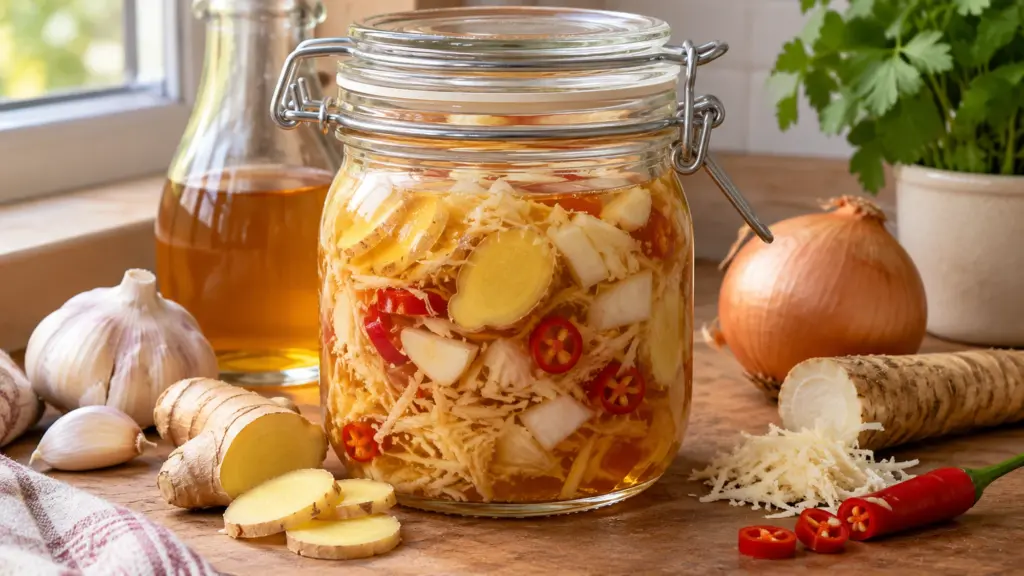
A spoonful of something sharp can wake up a bowl of beans more effectively than another shake of salt. Fire cider takes that idea in a pungent direction: cider vinegar picks up the bite of ginger, horseradish, onion, garlic and chili, then becomes a seasoning you can use a little at a time.
This fire cider is a refrigerated culinary vinegar infusion, not a medicine or a shelf-stable preserve. Keep the aromatics covered with commercial 5% acidity cider vinegar, allow several weeks for flavor, then strain and use sparingly in food.
I’d start with a small jar rather than a countertop collection. Horseradish and chili can become quite assertive, and tasting a little in a finished dressing tells you more than taking an undiluted shot. The point here is a bright, savory condiment with a warm finish.
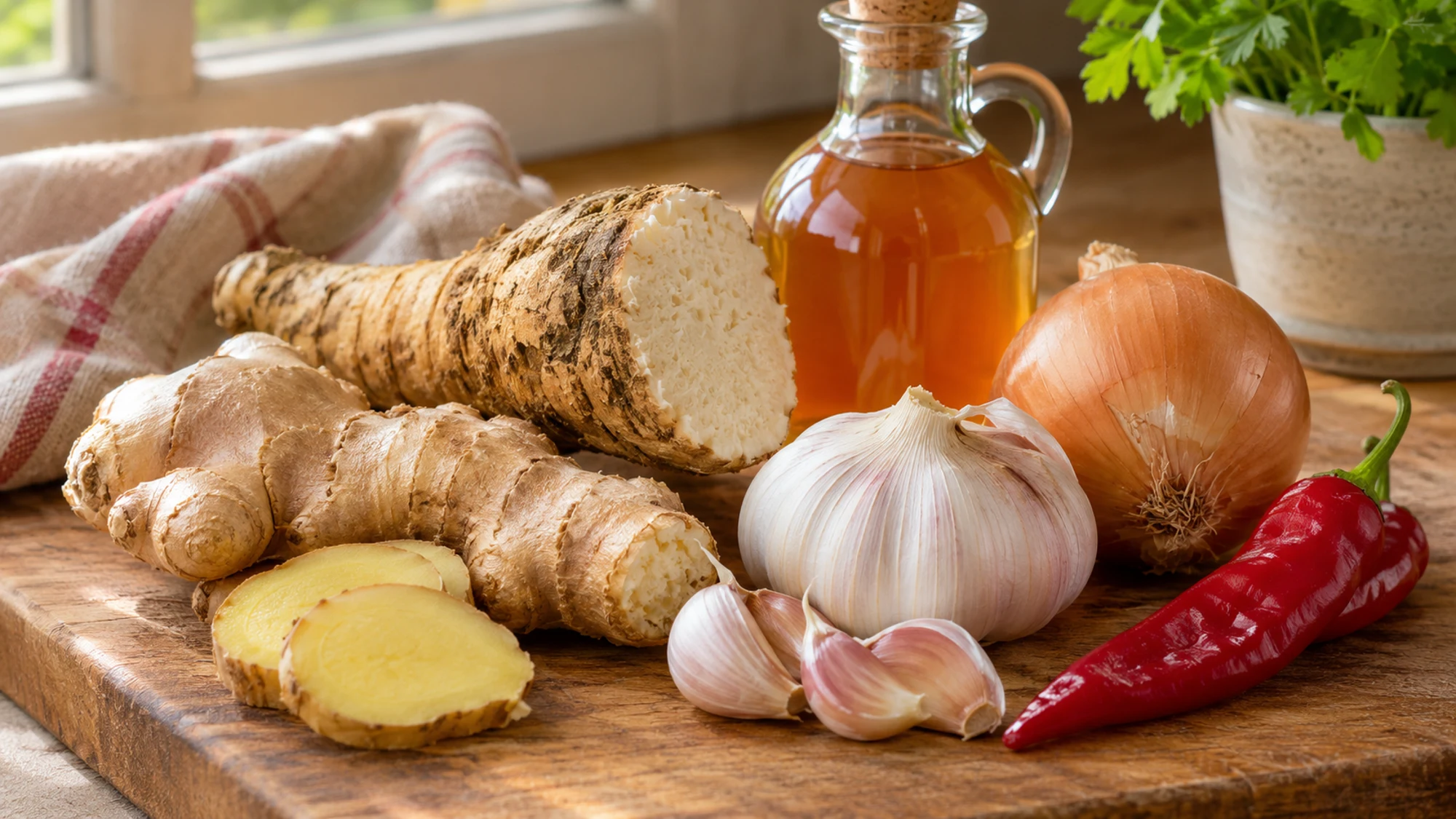
Serving Suggestions for Fire Cider
Use the strained vinegar where you want both acidity and a little heat. Its garlic and onion notes make it particularly suited to savory food. Add a small amount to a portion of the meal first, taste, then decide whether the whole bowl needs the same treatment.
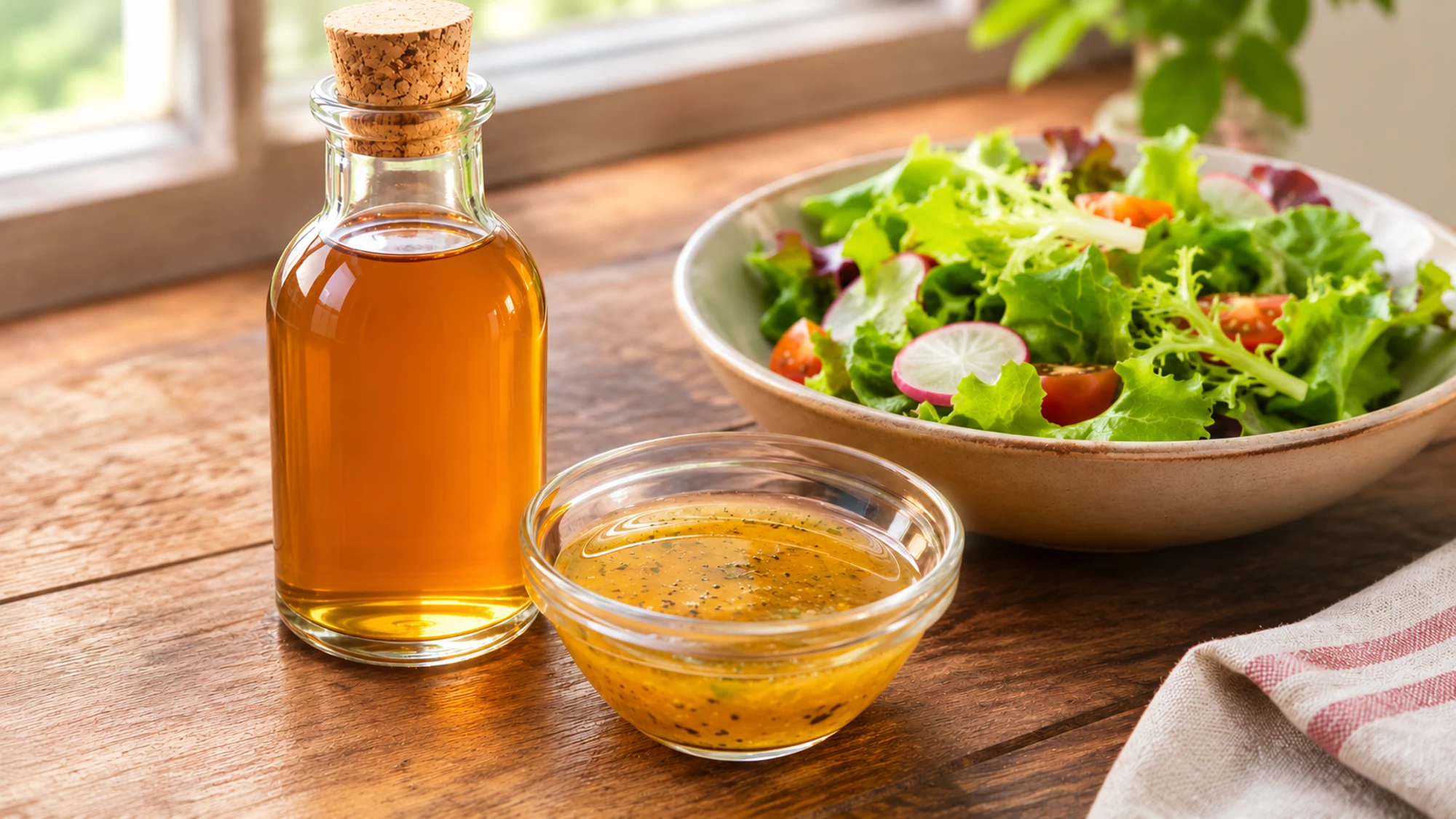
- Whisk a little into olive oil for a dressing, then taste it on a salad leaf rather than straight from the spoon. Salt and sweetness can be adjusted separately.
- Stir a small splash into cooked beans or lentils just before serving. Begin cautiously so the vinegar supports the dish instead of becoming its only flavor.
- Use it in a marinade that stays refrigerated, following a recipe suited to the protein or vegetables you are preparing.
- Sweeten only the serving you need if you prefer a gentler finish. Keeping the main bottle unsweetened leaves more flexibility for savory uses.
Our red wine vinegar guide explores the same seasoning principle with a different vinegar. Fire cider is not interchangeable in every recipe: the extra aromatics bring heat and a noticeable garlic character, and neither flavored vinegar should replace the specified acid in a canning formula.
Taste fire cider in the food it will season. A restrained splash can be useful; a large pour is much harder to take back.
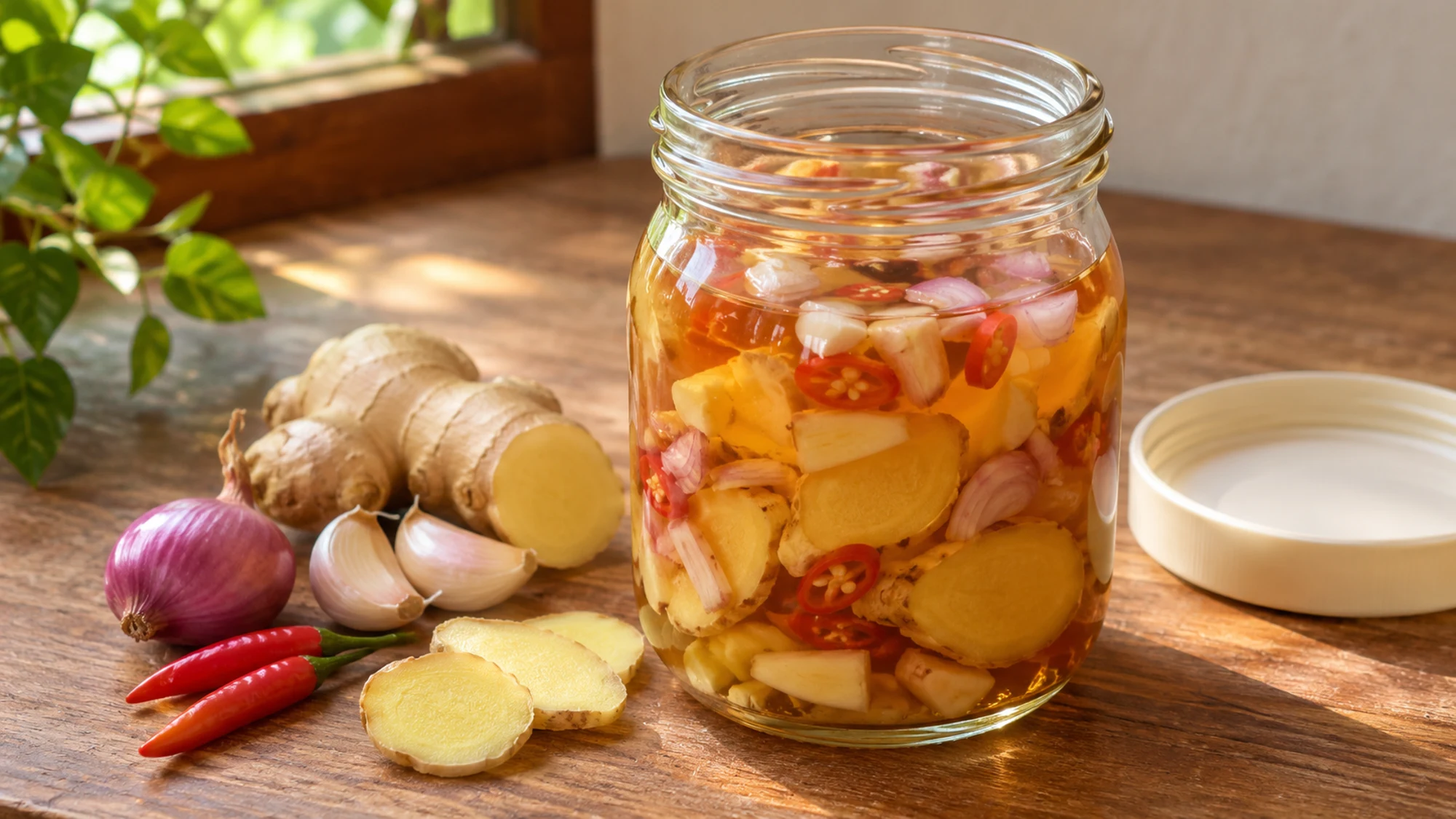
Fire Cider Variations and Ingredient Choices
Fresh ginger gives a different impression from horseradish, and chili adds another kind of heat. I prefer keeping those roles clear before adding more spices. Choose sound roots and vegetables, wash them carefully, and use a clean jar with a nonreactive lid.
| Choice | Flavor effect | Practical limit |
|---|---|---|
| Less chili | A gentler pepper finish | Keep the vinegar undiluted |
| No honey | Sharper, more savory | Sweeten a serving later if wanted |
| Sliced ginger | Clear ginger bite | Keep pieces submerged |
| Extra horseradish | More pungent aroma | Start modestly; it can dominate |
The Oregon State Extension guidance on flavored vinegars emphasizes clean equipment, commercial vinegar and careful storage. This version stays refrigerated during infusion and after straining. Do not dilute the jar with water to soften the flavor; adjust the portion in a dressing instead.
- Use a food-safe nonmetallic lid, or a suitable protective barrier that prevents vinegar touching a reactive metal lid.
- Leave enough space to move the ingredients gently, while ensuring that the vinegar covers them. A loosely filled jar is easier to manage than a tightly packed one.
- Label the preparation date and keep the container closed between checks. Use clean utensils each time.
- Discard the entire batch without tasting if mold, bubbling, sliminess or other spoilage appears. Straining does not rescue a spoiled infusion.
Vary the heat, not the storage assumptions. A homemade flavored vinegar still needs clean handling, a clear date and refrigeration.
Health Benefits: Keep the Claims in Proportion
Fire cider is often described as a cold remedy, but a recipe should not turn that tradition into a treatment promise. Cleveland Clinic’s review explains that evidence does not establish fire cider as a way to prevent or cure illness. Enjoy the flavor if it suits you; there is no need to drink it as a daily health ritual.
- The ingredients do not make the finished vinegar a substitute for vegetables, meals or medical care. Most of the solid ingredients are strained out.
- Undiluted acidic vinegar and hot peppers can be unpleasant or irritating. Use a small amount in food rather than treating discomfort as evidence that it is working.
- If adding honey, do not give the honey-containing preparation to infants younger than 12 months. Honey remains an added sweetener, not a reason to overlook that restriction.
The accompanying Mountain Rose Herbs video demonstrates a related infusion with additional spices and different preparation choices. It is included for culinary context, not as support for wellness claims. Follow the measured card below and its refrigerated handling rather than combining storage directions from several versions.
The useful benefit is flavor: a small amount adds tang and pungency to ordinary meals. Claims about immunity or detoxification are not part of this recipe.
Bottom Line
Make fire cider as a carefully handled seasoning, let the aromatics infuse, and taste the strained vinegar in a small portion of food. Keep it refrigerated and let flavor—not a health promise—be the reason to use it.
Fire Cider Recipe

Ingredients
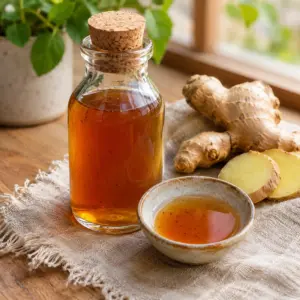
- 0.25 cup fresh ginger scrubbed and thinly sliced
- 0.25 cup fresh horseradish root peeled and coarsely grated
- 0.5 small onion chopped
- 4 garlic cloves peeled and lightly crushed
- 1 small red chili sliced; use less for gentler heat
- 2 cups commercial apple cider vinegar labeled 5% acidity; more if needed to cover
- honey to taste, stirred into individual servings only
Equipment
- Clean 1-quart glass jar
- Food-safe nonreactive lid
- Knife and cutting board
- Grater
- Fine strainer and clean cheesecloth
- Clean storage bottle
Instructions
- Wash and rinse the jar, lid, strainer and bottle thoroughly. Sterilize heat-safe glass containers according to their manufacturer’s instructions. Wash the produce under running water and dry; prepare the ginger, horseradish, onion, garlic and chili with clean utensils.
- Put the prepared aromatics into the jar without packing them tightly. Pour in the commercial cider vinegar, ensuring all the ingredients are covered. Add a little more of the same vinegar if necessary; do not add water.
- Close with a food-safe nonreactive lid, label the date and refrigerate. Gently swirl the closed jar daily. Infuse for 3–4 weeks, checking that the ingredients remain covered. Discard without tasting if mold, unexpected bubbling, sliminess or another sign of spoilage appears.
- Strain through a fine strainer lined with clean cheesecloth into the clean bottle. Close, date and refrigerate. The yield is approximately 1 1/2 cups, depending on how much liquid the solids retain.
- Use small amounts in dressings or other food, tasting the finished dish before adding more. If desired, sweeten only the portion being served with a little honey. Keep the main bottle refrigerated; this is not a canning or room-temperature storage recipe.