
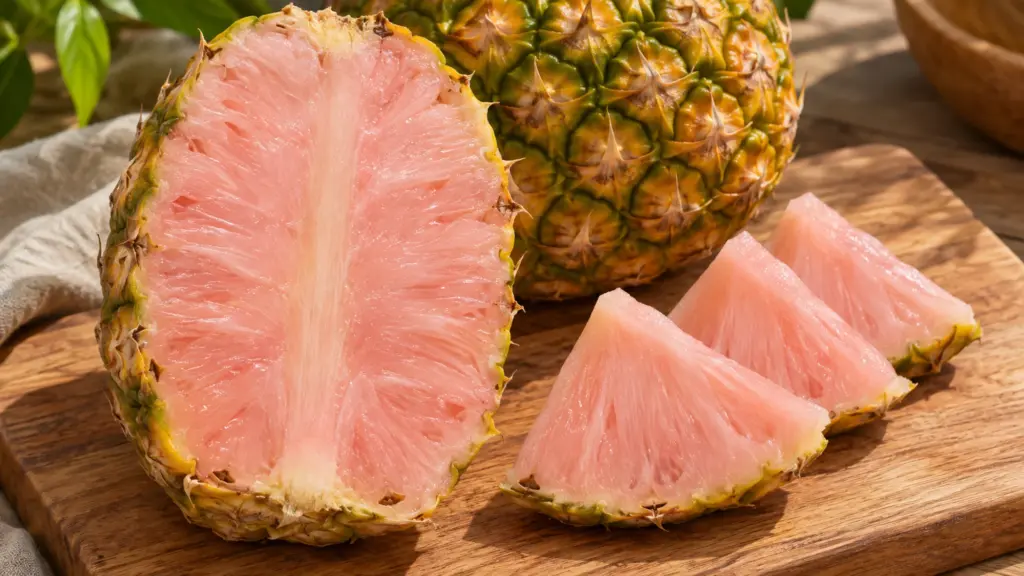
Cut through the familiar pineapple rind and a blush-pink center can feel like a party trick. Pink pineapple is real fruit, not yellow pineapple soaked in coloring. The useful questions are why it is pink, how its flavor compares and whether the novelty fits what you plan to serve.
Pink pineapple sold as Pinkglow is a genetically engineered pineapple with more of the pigment lycopene retained in its flesh. It is not dyed. Enjoy it as a fruit with a distinctive appearance, not as a proven nutritional upgrade over yellow pineapple.
Why Pink Pineapple Is Pink
In its 2016 consultation announcement, the FDA explained that the variety produces less of certain enzymes that convert pink lycopene into yellow beta-carotene. Lycopene also supplies familiar red or pink color in tomatoes and watermelon.
This is a bioengineered variety, so describing it simply as a naturally occurring pink pineapple would leave out an important part of the story. The pigment occurs in food naturally; the plant was deliberately developed to change how much remains in its flesh. The exterior can still look recognizably like pineapple.
- Pink flesh: The color is in the fruit itself, not an added syrup or surface dye.
- Brand versus description: Pinkglow is the branded fruit commonly associated with the term pink pineapple.
- No crown in the box: The producer says it removes and replants the crowns before shipping; a missing leafy top is not, by itself, a quality problem.
How It Compares With Yellow Pineapple
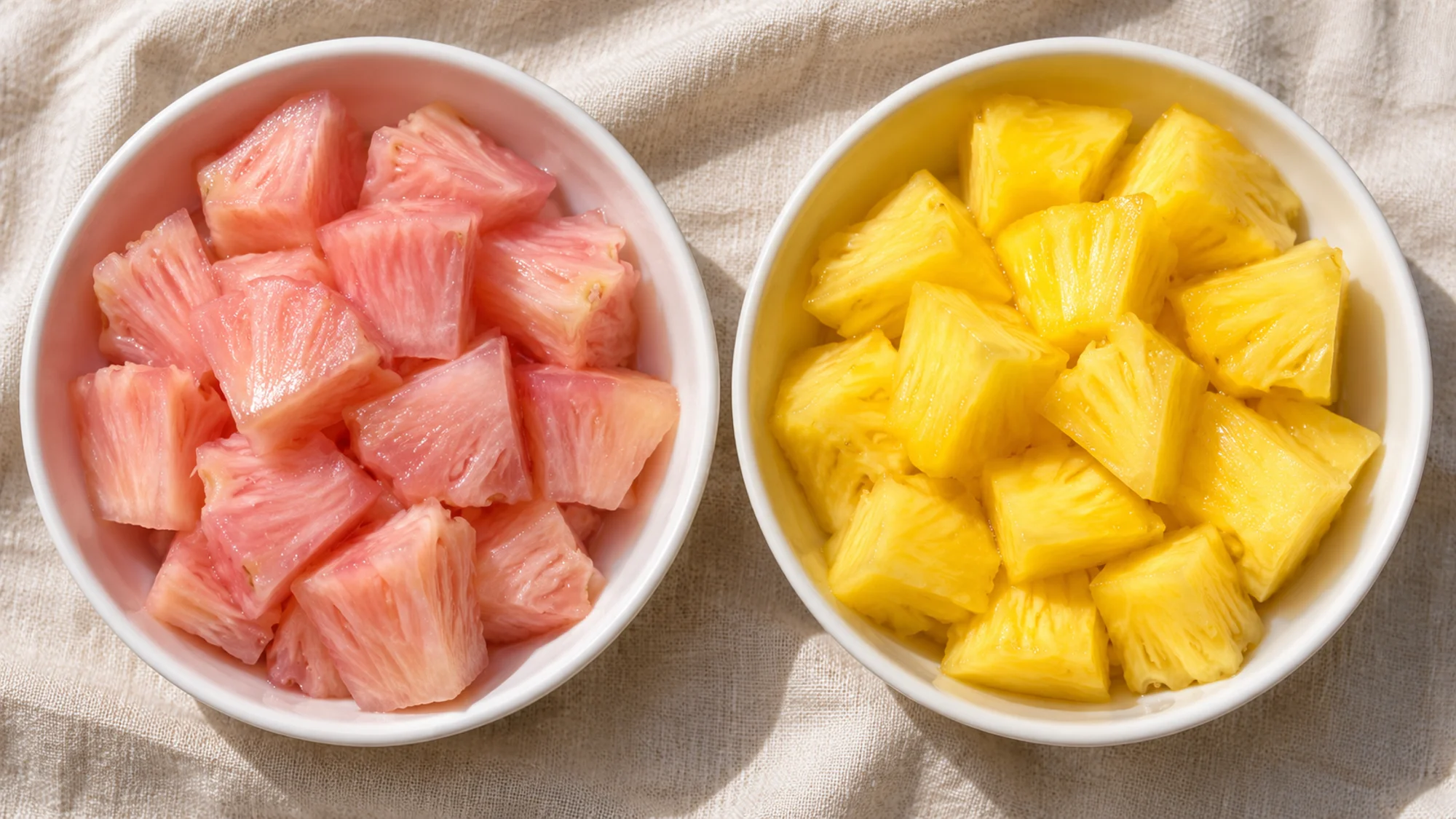
The producer markets Pinkglow as sweet and lower in acidity, while individual fruit and personal preferences still vary. I’d taste a plain piece before adding lime, sugar or a strong dressing. Otherwise you learn more about the topping than the pineapple.
| Question | Pink pineapple | Practical choice |
|---|---|---|
| What stands out? | Blush-pink flesh | Serve visibly sliced when color is the point |
| Is it always better tasting? | Sweetness and acidity still involve preference | Compare plain pieces, not heavily dressed fruit |
| Is it nutritionally superior? | More lycopene does not prove better health outcomes | Choose either as part of a varied diet |
| Can ordinary pineapple work? | Many serving ideas do not depend on pink color | Use yellow pineapple when it better fits your budget |
My preference would be a simple fruit plate for a first purchase. The color gets its moment, and you can decide whether the flavor is worth buying again.
Is Pink Pineapple Safe to Eat?
The FDA concluded its consultation with no unresolved safety or regulatory questions; it also explicitly notes that consultation is not synonymous with FDA approval. Health Canada’s assessment found no greater human-health risk than conventional pineapple varieties.
Health Canada also found no nutritional difference apart from the intended increase in lycopene. That is not evidence that eating pink pineapple prevents disease. Nor does a sweeter impression mean it is suitable for someone with a pineapple allergy; the assessment did not find an allergy-related change.
- Treat it as pineapple, not a supplement or treatment.
- If pineapple causes you an allergic reaction, do not use a pink variety as a workaround.
- A reassuring assessment of the variety does not remove ordinary produce-handling needs. Damaged or poorly stored cut fruit still requires caution.
Cut, Serve and Store It Without Fuss
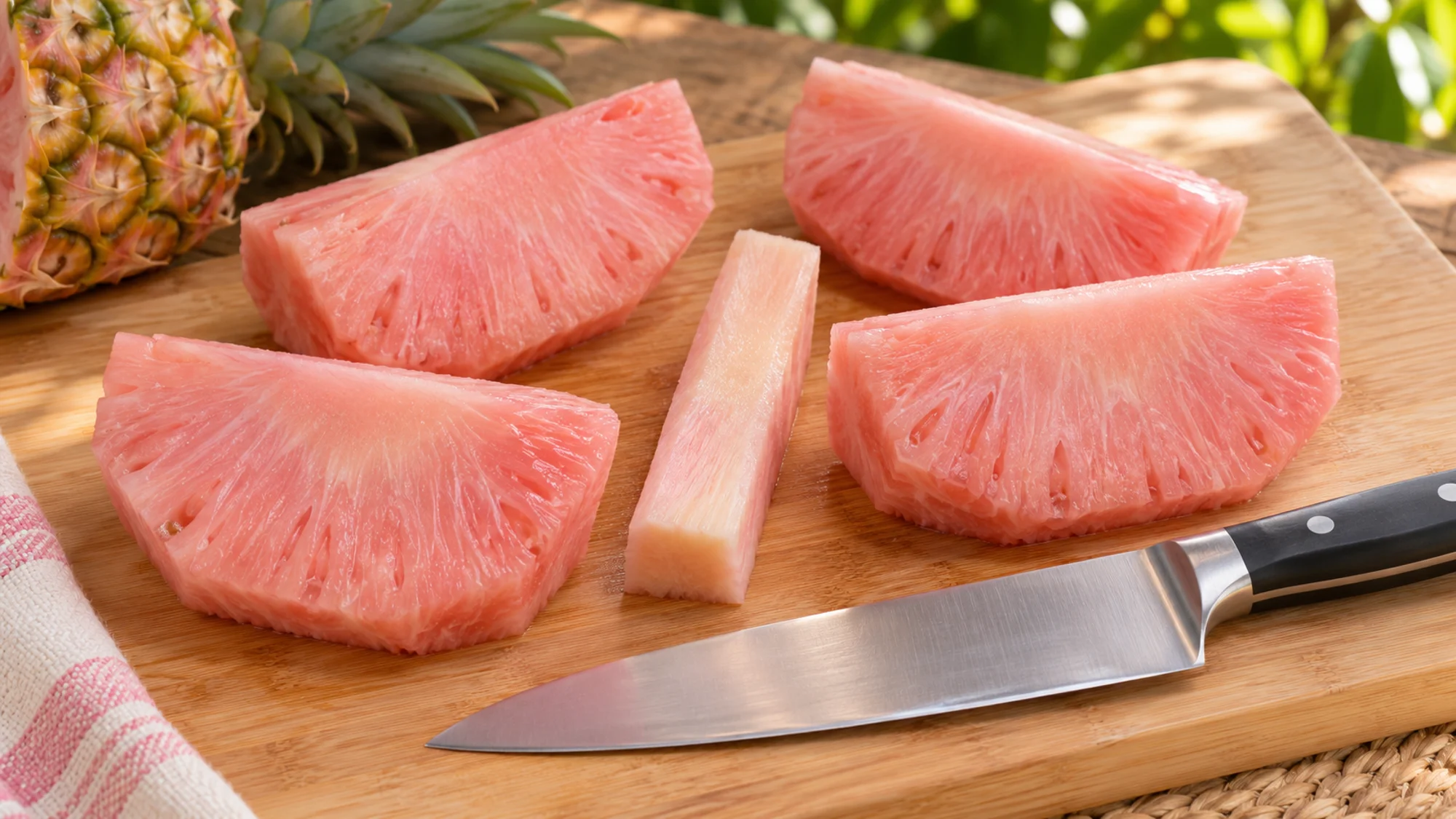
Use a stable cutting board and a sharp knife, and wash the rind under running water before cutting so the knife does not carry surface dirt inward. Follow FDA produce guidance: wash hands and utensils, avoid soap on produce and keep ready-to-eat fruit away from raw meat.
- Trim a thin slice from the top and base to make a stable end. Stand the fruit upright and cut the rind away in manageable strips.
- Remove remaining tough eyes, quarter lengthwise and trim the firmer central core if you prefer tender pieces. Cut into spears or bite-sized chunks.
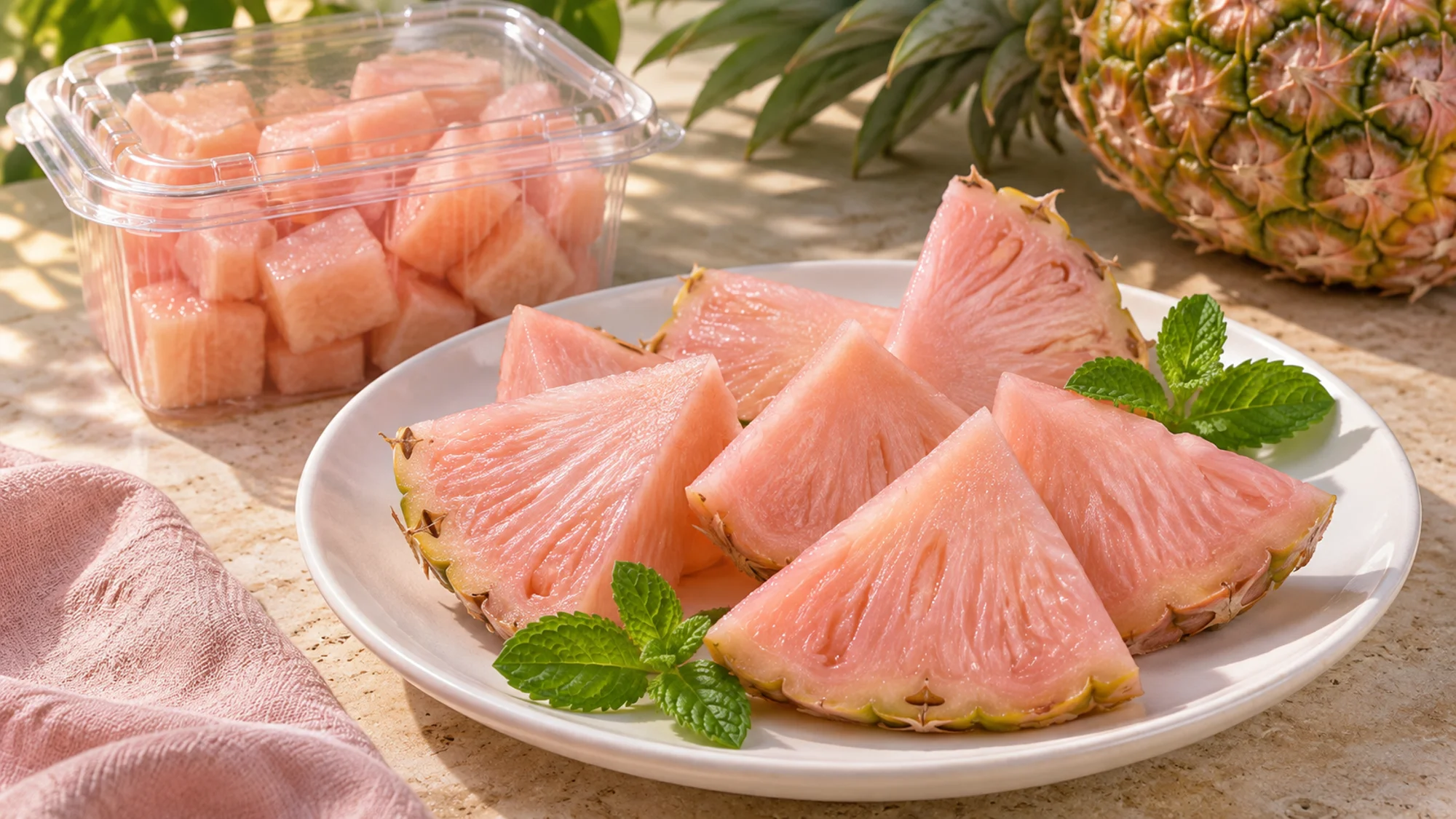
- Serve plain, with a little mint, or over yogurt. For a different base, add fresh pieces at serving time to our make-ahead chia pudding.
- Refrigerate cut fruit promptly in a covered container at 40°F (4°C) or below. Follow the seller’s storage instructions and any packaged use-by date.
- Do not leave cut fruit out for more than two hours, or one hour above 90°F (32°C), following FDA cold-storage guidance.
I’d keep the serving plan modest: slice what you will enjoy and put the rest away before the gathering gets busy. The pale color can disappear among dark berries or a thick sauce, so an uncluttered plate makes more sense than adding ingredients just for decoration.
Bottom Line
Pink pineapple is a genuine pink-fleshed, bioengineered variety—not dyed fruit and not a necessary superfood purchase. Choose it when you want to enjoy its appearance and flavor, handle it like other cut pineapple, and let ordinary yellow pineapple remain an equally reasonable option.