

A glass of iced tea should taste like tea, not melted ice with a tan. The useful trick in how to make iced tea is to brew a concentrated base briefly, remove the bags, and then add cold water. You get that familiar amber color and brisk black-tea flavor without leaving the leaves to steep while the pitcher cools.

For a small pitcher, use four regular black tea bags and four cups of water, divided between hot brewing water and cold dilution water. Steep for four minutes, sweeten while warm if you like, then refrigerate before serving over fresh ice.
I’d start with an ordinary black tea rather than a heavily flavored blend. It makes the balance easier to adjust, and the optional lemon adds a bright citrus edge without turning the pitcher into lemonade. Choose regular single-cup bags, not family-size or gallon bags; those contain different amounts of tea.
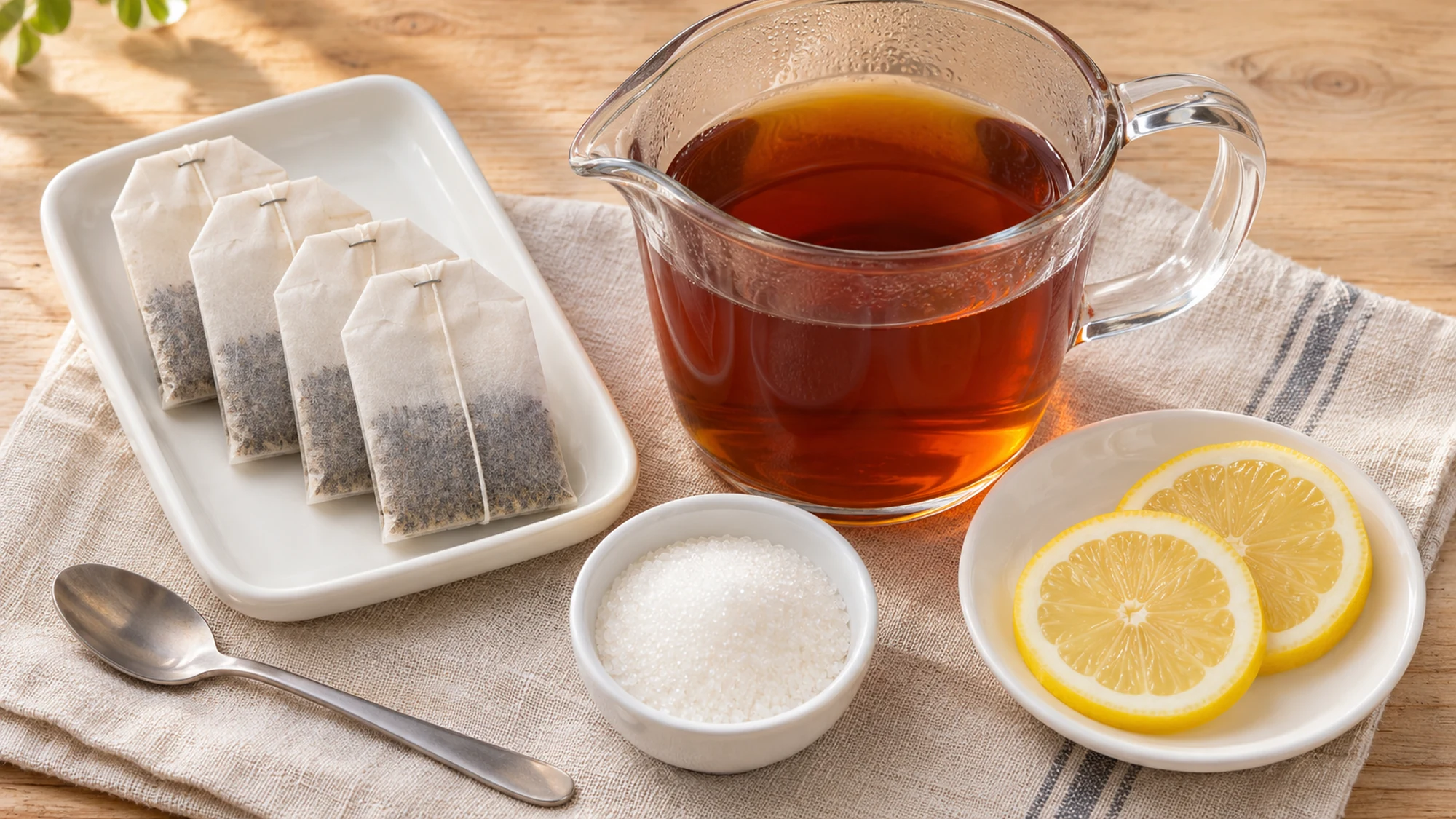
Serving Suggestions for Homemade Iced Tea
Serve this tea thoroughly chilled, with ice in individual glasses rather than floating in the storage pitcher. That keeps the remaining batch from gradually becoming weaker. The recipe makes about four cups before serving ice, enough for four modest glasses or two generous tumblers.
It fits naturally beside sandwiches, a crisp chopped salad, or lemon-seasoned grilled salmon. I prefer to put lemon slices on the table separately so everyone can choose how much citrus they want. A little squeeze changes the drink more noticeably than a decorative slice.
- Use a clean pitcher suitable for hot liquids. Ordinary thin glass can crack when boiling water hits it.
- Keep the prepared tea covered in the refrigerator until serving. Wash the pitcher between batches rather than topping yesterday’s tea up with a fresh brew.
- For a picnic, carry the tea cold in an insulated container and pour only what you need. Keep the extra ice separate.
Chill the tea first, then add fresh ice at serving time. Your last glass should have as much character as the first.

How to Make Iced Tea Your Way
Sweetness and strength are separate decisions. If the tea tastes too concentrated after chilling, add a small splash of cold water and taste again. If it tastes weak, try an additional regular bag in the next batch rather than a much longer steep; extra brewing time can make the flavor more astringent.
Use this comparison to choose a direction without changing everything at once. Lipton’s iced-tea brewing guide also uses a short hot infusion followed by dilution. Its bag size and pitcher yield differ, so follow the quantities in the card below.
| Your preference | What to change | What to expect |
|---|---|---|
| Unsweetened | Leave out the optional sugar | A brisk, tea-forward glass |
| Lightly sweet | Dissolve the optional sugar while warm | Even sweetness without gritty crystals |
| Lemony | Add a lemon slice or squeeze to each glass | A sharper, citrus finish |
| Less caffeine | Choose decaffeinated black tea bags | Similar preparation; not necessarily caffeine-free |
If you want to sweeten a glass after chilling, use a little prepared simple syrup instead of dry sugar. Granules can linger stubbornly on the bottom; the spoon should not have to do a full workout.
Change one element at a time. Adjusting dilution, sweetness, and lemon separately makes it easier to find the balance you enjoy.

Health Benefits and Practical Trade-offs
Unsweetened black tea contributes fluid without added sugar, and the plain brewed tea used here has negligible calories. That is a practical reason to keep a pitcher handy if you enjoy its flavor. It is not a detox drink, a meal replacement, or a promise of weight loss.
Regular black tea contains caffeine, with amounts that vary by product and preparation. If it affects your sleep or makes you feel jittery, choose decaffeinated tea or a smaller serving. The FDA’s caffeine guidance explains why personal sensitivity matters.
- The optional two tablespoons of sugar add about six grams of sugar per serving when the pitcher is divided into four.
- Lemon is mainly a flavor choice here. A decorative slice does not turn the drink into a significant source of nutrients.
- Hot brewing and clean equipment matter. Refrigerate the diluted tea promptly rather than leaving it on a sunny windowsill.
The most useful benefit is control: you choose the sweetness, portion, and tea. Enjoy the drink for those everyday qualities rather than a dramatic health claim.
Bottom Line
Good iced tea needs a clear sequence, not complicated equipment: a brief hot steep, measured dilution, and enough chilling time. Give the tea bags a timer instead of an afternoon, keep the pitcher cold, and let lemon and sweetness remain personal choices. That leaves you with a straightforward drink worth making again.
How to Make Iced Tea Recipe


Ingredients
- 4 regular black tea bags single-cup size, not family-size or gallon bags
- 2 cups water freshly boiled
- 2 cups cold water
- 2 tbsp granulated sugar optional; about 25 g
- ice cubes for serving
- lemon slices optional, for serving
Equipment
- Kettle or small saucepan
- Heatproof pitcher or large measuring jug
- Measuring cups and spoon
- Timer
- Covered refrigerator pitcher
Instructions
- Place the tea bags in a clean heatproof pitcher or measuring jug rated for boiling liquids. Bring 2 cups water to a full boil.
- Pour the boiling water over the bags and steep for 4 minutes. Lift out the bags gently and let them drain without squeezing. Stir in the optional sugar while the tea is still warm until completely dissolved.
- Stir in 2 cups cold water. Transfer to a clean covered refrigerator pitcher if needed and refrigerate promptly until cold, about 1 hour; chilling time varies with the container and refrigerator.
- Taste the chilled tea and add a small splash of cold water if you prefer a lighter brew. Divide among four ice-filled glasses and add optional lemon slices. Keep the remaining tea covered and refrigerated.