
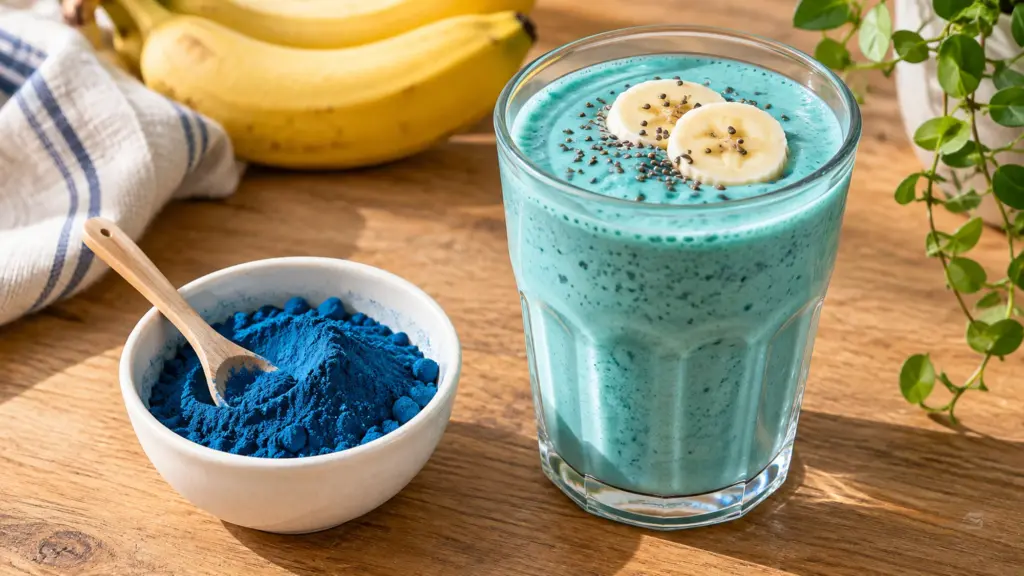
A smoothie the color of a swimming pool raises a fair question: what made it blue? Often the answer is blue spirulina, a pigment-rich extract sold for coloring food. Its bright appearance is the interesting part; it is not proof that the drink delivers extraordinary nutrition.
Blue spirulina usually means a blue extract rich in phycocyanin, rather than the whole green spirulina powder. Use it as an optional food-coloring ingredient, follow the product directions, and do not transfer health claims about whole spirulina to a small spoonful of extract.
What Blue Spirulina Actually Is
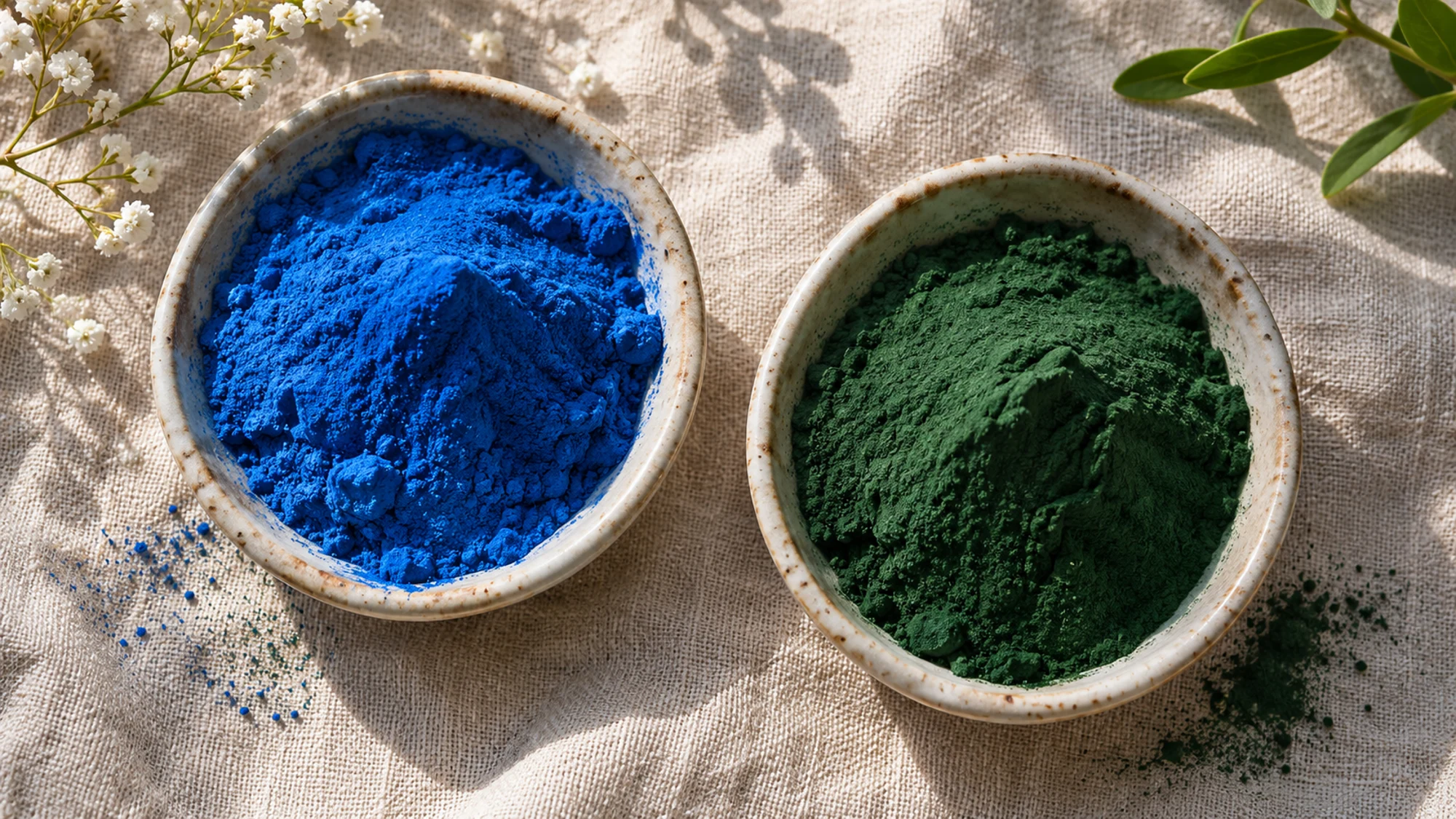
Spirulina is the common name used for certain edible cyanobacteria, often called blue-green algae. The blue pigment is phycocyanin. An FDA ingredient notice identifies a phycocyanin-enriched water extract from Arthrospira separately from the whole material.
That distinction matters in the shopping aisle. I’d read the ingredient list before comparing colors or prices: one package may contain an extract, another whole spirulina, and another a mixture. The front-label phrase alone cannot tell you the concentration, serving size or other ingredients.
| Product | What to expect | What to check |
|---|---|---|
| Blue spirulina extract | Blue coloring from phycocyanin-rich extract | Food-use instructions and added ingredients |
| Whole spirulina powder | Green powder containing more of the original material | Its own serving size and nutrition panel |
| Blue smoothie blend | A mixture that may include fruit powders or sweeteners | The complete ingredient list, not just the color |
Getting a Clearer Blue in the Kitchen
The base of the food affects the shade you see. A pale banana-and-milk mixture gives the blue less competing color than a dark berry smoothie. I prefer starting with a small portion of the finished base, so a color experiment does not take over the whole blender.
- Choose a food-grade product intended for your use and follow its labeled amount; different extracts are not equally concentrated.
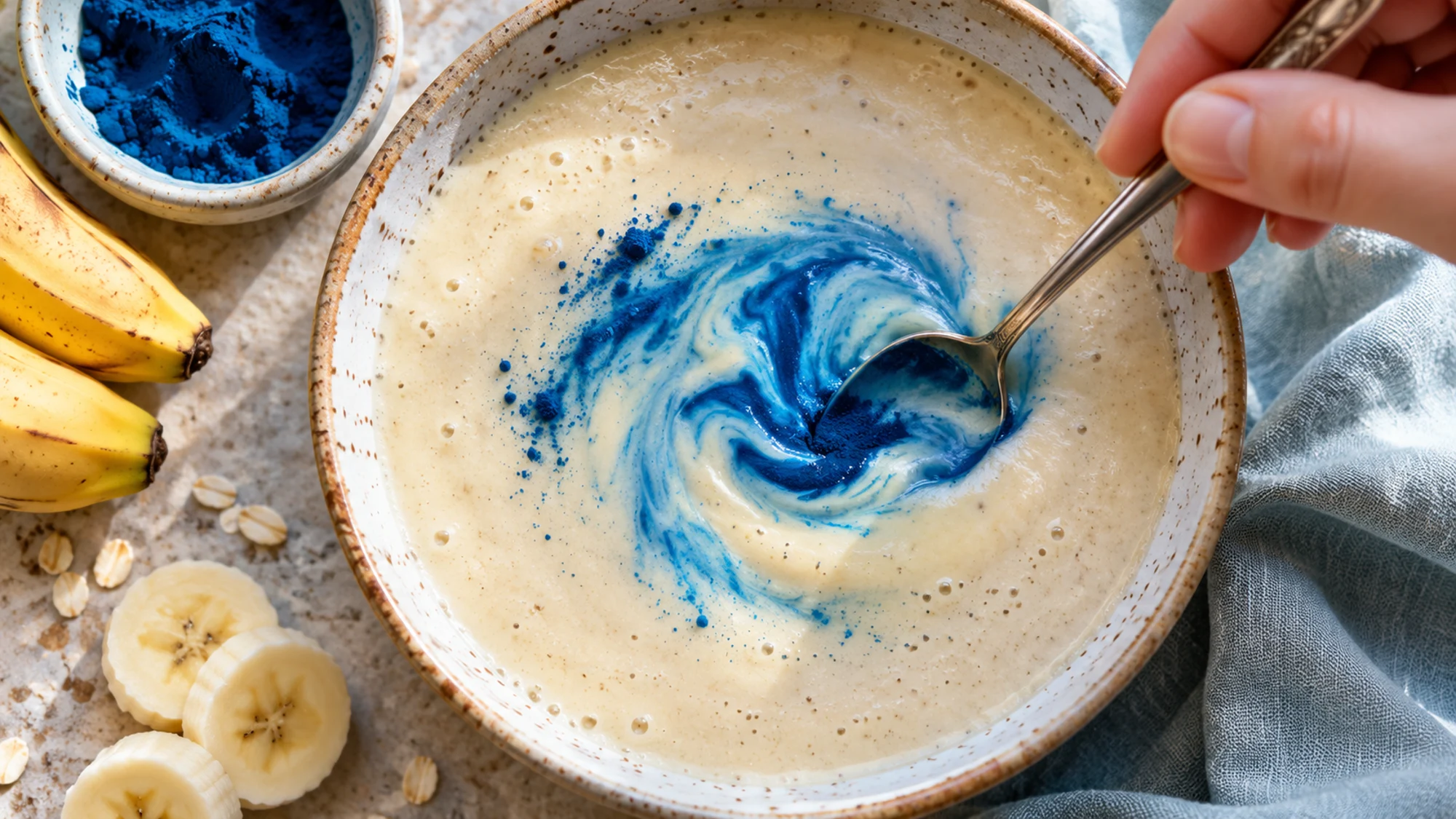
- Mix the powder thoroughly into a small amount of the base before incorporating it into the rest, using the product’s preparation instructions.
- Start with a pale base when a clean blue is the goal. Added greens, cocoa or strongly colored fruit change the visual result.
- Taste the finished food, too. A pretty shade is not a reason to keep adding powder beyond the label’s directions.
Make the food taste good first, then think about color. A blue smoothie can still be an ordinary banana smoothie, and that is perfectly fine.
Why Heat and Acidity Matter
Blue spirulina is not a universal baking dye. Food-color producer EXBERRY explains that phycocyanin needs protection from high temperatures and acid. Specialized commercial formulations can behave differently from the simple powder in a home pantry.
- Cold smoothies: A practical starting place because the mixture does not go through an oven or simmer.
- Frosting or a cooled topping: Consider a product whose directions support that use; do not assume the same color will survive baking.
- Lemon-heavy drinks: Test a small finished portion first. Acidity can affect the color.
- Storage: Keep the powder according to its package instructions, with a clean, dry scoop. Judge the finished food’s storage needs by all its ingredients.
For a straightforward culinary example, the Canada Agriculture and Food Museum uses blue spirulina in a fruit smoothie. That illustrates a food application, not a medical benefit. You can also keep breakfast entirely uncolored; our chia pudding guide focuses on texture rather than a bright finish.
Keep Health Claims and Product Quality Separate
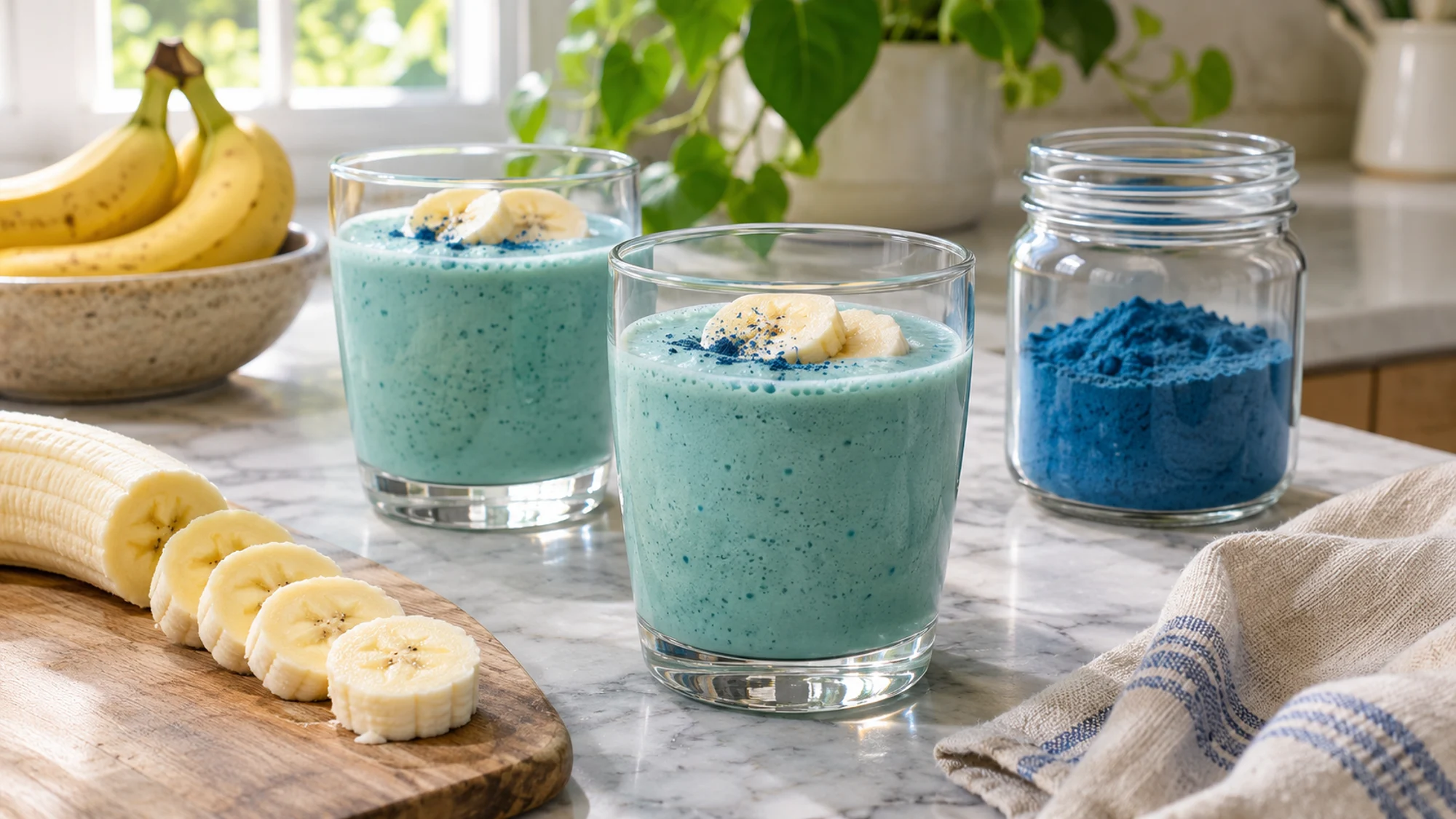
A vivid blue hue cannot establish a meaningful protein dose, a vitamin contribution or a health outcome. Check the actual serving on the label instead of borrowing figures for whole spirulina. Laboratory research on a pigment also does not show that a colored drink will detox the body, treat a condition or replace a balanced meal.
The FDA’s blue-green algae guidance emphasizes appropriate manufacturing and contamination testing. Its examples include AFA products, which are not identical to every spirulina extract; this is a reason to examine sourcing, not to assume all blue powders are contaminated.
- Buy from a supplier that identifies the ingredient and provides meaningful batch testing information, rather than relying on a wellness slogan.
- Check current recall information and follow the directions for use. Color, smell and taste cannot rule out contaminants.
- If considering an algae supplement during pregnancy or nursing, for a child, or with a chronic medical condition, ask the appropriate healthcare professional first. A food-coloring experiment is not a reason to start a supplement regimen.
Bottom Line
Choose blue spirulina for the color it can bring to a suitable food, not for a promise it cannot demonstrate. Verify what is in the package, begin with a pale, cool base and keep the rest of the meal’s flavor and nutrition in perspective.