
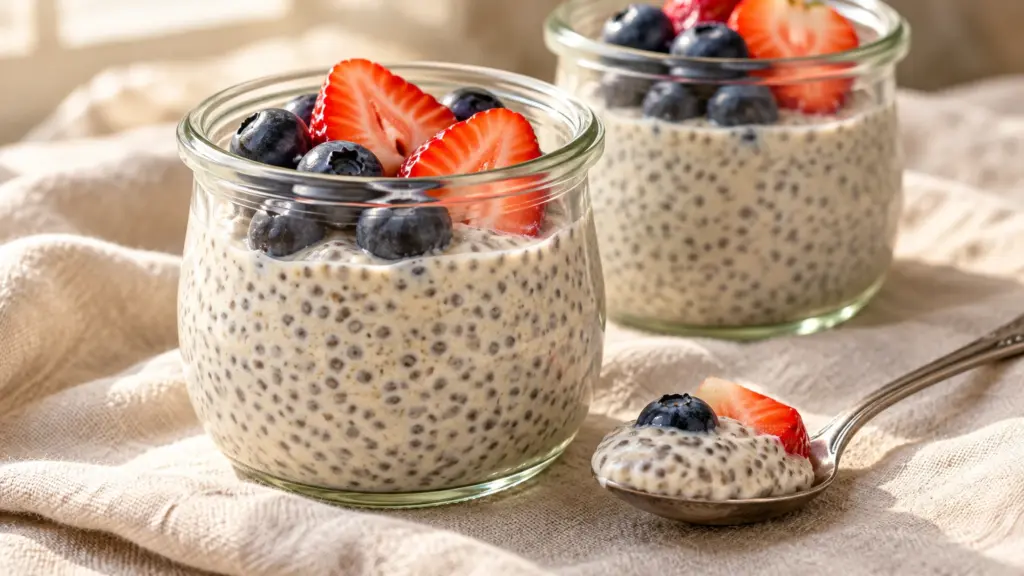
A jar that looks perfectly mixed at bedtime can still hide a solid layer of chia at the bottom. If you are learning how to make chia pudding, the most helpful habit is not adding more seeds. It is returning for a second stir while the mixture is still loose.
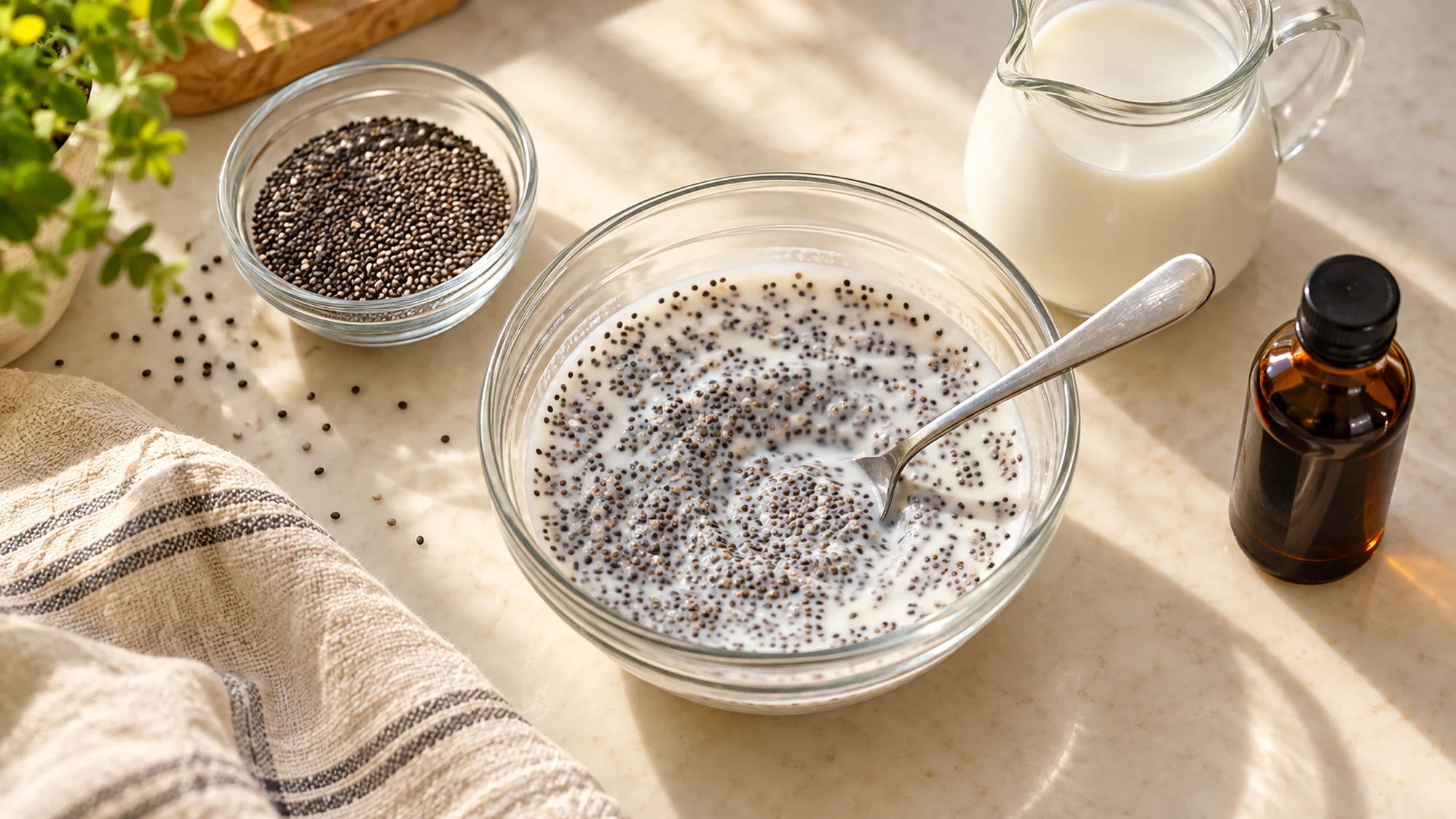
Whisk whole chia seeds into milk, sweeten lightly and stir again after 10 minutes. Chill for at least four hours, then check the texture before adding fruit. That brief second stir helps the seeds thicken evenly instead of settling into a stubborn clump.
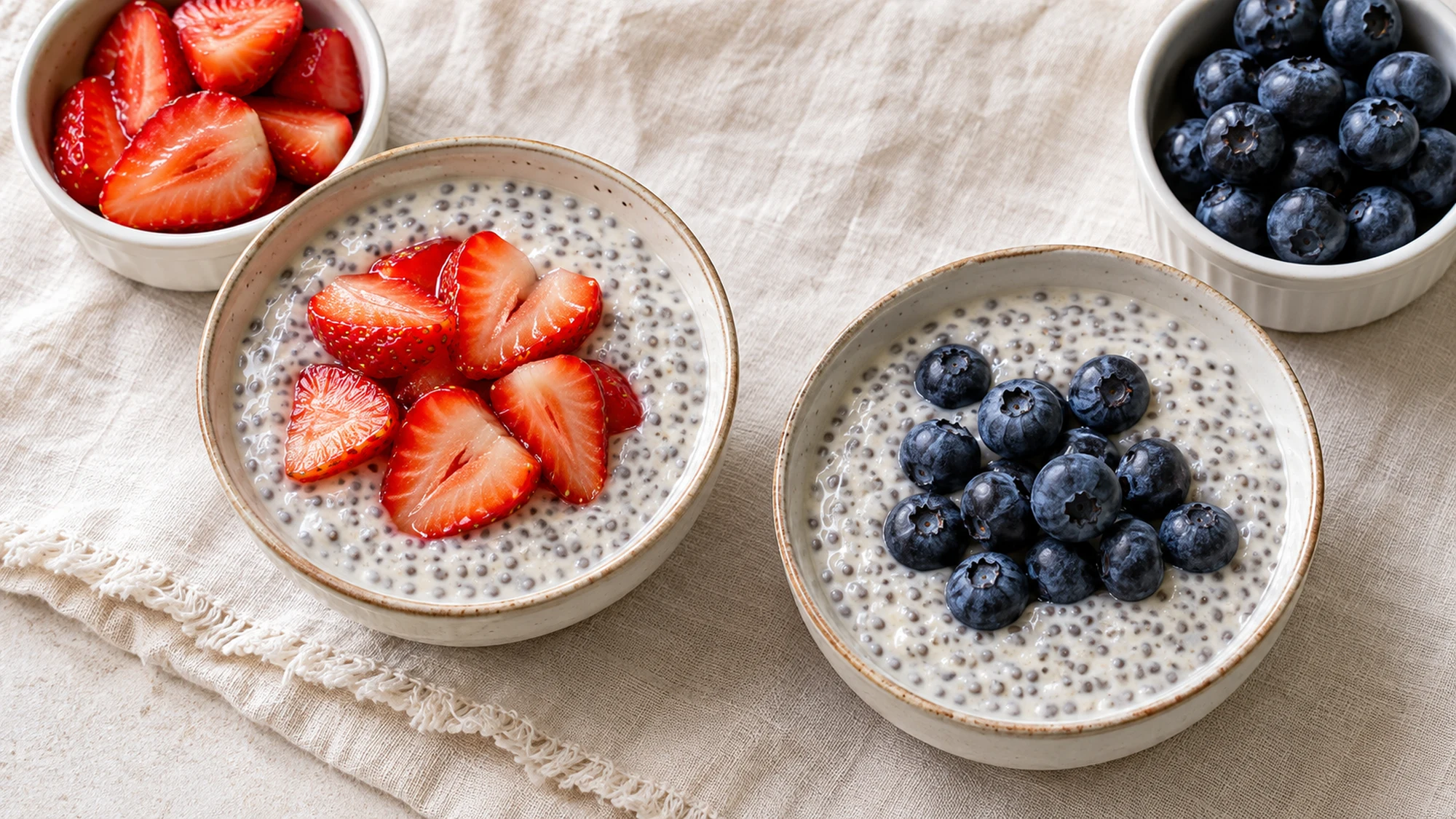
This vanilla version makes two small portions with a soft, spoonable texture and a little maple sweetness. Expect tiny tender seeds in every bite, not the perfectly smooth finish of a cooked custard. I prefer keeping the base simple so strawberries or blueberries can bring the brighter flavor.
Serving Suggestions for Chia Pudding
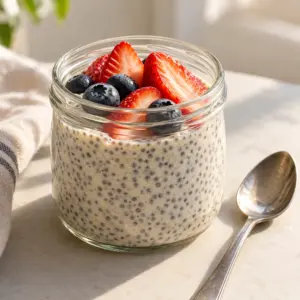
Serve it cold in a wide-mouth jar or a small bowl. Leave enough room to stir from the bottom; a narrow bottle makes both mixing and eating harder than they need to be. Add washed, dried fruit shortly before serving so the topping stays distinct.
- For breakfast: Pair a portion with toast or another food that fits your appetite. The small jar does not have to be the whole meal.
- For a snack: Keep the pudding plain until you are ready to eat, then add a spoonful of berries.
- For extra contrast: Add chopped nuts or granola at the table, checking ingredients for any allergies. They soften when stored in the pudding.
If you like a warm, gently sweet alternative, atole de pinole brings toasted-corn flavor in a drinkable breakfast. Chia pudding is the chilled, make-ahead choice; neither needs a complicated topping collection.
I would choose one juicy fruit and one optional crunchy topping rather than burying the vanilla base. A little contrast is more useful than a crowded jar.
How to Make Chia Pudding With the Texture You Like
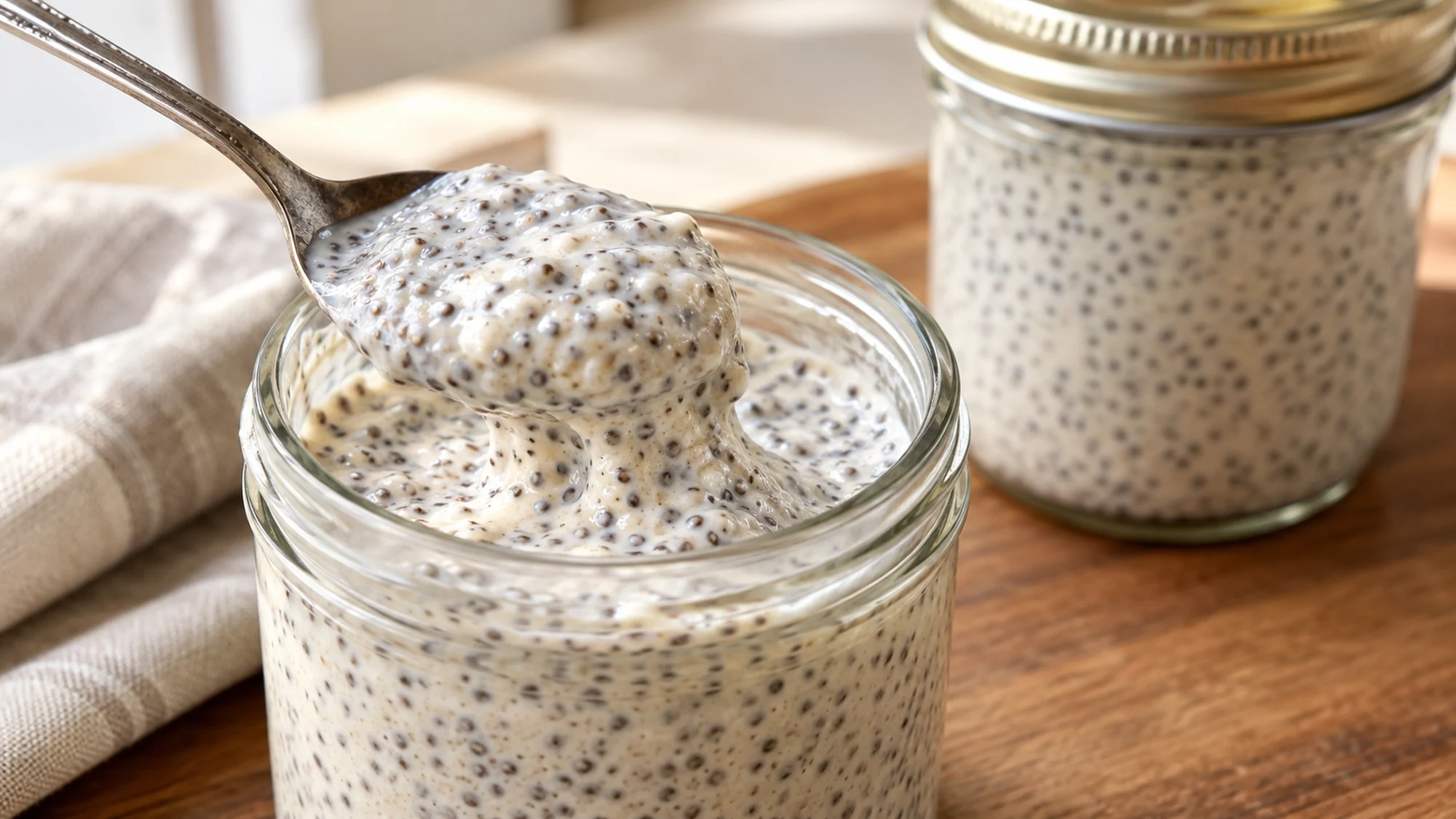
Whole black or white chia seeds both work here. Stir thoroughly enough to wet every seed, especially around the bottom edge of the bowl. A few loose seeds on top are easy to miss, and dry pockets will not turn creamy just because the outside has thickened.
The milk matters, too. Dairy milk gives a familiar mild base; an unsweetened plant beverage can work, but its flavor, thickness and nutrition will differ. Canned coconut milk is much richer and is not a like-for-like swap for the milk in this recipe.
| What you notice | What to try | Keep in mind |
|---|---|---|
| Thick but spoonable | Serve as it is | The texture should hold softly, not pour like milk. |
| Too stiff after chilling | Stir in milk one tablespoon at a time | Stop as soon as it loosens; it is easier to add than remove. |
| Thin with clumps underneath | Break up clumps and chill longer | Check the mixing before adding more seeds. |
| Still liquid after a full chill | Check seed freshness and measured amounts | Start with a small fresh batch rather than endlessly adding seeds. |
Measure the first batch instead of judging by eye. Once you know how your preferred milk and seeds behave, small changes are much easier to repeat.
Health Benefits in Context
Chia contributes fiber, plant protein and the omega-3 fat ALA. Harvard’s chia seed overview also makes an important distinction: nutrients in the seeds do not make this pudding a treatment or a guaranteed weight-loss food.
The milk and toppings change the finished nutrition. Dairy milk adds protein and calcium; plant beverages vary considerably, so check their labels rather than assuming they are interchangeable. The recipe estimate excludes optional fruit and crunchy toppings.
- Use unsweetened milk or a plant beverage if you want to control the sweetness yourself.
- This dairy version contains milk. A lactose-free dairy milk is not a solution for a milk allergy.
- Let the seeds hydrate fully in the pudding; do not eat a spoonful of dry chia and chase it with water.
Think of chia pudding as one useful way to enjoy seeds and fruit, not a nutritional shortcut. Choose the portion and additions that make breakfast satisfying for you.
Bottom Line
Keep the covered pudding at 40°F (4°C) or below and use this small batch within three days. Follow FDA refrigeration guidance: do not leave perishable food out for more than two hours, or one hour above 90°F (32°C). Use fresh milk and a clean spoon each time.
Good chia pudding is a matter of even hydration: measure, stir twice and give it a proper chill. Add fresh fruit at the end, and adjust a too-thick batch with a small splash of milk rather than starting over.
How to Make Chia Pudding Recipe

Ingredients
- 1 cup 2% milk 240 ml, plus a little more if needed after chilling
- 0.25 cup whole chia seeds About 56 g
- 2 teaspoons maple syrup
- 0.5 teaspoon vanilla extract
- Fresh strawberries or blueberries Add just before serving; not included in nutrition estimate
Equipment
- Small mixing bowl
- Whisk or fork
- Two covered containers
Instructions
- Whisk the milk, chia seeds, maple syrup and vanilla in a clean bowl until all the seeds are wet. Scrape around the bottom edge so no dry pockets remain.
- Wait 10 minutes, then whisk again thoroughly to break up any clusters. Divide between two covered containers, leaving room to stir.
- Refrigerate at 40°F (4°C) or below for at least 4 hours, preferably overnight, until evenly thickened and spoonable. The 10-minute pause is included in the chilling allowance.
- Stir before eating. If too thick, add milk one tablespoon at a time until the pudding loosens. Add optional washed, dried berries just before serving.
- Keep covered and refrigerated; use within 3 days. Discard if left out longer than 2 hours, or 1 hour above 90°F (32°C).