
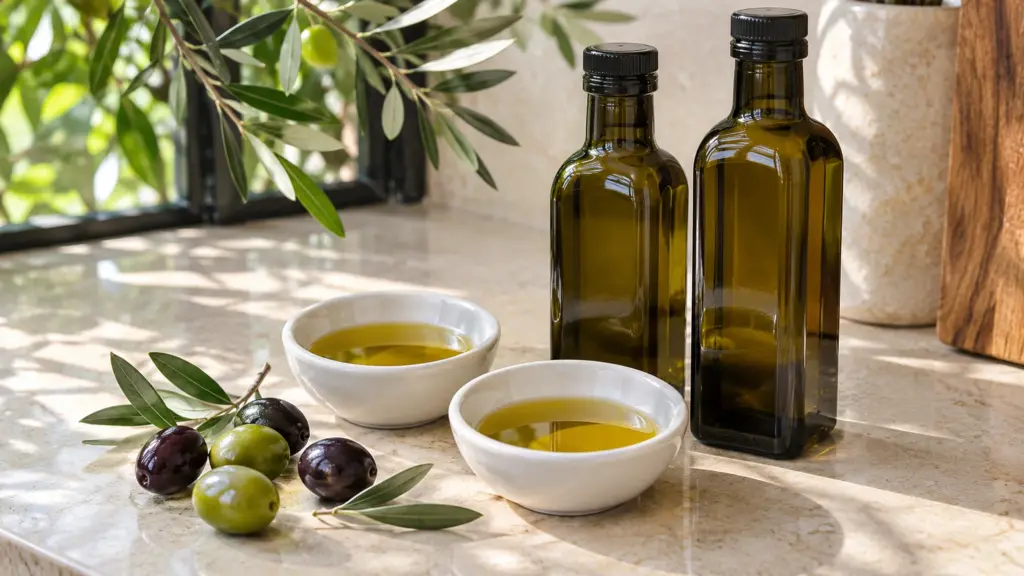
Two bottles stand beside the stove: one says olive oil, the other extra virgin. The practical difference is not that one belongs only in a pan and the other only on salad. It is how the oil was processed, the flavor you want and how fresh the bottle is.
Olive oil and extra virgin are related but different label choices. Extra virgin is unrefined and must meet its grade’s standards; regular olive oil combines refined and virgin oils. Both can be used for cooking.
I’d start with the food rather than a rule about which bottle sounds more impressive. A peppery finish can lift a bowl of beans, while a quieter oil may make more sense when you want vanilla, lemon or another delicate ingredient to lead.
Olive Oil and Extra Virgin: Read the Whole Label
The International Olive Council distinguishes virgin oils extracted by mechanical or physical methods from refined oils. Extra virgin belongs to the virgin category and meets additional quality criteria. The retail grade called olive oil is a blend of refined and virgin olive oils.
| Bottle wording | What it means | Useful role |
|---|---|---|
| Extra virgin olive oil | Unrefined virgin oil meeting extra-virgin standards | Dressings, finishing and everyday cooking |
| Olive oil | A blend of refined and virgin olive oils | Cooking when a milder flavor suits the dish |
| Light-tasting olive oil | A mild-tasting refined-and-virgin blend | Recipes where a pronounced olive flavor is unwanted |
According to the North American Olive Oil Association’s consumer guide, light-tasting olive oil contains relatively little virgin oil, keeping its flavor mild. “Light” does not mean reduced-calorie. Also check whether the ingredient list identifies only olive oils or a mixture with another type of cooking oil.
Extra virgin describes a grade; light-tasting describes a milder style. Neither word tells you the amount your recipe needs.
Choose the Flavor You Want to Notice
Extra virgin oils are not all equally strong. Some are gentle enough to sit behind the other ingredients; others bring a pronounced grassy, bitter or peppery character. Read the producer’s tasting description as a starting point, then taste a small amount with the food you plan to serve.
- For a simple dressing: Choose an oil you enjoy without heating. Start with a small amount of vinegar or lemon, taste, then adjust rather than masking an oil you dislike with extra acid.
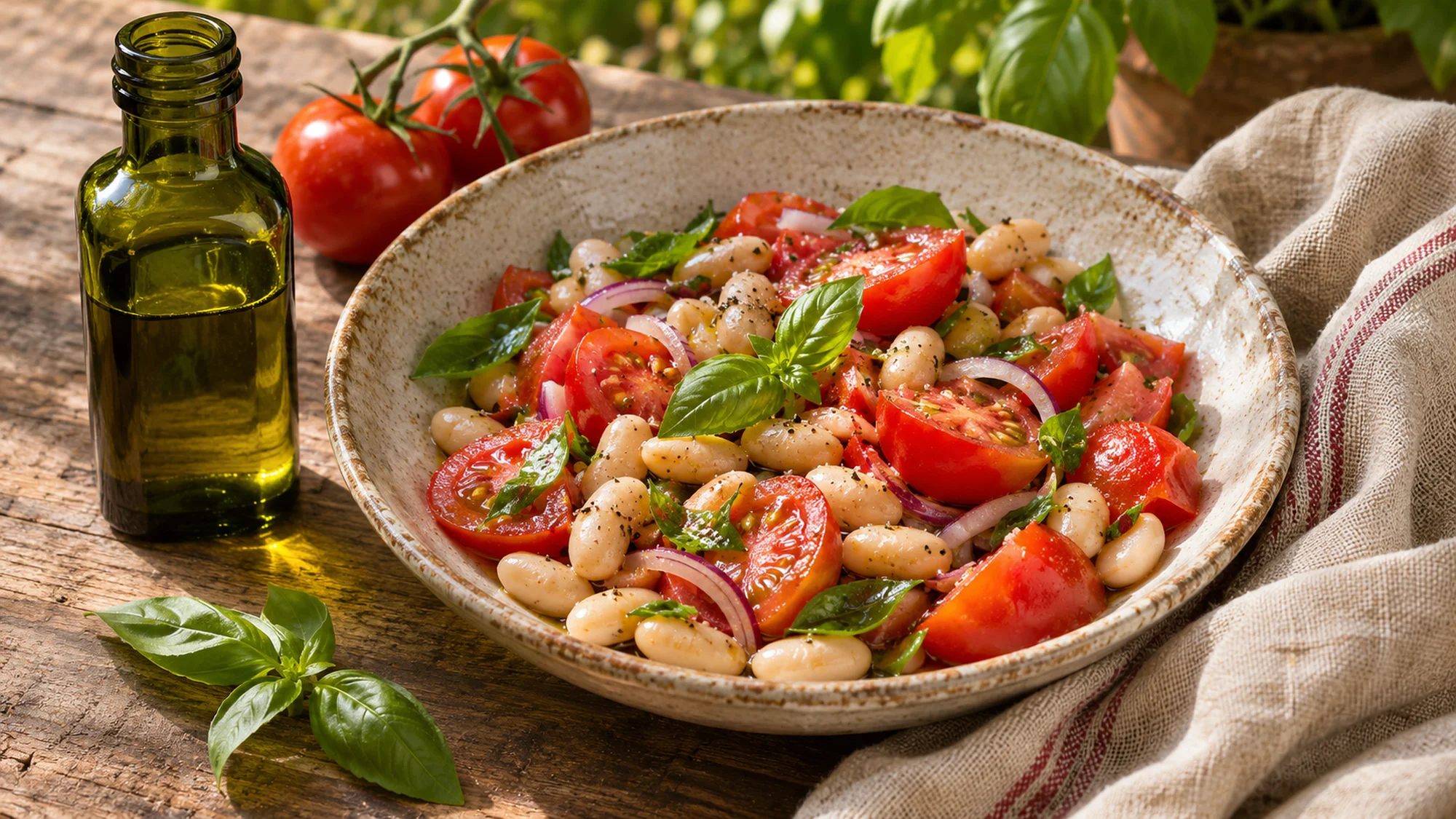
- For beans or vegetables: Try a modest finishing drizzle over a small serving first. That makes it easier to judge whether the oil complements the dish before dressing the entire bowl.
- For a delicate bake: Use the type specified by the recipe. A bold extra virgin oil can become part of the flavor rather than disappear, which may or may not be the intended result.
- For a mild preference: Regular or light-tasting olive oil is a reasonable kitchen choice. You do not have to enjoy the strongest bottle to cook with olive oil.
Taste is the useful test at dinner. I’d rather choose an oil that fits the dish than overpower it just because a label sounds premium.
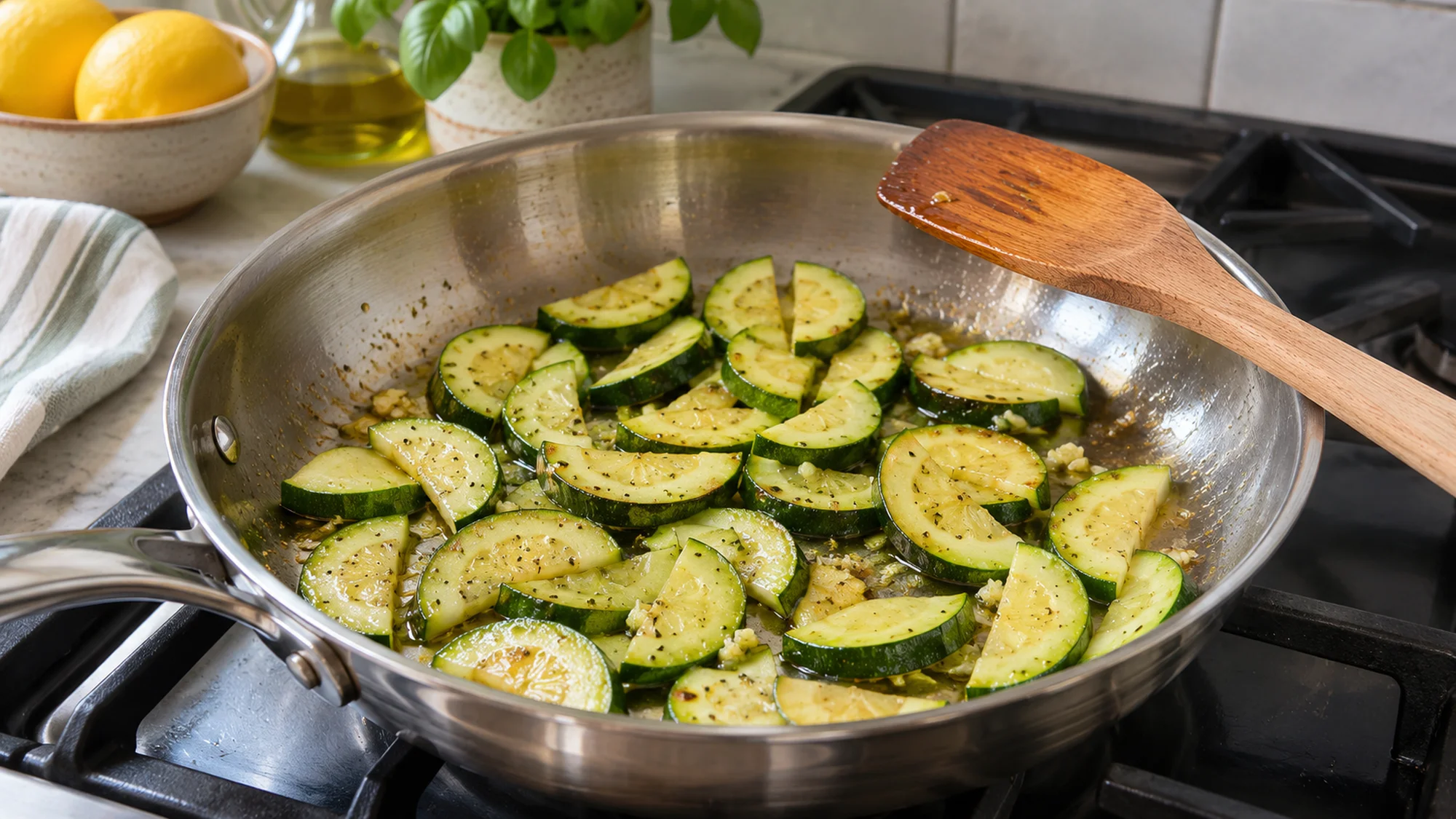
You Can Cook With Extra Virgin Olive Oil
The UC Davis food-quality guide rejects the idea that olive oil should be kept out of the pan. It explains that smoke point varies with grade, quality and freshness. There is no single temperature that describes every bottle, and buying extra virgin does not restrict you to cold food.
- Keep your ingredients ready before heating the pan. An empty oiled skillet left on the burner can overheat while you finish chopping.
- Match the heat to the food and method. For a gentle sauté, you are looking for controlled cooking, not a cloud of smoke.
- If the oil starts smoking, lower or remove the heat safely. Do not use smoke as the signal that a pan is ready.
- For a recipe that needs a neutral taste, choose a mild oil for that reason. For one where olive flavor is welcome, extra virgin can do the cooking too.
You do not need a separate rule banning extra virgin from heat. Control the pan and choose the flavor the meal needs.
Buy for Freshness, Then Put the Bottle Away
UC Davis notes that olive oil loses quality over time and recommends buying an amount you can use within weeks or a few months of opening. A harvest date can help you assess freshness, while green color alone cannot establish quality. Protect the oil from light, heat and air rather than leaving it beside a hot burner.
- Check the date and storage guidance when buying. A large bargain bottle is less appealing if it will sit open through months of infrequent cooking.
- Keep the cap closed between uses and store the bottle in a cool, dark cupboard. A decorative open pourer is less useful if it leaves the oil exposed.
- For a smaller household, consider a smaller bottle first. You can learn which flavor suits your cooking without committing to a large quantity.
- Keep origin and processing separate. Our guide to whether olive oil is a seed oil explains why the fruit source does not change when olive oil is refined.
Fresh oil that you actually use is the better purchase. Save shelf space for the bottle that suits your cooking, not a collection you rarely open.
Bottom Line
Choose extra virgin when you want its flavor, and regular or light-tasting olive oil when a milder result fits better. Both can cook dinner; freshness, careful storage and sensible heat matter more than a rigid salad-versus-stove rule.
This UC Davis video offers a look at the university’s olive-oil production, providing background on the ingredient behind the bottle.