
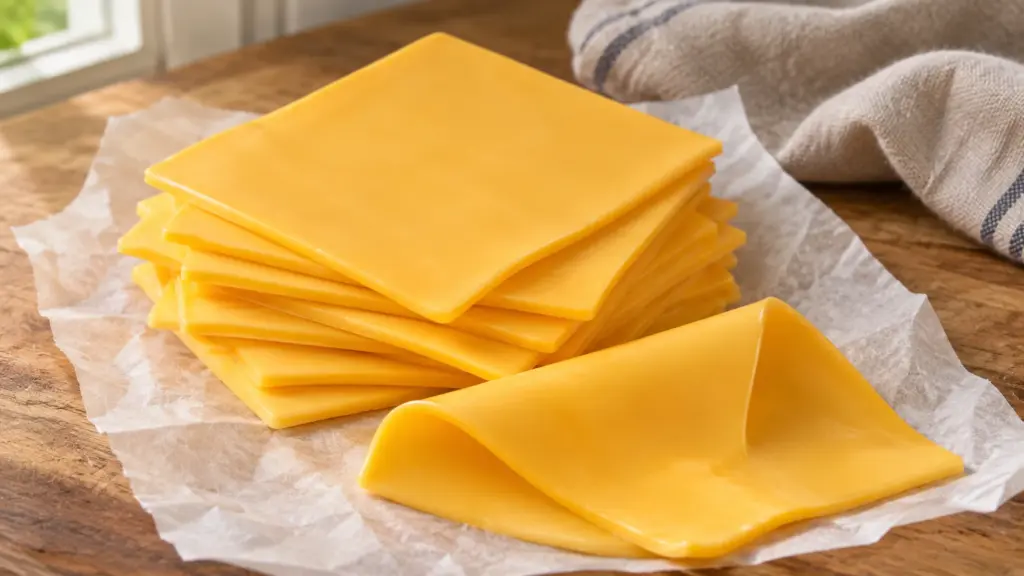
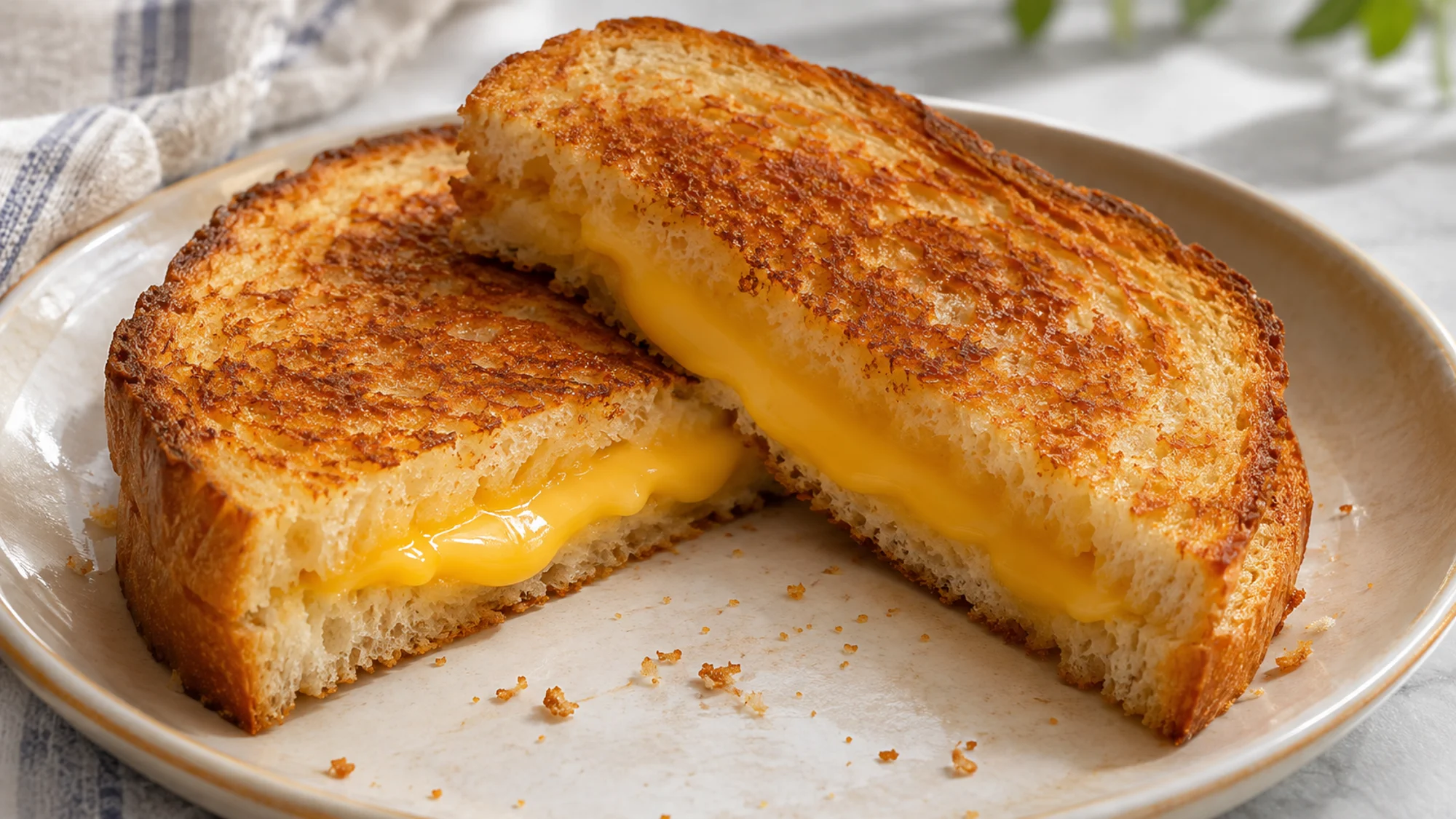
A burger gets a neat, glossy cheese layer. A grilled cheese sandwich stays creamy instead of turning into a puddle of oil. American cheese is often chosen for exactly that dependable texture, but the words on the package tell you more than its familiar square shape.
American cheese is a family of cheese-based products, not one identical slice. Read the full product name and ingredient list, then choose for the melt, flavor and portion you want.
I’d start at the label rather than the argument over whether it counts as “real” cheese. That simple habit makes shopping less confusing and gives you a better idea of how the product will behave in your pan.
What Is American Cheese Made From?
Traditional process American cheese combines cheese with emulsifying ingredients and heat. These ingredients help the mixture stay uniform. The Wisconsin Department of Agriculture’s cheese-labeling guide explains that process cheese, cheese food and related products have different identities and ingredient requirements.
- The full name matters: “Pasteurized process American cheese” is more specific than the large word “American” on the front.
- Similar-looking slices can differ: A product labeled cheese food or cheese product is not automatically the same formulation as process cheese.
- The ingredient list is useful: It tells you which dairy ingredients, emulsifying ingredients, colors and other additions are actually present.
The University of Wisconsin Center for Dairy Research’s explanation of American cheese compares these categories. Avoid reducing all of them to one percentage or calling every wrapped slice the same thing.
A short phrase under the product name can answer the biggest question. Read it before judging the cheese by its wrapper, price or color.
Choosing American Cheese for a Smooth Melt
The U.S. Dairy Export Council’s process-cheese guide describes products made for different melting and slicing properties. That is why one package may suit a burger while another is designed for a sauce. Not every process cheese behaves identically.
| What you want | What to compare | Useful approach |
|---|---|---|
| Even burger coverage | Slice size and thickness | Choose a slice that fits the patty without a large overhang. |
| Creamy grilled cheese | Flavor and melting description | Arrange an even layer so the center warms with the edges. |
| A mild sauce | Product intended for melting | Follow a recipe written for that product type. |
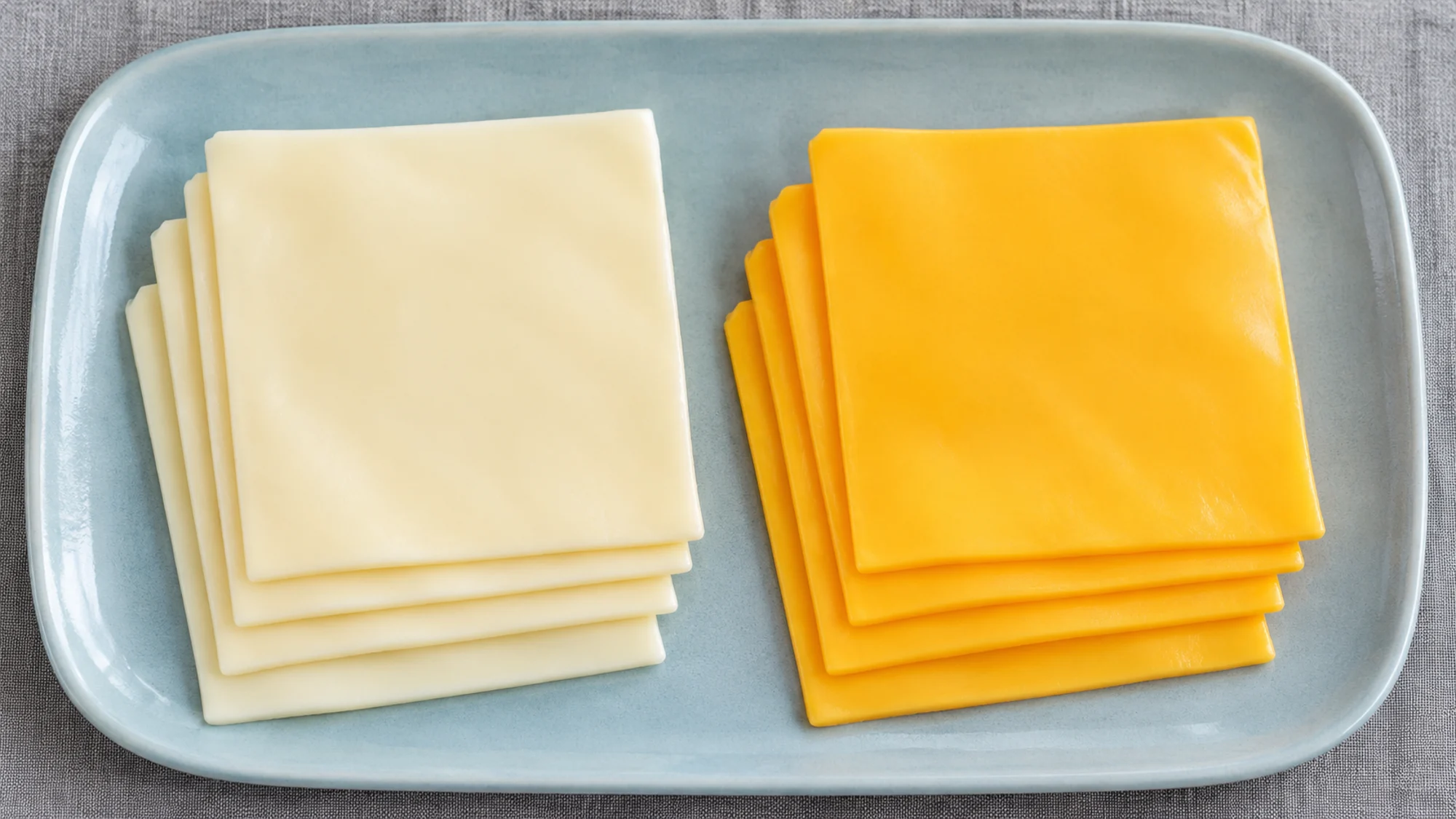
| White or yellow slices | Ingredients and nutrition | Do not use color alone as a quality ranking. |
- Moderate the heat: For a sandwich, give the center time to warm before the outside gets too dark. A thick stack is not always an improvement.
- Taste before adding salt: Cheese already contributes seasoning. Add other salty toppings thoughtfully rather than automatically.
- Substitute with a clear expectation: Cheddar brings a different flavor and texture; it is not a guarantee of the same silky result.
For a nuttier sandwich with a different texture, see our guide to Swiss cheese. I’d make that swap because I wanted Swiss flavor, not because I expected the cheeses to be interchangeable in every sauce.
Choose the cheese for the job. A reliable melt is a useful cooking property, not a promise that every brand or every substitution works alike.
Nutrition, Allergens and Keeping Slices Fresh
Compare portions before comparing numbers. For example, Land O’Lakes yellow American pre-sliced cheese lists 70 calories, 3.5 grams of saturated fat and 340 milligrams of sodium per 19-gram slice. That is one product’s label, not a nutrition value for all American cheese.
- Check the serving weight: “One slice” can mean different amounts at the deli counter and in a packaged product.
- Read the allergen statement: These are milk-based foods, and some contain other allergens. The example above lists milk and soy.
- Consider the whole plate: Bread, condiments and other fillings affect the meal too. Pair a sandwich with vegetables or fruit if that suits your appetite.
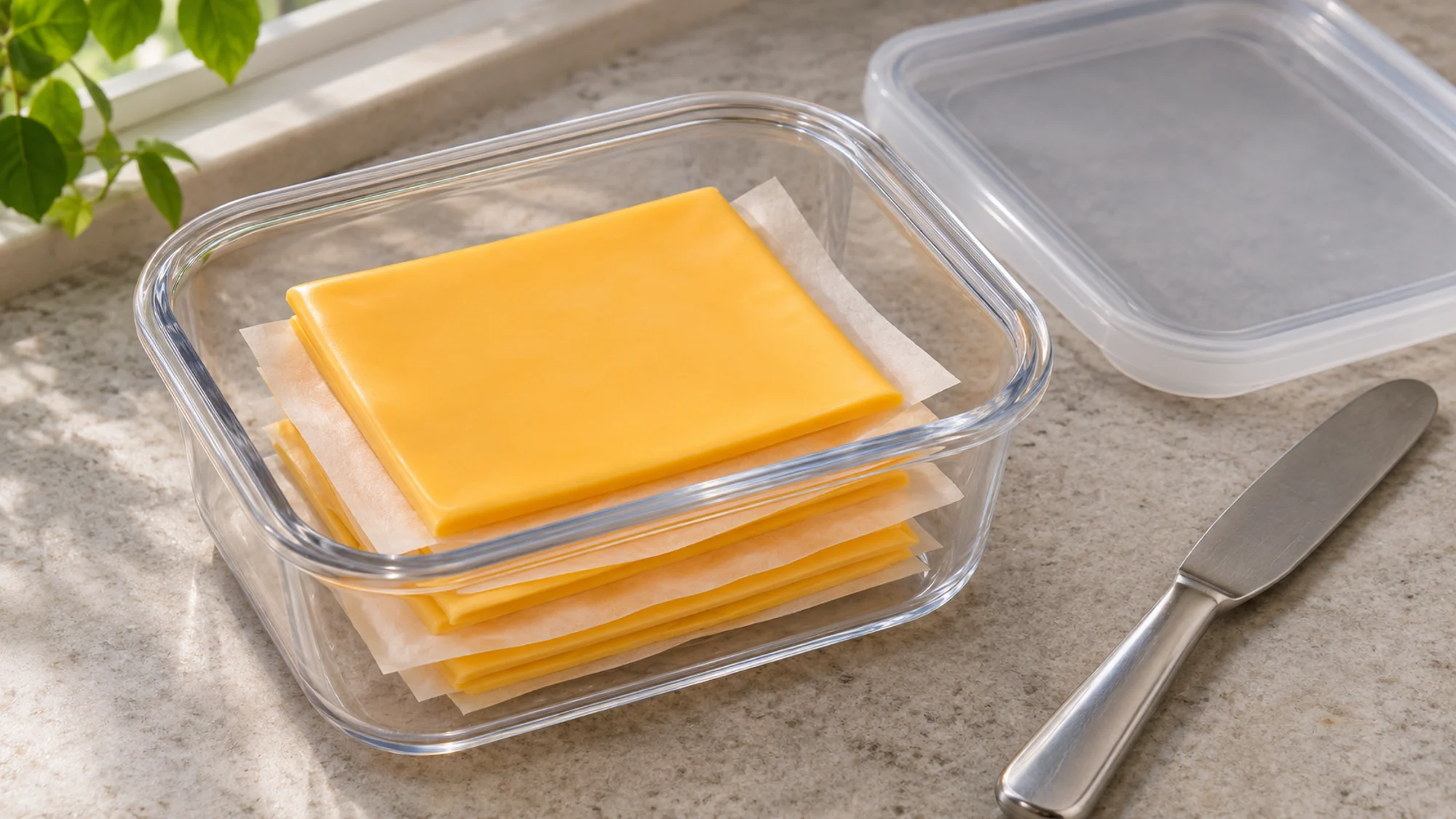
- Keep the original guidance: Follow the package’s refrigeration and after-opening instructions. Do not assume an individually wrapped slice is shelf-stable.
The Colorado State University cheese-handling guide recommends protecting cheese from drying and contamination. Use clean utensils, reseal the package, and buy an amount that fits your usual meals rather than leaving loose slices exposed in the refrigerator.
The useful comparison is specific: the product, the serving weight and the storage instructions. Neither a yellow color nor a convenient wrapper answers those questions.
Bottom Line
American cheese makes sense when you want mild flavor and a smooth, predictable layer in a sandwich or burger. Choosing it does not require dismissing other cheeses, and choosing another variety does not make the same cooking result automatic.
I’d keep the decision simple: read the full label, buy the amount you will use, and pick the cheese whose texture fits dinner. There is room for both a creamy melt and a sharper slice.
Sources
- Wisconsin DATCP: cheese categories and labels
- Center for Dairy Research: American cheese categories
- U.S. Dairy Export Council: process cheese performance
- Land O’Lakes: product ingredients and nutrition
- Colorado State University: cheese storage and handling
- America’s Test Kitchen: American cheese and a smooth sauce