
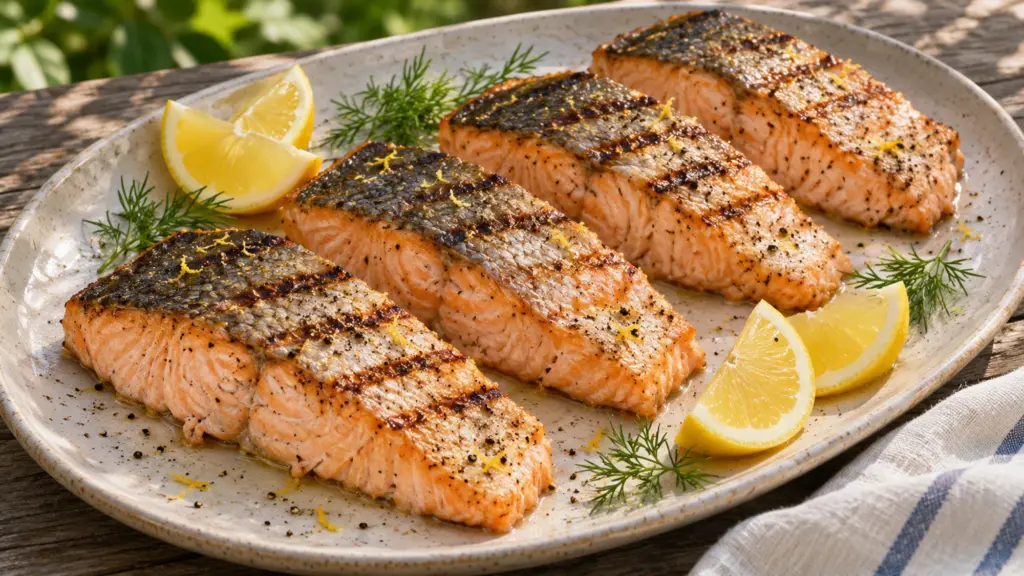
A salmon fillet that sticks to the grill can turn dinner into a rescue operation with a spatula. Learning how to grill salmon starts before the fish touches the grate: dry the surface, heat and clean the grill, and keep the skin attached. A thin coat of oil and patient cooking give the fillets a better chance of lifting in one piece.
Grill similarly sized, skin-on salmon portions over controlled heat, keep a cooler area available, and check the thickest part with a thermometer. The food-safety target is 145°F (63°C), not a particular number of grill marks.
I’d spend more attention on the thickness of the fish than on an elaborate marinade. This version uses lemon, olive oil, salt and black pepper, with optional fresh herbs at the end. That short ingredient list leaves the salmon’s flavor clear and avoids a sugary coating that can darken before the middle is cooked.
Serving Grilled Salmon While the Skin Is Still Crisp
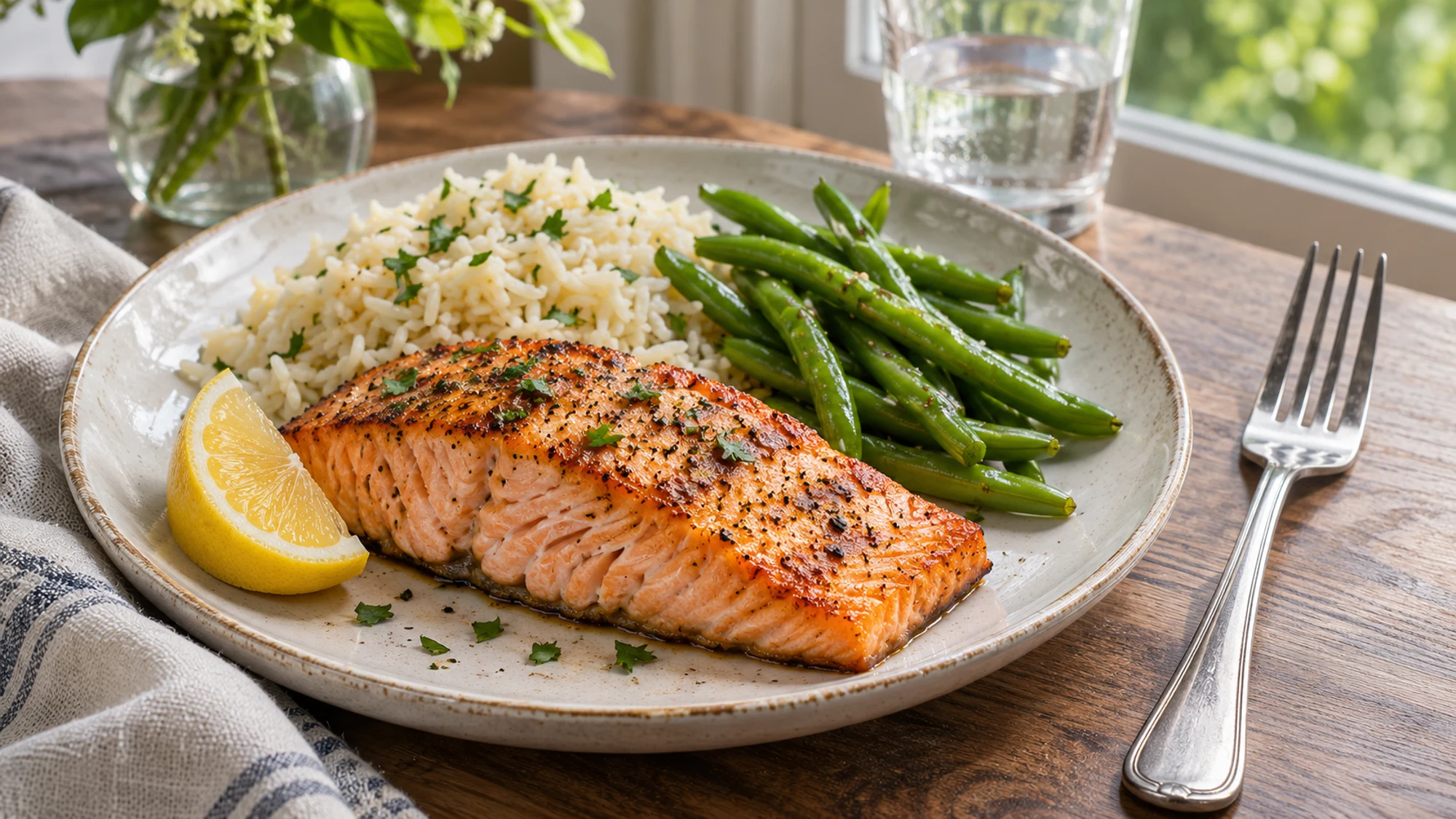
Have the side dishes nearly ready before the salmon goes on the grill. Fish cools quickly, and a crisp skin softens when it sits underneath a pool of sauce. Serve the portions promptly with lemon wedges, letting everyone add the amount of juice they prefer.
- For a simple dinner: add rice or small boiled potatoes and green beans. Keep the sides lightly seasoned so the whole plate does not become salty.
- For a cool contrast: this chickpea cucumber salad brings crunchy vegetables and a bright dressing alongside the warm fish.
- For bowls: lift the flesh from the skin if you prefer, and break it into large flakes rather than tiny shreds. Add a cooked grain and vegetables.
- For the table: place sauce beside the fish instead of covering every portion. The browned surface should still be easy to see and enjoy.
A wide fish spatula supports more of the fillet than a narrow turner. If the skin clings to the grate, do not yank it away: ease the spatula underneath and give the stuck section a little more time if the fish is not yet done. The cooler zone is your escape route if browning gets ahead of cooking.
Prepare the sides first and keep sauces to the side so the salmon reaches the table warm, intact and pleasantly textured.
How to Grill Salmon With the Cut You Have
Center-cut portions of similar thickness are easiest to manage together. A thin tail piece is not a failed purchase; it simply needs an earlier check. Frozen salmon also works when thawed safely and dried well before seasoning.
| Choice | Useful adjustment | Main caution |
|---|---|---|
| Thick center-cut portions | Cook comparable pieces together | Check the thickest center |
| Thin tail portions | Check earlier and move to cooler heat | Do not wait for thicker pieces |
| Skinless fillets | Use a suitable grill basket if needed | They are more fragile |
| Frozen fillets | Thaw in the refrigerator, then dry | Do not leave on the counter to thaw |
- Fresh herbs: finish with chopped dill or parsley. Add tender herbs after grilling so they stay fresh rather than scorching.
- Lemon: use wedges at serving instead of a long acidic soak. You can adjust the brightness without changing the surface texture beforehand.
- Heat control: move the fish away from flare-ups. Flames licking the sides are not a shortcut to an evenly cooked center.
- Turning: one careful turn is enough when you want flesh-side browning. Repeated flipping makes a delicate fillet harder to keep together.
Adjust the timing to the cut, and use the cooler part of the grill when the outside is ready before the center.
Health Benefits and Safe Cooking
Salmon supplies protein and omega-3 fats, and the FDA’s advice about eating fish includes salmon among lower-mercury Best Choices. Those qualities do not make one meal a treatment for a health condition; the overall eating pattern and portion still matter.
- Keep it cold: follow the FDA’s seafood handling guidance. Thaw overnight in the refrigerator and keep raw fish separate from ready-to-eat food.
- Use a thermometer: insert it into the thickest part without touching the grill. Cook to 145°F (63°C); the flesh should also be opaque and separate readily.
- Watch the seasoning: sauces and seasoned salt blends can add sodium quickly. I prefer lemon and herbs for an extra layer of flavor before adding more salt.
- Save leftovers safely: refrigerate promptly within 2 hours, or 1 hour above 90°F (32°C). Use within 3–4 days; reheat leftovers to 165°F (74°C).
A thermometer makes the final decision clearer, while careful chilling and separate utensils protect the work you put into the meal.
Bottom Line
Good grilled salmon is more about preparation and restraint than constant turning. Dry the fish, control the heat, support it with a wide spatula and check the center. Lemon and a simple side are enough to finish the plate.
How to Grill Salmon Recipe

Ingredients
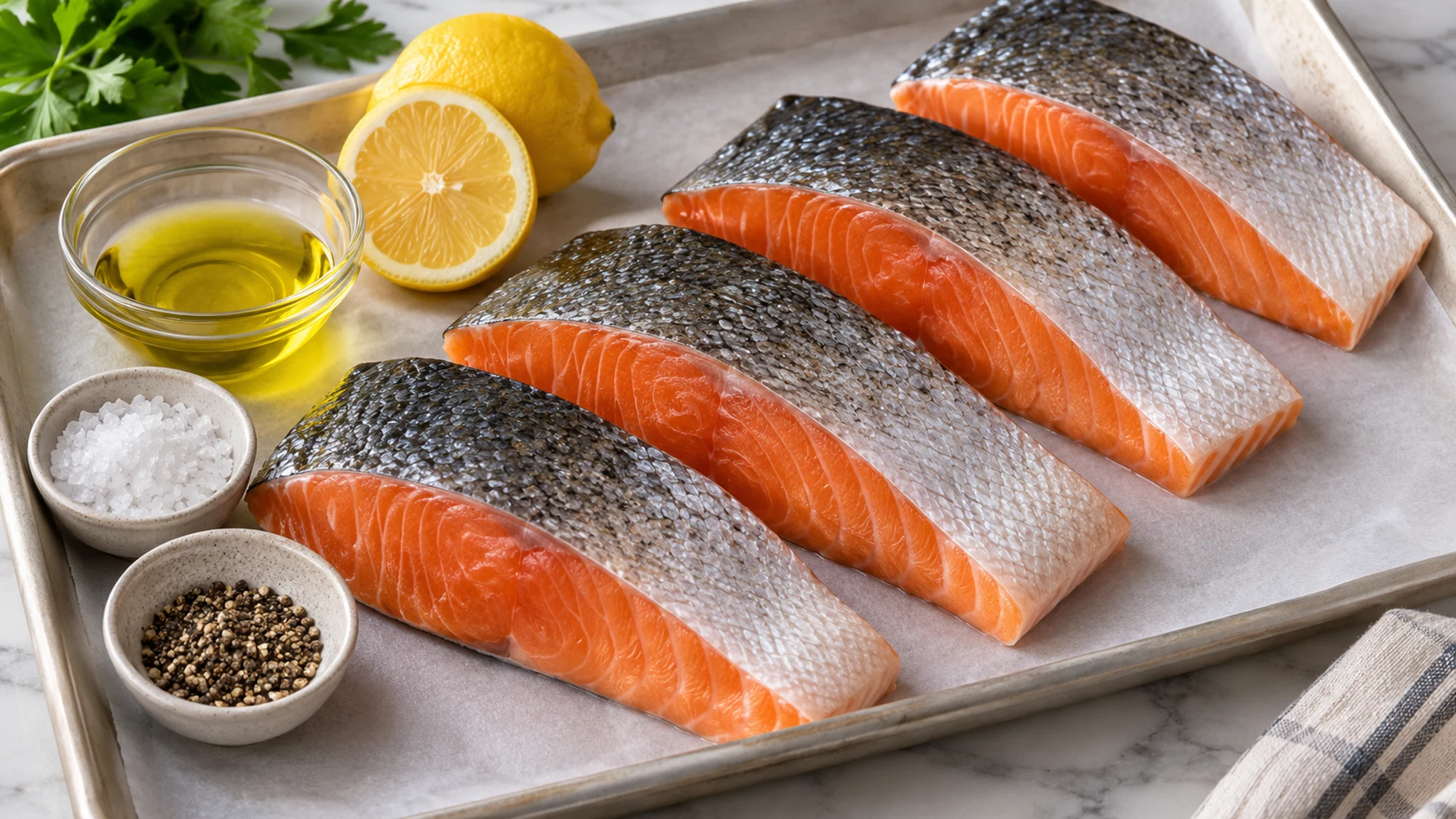
- 4 skin-on salmon fillets 6 oz (170 g) each, similar thickness
- 1 tbsp olive oil
- 0.5 tsp fine salt
- 0.25 tsp black pepper
- 1 lemon cut into wedges
- 1 tbsp chopped fresh dill or parsley optional, to finish
Equipment
- Outdoor grill with lid
- Wide fish spatula
- Tongs
- Instant-read thermometer
- Clean tray
- Paper towels
- Measuring spoons
Instructions
- Pat the thawed salmon dry with paper towels and place on a clean tray. Keep it refrigerated while you heat the grill.
- Heat a clean outdoor grill to medium-high, about 400°F (200°C), with a cooler indirect-heat area available. Brush the fish with the olive oil and season with salt and pepper.
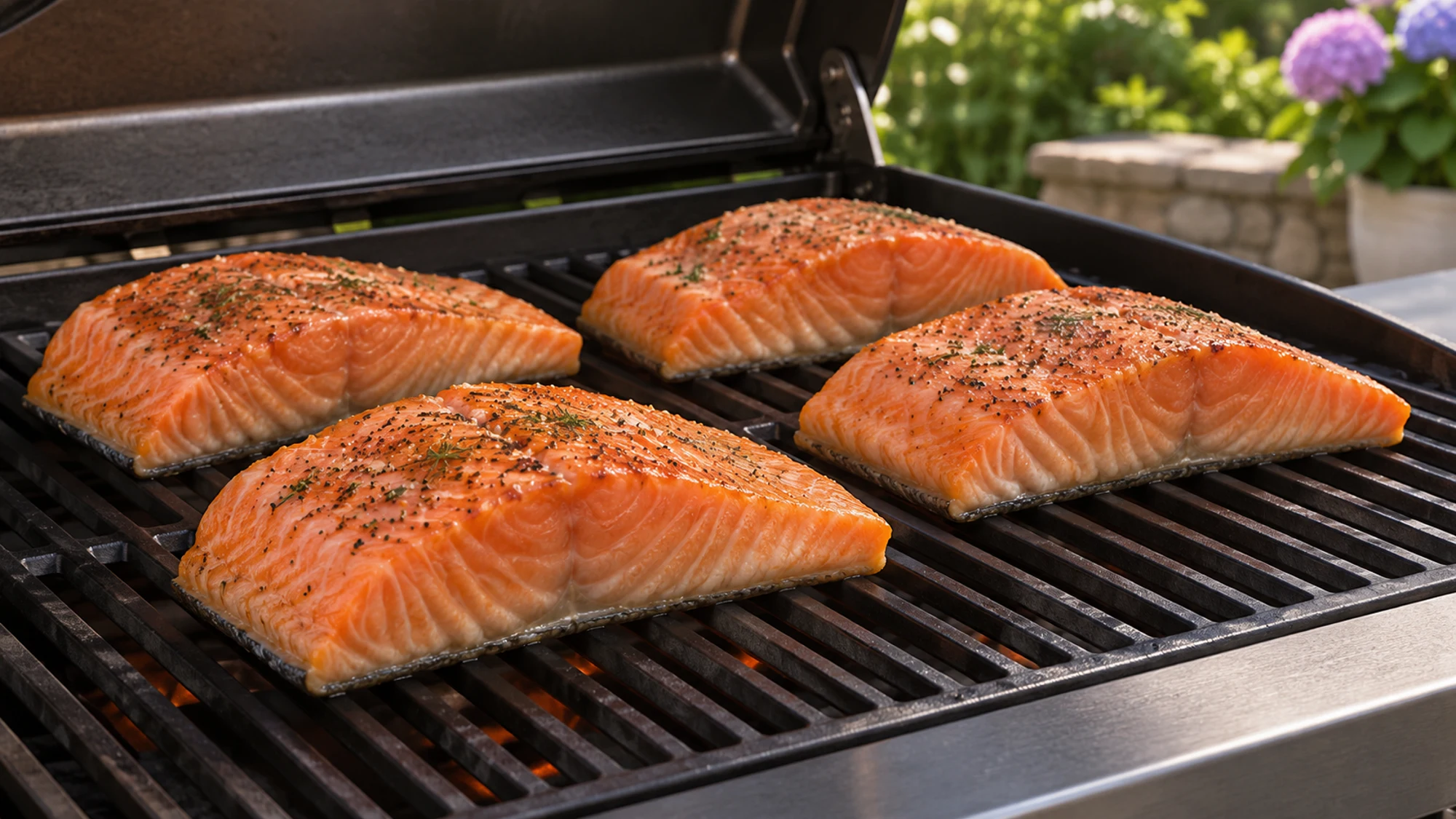
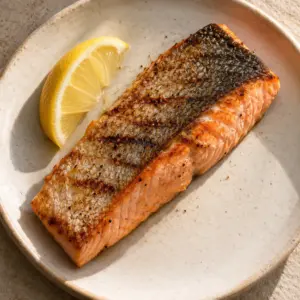
- Place the salmon skin-side down on the hot grate. Close the lid and cook for about 6–8 minutes, checking for flare-ups. Move to the cooler area if the outside browns too quickly.
- If the fish releases readily, support each portion with a wide spatula and turn once for light flesh-side browning. Cook another 2–4 minutes, or finish skin-side down over gentler heat if turning risks breaking it. Check early for thin pieces; the thickest center must reach 145°F (63°C). Timing depends on thickness and grill.
- Transfer to a clean serving plate. Serve promptly with lemon wedges and the optional dill or parsley. Refrigerate leftovers within 2 hours, or 1 hour above 90°F (32°C), and use within 3–4 days; reheat to 165°F (74°C).