
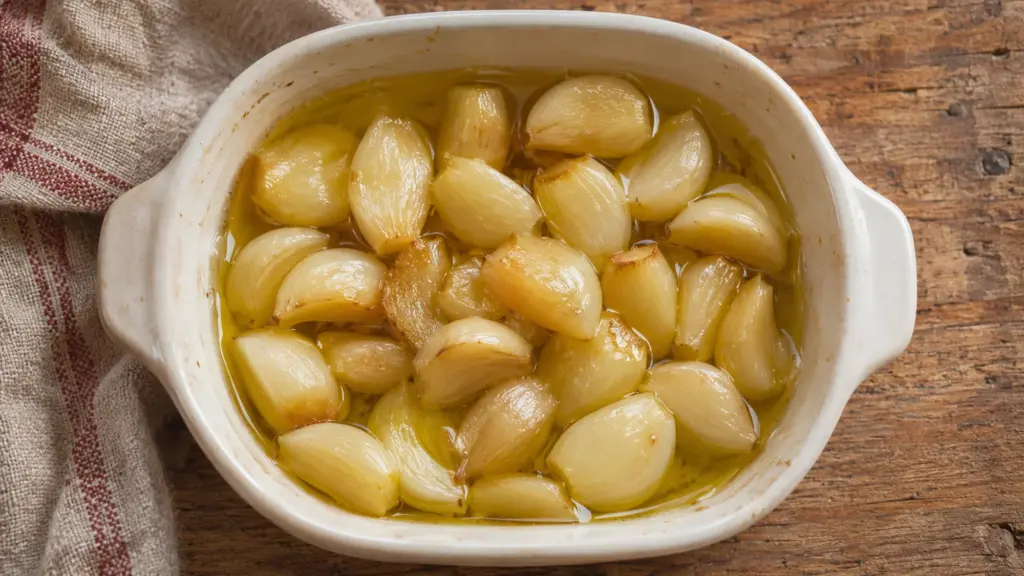
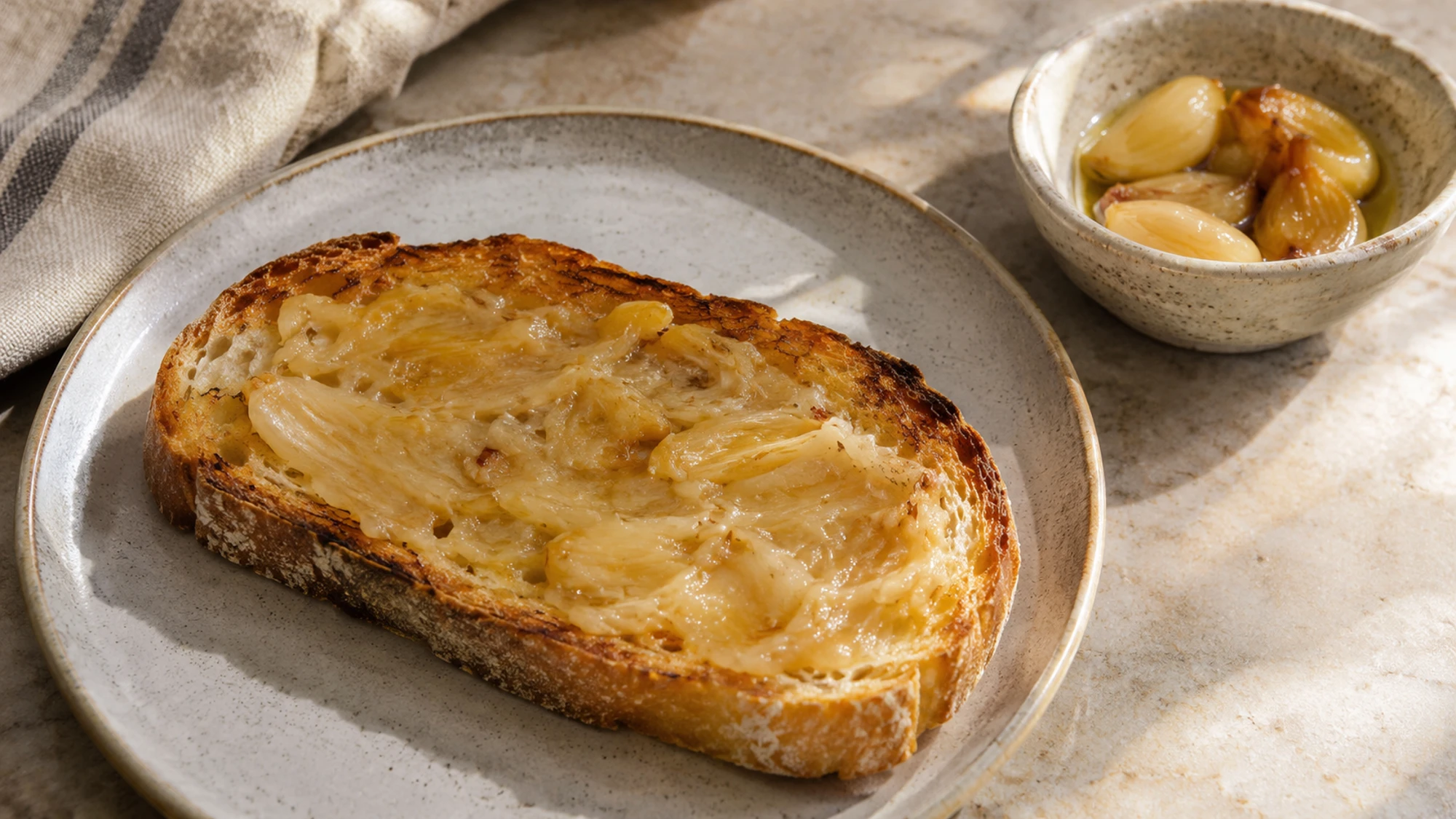
A raw garlic clove can take over a mouthful; a slowly cooked one can melt into it. If you’re wondering how to make garlic confit, the useful starting point is gentle oven heat, whole peeled cloves and enough olive oil to cover them—not a pan of sizzling, browning garlic.
Cook the cloves until they crush easily, then treat the garlic and its oil as a refrigerated, short-lived condiment. Softness is the cooking goal; a sealed jar does not make it shelf-stable.
I’d make a modest batch first and decide where it will go before peeling the garlic. This version needs little attention once it is in the oven, but it does need a plan for prompt chilling. Choose firm cloves, trim the tough root ends and keep the pieces whole so they soften at a similar pace.
Serving Suggestions for Garlic Confit
Start with toast while the contrast is at its best: crisp bread, a soft clove and just enough oil to help it spread. Our baguette with a crackly crust makes a useful base. Add the garlic shortly before serving so the bread keeps its crunch.
- For beans: Mash a clove into warm white beans, then loosen with a little of the cooking liquid. Taste before adding more oil.
- For vegetables: Toss cooked green beans or roasted carrots with a small spoonful of the garlic and oil. The vegetables should still taste like themselves.
- For sandwiches: Spread a thin layer under sliced tomato or cheese instead of leaving whole cloves to tumble out.
- For pasta: Mash the garlic first, then work in hot pasta water a little at a time. A puddle of oil is not the same thing as a sauce.
Use a clean utensil to take out only what you need, and return the rest to the refrigerator. If the oil becomes cloudy or firms up when cold, soften only the serving portion; do not leave the whole batch on the counter while dinner comes together.
Think of garlic confit as a seasoning you can spread: start small, taste the finished dish and keep the remaining batch cold.
How to Make Garlic Confit Your Own
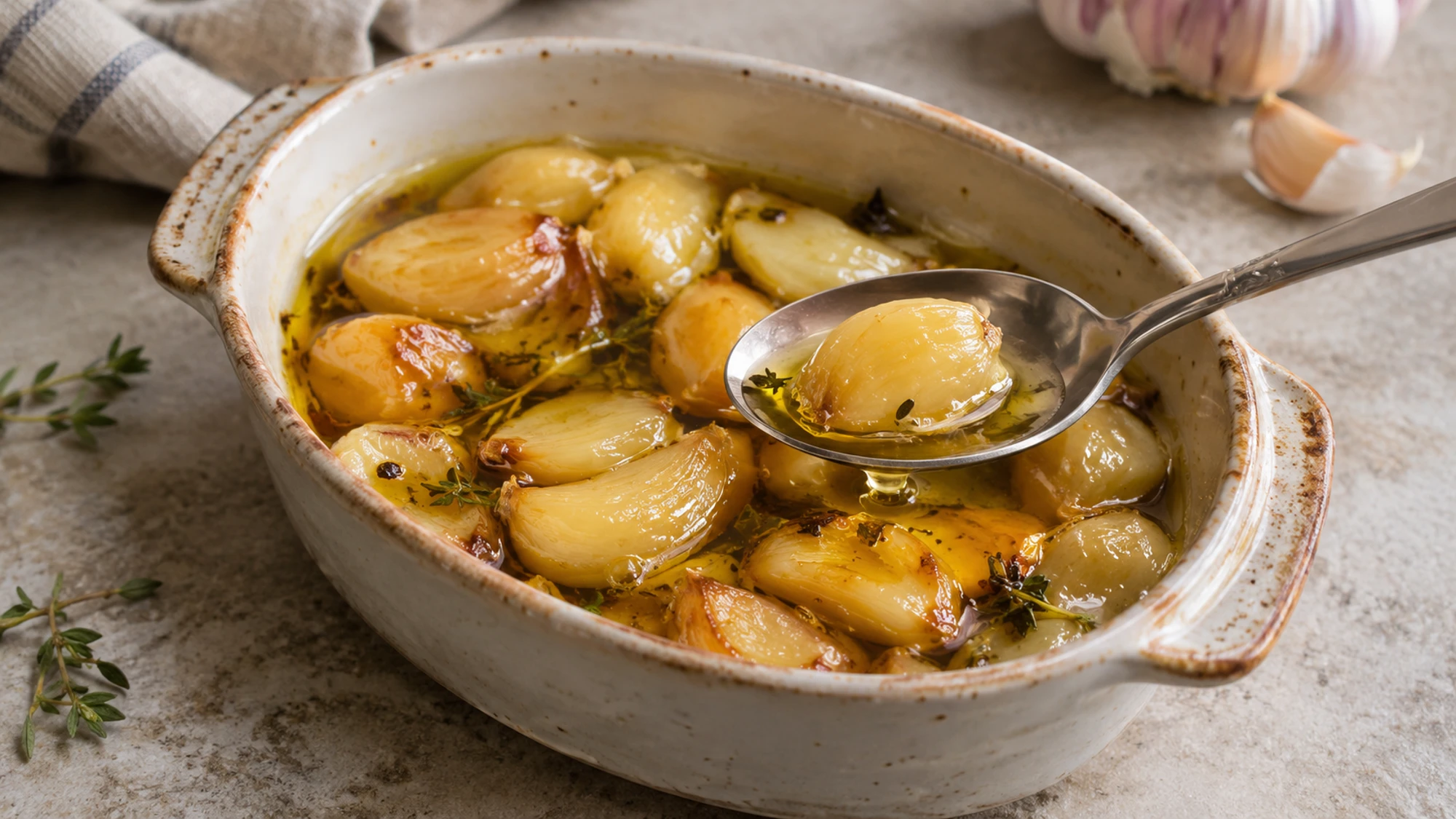
I prefer the plain garlic-and-oil version for flexibility. Thyme is an optional variation, not a requirement, and the gentler flavor of a mild olive oil leaves more room for the garlic. A strongly peppery oil will announce itself, especially in an uncooked dressing.
| Choice | What changes | Useful limit |
|---|---|---|
| Plain olive oil and garlic | Versatile, mellow garlic flavor | Refrigerate; use within 4 days |
| Optional thyme sprigs | A herbal note for beans or toast | Refrigerate; use within 2–3 days |
| Smaller baking dish | Less oil needed to cover the cloves | Keep the garlic submerged |
- Cloves still firm? Give them more time at gentle heat. A knife should slide in easily; color alone does not tell you the center is soft.
- Oil bubbling vigorously? Lower the heat and check the oven temperature. You want slow cooking rather than frying.
- Dark edges? Check sooner next time and use a dish that keeps the cloves covered. Bitter, scorched garlic will not become mellow by stirring it into more oil.
Keep changes small and judge the cloves by tenderness. Adding herbs changes the flavor, not the need for careful storage.
Health Benefits and Storage Considerations
The practical benefit here is flavor, not a medicinal promise. Olive oil supplies unsaturated fat, as USDA’s guidance on fats explains, but the amount you spoon onto the plate still matters. Garlic confit is a condiment, not a replacement for vegetables, protein or a varied meal.
- Chill promptly: Divide the garlic and oil into small, shallow containers. USDA advises prompt refrigeration, never more than 2 hours out, or 1 hour above 90°F (32°C).
- Keep it cold: The National Center for Home Food Preservation limits garlic-in-oil to 4 days at 40°F (4°C) or below. Freeze portions promptly for longer storage.
- Do not can it: This cooking method does not make garlic oil safe for pantry storage. Discard a mishandled batch without tasting; smell is not a safety test.
Enjoy the mellow flavor in a sensible portion, and give refrigeration as much attention as the oven.
Bottom Line
For soft, spreadable garlic, keep the heat gentle and let tenderness guide you. Make only what you can use promptly, refrigerate the garlic and oil together, and freeze extra portions rather than stretching the storage window.
How to Make Garlic Confit Recipe

Ingredients
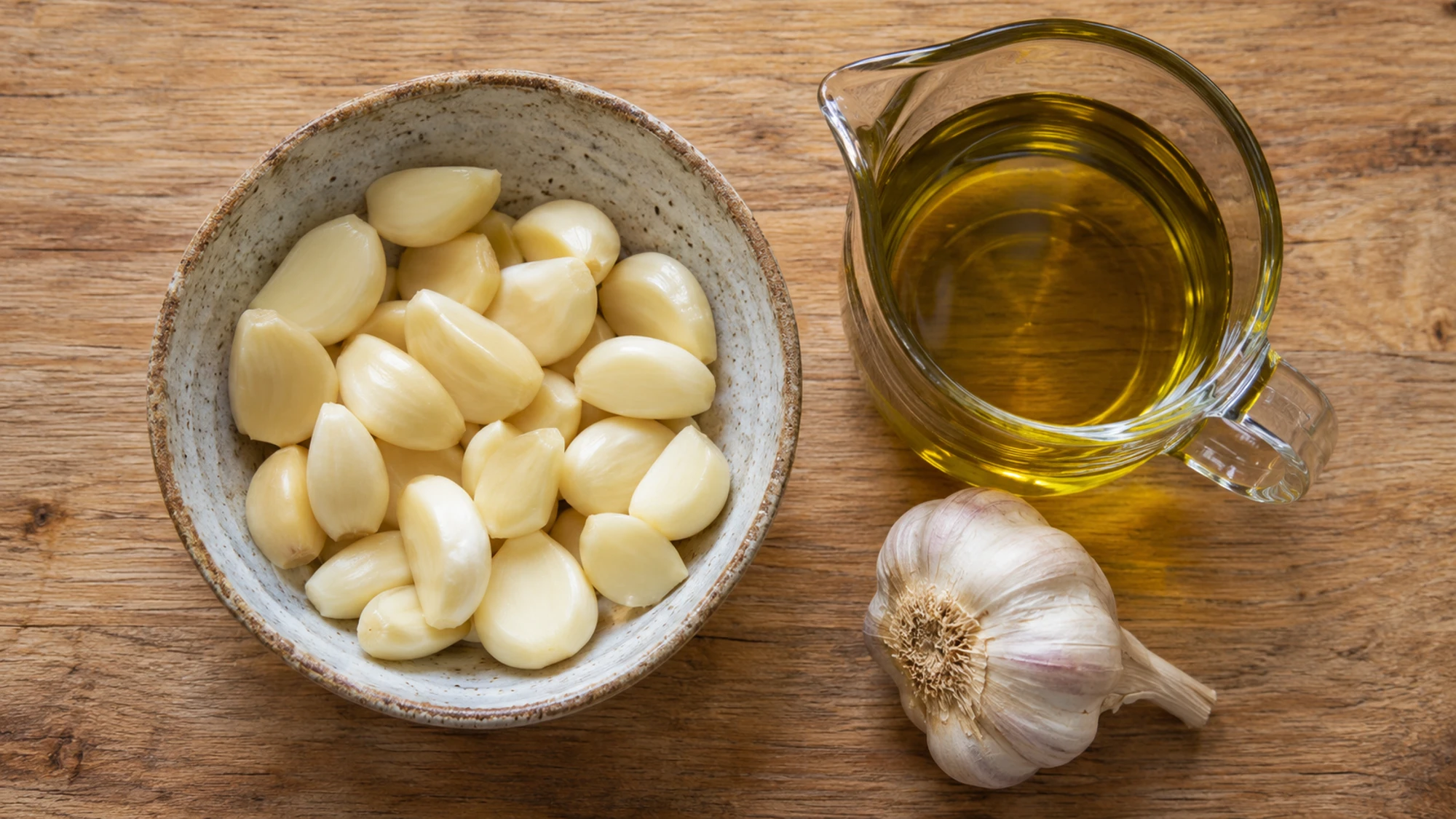
- 3 medium garlic bulbs cloves separated and peeled, about 1 cup
- 1 cup olive oil or enough to cover the garlic in a snug dish
- 2 sprigs fresh thyme washed and thoroughly dried; shortens refrigerated storage to 2–3 days
Equipment
- Small oven-safe baking dish
- Knife and cutting board
- Measuring cup
- Oven mitts
- Slotted spoon
- Small shallow food-storage containers
Instructions
- Heat the oven to 200°F (95°C). Peel the garlic, trim the tough root ends and arrange the whole cloves in a small oven-safe dish.
- Pour in enough olive oil to cover the cloves; about 1 cup fits a snug dish. Add the optional thyme if using. Set the dish on a stable oven rack.
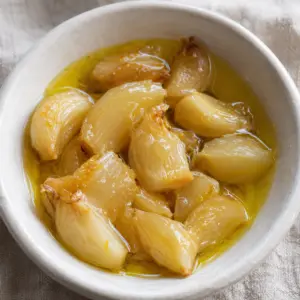
- Cook for about 2 hours, checking from 90 minutes, until a knife slides easily into the cloves and they mash smoothly. They may be pale or lightly golden. If the oil bubbles vigorously or the cloves darken quickly, lower the heat. Larger cloves may need additional time.
- Use a clean spoon to remove the portion for immediate serving. Transfer the remainder with its oil into small shallow containers and refrigerate promptly. Do not leave out longer than 2 hours, or 1 hour above 90°F (32°C).
- Label with the preparation date. Keep at 40°F (4°C) or below and use the plain version within 4 days; use the thyme variation within 2–3 days. Freeze promptly for longer storage. This is not a canning recipe; never keep it at room temperature.