
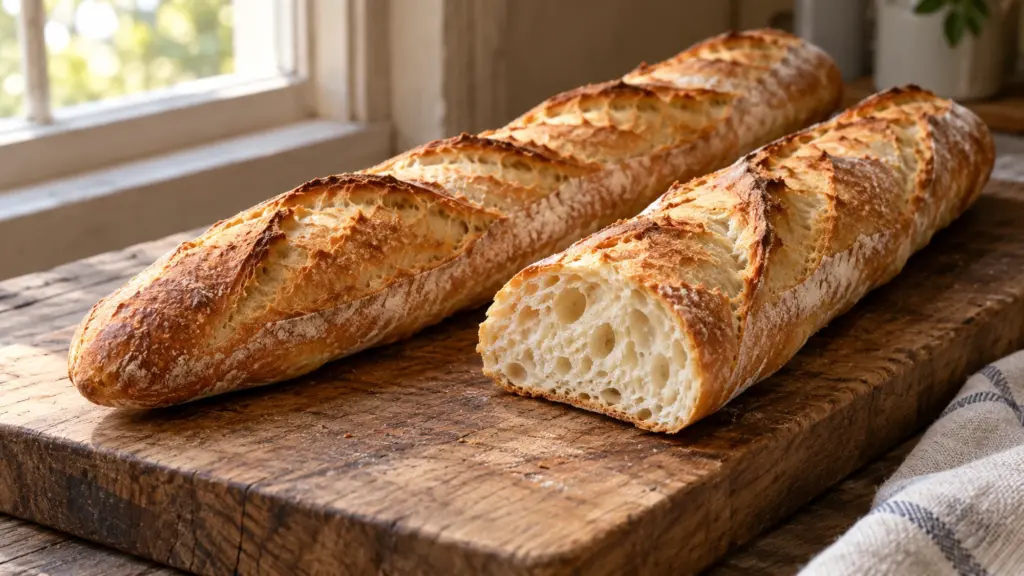
A baguette can look beautifully golden and still disappoint when the crust turns soft before dinner. The useful distinction is not a secret ingredient: this lean dough needs a hot oven, a little steam at the start, and an uncovered cooling period so trapped moisture can escape.
This baguette recipe makes three slender loaves from flour, water, yeast and salt. Gentle folds build strength without a mixer, while a short rest before shaping makes the dough easier to lengthen without tearing.
I’d weigh the flour rather than scoop it, especially for bread. A few extra handfuls can turn a supple dough into a stiff one, and a sticky surface is not an invitation to keep adding flour. Expect a hands-on project with waiting periods, not a loaf that rushes from bowl to table.
Serving Suggestions for Baguette
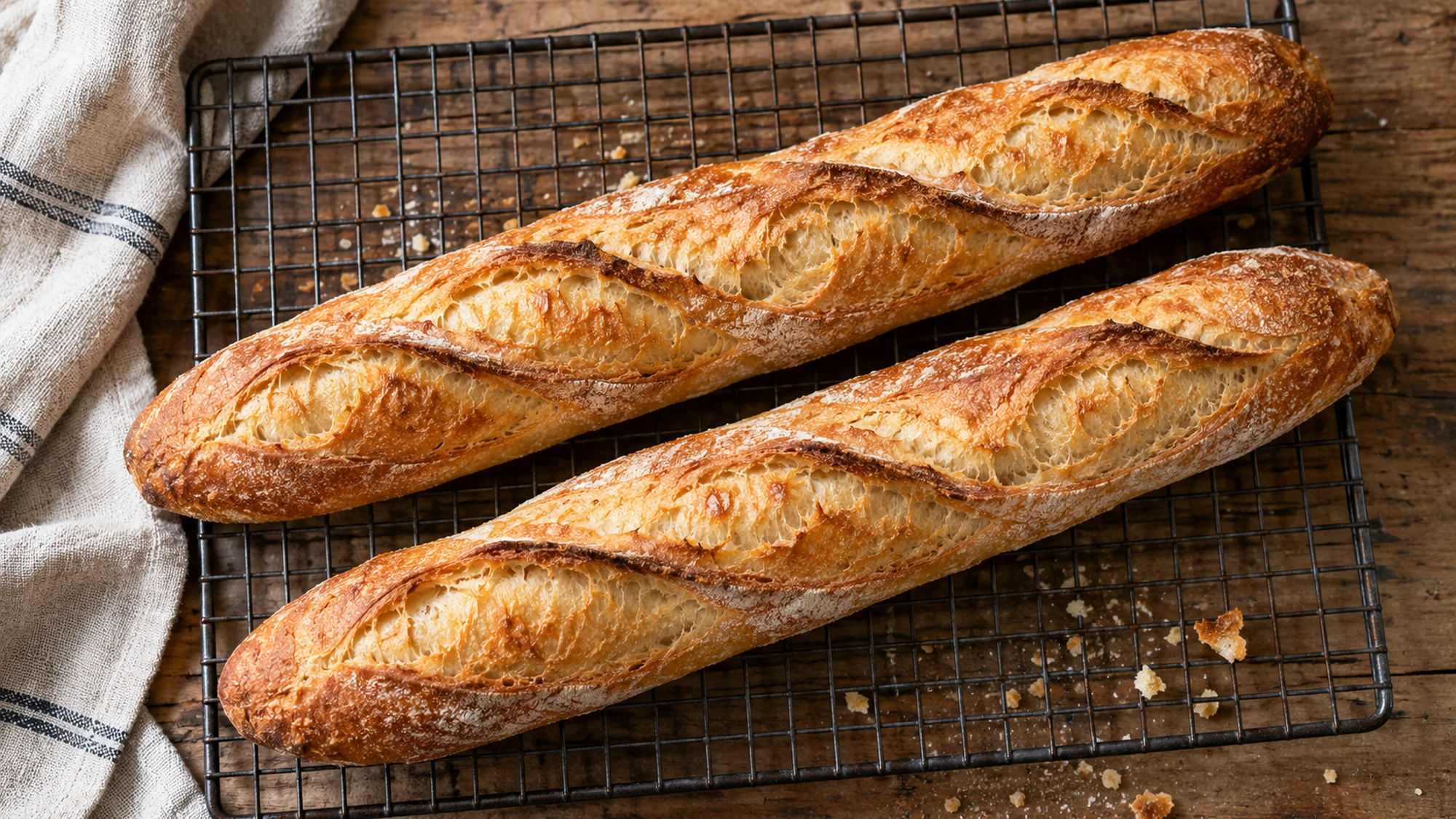
Let the loaves cool before reaching for a serrated knife. The crust is delicate while hot, and the interior needs time to settle; cutting immediately can compress the crumb. I prefer broad diagonal slices for an open sandwich and shorter, straight cuts alongside soup.
Choose accompaniments that make the bread useful rather than burying it. These loaves have no added butter or sugar, so they can move from a savory lunch to breakfast toast without competing with the topping.
- Soup night: Serve manageable pieces alongside tomato soup, white bean soup or vegetable stew. Keep extra bread separate from the bowl so the crust stays crisp.
- Open sandwiches: Add sliced tomatoes and cheese, or mashed white beans and herbs. Put wet ingredients on shortly before eating.
- Breakfast: Toast leftover slices and add an egg, nut butter or fruit. The narrower slices are easy to portion without turning breakfast into a towering sandwich.
- Freezer plan: Wrap fully cooled bread in meal-size portions and freeze rather than keeping a large cut loaf on the counter. Thaw only what you need.
Serve the first loaf fresh, and give the others a specific job. Planning for toast or the freezer is more useful than expecting a crisp, uncovered loaf to stay unchanged.
Baguette Variations and Shaping Choices
Keep the basic dough plain the first time so you can notice how it feels at each stage. This is a same-day version, not a sourdough formula; swapping in starter changes both the water balance and the fermentation schedule.
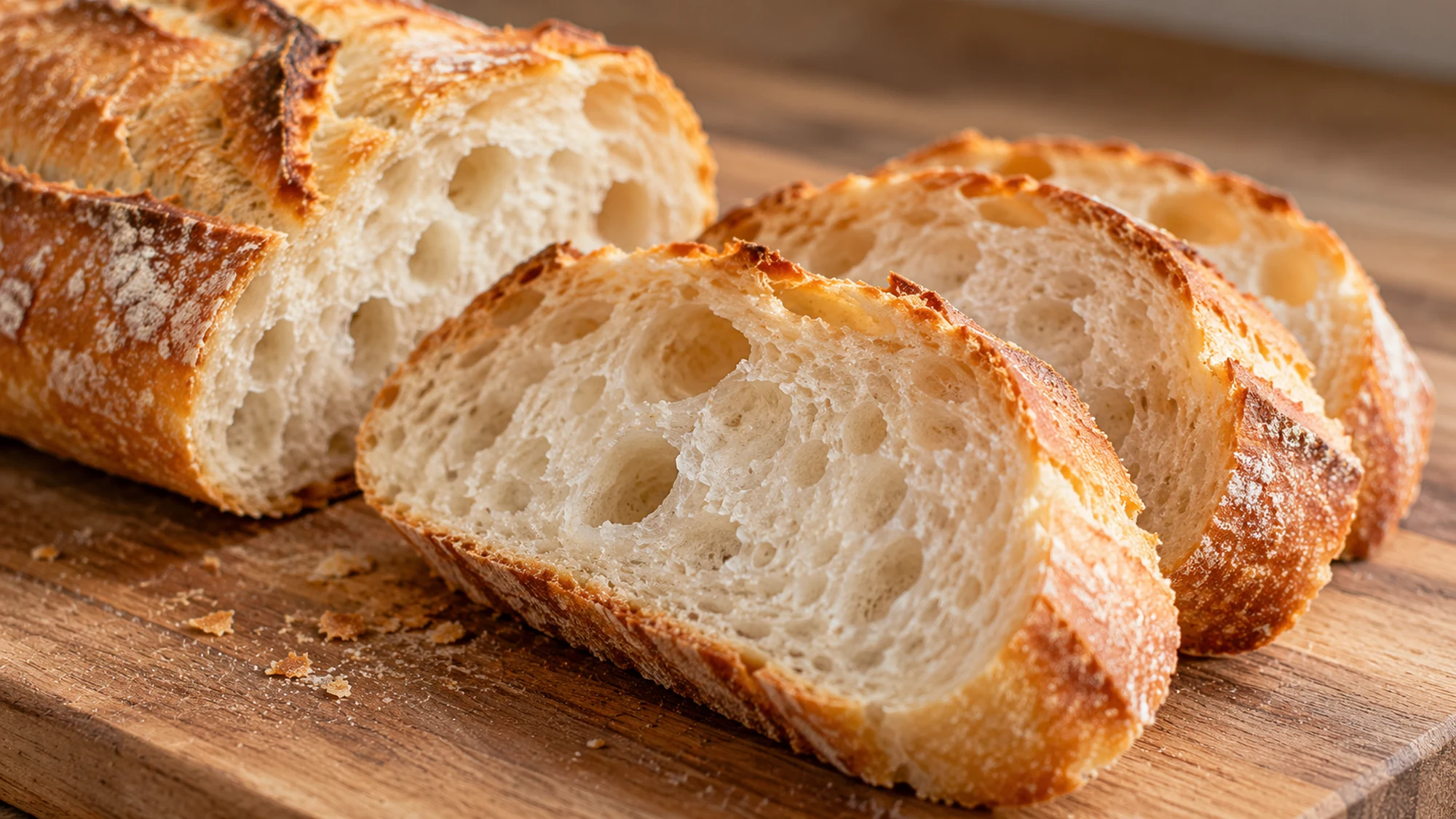
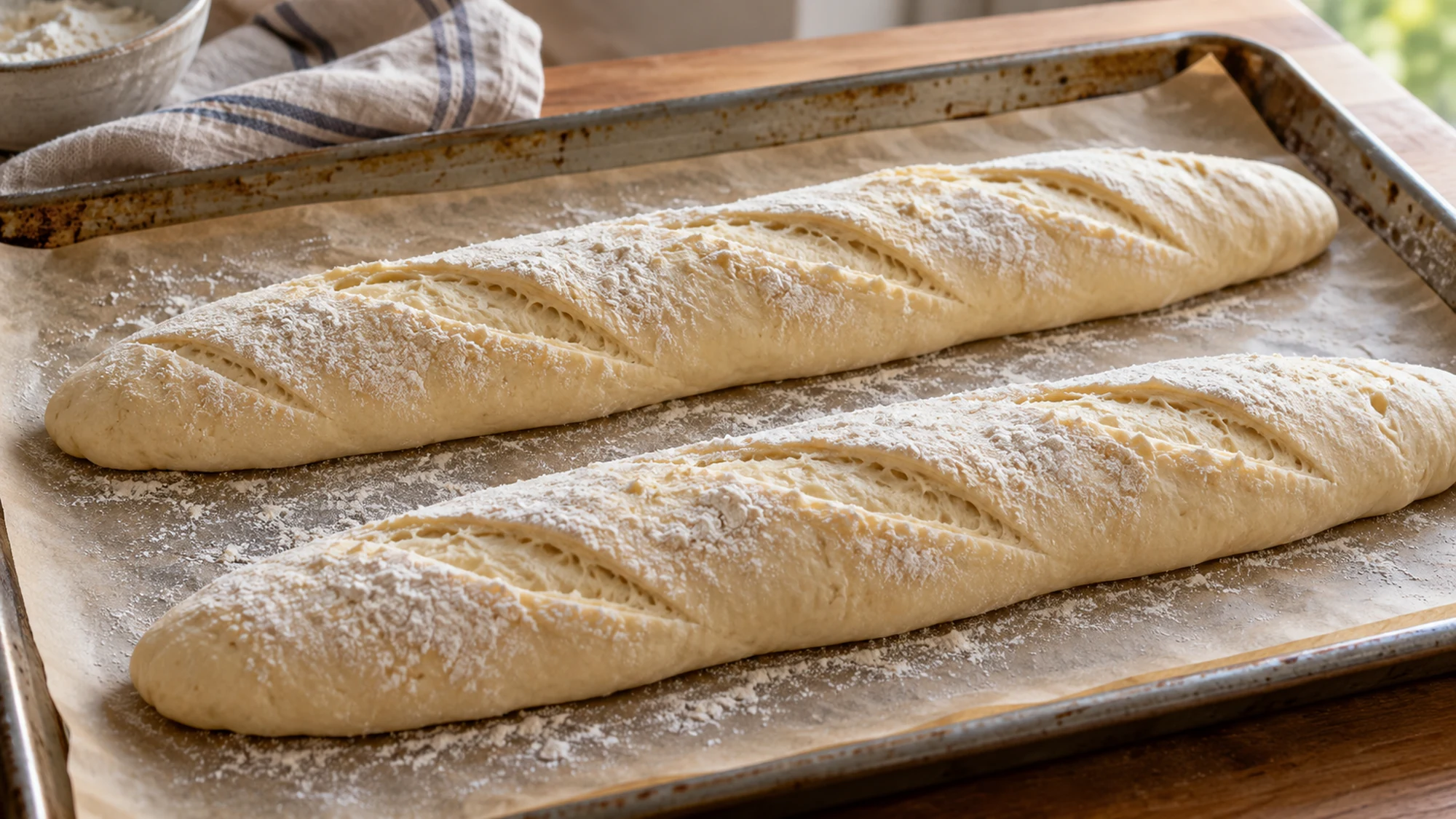
Shaping and scoring deserve more attention than decorative flour. King Arthur’s baguette technique guide explains why these steps matter. Think of the shallow overlapping cuts as planned expansion points, not deep stripes across the loaf.
| Choice | What changes | Practical decision |
|---|---|---|
| Shorter loaves | More compact shape | Make three shorter loaves if your pan cannot accommodate 14-inch lengths. |
| All-purpose flour | Supple dough, moderate chew | Use the specified flour before changing hydration. |
| Bread flour | Usually stronger dough | Expect a chewier result and different water absorption. |
| Added seeds | Different surface and flavor | Try them on a later batch; do not replace the flour with seeds. |
If the dough springs back while shaping, pause instead of pulling harder. A brief covered rest is a more useful adjustment than extra force or another dusting of flour.
Health Benefits in Context
The honest health benefit here is a flexible grain food that can accompany a varied meal, not a special nutritional advantage from the baguette shape. White flour supplies carbohydrate, and this recipe is not a whole-grain bread.
Health Canada’s explanation of whole grains notes their higher fiber content compared with refined grains. You can enjoy this loaf while choosing whole-grain foods elsewhere; there is no need to describe a white baguette as high fiber to justify making it.
- Consider the meal: Beans, vegetables, fish, eggs or another protein food bring things bread alone does not provide.
- Notice the toppings: Butter, cheese, spreads and cured meats change the meal’s fat, salt and overall energy content.
- Check allergies: This recipe contains wheat and gluten. Changing the flour requires a specifically developed gluten-free recipe, not a direct swap.
Treat bread as one part of the plate, and choose a serving that suits the meal. A homemade label does not remove the salt or make every portion nutritionally equivalent.
Bottom Line
A good baguette starts with manageable dough and patient handling. Keep the flour measured, allow the shaped loaves to become noticeably puffy, and give the crust time to dry as the bread cools.
I’d focus on those cues before chasing a dramatic open crumb. Three modest loaves with crisp edges and a tender middle are a very satisfying reason to clear some space on the counter.
Baguette Recipe

Ingredients
- 500 g unbleached all-purpose flour plus a little for shaping
- 350 g water lukewarm, not hot
- 3 g instant yeast
- 10 g fine salt
Equipment
- Digital scale
- Large mixing bowl
- Dough scraper
- Half-sheet pan
- Parchment rated for 450°F
- Clean towel
- Bread lame or sharp serrated knife
- Small sturdy metal roasting pan for steam
- Cooling rack
Instructions
- Mix flour, water, yeast and salt until no dry flour remains. Cover and rest 20 minutes. The dough should feel soft and tacky; do not add flour simply to make it dry.
- With damp hands, lift one edge and fold it over the center. Rotate the bowl and repeat on all four sides. Cover. Repeat these folds after 30 minutes and again after another 30 minutes. Let the dough continue rising until visibly aerated and roughly doubled, approximately 2 hours total from mixing; room temperature affects timing.
- Turn onto a lightly floured surface. Divide into three equal pieces, about 288 g each. Gently form short cylinders, cover and rest 15 minutes.
- Flatten each piece gently into a small rectangle without pressing out every bubble. Fold the top long edge toward the center, then the bottom edge over it; seal the seam. Roll from the center outward into a loaf about 14 inches long. If the dough resists, cover and rest 5 minutes before continuing.
- Place seam-side down on a parchment-lined half-sheet pan, leaving room between loaves. Cover loosely and let rise 35–50 minutes, until puffy and a light fingertip indentation returns slowly.
- Meanwhile heat the oven to 450°F. Set an empty, sturdy metal roasting pan on a lower rack. Do not use glass for steam. When ready to bake, make three or four shallow, overlapping diagonal cuts along each loaf.
- Place the bread on the middle rack. Wearing oven mitts and keeping your face and hands away from steam, carefully pour 1/2 cup hot water into the metal pan and close the door. Do not pour water onto the oven floor or door glass.
- Bake 22–28 minutes, until deeply golden and firm. Rotate the bread pan if needed for even browning. Transfer loaves to a rack and cool uncovered at least 30 minutes before slicing.