
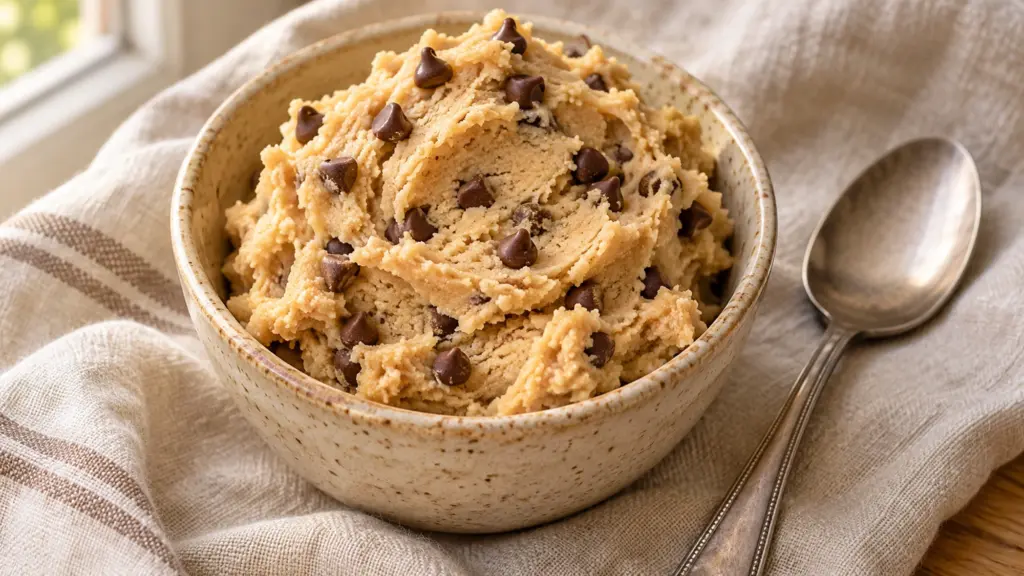
The chocolate chips are ready, the butter is soft, and the only thing missing is a dough you can actually eat without baking. Here’s how to make edible cookie dough with a creamy brown-sugar base: use commercially heat-treated flour specifically labeled ready to eat, leave out the eggs, and add just enough milk for a scoopable finish.

Choose the right flour before you start mixing. Ready-to-eat cookie dough is a separate recipe, not ordinary cookie dough with the eggs left out.
I’d keep the flavor familiar: vanilla, a little salt, and small chocolate chips scattered through each spoonful. The recipe below makes sixteen small dessert portions. It is meant for eating chilled, not for baking into cookies; there is no leavener, and the ingredient balance serves a different purpose.
Serving Edible Cookie Dough Without Overcomplicating It
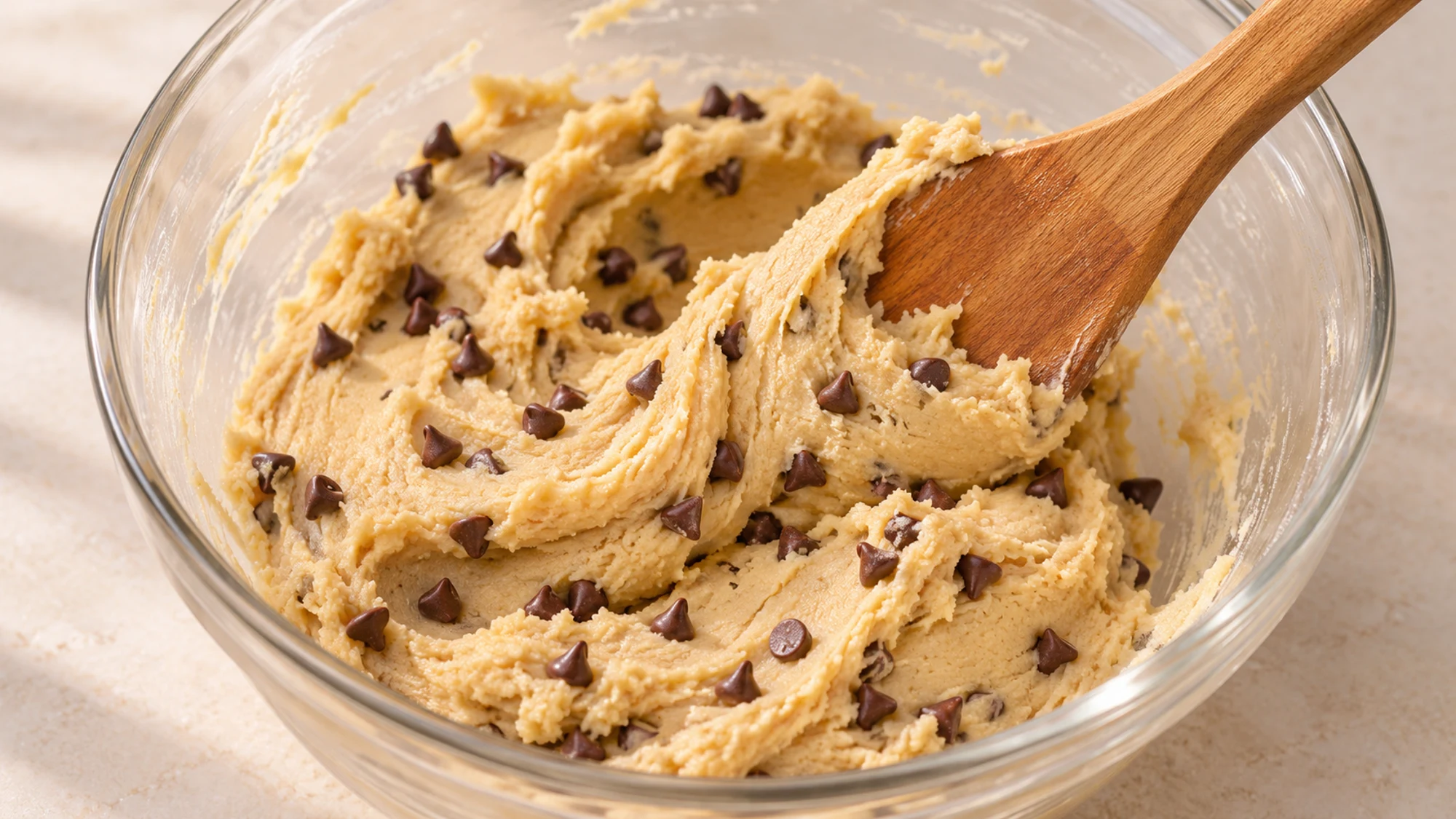
A small scoop in a ramekin is enough to show off the buttery texture. Serve it cool rather than refrigerator-hard: let only the portions you need soften briefly while the rest stays chilled. A teaspoon makes more sense here than an ice-cream-sized serving spoon.
- For a dessert plate: add fresh strawberries or apple slices separately so their moisture does not loosen the dough.
- For an ice cream topping: break a chilled portion into small pieces and scatter it over the scoop just before serving.
- For sharing: portion into individual cups with clean spoons instead of leaving one large communal bowl out.
If you want a different base, our chickpea cookie dough uses cooked chickpeas and peanut butter rather than wheat flour and butter. It has its own texture and allergen considerations; it is not a direct ingredient swap for this recipe.
Keep the serving extras simple. A crisp piece of fruit beside the soft dough gives more contrast than another handful of chocolate on top.
How to Make Edible Cookie Dough With Your Favorite Mix-Ins
Start with softened butter, not melted butter. It should yield when pressed but still hold its shape. Beat it with the sugars before adding the flour; this distributes the sugar and leaves fewer buttery lumps. Once the flour goes in, stop mixing as soon as the dry pockets disappear.
Different ready-to-eat flour products can absorb milk differently. Begin with one tablespoon, then add the second only if the dough remains crumbly. I prefer a slightly firm mixture before chilling; trying to rescue a runny bowl usually means adding more flour and changing the flavor balance.
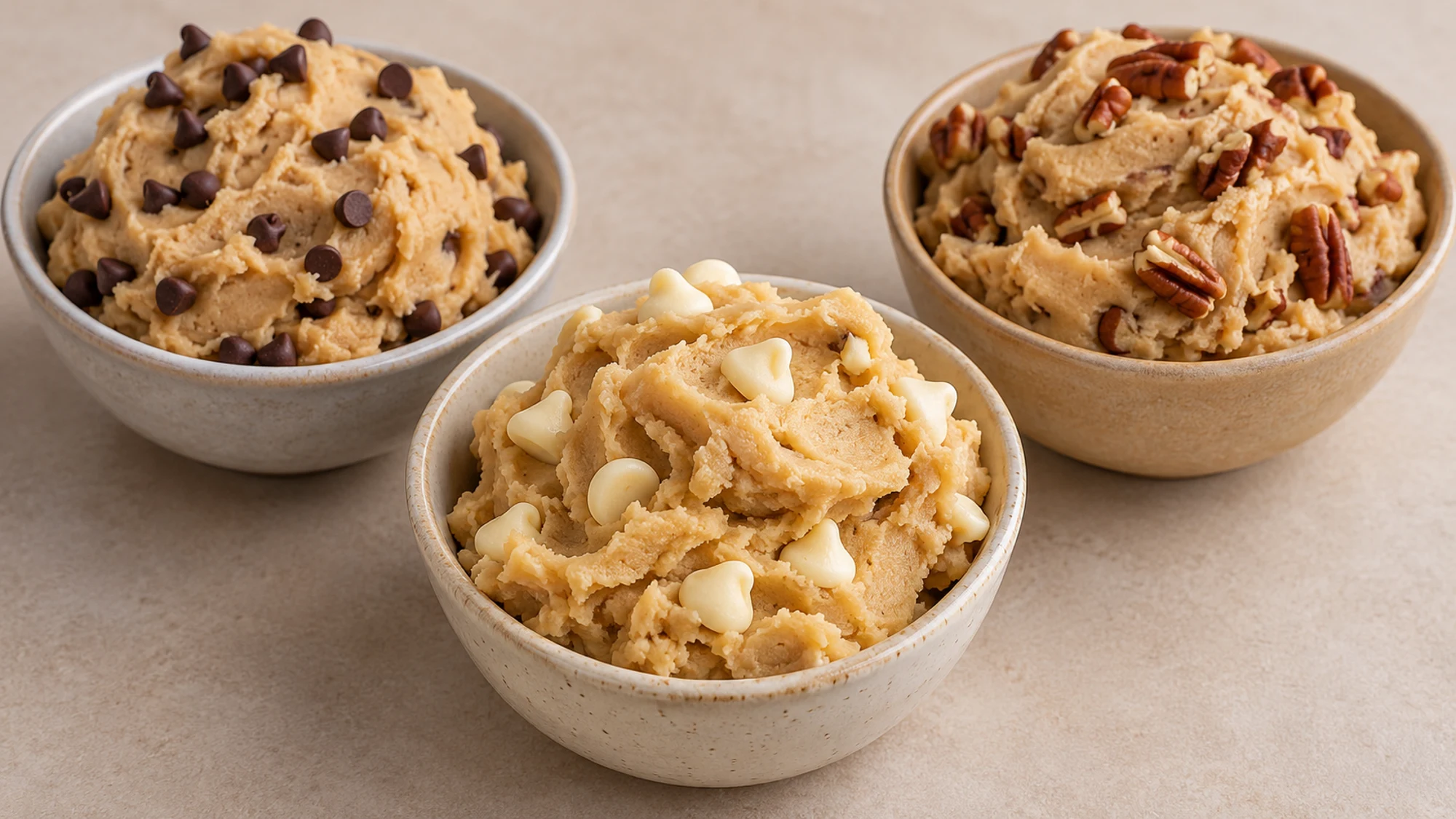
| Change | Result | Keep in mind |
|---|---|---|
| Mini dark chocolate chips | Chocolate in smaller bites | Use the same chocolate amount. |
| White chocolate chips | A sweeter, milder contrast | Check milk and other allergens. |
| Chopped toasted pecans | Nutty flavor and crunch | Replace some chips; introduces tree nuts. |
| Extra milk | Softer dough | Add by the teaspoon after the initial amount. |
Mix-ins are flexible; flour safety is not. Ordinary wheat, oat, almond, or other flour is not automatically suitable for an uncooked dessert.
Health Benefits and the More Important Safety Distinction
This is a sweet dessert, not a high-protein snack or a health food in disguise. Butter, sugar, and chocolate provide most of its richness. Leaving out eggs changes the recipe, but it does not remove wheat or milk, and chocolate chips may contain soy.
The practical benefit is being deliberate about ingredients. South Dakota State University Extension explains why commercially processed ready-to-eat flour and other ready-to-eat ingredients matter. A package that simply says “heat-treated” is not enough if the manufacturer still requires cooking.
- Read every package when cooking for someone with allergies; an egg-free ingredient list is not a guarantee against cross-contact.
- Keep raw baking flour away from the bowl, utensils, and prepared dessert.
- Use pasteurized milk and clean equipment, and wash your hands before handling the ingredients.
Judge this recipe as a small dessert you enjoy, with clear ingredient choices and a portion that suits you.
Bottom Line
The FDA advises against heat-treating flour at home; a microwave or oven treatment is not a dependable replacement for a validated commercial process. If suitable flour is unavailable, choose a flour-free recipe rather than improvising a safety step.
Cover and refrigerate the finished dough promptly at 40°F (4°C) or colder. Make a small batch, use within three to four days, and freeze portions you will not use in that time. Keep the container dated and use a clean spoon each time.
Start with labeled ready-to-eat flour, mix for texture, and keep the finished dough chilled. Those choices matter more than an elaborate topping.
How to Make Edible Cookie Dough Recipe


Ingredients
- 1 cup commercially heat-treated wheat flour 120 g; specifically labeled ready to eat without cooking; not home-treated
- 0.5 cup unsalted butter 113 g, softened
- 0.5 cup packed light brown sugar 100 g
- 2 tablespoons granulated sugar 25 g
- 1 teaspoon vanilla extract
- 0.25 teaspoon fine salt
- 1–2 tablespoons pasteurized milk add only as needed
- 0.5 cup mini semisweet chocolate chips 85 g
Equipment
- Mixing bowl
- Hand mixer
- Measuring cups and spoons
- Silicone spatula
- Airtight storage container
Instructions
- Check that the flour is commercially processed and explicitly labeled ready to eat without cooking. Gather the ingredients and clean bowl, beaters, spatula and measuring utensils. Do not substitute ordinary flour or flour heated at home.
- Beat the softened butter, brown sugar and granulated sugar with a hand mixer for about 2 minutes, until evenly combined and creamy. Scrape down the bowl.
- Mix in the vanilla, salt and 1 tablespoon milk. Add the ready-to-eat flour and mix on low just until no dry pockets remain. If crumbly, add up to 1 additional tablespoon milk a teaspoon at a time.
- Fold in the chocolate chips with a spatula. Cover and refrigerate for 20 minutes, until scoopable. Divide into 16 small dessert portions; this dough is not formulated for baking.
- Refrigerate promptly at 40°F (4°C) or colder and use within 3–4 days, or freeze individual portions. Discard after more than 2 hours at room temperature, or 1 hour above 90°F (32°C).