
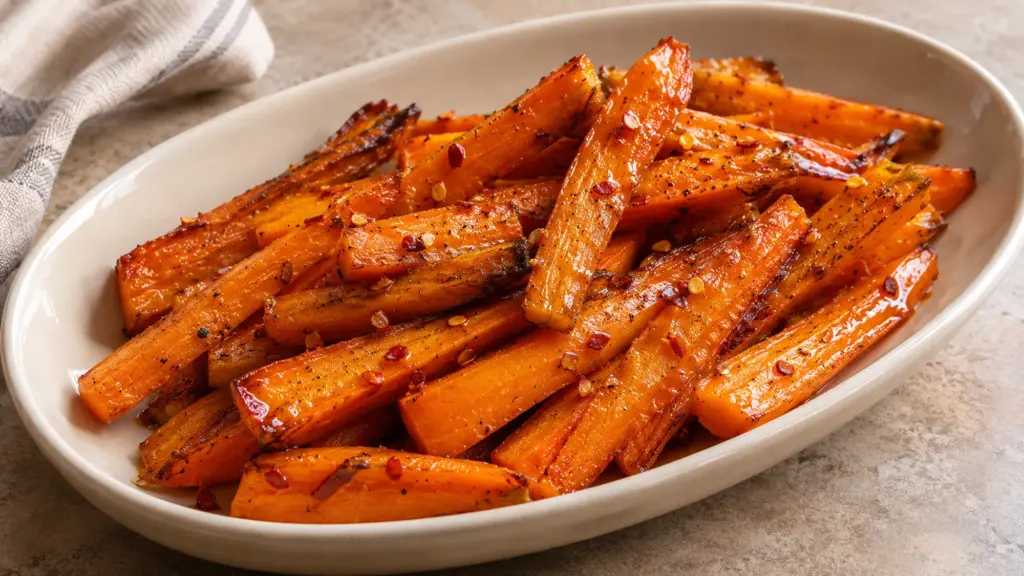
Carrots can look beautifully browned on the outside and still resist a fork in the middle. For these hot honey roasted carrots, the useful trick is keeping the pieces similar in thickness and saving the sticky finish for the serving bowl. That gives the oven one job: soften the carrots and build some color.
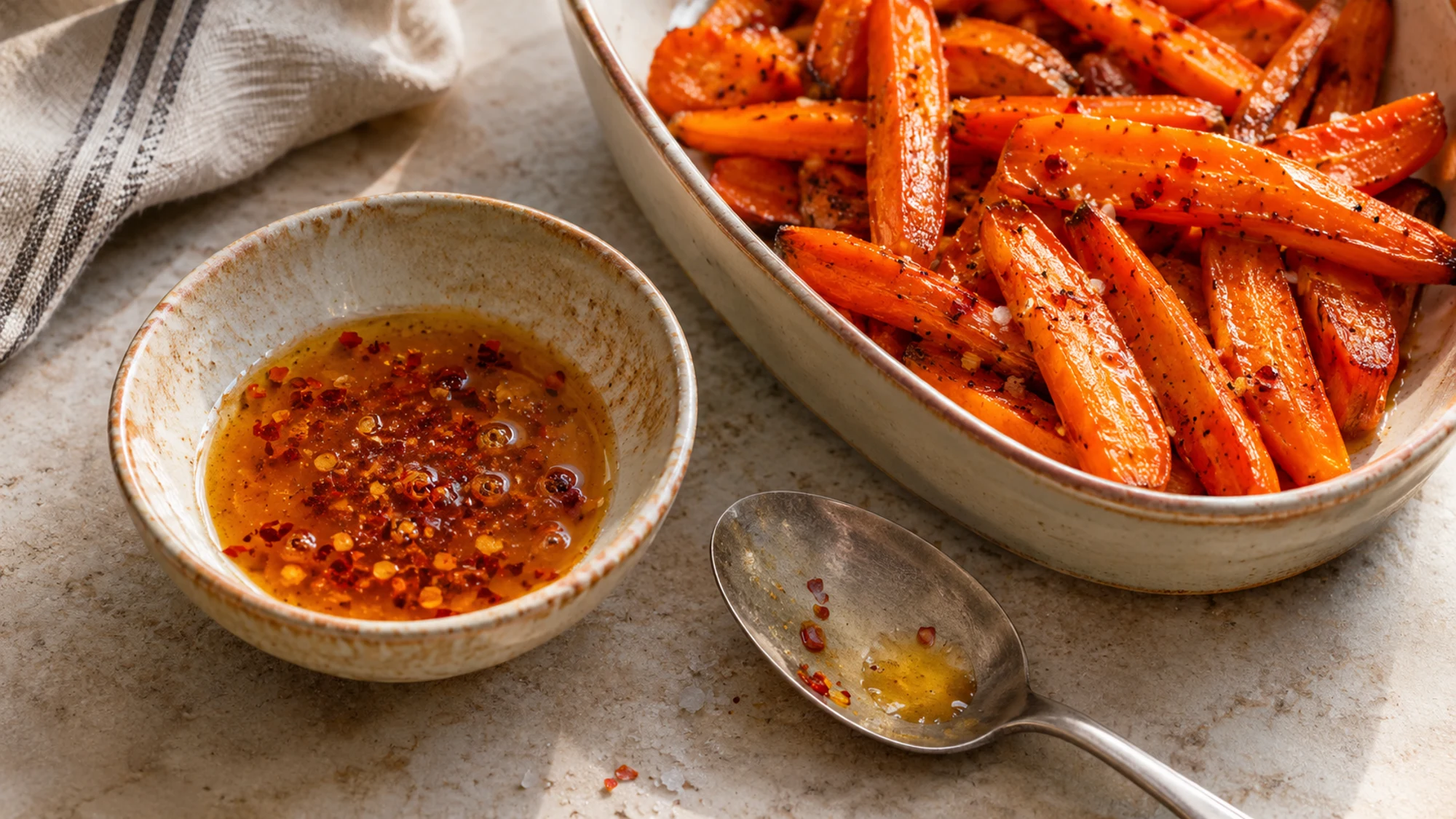
Roast evenly cut carrots with olive oil, salt and pepper, then toss the hot pieces with honey, chile flakes and a little cider vinegar. The glaze stays glossy, and you can adjust the heat before the whole bowl reaches the table.
I prefer the carrots to taste like carrots first, with a little sweetness and a warm finish behind them. There is no need to hide them under a heavy sauce. A roomy tray matters more than an elaborate seasoning mix, especially if the carrots are unusually thick.
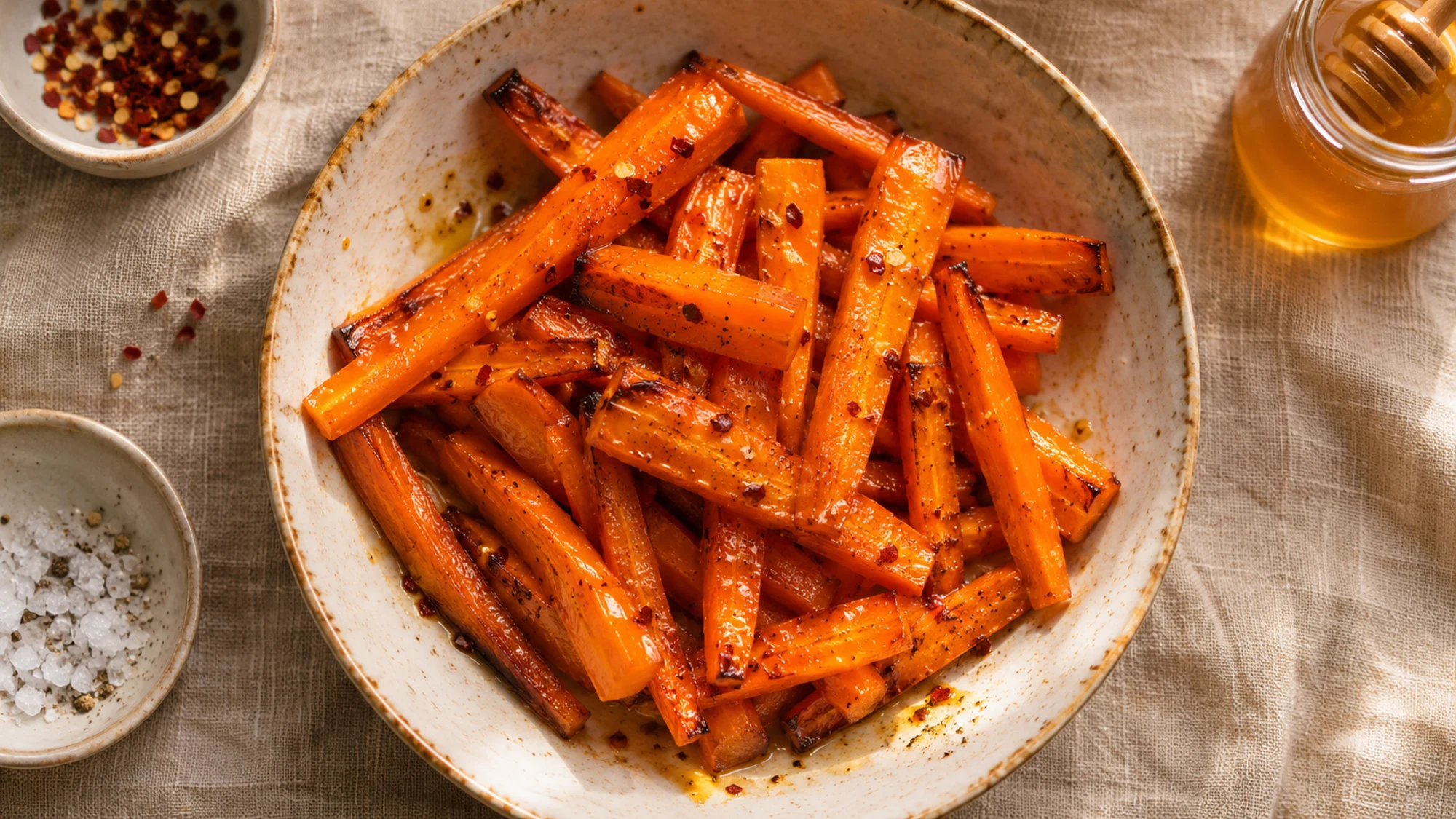
Serving Hot Honey Roasted Carrots
Serve them warm beside a fairly simple main dish. The sweet-hot glaze brings enough contrast to roasted chicken, seared pork or a bowl of lentils that you can leave the rest of the plate uncomplicated. A spoonful of the glaze left in the mixing bowl belongs on the carrots, not down the sink.
For a fish dinner, the gentle seasoning in this oven-roasted salmon makes a useful partner. Cook the two dishes separately if their oven temperatures or finish times do not match; holding fish in a hot oven while carrots catch up is not the best trade.
- Keep the heat flexible: Toss a small portion with honey and vinegar before adding chile to the rest.
- Give a grain bowl contrast: Add the carrots alongside beans and a plain grain, rather than treating the vegetable as the meal’s protein source.
- Serve without stacking: A broad dish shows off the edges better than a deep, tightly packed bowl.
A measured glaze and a quiet main dish let the carrots do their share of the work. Add extra chile at the table rather than making every portion equally fiery.
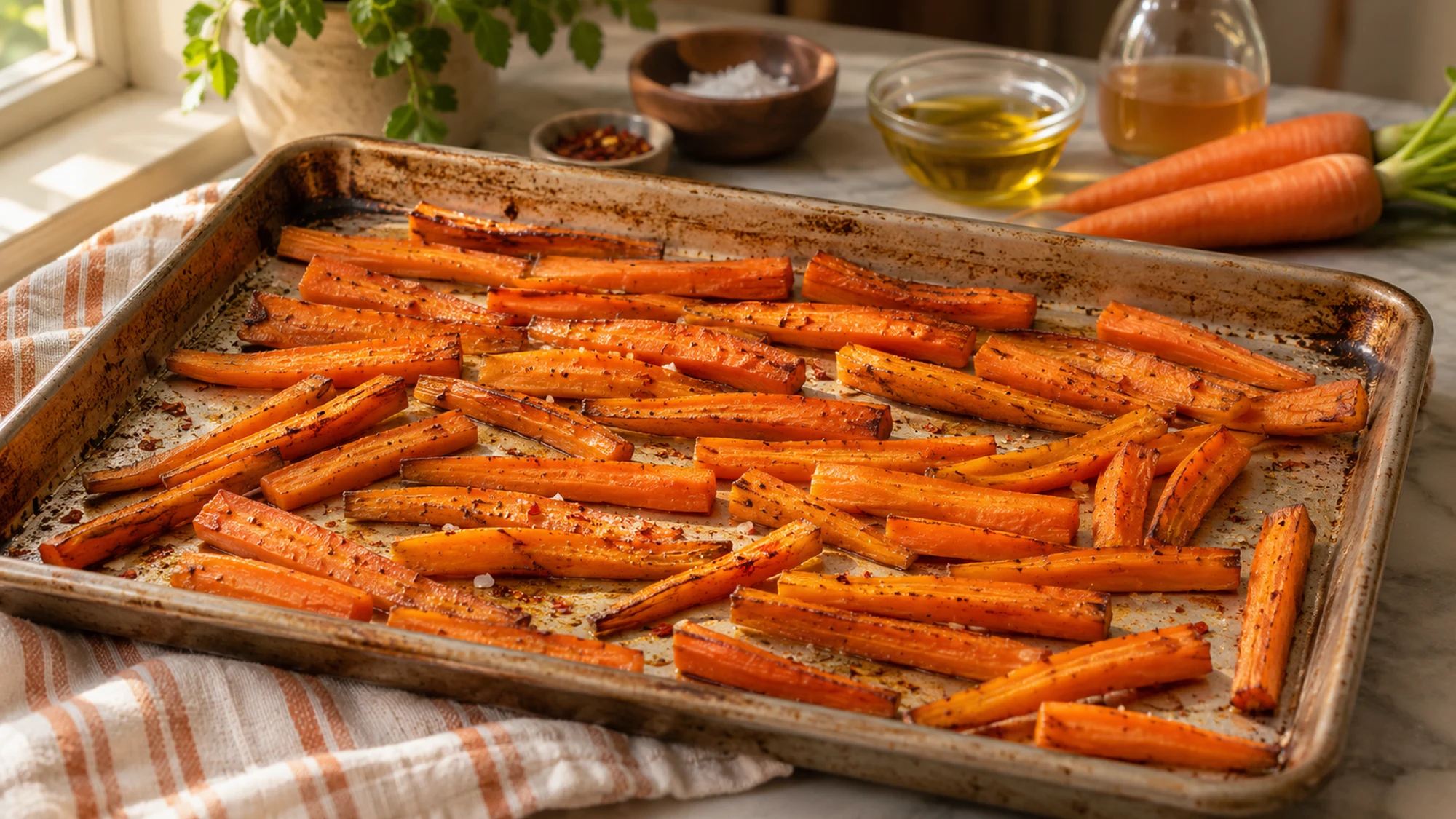
Variations for Hot Honey Roasted Carrots
Cut size is the adjustment worth making first. Split a thick carrot lengthwise before cutting it into shorter lengths; a very slender carrot may need less cutting. Aim for comparable thickness rather than perfectly matching lengths, because the thickest piece determines how long you wait.
I would change one flavor at a time. Lemon can replace the cider vinegar for a different brightness, while maple syrup gives a distinct alternative to honey rather than an identical result. Neither switch fixes a crowded tray; use a second pan when a double batch cannot sit in one layer.
| Change | What it does | What to watch |
|---|---|---|
| Less chile | Keeps the honey-vinegar finish mild | Start small; flakes vary in heat |
| Lemon for vinegar | Adds a citrus note | Use the same small measured amount initially |
| Maple syrup for honey | Makes a different sweet glaze | The flavor and thickness change |
| Two trays | Leaves space for browning | Rotate and check each tray separately |
- If the tips darken early: Check whether the pieces taper sharply; trim or split the thicker ends more evenly next time.
- If the tray looks wet: Let the carrots roast in a single layer rather than covering them. Check tenderness before chasing deeper color.
- If the glaze tastes too assertive: Stop adding it. The carrots do not need to sit in a puddle.
Build the roasted texture first, then add the sweet heat. A sticky glaze cannot rescue a hard center or a crowded pan.
Health Benefits and a Measured Glaze
Carrots provide carotenoids, including beta-carotene, which the body can convert to vitamin A. The NIH vitamin A overview explains its role in normal vision and other body functions. That is a reason to enjoy a variety of vegetables, not a promise that this particular side improves eyesight.
- Honey contributes added sugar, even when the recipe uses only a modest amount. Measure it before deciding whether the finished carrots need more.
- Olive oil helps coat the vegetables for roasting and contributes energy; an extra pour is not required for every dry-looking spot.
- Do not give honey-containing foods to children younger than 12 months, following CDC infant-feeding guidance.
Enjoy the color, texture and sweet-spicy contrast without turning a vegetable side into a health claim. The rest of the plate still matters.
Bottom Line
Even cuts, room on the pan and an off-heat glaze make these hot honey roasted carrots easy to understand and adjust. For leftovers, follow FoodSafety.gov storage guidance: refrigerate in shallow containers within two hours, or one hour above 90°F (32°C), use within three to four days and reheat to 165°F (74°C).
Let a fork tell you when the carrots are tender, then taste the glaze on one piece. That small pause keeps the sweetness and heat where you want them.
Hot Honey Roasted Carrots Recipe

Ingredients
- 2 lb carrots trimmed; cut into similar ½-inch-thick batons
- 2 tbsp olive oil
- 0.5 tsp fine salt
- 0.25 tsp black pepper
- 2 tbsp honey
- 1 tsp apple cider vinegar
- 0.25 tsp red chile flakes more at the table if desired
Equipment
- 13 × 18-inch rimmed baking sheet
- Heat-rated baking parchment
- Knife and cutting board
- Mixing bowl and small bowl
- Measuring spoons and whisk
- Spatula
Instructions
- Heat the oven to 425°F (220°C). Line a 13 × 18-inch rimmed baking sheet with parchment rated for that temperature.
- Wash and trim the carrots. Cut into batons about 2 inches long and ½ inch thick, splitting thick pieces so they cook evenly.
- Toss the carrots with olive oil, salt and black pepper. Spread in one layer with space between pieces; use a second pan if needed.
- Roast for 30–35 minutes, turning after about 18 minutes, until browned in places and tender when pierced with a fork. Check each pan separately.
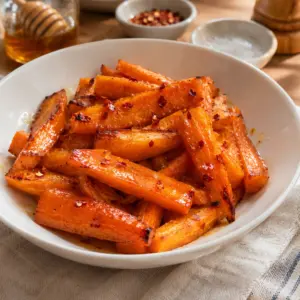
- Whisk honey, cider vinegar and chile flakes together in a small bowl. Transfer the hot carrots to a clean serving bowl, add the glaze and toss. Taste before adding extra chile; serve warm.