
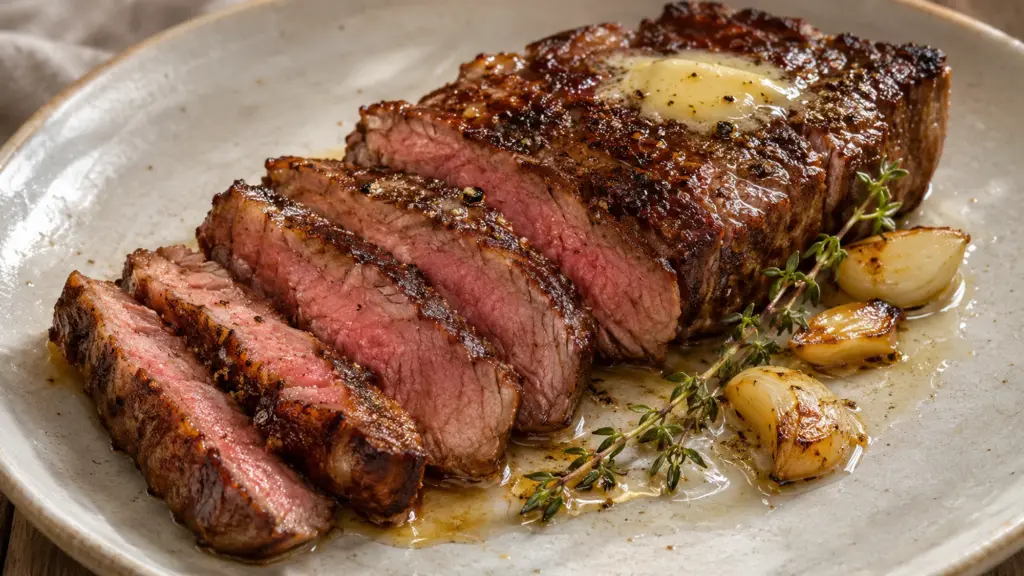
The steak is browning, the butter is foaming, and suddenly the clock seems less helpful than it did a minute ago. Knowing how to cook steak in a skillet comes down to managing that heat and checking the center, not memorizing a time for every cut. This version uses boneless strip steaks and a small garlic-thyme butter finish.
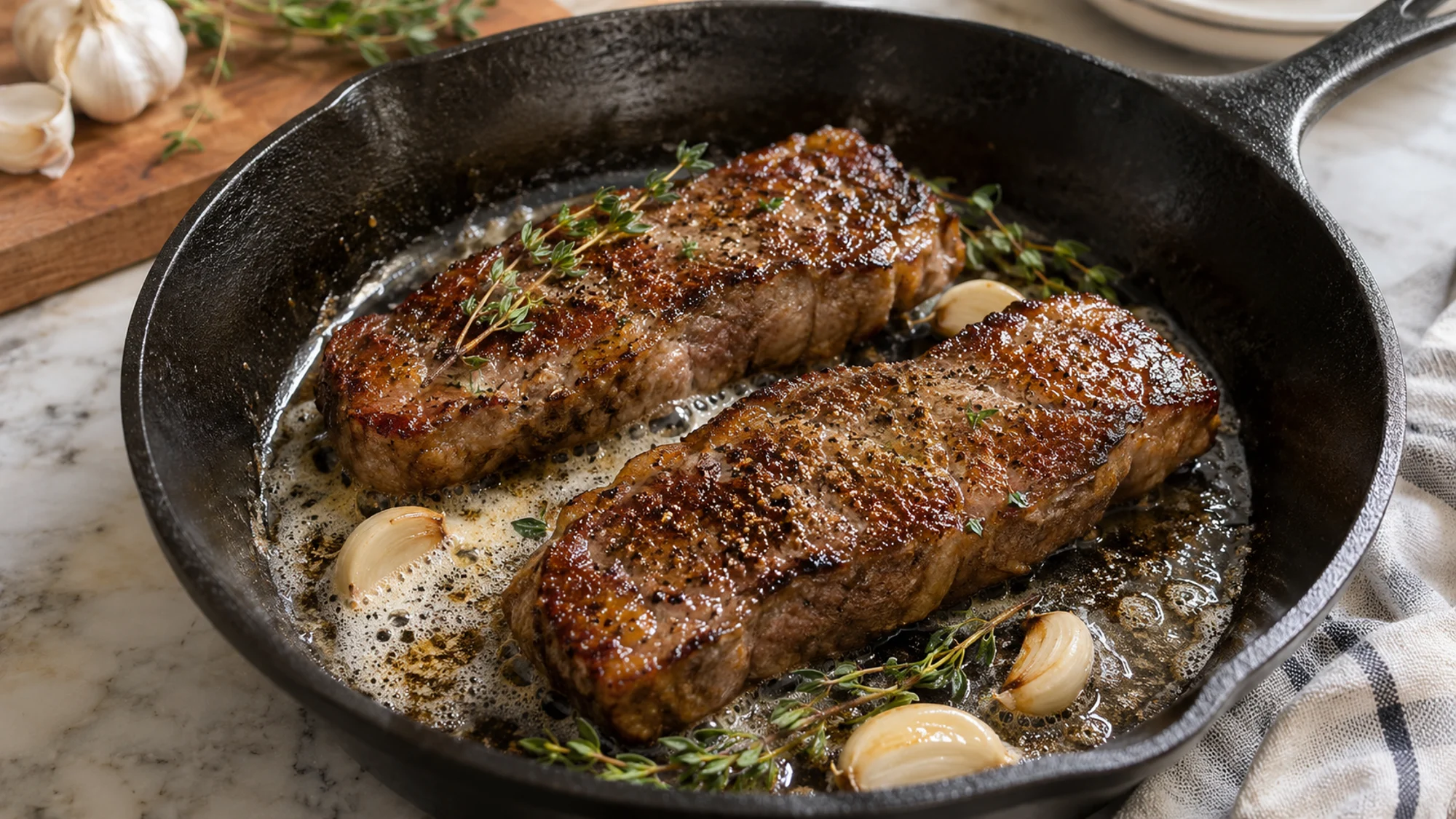
Pat the steaks dry, sear in a hot heavy skillet, then lower the heat before adding butter, garlic and thyme. Use a thermometer to reach at least 145°F (63°C), and rest the meat for at least three minutes before serving.
I would choose two steaks of similar thickness over two steaks that merely weigh the same. A thin end cooks differently from a thick center, and no confident-looking timer can change that. Have the sides nearly ready before the steaks enter the pan; the final few minutes deserve your attention.
Serving Suggestions for How to Cook Steak
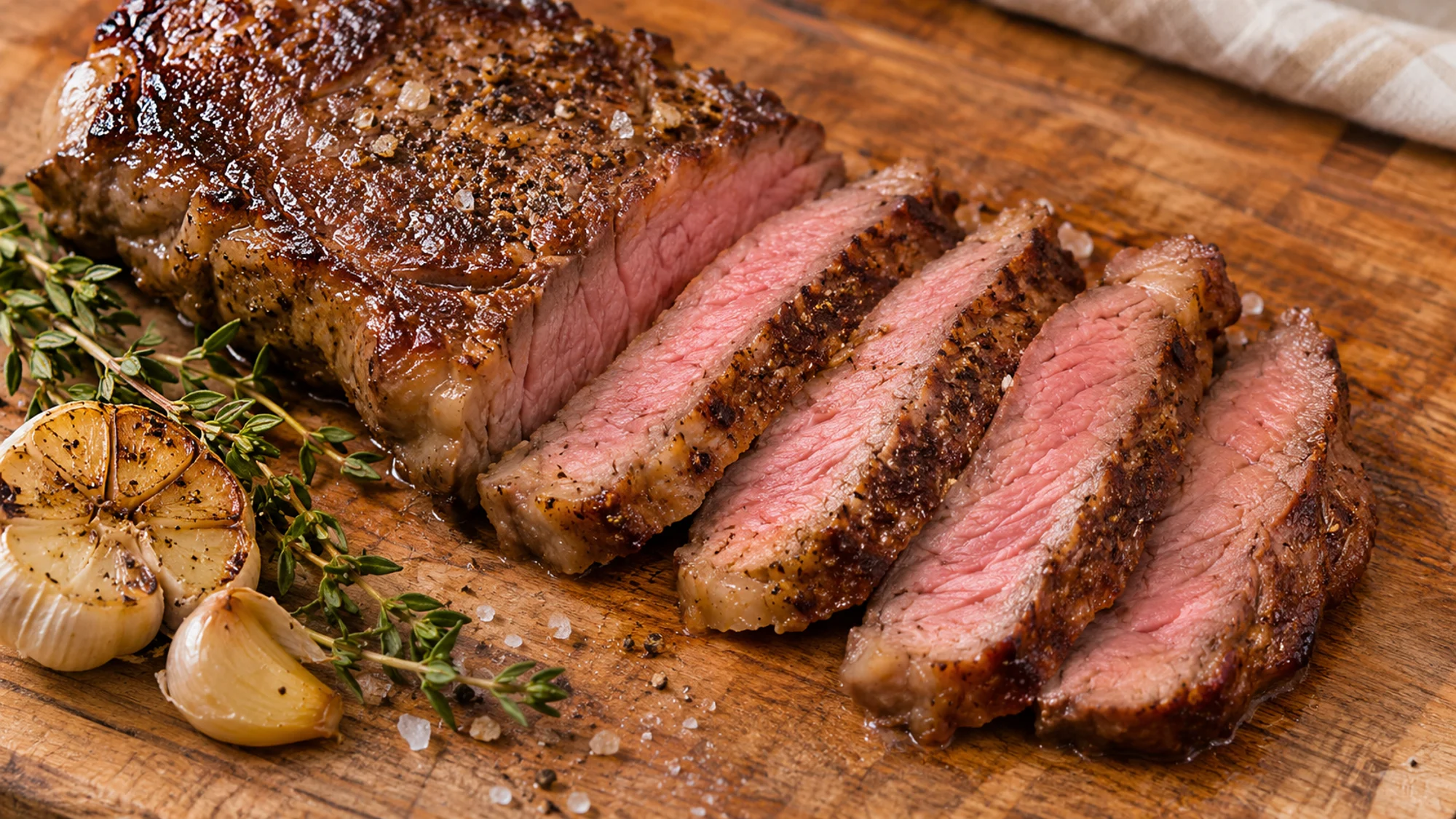
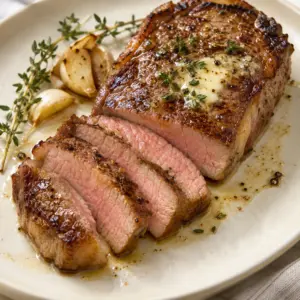
Rest the cooked steaks on a clean board or warm plate, not the dish that held them raw. Once rested, slice across the visible muscle grain so each bite contains shorter fibers. Spoon a little of the garlic butter over the slices rather than drowning the crust you just worked to build.
A crisp-skinned air-fryer jacket potato is a practical partner because it can cook separately. A green salad or plainly cooked vegetables brings a different texture, while a rich creamy sauce is entirely optional. I prefer one buttery element on the plate rather than several competing ones.
- Portion at the board: Two 12-ounce raw steaks make four moderate servings when sliced and shared with sides; cooked weight will be lower.
- Keep the juices: Add the small amount collected during resting to the serving plate, not to a bowl of raw-meat marinade.
- Serve promptly: Resting is useful; leaving sliced steak uncovered for a long wait simply cools dinner.
A clean board, a short rest and a sharp knife are part of serving, not an afterthought. Slice when the rest of the plate is ready.
Variations and Heat Control
The method here is for boneless strip steaks about one inch thick. Thinner steaks need earlier checks; very thick steaks may benefit from a separate skillet-to-oven method instead of a longer hard sear. Do not treat the same cooking time as a promise for every cut.
Butter belongs near the end, after the pan’s heat has been reduced. It should foam gently around the garlic and thyme, not rapidly turn black. If the pan smokes heavily, lower the heat; a darker crust is not automatically a better crust, especially while the center is still underdone.
| Decision | Useful choice | Reason |
|---|---|---|
| Steak thickness | Use similar 1-inch cuts | More predictable cooking |
| Crowded skillet | Cook in batches | Keeps good contact with the pan |
| Butter darkens rapidly | Reduce heat | Protects the garlic-butter finish |
| Center temperature | Check with a thermometer | Color and firmness are not a safety test |
- Swap the herb: Rosemary gives a different aroma from thyme. Use a sprig, not a large handful that crowds the butter.
- Skip butter if needed: The steak can be served without it; that changes the finish rather than requiring an imitation dairy ingredient.
- Keep garlic chunky: Lightly crushed cloves are easier to move out of a hot spot than finely minced pieces.
- Turn thoughtfully: Establish some color, then turn and monitor both sides. Avoid pressing the meat flat to squeeze out liquid.
The burner knob is an ingredient you control. Use enough heat to brown the surface, then make room for the center to finish without burning the aromatics.
Health Benefits and Safe Doneness
Beef contributes protein and nutrients including iron, but the cut, portion and added butter affect the overall meal. The USDA food-group overview places protein foods alongside vegetables, grains and other groups rather than treating any one ingredient as a complete diet.
- Follow the federal minimum-temperature guidance: whole beef steaks should reach 145°F (63°C) and rest at least three minutes.
- Insert the thermometer from the side toward the thickest center, avoiding fat pockets or contact with the pan. The beef industry thermometer guide illustrates that placement.
- Keep raw-meat tools and plates separate from cooked food. Wash your hands after handling the raw steaks and clean contacted surfaces.
Use temperature for the safety decision and portion size for the meal you want. A rosy center or a dark crust alone cannot establish that the steak is safely cooked.
Bottom Line
Learning how to cook steak does not require a restaurant burner or an elaborate sauce. Start with dry, similar-thickness steaks, leave room in the skillet and lower the heat for the butter finish. The recipe’s times are a checking window, not a reason to ignore the thermometer.
Give the surface time to brown, the center time to finish and the cooked steak time to rest. Those three jobs matter more than a dramatic sizzle.
How to Cook Steak Recipe

Ingredients
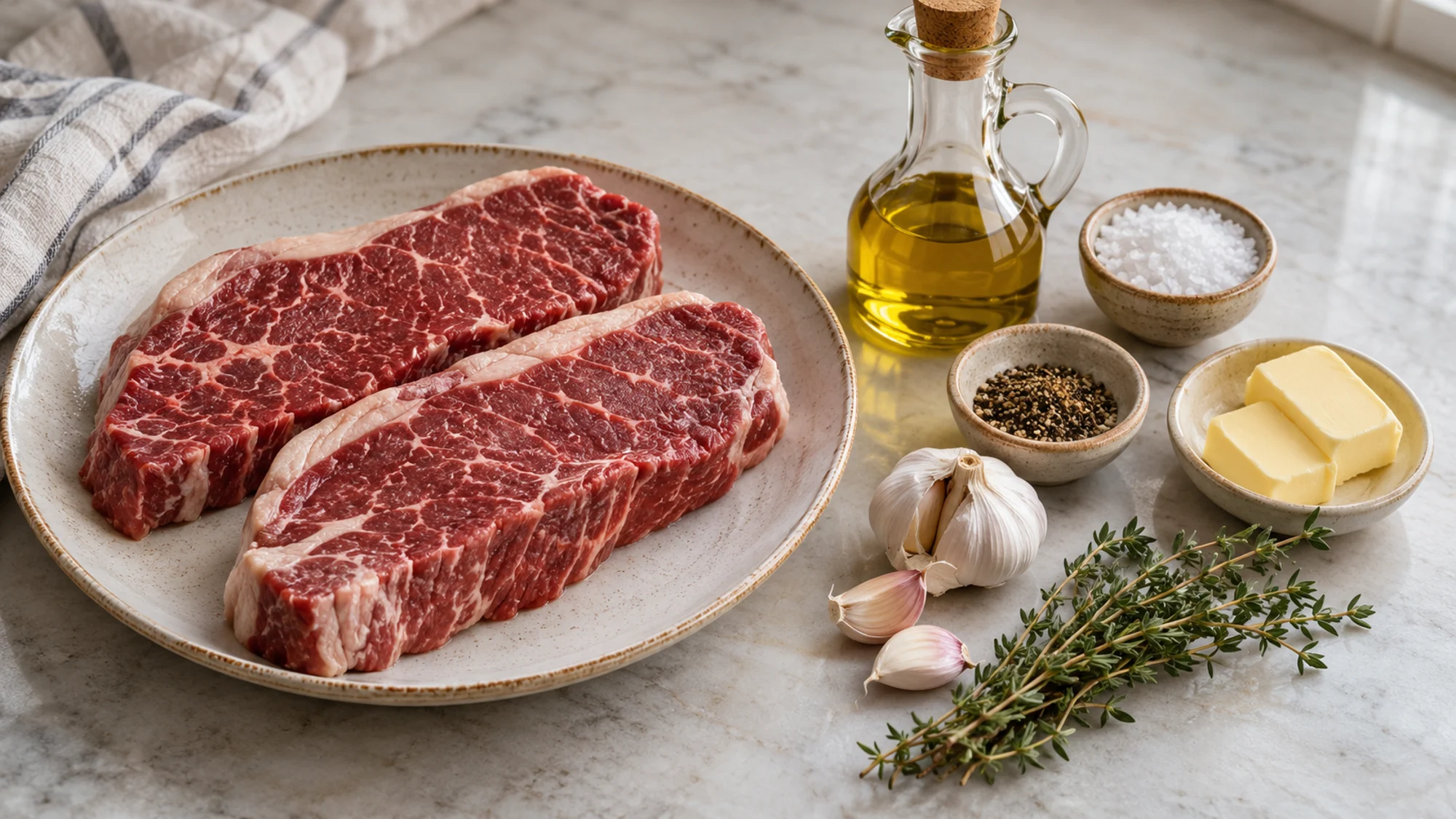
- 2 boneless strip steaks 12 oz each, about 1 inch thick
- 1 tbsp olive oil
- 0.75 tsp fine salt
- 0.5 tsp black pepper
- 2 tbsp unsalted butter
- 2 garlic cloves lightly crushed
- 2 sprigs fresh thyme
Equipment
- 12-inch heavy cast iron skillet
- Tongs and metal spoon
- Instant-read thermometer
- Clean cutting board and knife
- Paper towels
Instructions
- Pat the steaks thoroughly dry with paper towels on a dedicated plate. Season both sides with the salt and black pepper. Wash your hands after handling the raw meat.
- Warm a 12-inch heavy skillet over medium-high heat. Add the olive oil. When it shimmers, lay the steaks in carefully, leaving room between them. Cook in batches if needed.
- Sear for about 3–4 minutes on the first side until browned, then turn and cook another 3 minutes. Reduce the heat if the pan smokes heavily or the surface darkens too quickly.
- Lower the heat to medium-low. Add the butter, garlic and thyme. As the butter foams, spoon it over the steaks and turn as needed, cooking until an instant-read thermometer inserted from the side into the thickest center reads at least 145°F (63°C). Expect about 10–12 minutes total cooking, but use the temperature rather than time.
- Move the steaks to a clean board and rest at least 3 minutes; about 5 minutes is convenient before slicing. Slice across the grain and divide among four servings. Spoon over a little pan butter and serve.