
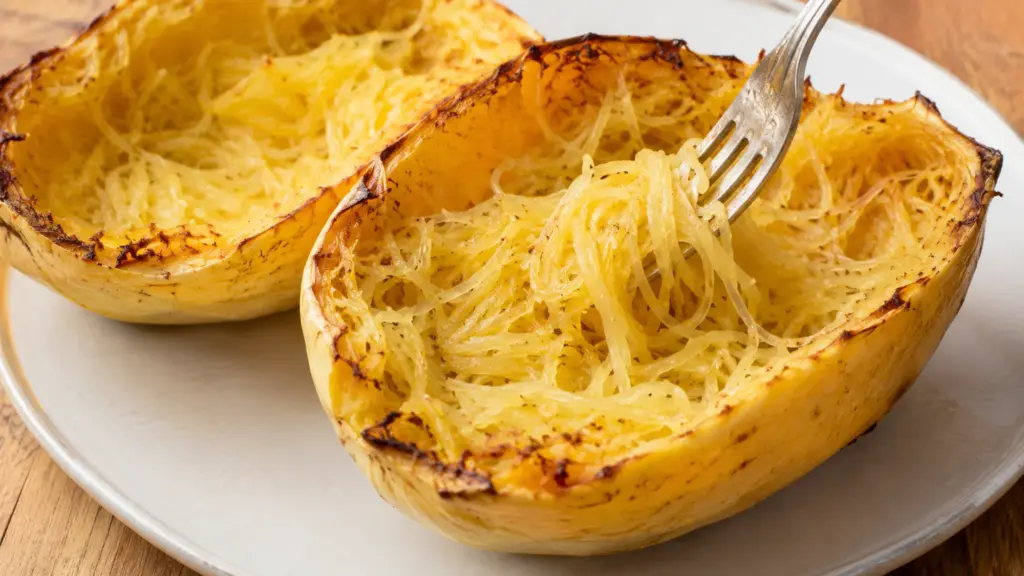
A fork is supposed to turn spaghetti squash into strands, not a wet heap. If you are wondering how to cook spaghetti squash with some texture left, start with a simple roast and check the flesh before it completely collapses. The goal is a vegetable with a gentle bite, not a convincing impersonation of wheat pasta.

Roast the seeded halves cut-side down at 400°F (200°C), using just a light coating of olive oil. Check for tenderness, let the squash cool enough to handle, then lift the strands with a fork instead of vigorously mashing them.
I would rather add a spoonful of sauce to the finished squash than bake it under a heavy topping from the start. That makes it easier to judge the texture and use the same batch in more than one meal. A three-pound squash is a useful starting size here, but the fork test matters more than its label.
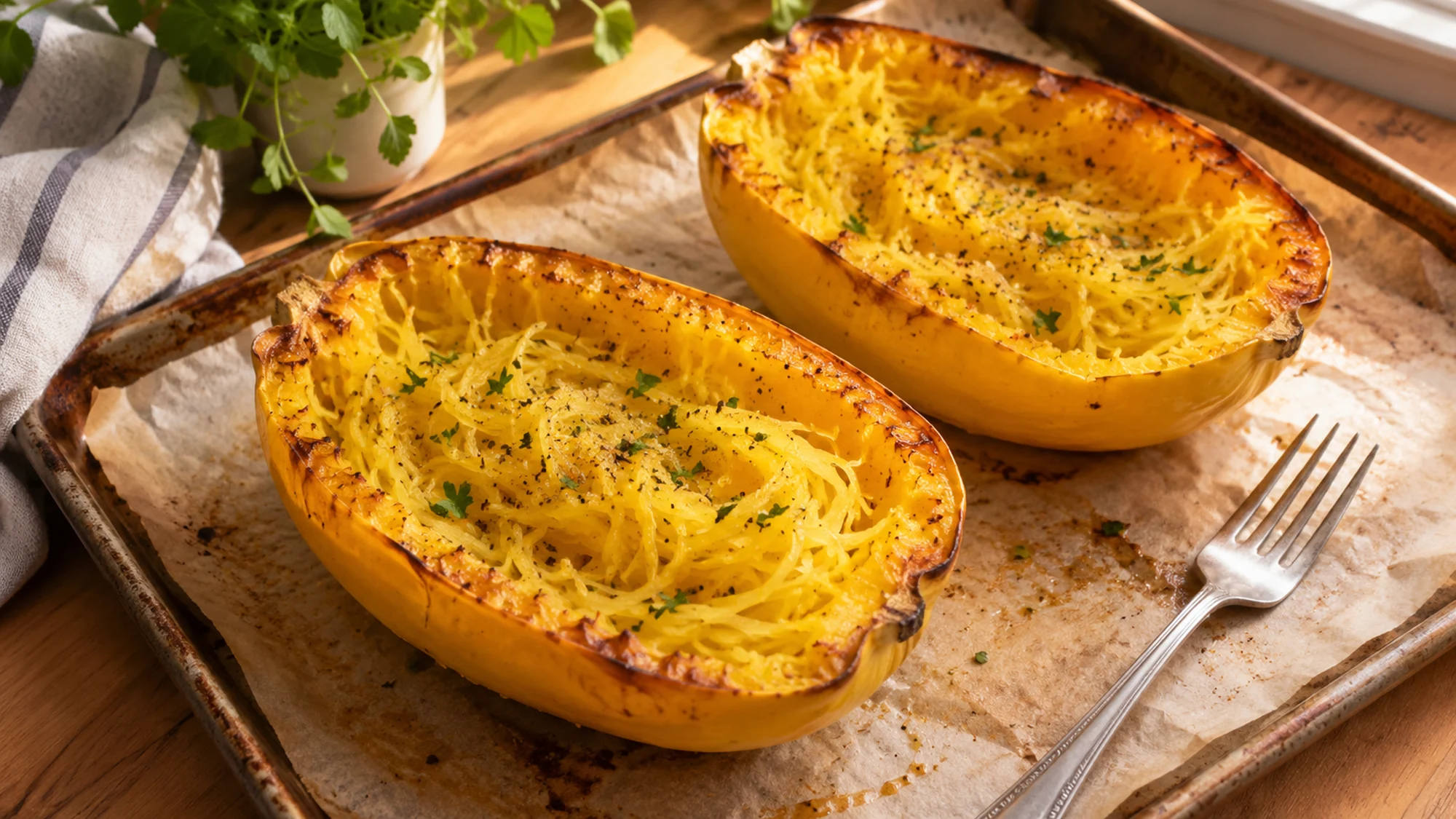
Serving Suggestions After You Learn How to Cook Spaghetti Squash
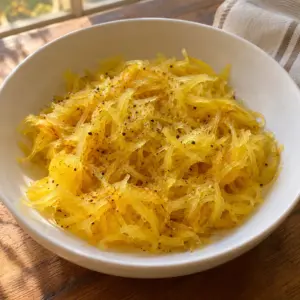
Serve the strands warm with a little of their roasting oil and black pepper, then choose a main dish that brings its own flavor. They work beside chicken, fish or beans, and do not need a rich sauce to count as a finished side. Lift them into the serving bowl with a fork rather than pressing them down with a spoon.
For a vegetable-forward plate, pair them with creamy gochujang butter beans. Keep the squash relatively plain so it offers a mild counterpoint. If you prefer tomato sauce, warm and reduce the sauce separately before adding it; pouring a watery sauce over moist squash makes the texture harder to manage.
- Start with a small spoonful: Toss in sauce gradually, tasting between additions. The delicate strands need less coating than a deep bowl of pasta.
- Add substance separately: Beans, cooked chicken or another protein can make the meal more complete without changing the basic squash preparation.
- Keep the shell optional: A roasted half makes a serving vessel, but a shallow bowl is easier to portion and mix.
Use the squash as a mild vegetable base and let the rest of the meal provide contrast. It can accompany pasta too; there is no rule that one has to replace the other.
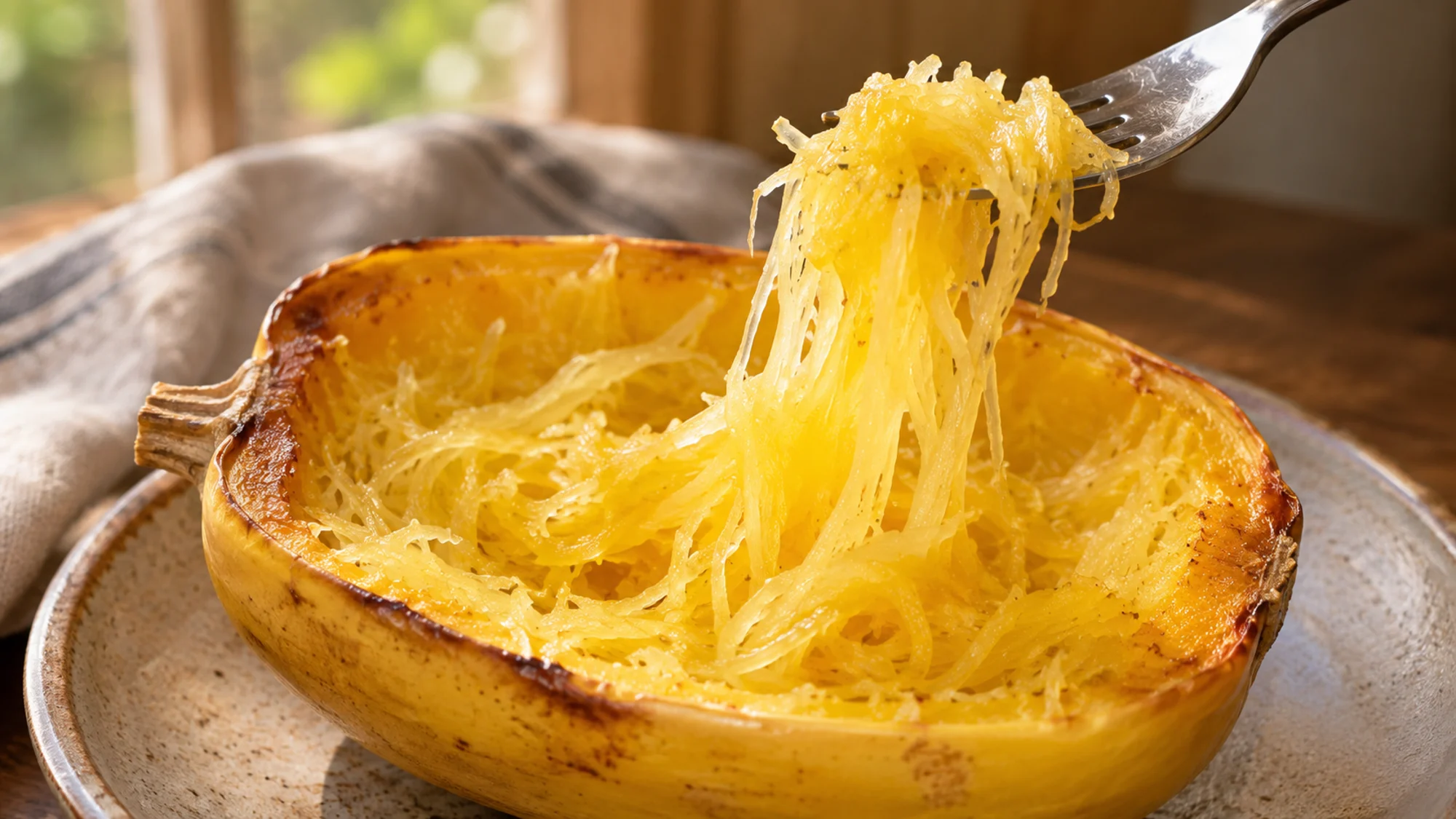
Variations for How to Cook Spaghetti Squash
This recipe uses lengthwise halves because they sit steadily on a tray and are familiar to prepare. The raw shell can be firm, so work on a stable cutting board and keep your free hand out of the knife’s path. If the knife will not move safely, stop rather than forcing it through a rolling squash.
I prefer starting with only oil, salt and pepper. That keeps the squash useful for several meals and makes it easy to notice when the flesh is ready. A sprinkle of cheese or chopped herbs can go on individual servings afterward, but those additions are not needed to make the basic recipe work.
| What you notice | Useful adjustment | Avoid |
|---|---|---|
| Strands still resist the fork | Return the halves to the oven briefly | Forcing out firm chunks |
| Flesh is tender | Stop roasting and let it cool enough to handle | Waiting for the shell to collapse |
| Liquid gathers in the bowl | Lift strands out with a fork or drain briefly | Adding extra watery sauce |
| A smaller squash | Begin checking earlier | Assuming all squash take the same time |
- Choose the finish: Leave a little bite if the squash will be reheated in another dish; cook slightly softer for serving immediately.
- Change seasoning later: Lemon zest, herbs or grated cheese give different results. Add them to a portion rather than committing the whole batch.
- Handle the hot shell carefully: Use oven mitts when turning the halves. Escaping steam can be hot even when the outside looks calm.
A little resistance is not a failure, and more roasting is not always better. Check the flesh, then decide how you want to serve it.
Health Benefits in Context
Spaghetti squash adds another vegetable to the meal, but its name does not make it nutritionally interchangeable with pasta. Portion size, sauce and the foods beside it all change what the plate provides. Calling it a substitute can be useful for cooking; it should not imply that one food is automatically better for everyone.
- A varied meal can include vegetables alongside grains and protein foods; the USDA food-group overview explains those different roles.
- Keep oil and rich toppings measured if that helps you plan the meal, without expecting plain squash to provide everything a complete dinner needs.
- For the roasting technique shown in the card’s video, see Natasha’s Kitchen’s spaghetti squash demonstration; this card gives its own yield and seasoning amounts.
Enjoy the squash for its gentle flavor and unusual strands. The useful benefit is another way to serve a vegetable, not a promise of a particular health outcome.
Bottom Line
Learning how to cook spaghetti squash is mostly learning when to stop. Roast until the flesh separates, handle the halves carefully, and add sauce gradually. Follow safe leftover handling: refrigerate promptly in shallow containers, use within three to four days and reheat to 165°F (74°C).
Keep the first batch simple. Once you know how tender you like the strands, seasoning and serving choices become much easier.
How to Cook Spaghetti Squash Recipe

Ingredients
- 1 spaghetti squash about 3 lb (1.36 kg)
- 1 tbsp olive oil
- 0.5 tsp fine salt
- 0.25 tsp black pepper
Equipment
- Rimmed baking sheet and heat-rated parchment
- Sturdy knife and stable cutting board
- Spoon and fork
- Measuring spoons
- Oven mitts
Instructions
- Heat the oven to 400°F (200°C). Line a rimmed baking sheet with parchment rated for that temperature.
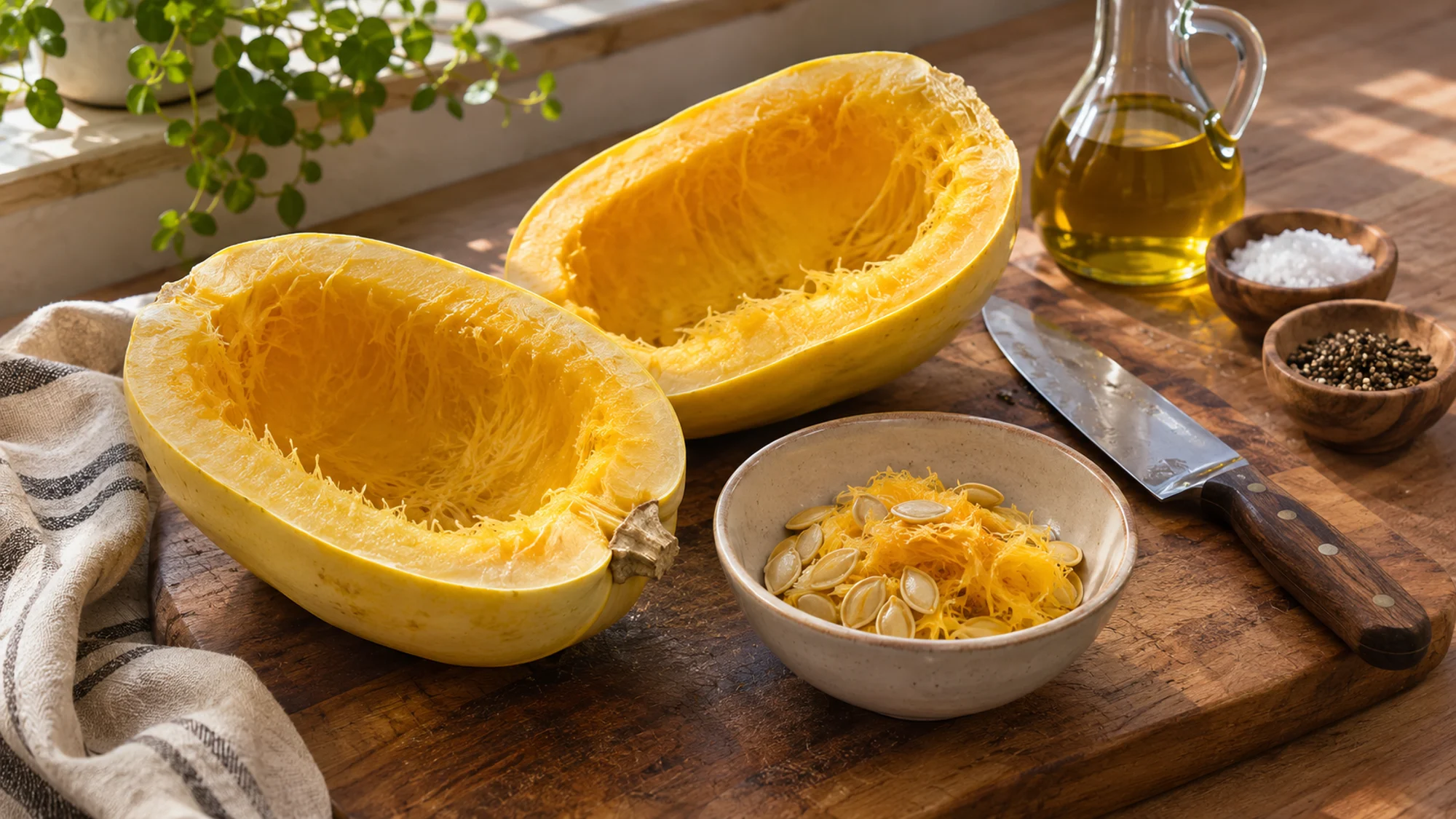
- Wash and dry the squash. On a stable board, carefully halve it lengthwise, keeping your free hand clear of the blade. Do not force a slipping knife. Scoop out the seeds and loose central fibers with a spoon.
- Rub the cut flesh with olive oil and season with salt and pepper. Place the halves cut-side down on the prepared tray.
- Roast for about 45–55 minutes, checking from 40 minutes, until a fork enters the flesh easily and the strands separate. Size and thickness affect the time; avoid roasting until the flesh becomes mushy.
- Turn the halves carefully with oven mitts. Let cool for about 5 minutes, or until safe to handle. Use a fork to lift the strands away from the shell. Serve warm, draining any pooled liquid before adding a sauce.