
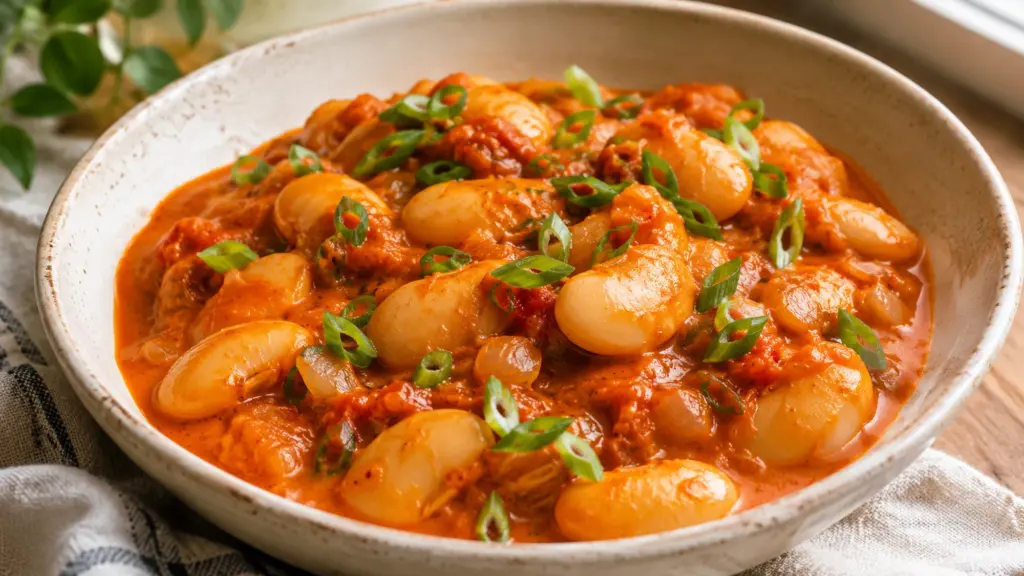
A tub of gochujang can make a plain can of beans feel like a dinner plan. These gochujang butter beans pair broad, tender beans with a creamy tomato sauce, softened onion and just enough chili paste to bring warmth without burying the beans. The useful trick is to build the sauce first, then fold in the beans gently.

Let the tomato and gochujang loosen into a smooth sauce before adding the butter beans. A quiet simmer keeps their centers creamy and their skins mostly intact.
I prefer a spoonable sauce here rather than a thick paste. A little water gives the tomato room to cook, while cream softens its sharpness at the end. This is a pantry-style dish using a Korean condiment, not a claim to a traditional Korean recipe. Choose a gochujang you enjoy and start modestly if its heat is unfamiliar.
Serving Gochujang Butter Beans
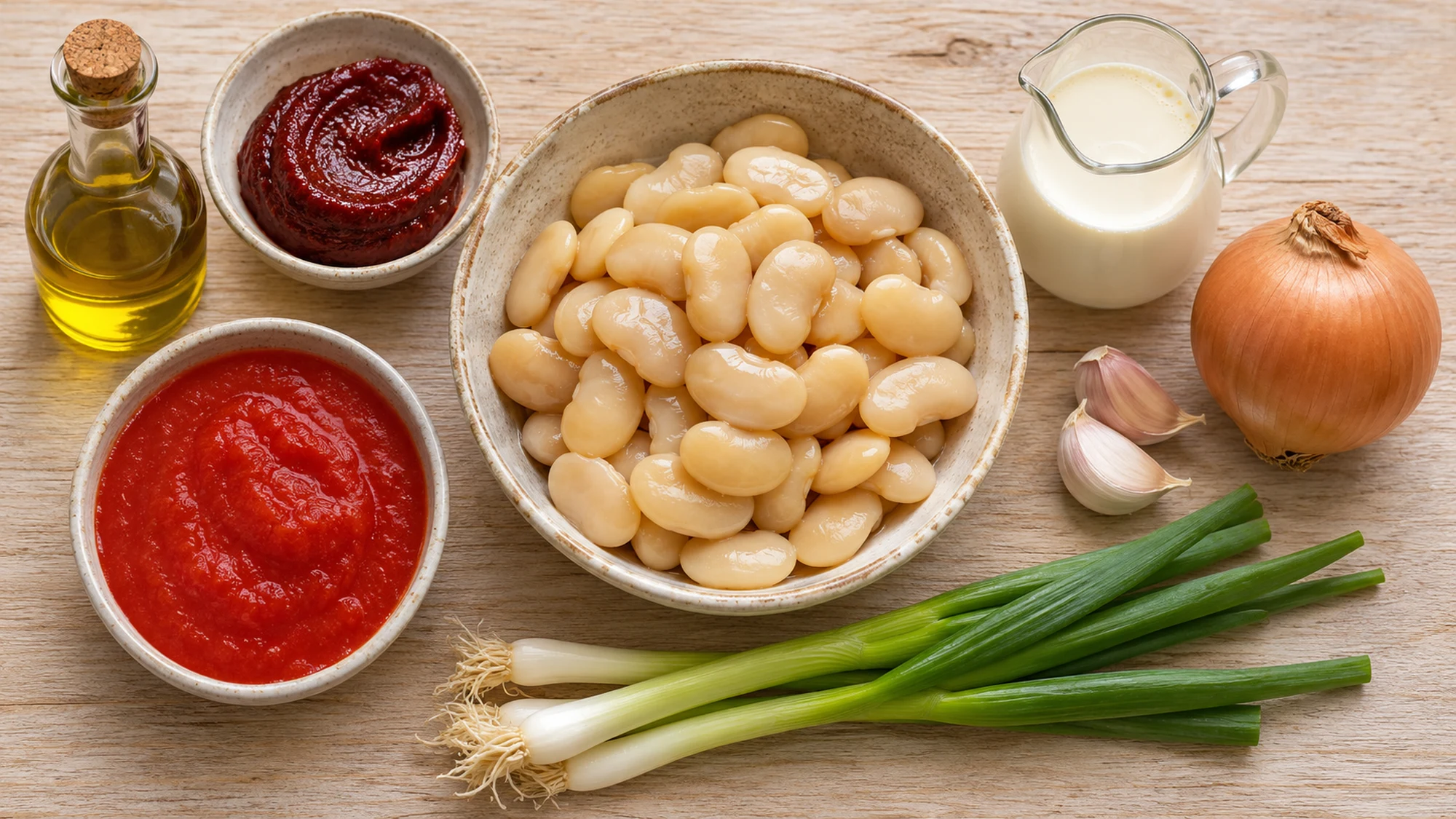
Serve the beans in shallow bowls so every spoonful catches some sauce. Plain rice is a useful partner because it leaves the fermented chili flavor in charge. Toast works, too, especially a sturdy slice with a crisp edge. I would keep the side dish cool and simple: cucumber, a lightly dressed salad or steamed vegetables, rather than another creamy component.
- For a rice bowl, spoon the beans over cooked rice just before eating so the sauce stays distinct.
- For toast, put the bread on the plate at the last moment; a long soak turns the underside soft.
- For a shared meal, bring the skillet to the table and offer scallions separately for anyone who prefers less raw onion bite.
If you would like another vegetable alongside, the steam-first green beans offer a different texture without competing for the center of the plate. A bright side is helpful here, but it does not need to be another project. The beans already do most of the flavor work.
Choose one simple base and one fresh or lightly cooked side. The contrast matters more than adding another rich topping.
Variations for Gochujang Butter Beans
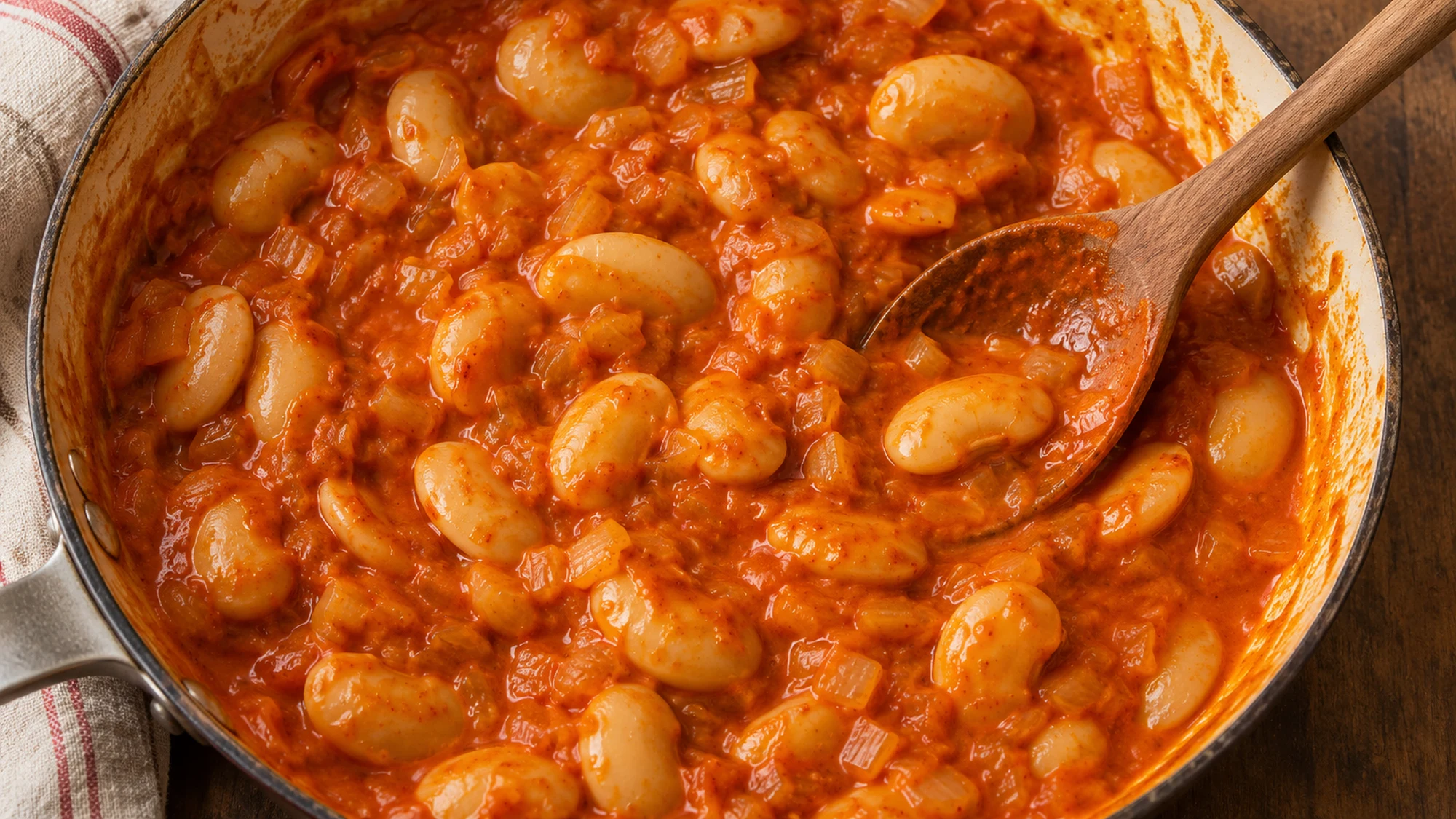
Canned beans vary in firmness. Drain and rinse them gently, then handle them with a broad spoon instead of vigorous stirring. If a few break, they will thicken the sauce; that is fine, but a pan full of mashed beans is a different dish. For a stronger chili flavor, dissolve a small additional dab of gochujang in some hot sauce before stirring it through.
| Choice | What changes | Best use |
|---|---|---|
| Cannellini beans | Smaller beans and a less broad, buttery bite | A pantry substitute when butter beans are unavailable |
| Unsweetened plant cream | Flavor and thickness depend on the product | A dairy-free adaptation after checking every label |
| Extra water | Looser sauce without extra richness | Reheating or serving over rice |
- Keep the heat adjustable: serve extra gochujang at the table rather than making the whole pan hotter.
- Add a handful of spinach near the end if you want greens in the sauce; let it wilt before judging thickness.
- Do not replace gochujang with an equal amount of dry chili flakes. The paste also contributes sweetness, salt and body.
Change one component at a time, then taste. A small adjustment is easier to balance than a second round of everything.
Health Benefits and Practical Trade-Offs
Beans contribute plant protein and fiber, as explained by University of Florida Extension’s guide to beans, peas and lentils. That is a useful reason to include them in meals, not a promise that one skillet will change your health. Cream adds richness, and the paste can contribute a meaningful amount of sodium; brands and portions matter.
- Compare gochujang labels for sodium, heat and allergens. Many products contain soy, and some contain wheat.
- Use a no-salt-added bean option if that suits your needs, then season the finished sauce to taste.
- Check plant cream and packaged sauces individually if cooking for an allergy; a simple substitution does not verify the whole dish.
For leftovers, follow USDA safe-handling guidance: refrigerate promptly in shallow containers within two hours, or one hour above 90°F, and use within three to four days. Reheat until the food reaches 165°F, adding a splash of water if the sauce has tightened. Keep any rice chilled promptly as well, rather than leaving it beside the stove.
Think of this as a bean-centered meal with a rich sauce. Adjust the portion, sides and packaged ingredients to fit the people eating it.
Bottom Line
Gochujang butter beans work best when the sauce is smooth and the beans are handled gently. Keep the simmer low, taste before adding salt, and serve with something simple enough to catch every last spoonful.
Gochujang Butter Beans Recipe


Ingredients
- 1 tablespoon olive oil
- 1 small onion finely diced
- 2 garlic cloves minced
- 1 tablespoon gochujang choose mild if desired; heat varies by brand
- 1 cup tomato puree plain, unseasoned
- 0.5 cup water plus more as needed
- 2 15-ounce cans butter beans drained and gently rinsed
- 0.25 cup heavy cream
- 2 scallions thinly sliced
- 0.25 teaspoon fine salt optional; only after tasting
Equipment
- Large skillet
- Broad spoon
- Knife and cutting board
- Measuring cups and spoons
Instructions
- Drain and gently rinse the butter beans. Dice the onion, mince the garlic and slice the scallions.
- Warm the olive oil in a large skillet over medium heat. Add the onion and cook for 5–7 minutes, stirring, until softened and translucent. Add the garlic and stir for 30 seconds.
- Stir in the gochujang, then add the tomato puree and water. Stir until smooth. Bring to a gentle simmer and cook for about 5 minutes, stirring occasionally.
- Fold in the butter beans carefully. Simmer gently for 5–7 minutes until hot throughout, adding a splash of water if needed to keep the sauce spoonable.
- Lower the heat and stir in the cream. Warm for 1–2 minutes without a hard boil. Taste before adding the optional salt. Finish with scallions and serve.