
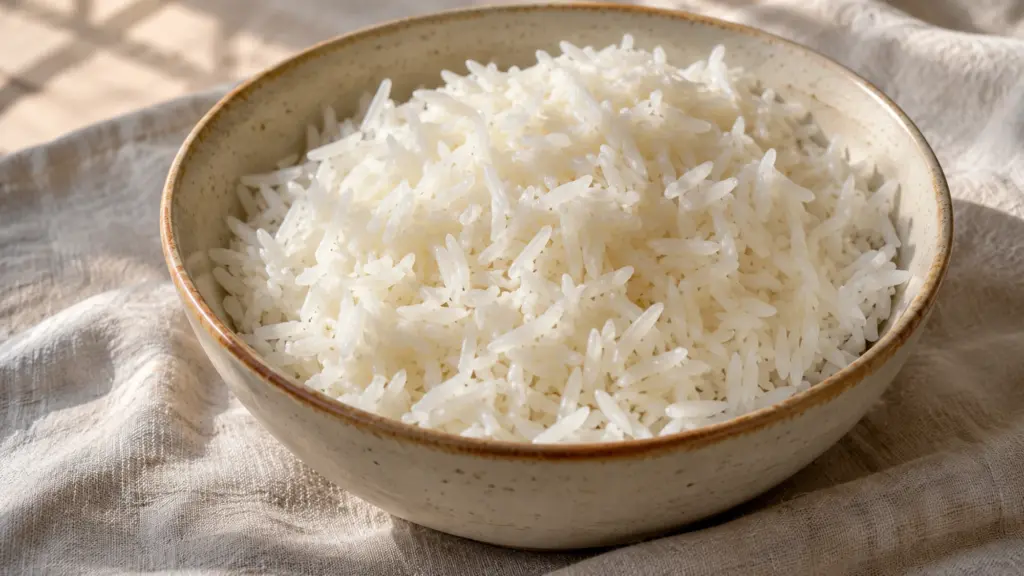
Rice is supposed to be the quiet part of dinner, yet a gummy pot can demand more attention than the main dish. If you are learning how to cook rice, start with one specific kind: ordinary long-grain white rice, a measured amount of water and a saucepan with a lid that fits.
For fluffy long-grain white rice, rinse and drain well, use controlled low heat and leave the lid closed while it cooks. Rest the covered pot off the heat before separating the grains with a fork.
This is a small stovetop batch, not a universal instruction for every rice on the shelf. Brown rice, instant rice and sticky short-grain rice need their own approach. I would rather get comfortable with one dependable bag than try to make one ratio answer every question in the pantry.
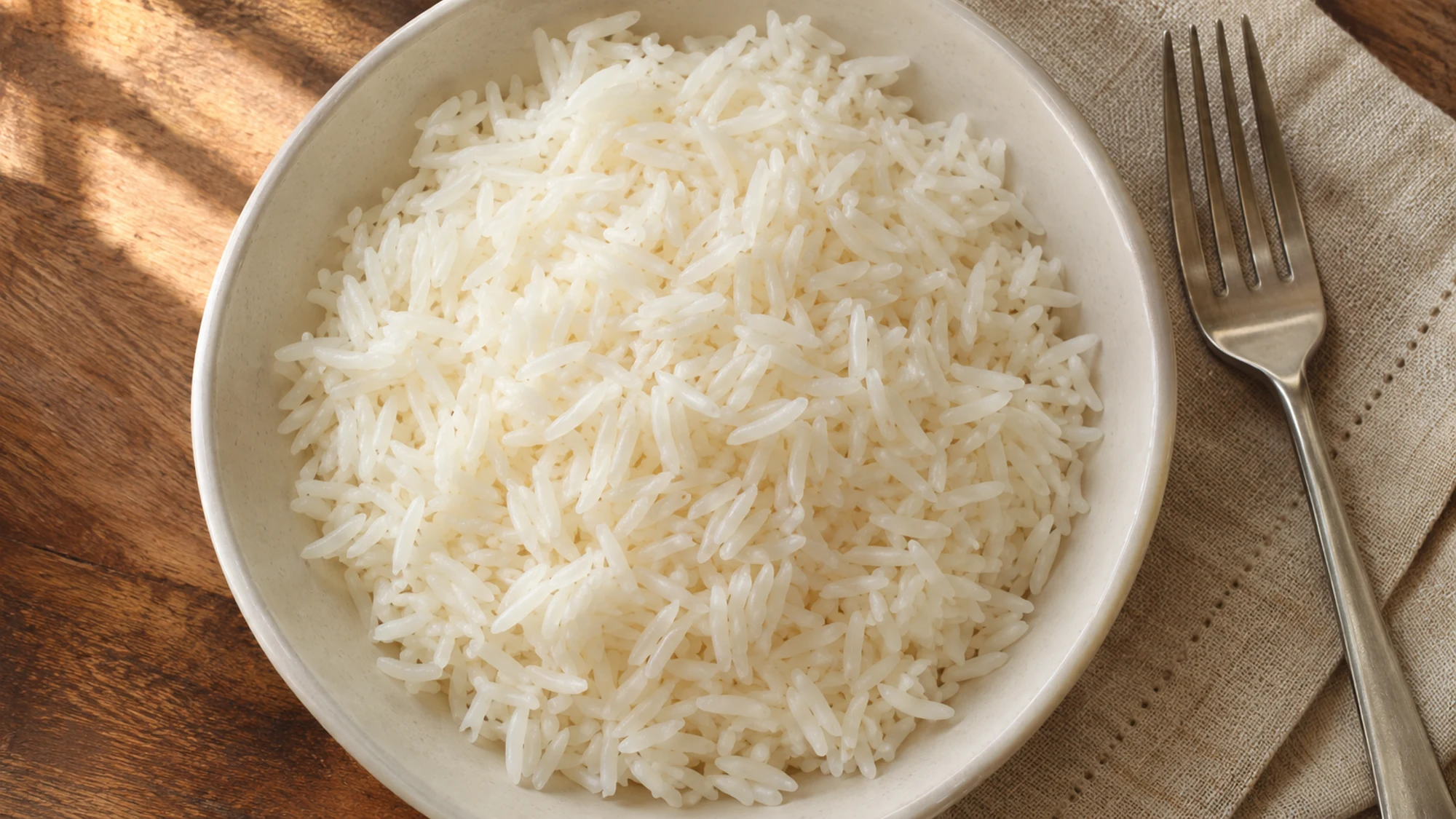
Serving suggestions for freshly cooked rice
Plain white rice gives a strongly flavored main dish a softer landing. Its mild flavor is useful beside spicy beans, ginger-scented vegetables or a saucy chicken dish. Spoon the sauce over part of the rice so you still get a little of both textures.
Try it with gochujang butter beans, or serve it beside apricot chicken and a green vegetable. I like leaving the rice lightly seasoned when the main dish already brings plenty of salt; the plate feels more balanced without adding extra ingredients.
- Fluff just before serving, lifting rather than mashing the grains.
- Use a shallow serving bowl if you want sauce to reach more of the rice.
- Keep a plain portion aside before mixing in toppings when everyone at the table wants a different finish.
- For tomorrow’s meal, cool the rice promptly in a shallow container instead of leaving the covered saucepan on the stove.
Let the rice support the rest of dinner. It does not need a busy ingredient list to be useful.
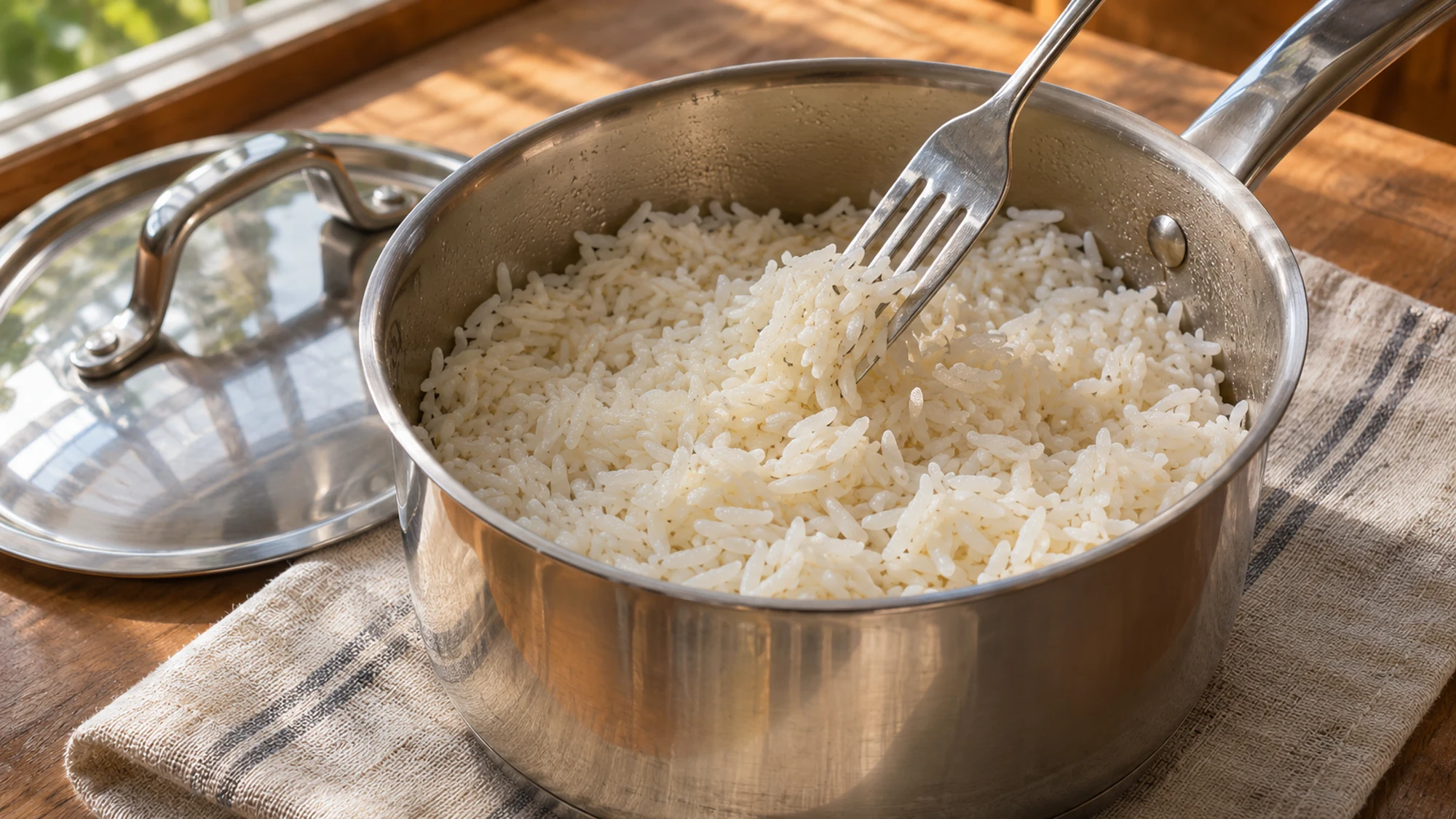
How to cook rice with small, useful variations
Water is the most flexible starting point. Broth can add savory flavor, but its salt level matters; use a low-sodium version and adjust the added salt rather than seasoning twice by habit. Fold in chopped herbs after cooking if you want a fresh finish.
The saucepan matters more than it looks. A loose lid lets moisture escape, while a burner that stays too hot can dry the bottom before the center of the grains softens. Once the liquid reaches a simmer, low heat should maintain gentle cooking, not a bubbling performance.
| What you notice | What to try |
|---|---|
| Rice is firm and the pot is dry | Add a small splash of hot water, cover and cook gently a little longer. |
| Rice is cooked but feels wet | Let excess steam escape briefly, then rest and fluff. |
| Bottom scorches before rice softens | Use a gentler burner setting and check that the lid fits. |
- Use the package directions if they specify a different ratio for your exact rice.
- Do not replace long-grain white rice with brown rice and keep the same cooking time.
- Avoid stirring while it simmers; move the grains gently only after the rest.
- For enriched rice labeled not to rinse, follow that instruction and use the package’s water measurement.
Change one variable at a time. Measured water and a steady low simmer tell you more than repeated lid-lifting.
Health benefits in the context of the whole plate
White rice supplies carbohydrate and can be part of a varied meal. Some products are enriched, but the label—not the color of the grain—tells you what has been added. USA Rice explains that rinsing enriched rice can wash away some added nutrients, which is why the package instruction deserves attention.
Brown rice retains the whole grain’s bran and germ; white rice has a different texture and a shorter cooking time. Purdue Extension’s overview explains several rice types. Choose the one that suits the meal rather than expecting a single ingredient to determine how nourishing the entire plate will be.
- Add beans, tofu, fish, chicken or another protein source when rice is the base of a main meal.
- Include vegetables for color, texture and variety.
- Taste the finished main dish before deciding whether the rice needs extra salt.
Plain rice leaves room for choice: the portion, the sauce and the rest of the meal all matter.
Bottom Line
A fitted lid, measured water and a short covered rest are worth more than constant stirring. Keep the method specific to long-grain white rice, and store leftovers thoughtfully. The Food Standards Agency advises cooling rice quickly, ideally within one hour, refrigerating it and using it within 24 hours. Reheat only once, until steaming hot throughout.
How to Cook Rice Recipe

Ingredients
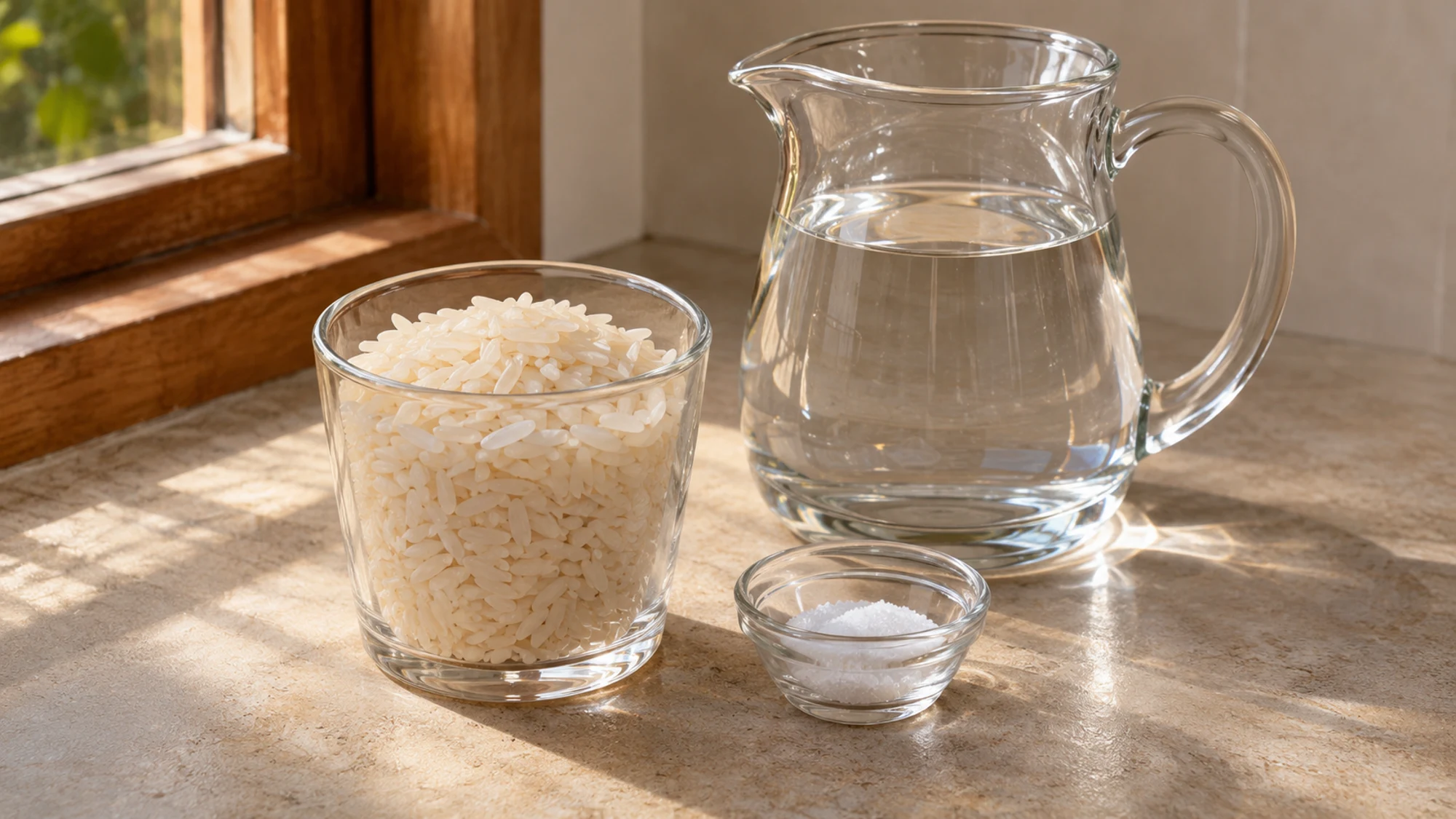
- 1 cup long-grain white rice about 180 g; not instant, parboiled or brown rice
- 1.5 cups water minus 2 tablespoons for the rinsed rice
- 0.25 teaspoon fine salt optional
Equipment
- 2- to 3-quart saucepan with fitted lid
- Fine-mesh sieve
- Measuring cups and spoons
- Fork
Instructions
- Put the rice in a fine-mesh sieve, rinse under cool running water and drain thoroughly. If your enriched rice package says not to rinse, follow its water ratio and instructions instead.
- Put the rinsed, drained rice in a 2- to 3-quart saucepan with 1 1/2 cups water minus 2 tablespoons and the optional salt. Bring to a boil over medium-high heat.
- Reduce the heat to the lowest setting, cover tightly and simmer for 13–15 minutes without stirring or lifting the lid. Check that the water has been absorbed and the grains are tender. If dry but still firm, add a small splash of hot water, cover and cook gently a few minutes longer.
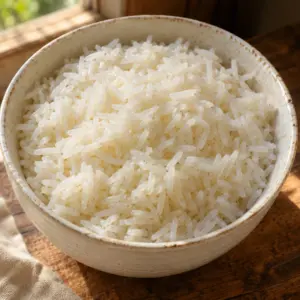
- Take the pot off the heat and leave covered for 10 minutes. Lift and separate the grains with a fork, then serve. Makes approximately 3 cups cooked rice.