
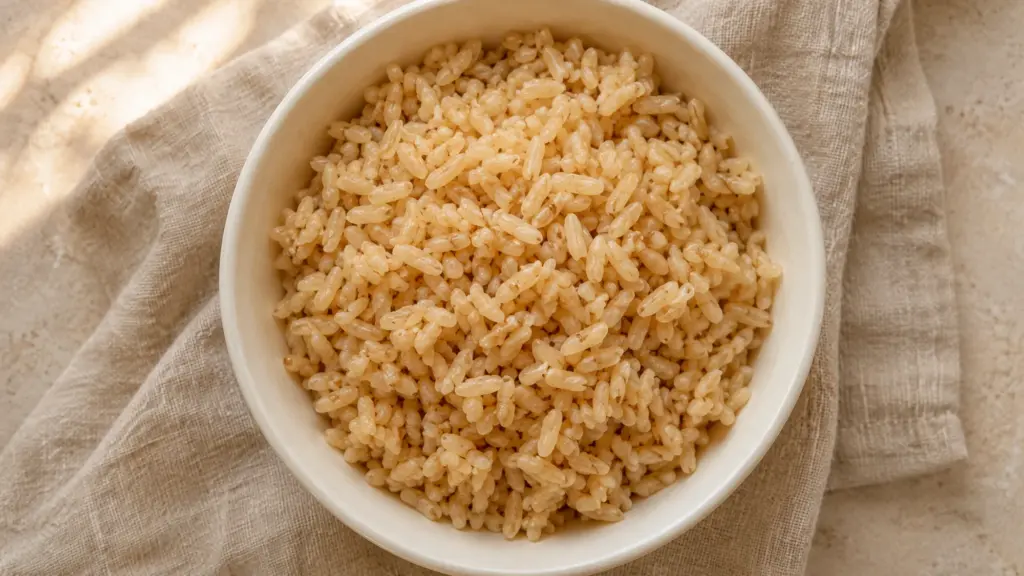
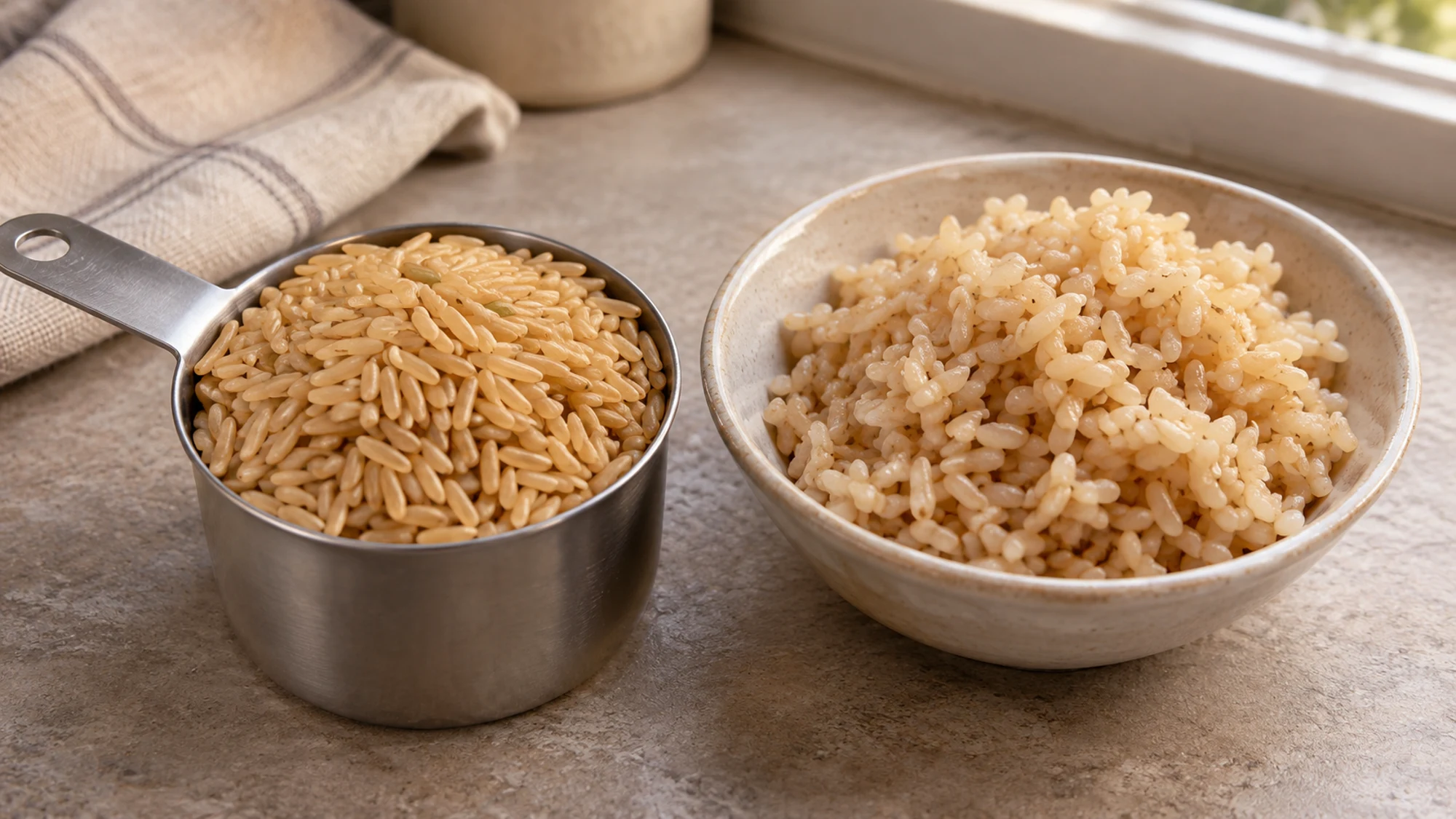
The lid comes off, the steam clears, and the rice looks ready—until one grain has a stubborn little crunch in the middle. Learning how to cook brown rice is mostly learning to give that center enough time, then stop before the grains turn heavy and wet.
For tender long-grain brown rice, use a measured amount of water, a tightly covered saucepan and a low simmer. Check the center of a grain near the end, then let the pot rest off the heat before fluffing.
This simple version keeps the seasoning quiet so the rice can go with beans, roasted vegetables or a saucy main dish. I prefer grains with a gentle chew rather than a completely soft texture; brown rice has its own character, and it does not need to imitate white rice.
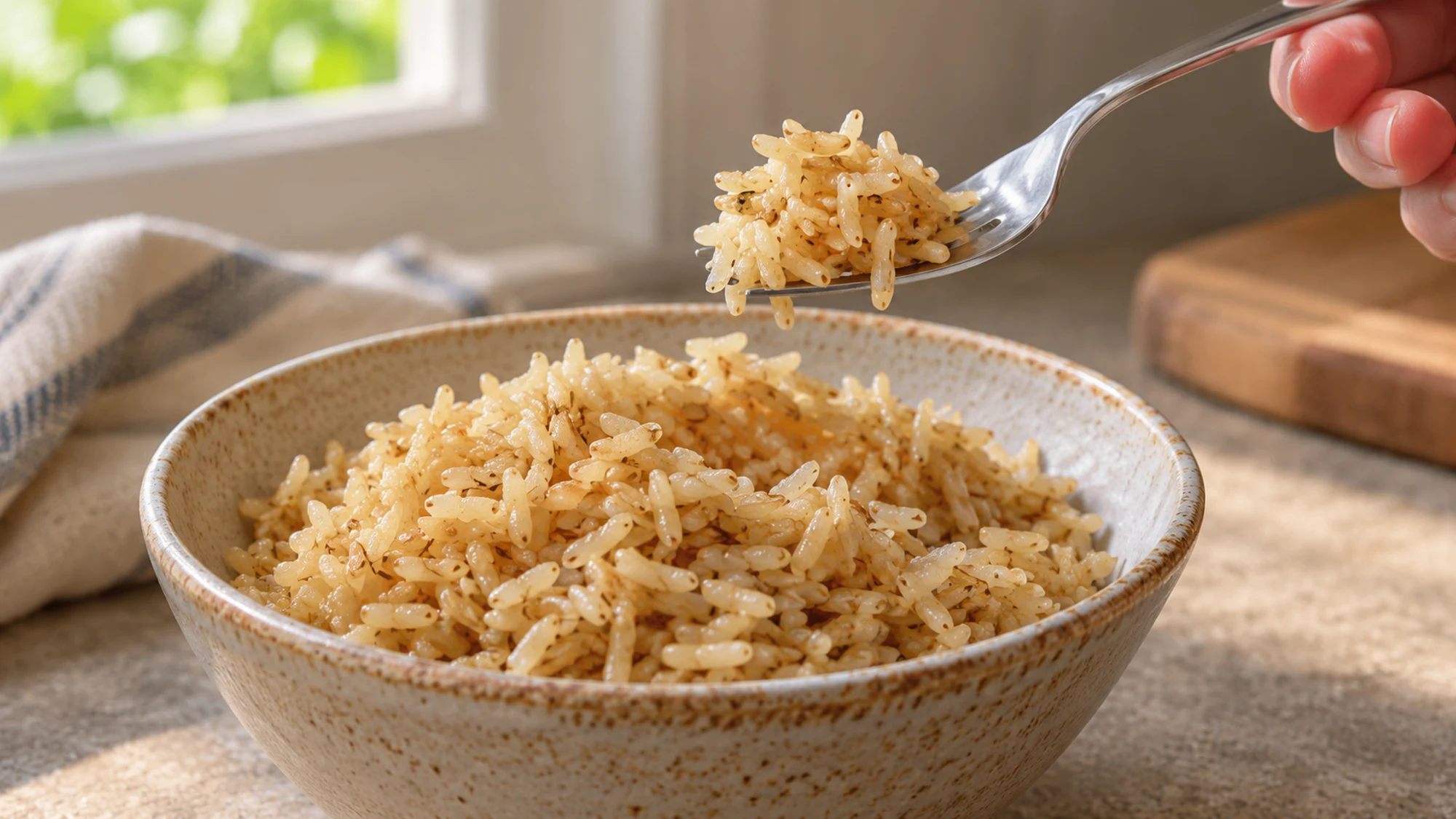
Serving suggestions after you learn how to cook brown rice
Think of brown rice as a supporting ingredient with a nutty flavor and a little bite. A spoonful of sauce works into the spaces between the grains without hiding everything on the plate. Keep crunchy vegetables alongside it so each forkful has contrast.
For a hearty bowl, pair it with gochujang ground chicken and cool cucumber. Or make a plant-based plate with crispy baked tofu, vegetables and a dressing you enjoy. Add the rice while warm for a cozy meal; chill it promptly if the plan is a cold grain salad.
- Spoon saucy beans or a stew partly over the rice rather than stirring everything together.
- Fluff with a fork before serving; pressing with a spoon can compact the grains.
- Cook only the amount you need, or portion leftovers into shallow containers promptly. A large warm pot is not a storage plan.
Build the meal around contrast: tender rice, something saucy and a vegetable with a little crunch.
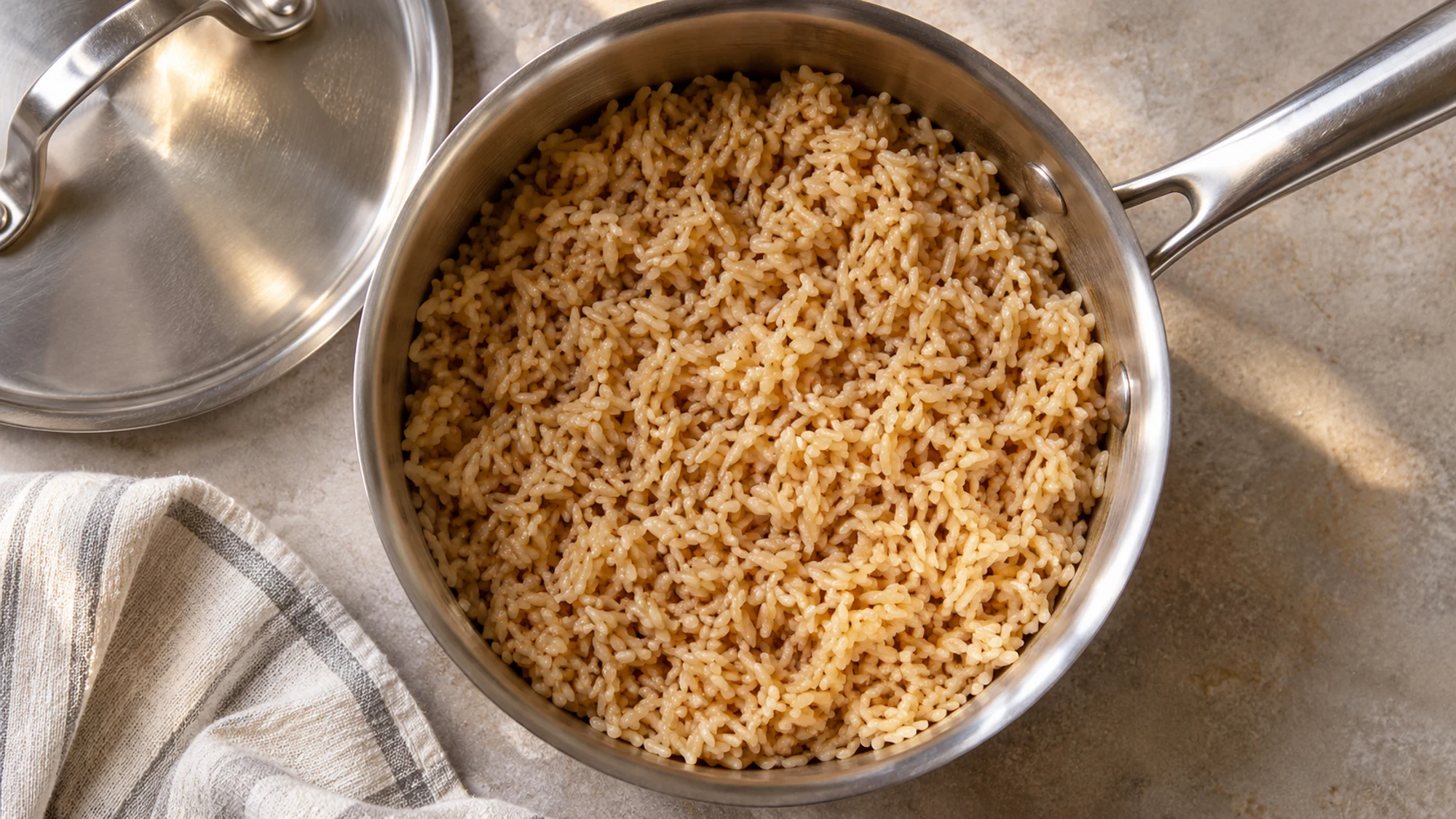
Variations for how to cook brown rice
Different bags of brown rice can behave differently. Long-grain, short-grain, quick-cooking and parboiled products are not interchangeable on the clock. Follow a package’s specific directions when they differ from this starting method, especially if the rice is labeled instant or quick-cooking.
For a savory variation, replace the water with an equal measured amount of low-sodium broth and adjust the salt. I would add chopped herbs or a squeeze of lemon after cooking, not use them to cover up an undercooked center. The grain still needs to be tender first.
| What you notice | What to try |
|---|---|
| Firm center and a dry pot | Add a little hot water, cover and continue over low heat. |
| Tender grains with visible liquid | Briefly uncover over low heat, then rest off the burner. |
| Soft, heavy rice | Next time check the water measurement and begin tasting earlier. |
- Keep the lid fitted during simmering; repeated peeking lets steam escape.
- Avoid frequent stirring. Save the fork for the final fluff.
- For a larger batch, use a suitable larger pot and allow for differences in heating time.
Change the flavor freely, but keep the rice type, measured liquid and gentle heat in view.
Health benefits and everyday balance
Brown rice is a whole grain: its bran and germ remain with the grain. Purdue Extension’s rice guide describes its mild nutty flavor and whole-grain character. That makes it one option for adding variety to meals, not a reason to label every plate with white rice a bad choice.
Rice contributes carbohydrate, and a varied meal can include protein and vegetables alongside it. Plain rice also lets you decide how much salt or sauce to add. USA Rice’s cooking guidance is a useful reminder that different rice types need different water amounts and cooking times.
- Choose the portion that fits the rest of your meal and appetite.
- Use plain water when you want the most flexible base for later seasoning.
- If you use a packaged broth, read its ingredient and sodium information rather than assuming all broths are alike.
A useful everyday grain earns its place by fitting the meal you actually want to eat.
Bottom Line
Give brown rice enough quiet cooking time, check for a tender center and let it rest before fluffing. For leftovers, follow the Food Standards Agency’s rice guidance: cool promptly, ideally within one hour, refrigerate and use within 24 hours. Reheat once until steaming hot throughout. A good pot of rice should make the next part of dinner easier.
How to Cook Brown Rice Recipe

Ingredients
- 1 cup long-grain brown rice about 180 g; not instant or quick-cooking
- 2.25 cups water
- 0.25 teaspoon fine salt optional
Equipment
- 2- to 3-quart saucepan with fitted lid
- Fine-mesh sieve
- Measuring cups and spoons
- Fork
Instructions
- Put the brown rice in a fine-mesh sieve, rinse briefly under cool running water and drain well.
- Combine the drained rice, water and optional salt in a 2- to 3-quart saucepan. Bring to a boil over medium-high heat.
- Reduce the heat to low and cover with a fitted lid. Simmer gently for 40–45 minutes, without stirring, until the grains are tender and the water is absorbed. If the center is still hard and the pot is dry, add a small splash of hot water, cover and continue cooking, checking after a few minutes.
- Remove from the heat and leave covered for 10 minutes. Fluff gently with a fork and serve. Yield varies with the rice, approximately 2 1/2 to 3 cups cooked.