
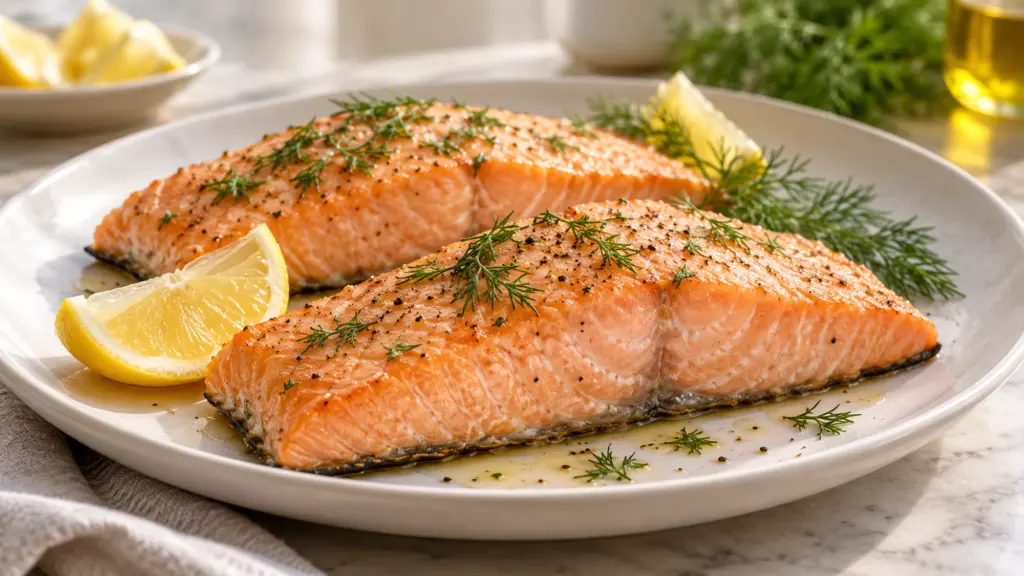
A hot skillet can give salmon crisp skin, but it also asks you to stay close to the stove. If your priority is a low-fuss dinner with tender flakes, the best way to cook salmon may be a moderate oven. This recipe uses lemon, dill and a little olive oil, with no flipping and no promise that one method wins every situation.
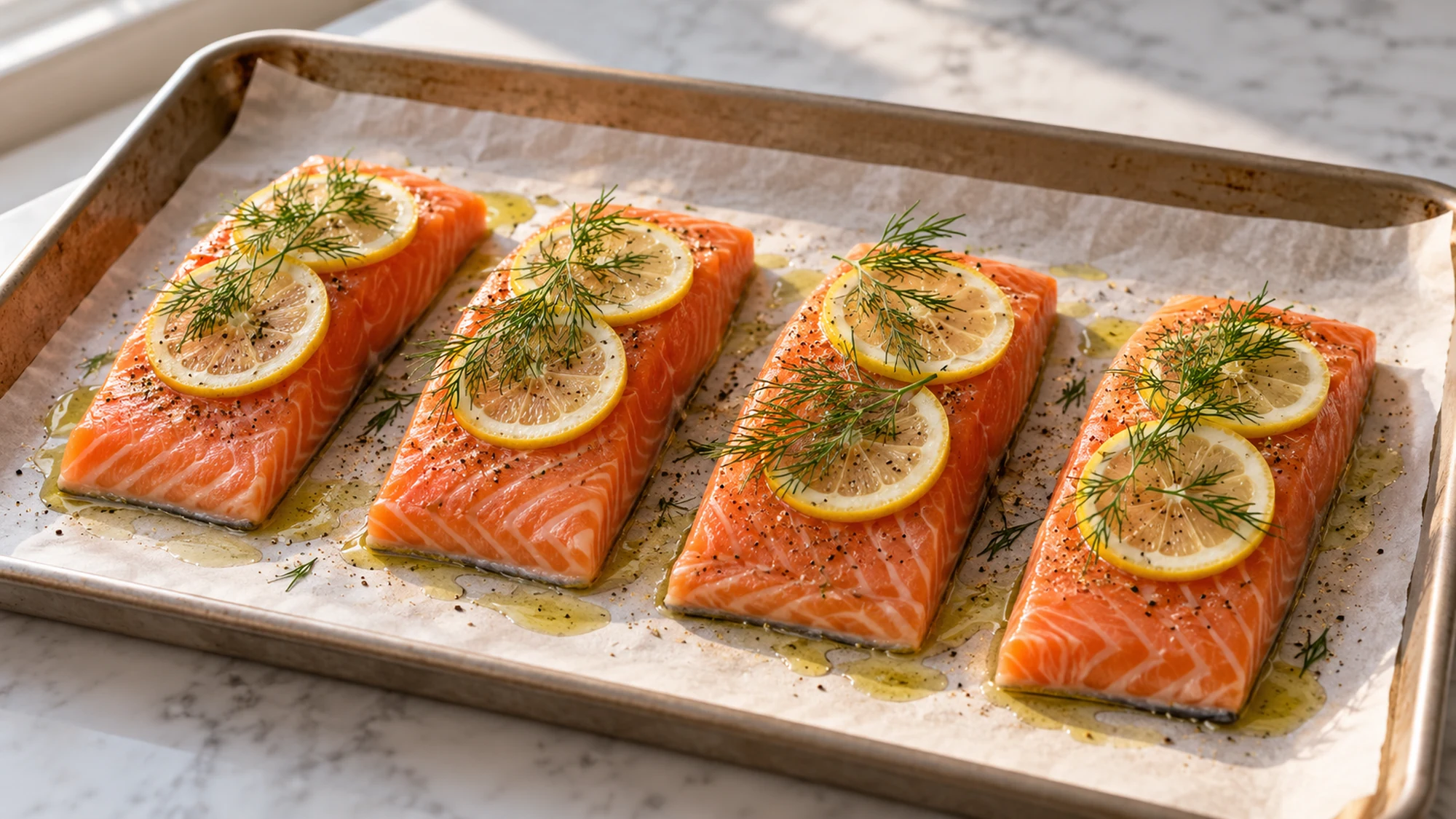
For this oven approach, choose pieces of similar thickness, place them skin-side down and start checking before the expected finish time. Cook the thickest part to 145°F (63°C), then serve promptly instead of leaving the fish in a hot oven.
I’d choose roasting when the sides need attention too. It will not produce the same crisp skin as a well-managed skillet, and that is worth saying before dinner. The payoff is a straightforward method that suits a few portions on one tray.
Serving the Best Way to Cook Salmon for Your Dinner
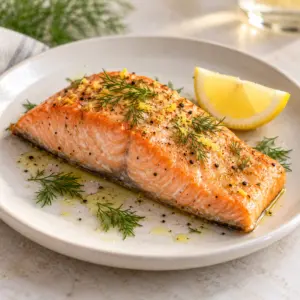
Serve the fish soon after it leaves the oven, with lemon available for anyone who wants more brightness. Slide a broad spatula beneath each portion rather than lifting it with narrow tongs. If you do not want the soft roasted skin, leave it on the tray as you lift the flesh.
- Choose a quiet starch: Plain rice, couscous or a baked potato lets the lemon and dill remain noticeable. A crisp-skinned jacket potato adds a different texture without requiring a competing sauce.
- Add green vegetables: Broccoli, green beans or a leafy salad can fill out the plate. Cook vegetables separately if their timing does not match the fish.
- Portion before cooking: Similar-sized individual pieces are easier to monitor than a thick center attached to a very thin tail. Check each piece rather than assuming all four finish together.
Let the fish be the center of the plate and use the sides for contrast. A simple sauce is optional; timely serving is more important.
Variations: Thickness Matters More Than a Fixed Timer
Salmon species and cuts differ in thickness and fat content. A lean, thin piece can finish before a thick farmed Atlantic portion. The Tulane culinary medicine roasting guide also uses a moderate oven and checks the center, rather than relying on color alone.
Choose the method according to the result you want.
| Your priority | Suitable approach | Trade-off |
|---|---|---|
| Little stovetop attention | Moderate oven roasting | Skin remains relatively soft. |
| Crisp skin | A separate skillet method | Needs closer heat control. |
| Even portions | Similar-thickness fillets | Thin pieces may still finish first. |
| Frozen fish | Thaw safely for this recipe | Cooking from frozen needs different directions. |
- Change herbs, not everything: Parsley can replace dill for a different flavor. Dried herbs are more concentrated, so use a smaller amount rather than a handful.
- Watch the garlic: Spread the lemon-oil mixture over the fish, not across exposed hot metal. Little garlic pieces can darken quickly where they dry out.
- Use a thermometer carefully: Insert it into the thickest part, avoiding the pan. A single reading from the thin edge does not describe the center.
- Do not chase a dark crust: This recipe is about gently cooked flesh. I prefer stopping at the proper finish point rather than drying the fish to create more surface color.
Treat the suggested time as a reminder to check, not an instruction to ignore the fish. Thickness and temperature tell you more than a number on the timer.
Health Benefits and Safe Handling
Salmon provides protein and omega-3 fats, but a single meal does not guarantee a health outcome. The nutrition estimate also changes with the species, portion and any sauce you add. This recipe’s estimate uses farmed Atlantic salmon; a different fish will not necessarily match it.
- Thaw with care: Follow the package directions and FDA seafood-handling guidance. Thaw in the refrigerator, not on the counter; follow vacuum-pack instructions about removing the packaging.
- Keep raw fish separate: Wash hands, tools and work surfaces after handling it. Do not put cooked fish back on the unwashed plate that held it raw.
- Know the allergen: Salmon is fish, a major food allergen. A different seasoning or dairy-free sauce does not make it suitable for someone with a fish allergy.
Choose salmon because it suits the meal, and keep the safety steps concrete. Careful thawing and a center-temperature check belong alongside the seasoning.
Bottom Line
The best way to cook salmon depends on what you want from dinner. For this recipe, moderate oven heat, even portions and lemon-dill seasoning provide a practical route to tender flakes. Refrigerate leftovers promptly and use within three to four days; reheat to 165°F (74°C), accepting that reheated fish will be firmer.
Roast for simplicity, not for a crisp-skin promise. Check early, finish safely and have the rest of the meal ready when the fish is.
Best Way to Cook Salmon Recipe

Ingredients
- 4 skin-on salmon portions 6 oz/170 g each, about 1 inch thick; 680 g total
- 1 tablespoon olive oil 15 ml
- 2 tablespoons lemon juice 30 ml
- 1 tablespoon chopped fresh dill 3 g
- 2 garlic cloves 6 g, finely minced
- 1/2 teaspoon fine salt 3 g
- 1/4 teaspoon black pepper
Equipment
- Rimmed baking sheet
- Parchment paper
- Instant-read thermometer
- Broad spatula
Instructions
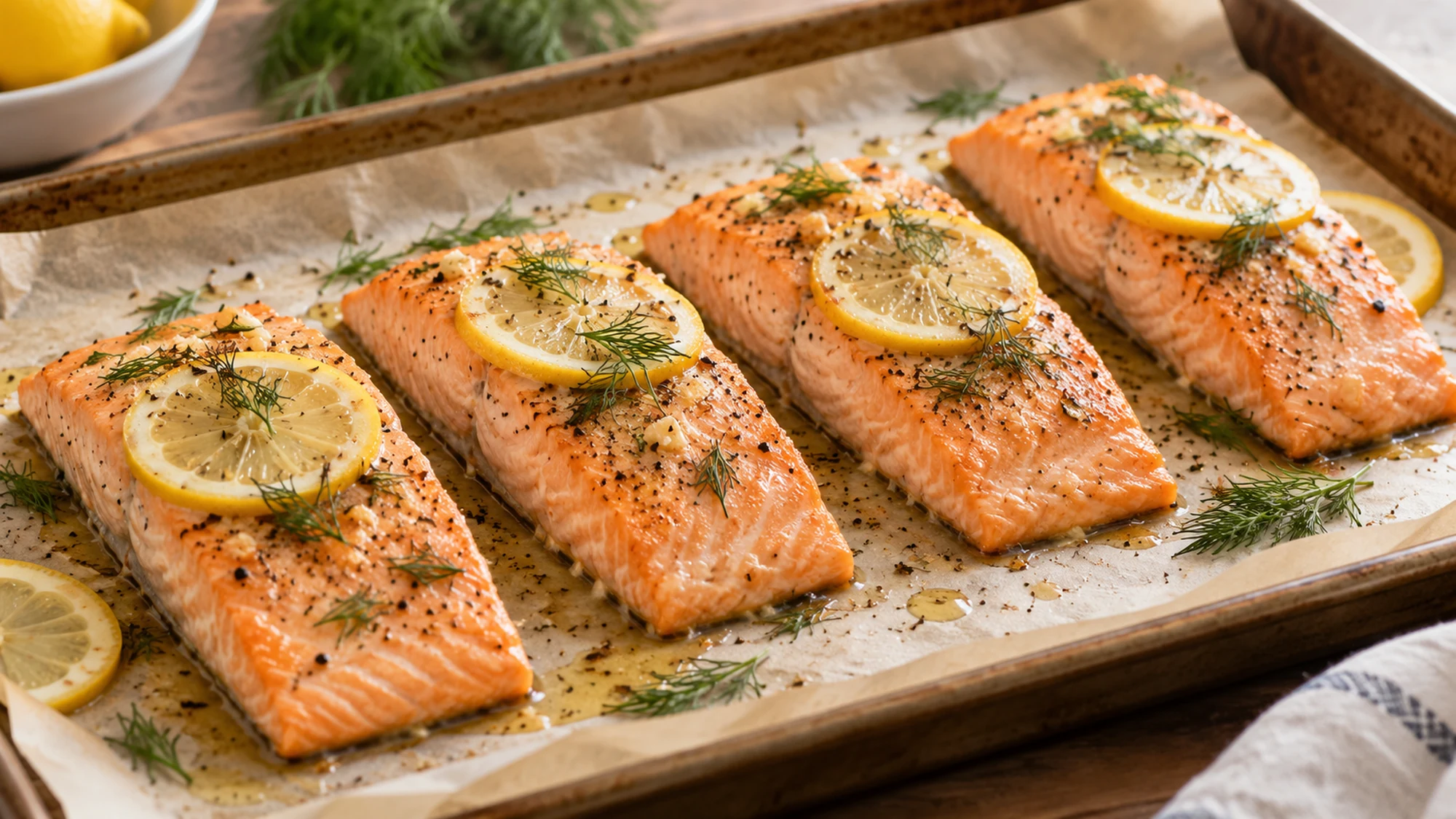
- Heat the oven to 350°F (175°C). Line a rimmed baking sheet with parchment. Keep the salmon refrigerated until preparation, then pat dry and check carefully for pin bones.
- Place the salmon skin-side down with space between the portions. Mix the olive oil, lemon juice, dill, garlic, salt and pepper, then spread evenly over the fish.
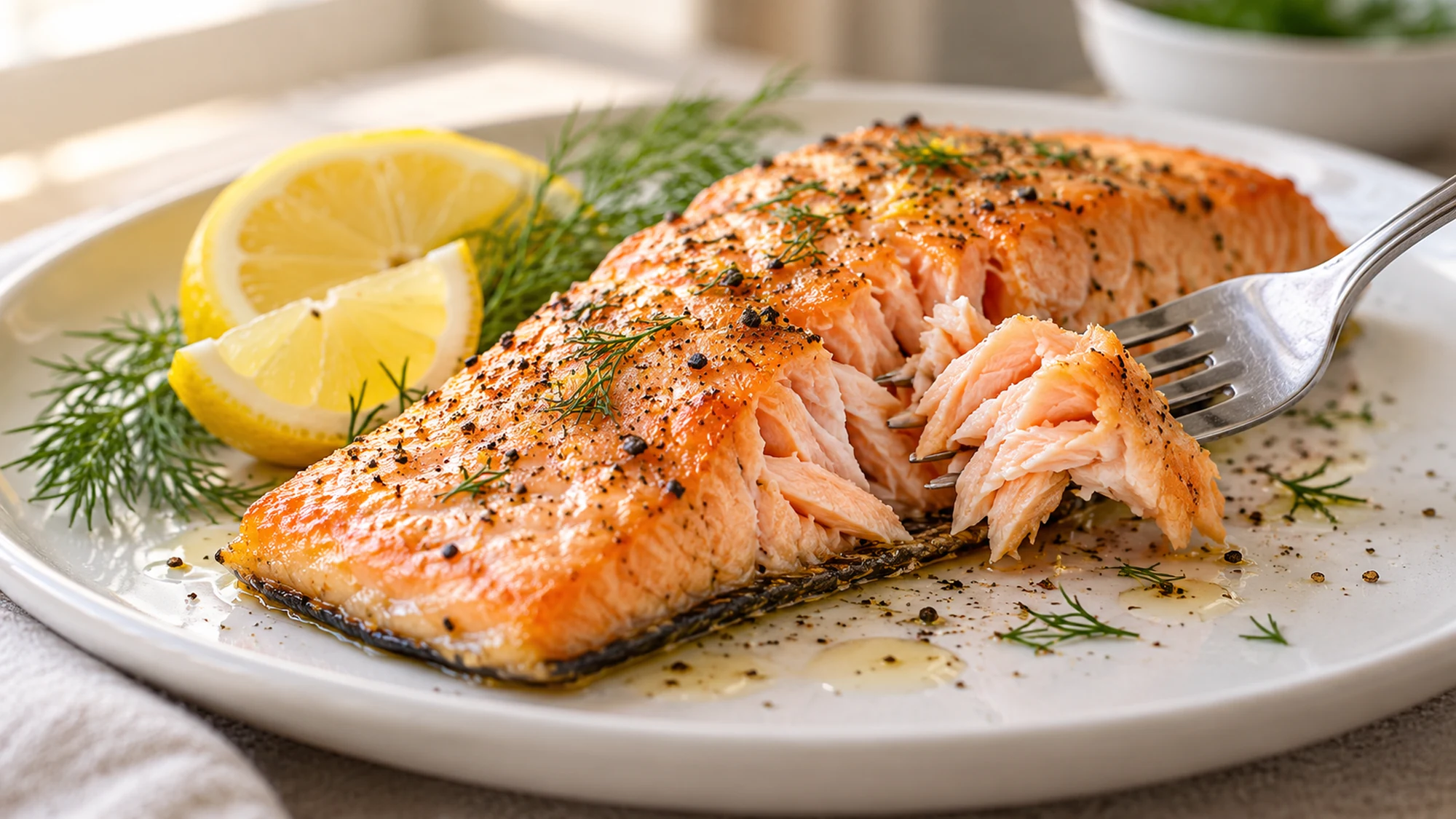
- Roast for about 15–20 minutes, beginning checks at 12 minutes for thinner pieces. Insert a thermometer into the thickest part of each portion without touching the tray. Cook to 145°F (63°C); the flesh should be opaque and separate easily into flakes. Remove individual portions as they finish.
- Lift carefully with a broad spatula and serve promptly. Leave the soft skin on the tray if preferred. Divide into four servings; optional sides are not included in the recipe quantities.