

Two cans on the baking shelf can look almost interchangeable until one turns a savory sauce unexpectedly sweet. Evaporated milk is the unsweetened, concentrated choice: useful when you want milk flavor with less water, not a shortcut to sweetened condensed milk.
Evaporated milk is milk with part of its water removed, then heat-treated and sealed. Use it for creamy soups, sauces, coffee and baking; do not swap it directly for sweetened condensed milk. Refrigerate the leftovers as soon as the can is opened.
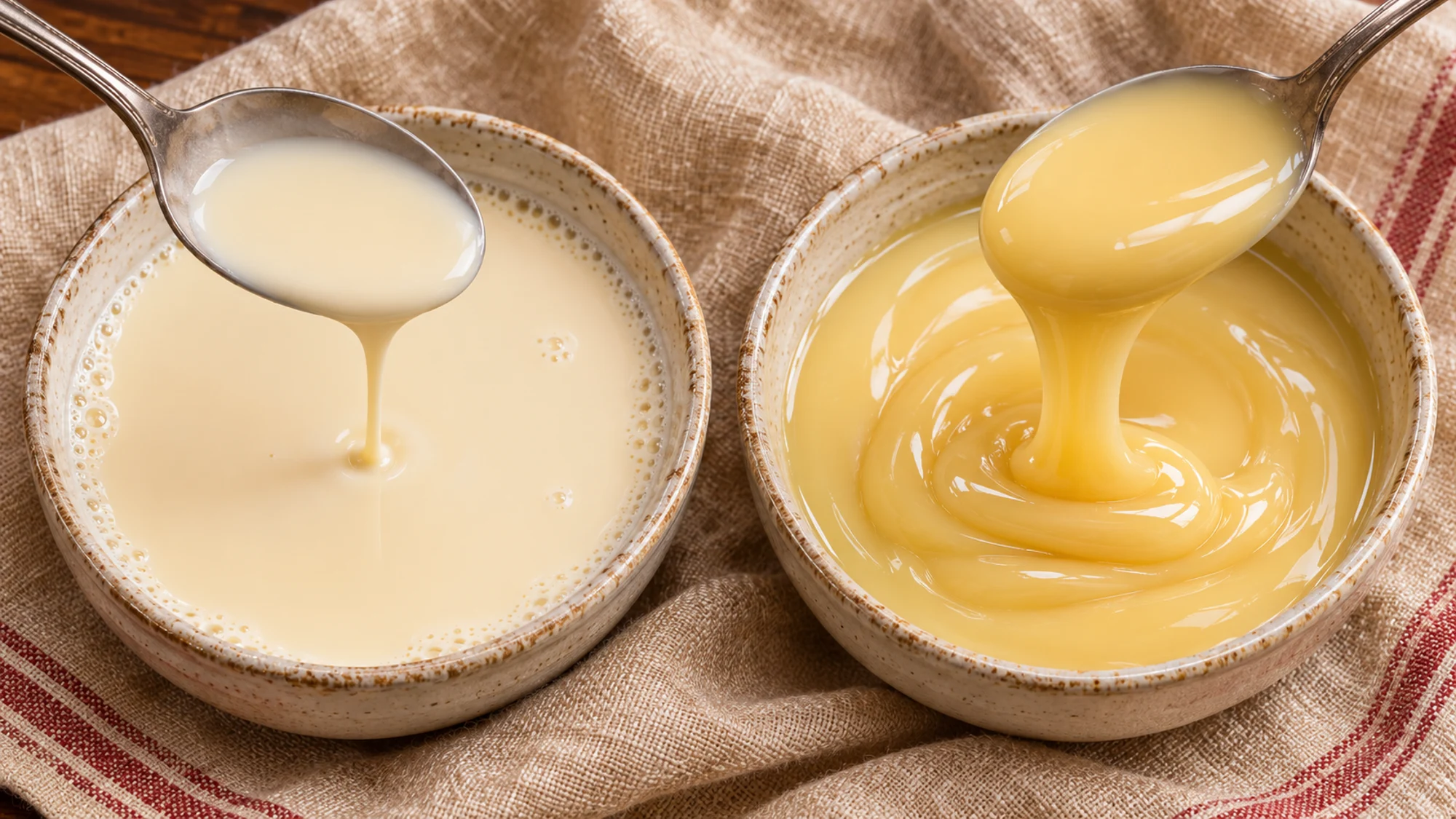
What Evaporated Milk Adds to a Dish
Think of concentration rather than added sweetness. The Canadian Dairy Commission’s ingredient overview describes a gently cooked flavor and cream-like appearance. Its pale ivory-to-golden color can be normal; it need not look as white as the milk in your refrigerator.
I’d choose it when a dish needs a fuller dairy character without bringing in a second strongly flavored ingredient. It is still milk, though, and the whole, reduced-fat and nonfat versions are not identical. Check which one your recipe expects before treating every can as equivalent.
- For savory cooking: Consider it for a creamy soup, mashed potatoes or a sauce that already calls for milk.
- For baking: Use the specified type and amount in custards, pies and other tested formulas.
- For drinks: Add a modest splash to coffee or tea, then taste before adding a sweetener.
- For texture: Expect a pourable liquid, not the dense, sticky consistency of sweetened condensed milk.
Evaporated Milk Versus Other Dairy Ingredients
The label matters more than the shape of the can. Carnation’s cooking guidance explicitly distinguishes evaporated milk from sweetened condensed milk and advises against using them as direct substitutes. Added sugar changes the recipe, not just the taste.
| Ingredient | Main difference | Best decision |
|---|---|---|
| Evaporated milk | Concentrated, unsweetened milk | Use when the recipe names it |
| Sweetened condensed milk | Concentrated milk with added sugar | Keep for formulas designed around its sweetness |
| Regular milk | More water, lighter body | Do not assume it supplies the same concentration |
| Heavy cream | A different fat level and whipping behavior | Do not assume an equal swap will whip or set alike |
My first check would be the words “sweetened condensed.” A nearly matching can is not a nearly matching ingredient when sugar is part of the structure.

Simple Ways to Use the Can You Open
Start with the dish you already planned rather than inventing three desserts to rescue a little milk. A measured splash in mashed potatoes or a milk-based sauce is often the least complicated next step. Add gradually where the recipe allows adjustment; you can loosen a mixture more easily than undo an overly thin one.
- To replace drinking milk: Carnation gives a half-milk, half-water dilution: combine ½ cup evaporated milk with ½ cup water for 1 cup.
- To replace half-and-half: The manufacturer permits an equal-volume substitution, but expect its characteristic cooked milk flavor.
- For a recipe that needs whipping: Follow a formula specifically designed for evaporated milk rather than assuming it behaves like heavy cream.
- Before measuring: Follow the can’s shaking instructions. Some milk solids can settle during storage.
I prefer making only one substitution at a time in baking. Changing the milk, sweetener and fat together makes it much harder to understand a different texture. If you simply want a different dairy breakfast, our chia pudding guide explains a separate milk-based preparation; keep its own specified proportions.
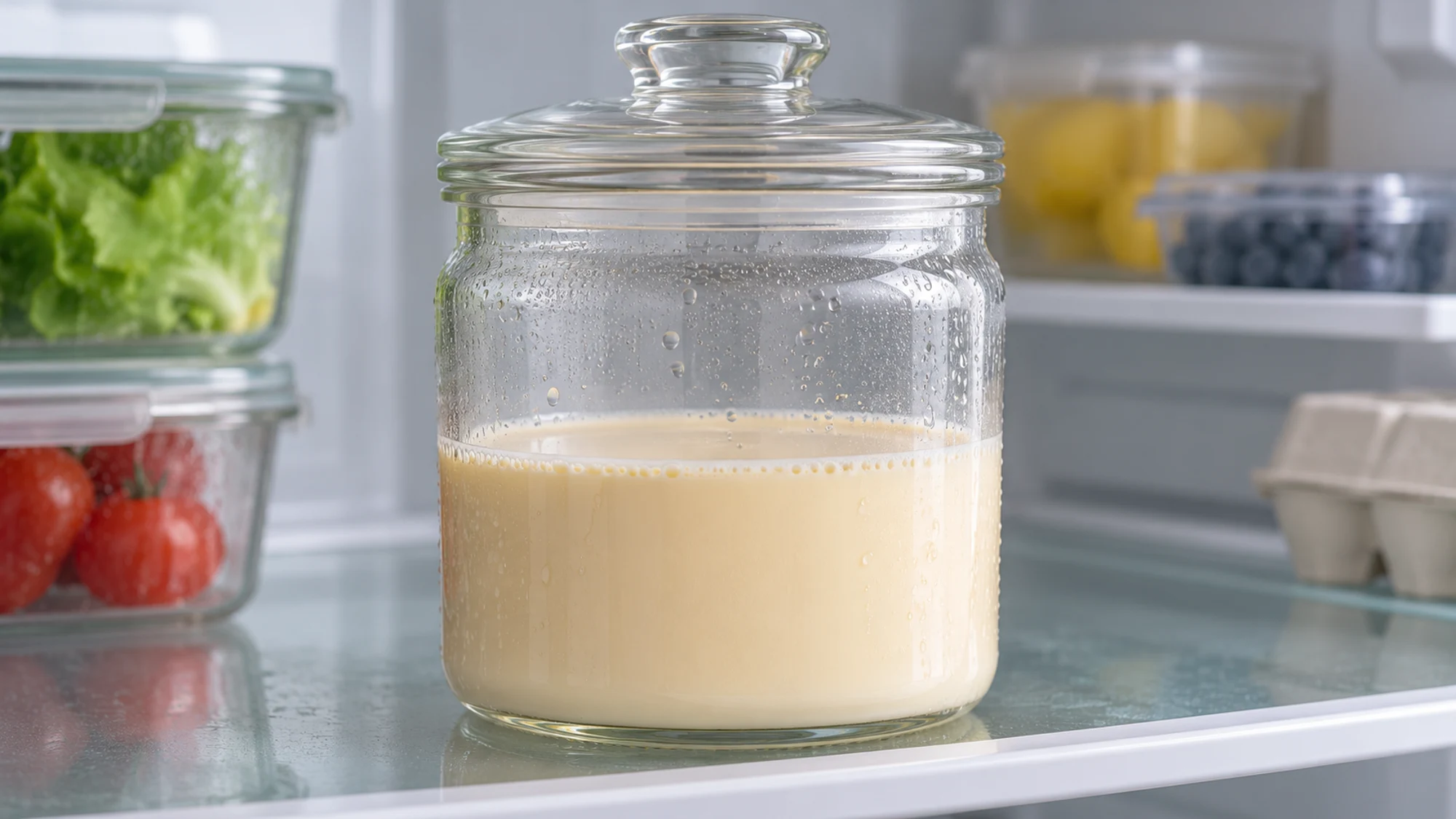
Storage and Label Details Worth Checking
Shelf-stable describes the unopened product, not an open can on the counter. USDA explains that shelf-stable foods may require refrigeration once opened. Keep the unopened can in a cool, dry place and follow the package’s date and storage directions.
- Transfer leftovers to a clean covered container and mark the opening date. Follow your product’s refrigerated use-by advice; Carnation’s U.S. guidance says to use it within a few days.
- Do not freeze a whole can. Carnation also discourages freezing leftover milk because the thawed texture becomes watery.
- Avoid leaking, bulging or badly damaged cans. Do not taste questionable food to decide whether it is safe.
- Ordinary evaporated milk contains milk and lactose. A lactose-free dairy version is still unsuitable for someone with a milk allergy.
Bottom Line
Evaporated milk earns its shelf space by adding concentrated dairy flavor without the sweetness of condensed milk. Match the can to the recipe, dilute only when that is the intended substitution, and plan a refrigerated use for the remainder before opening it.