
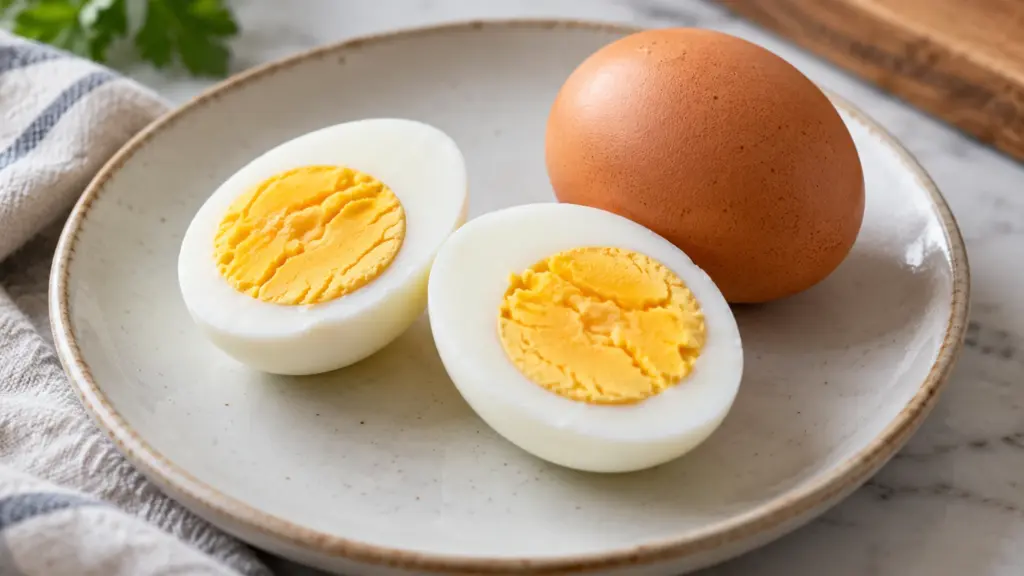
One egg on toast and a two-egg scramble may look like equally ordinary breakfasts, but they do not contribute the same amount of protein. The carton size and the number you crack are the first details to check.
A large whole egg provides about 6 grams of protein. Both the white and the yolk contribute, so an egg-white-only dish is not nutritionally interchangeable with the same number of whole eggs.
If your question is “how much protein in an egg,” I’d use that rounded answer for everyday planning, then look more closely when following a recipe or tracking a particular serving. Eggs are food, not identical little measuring devices.
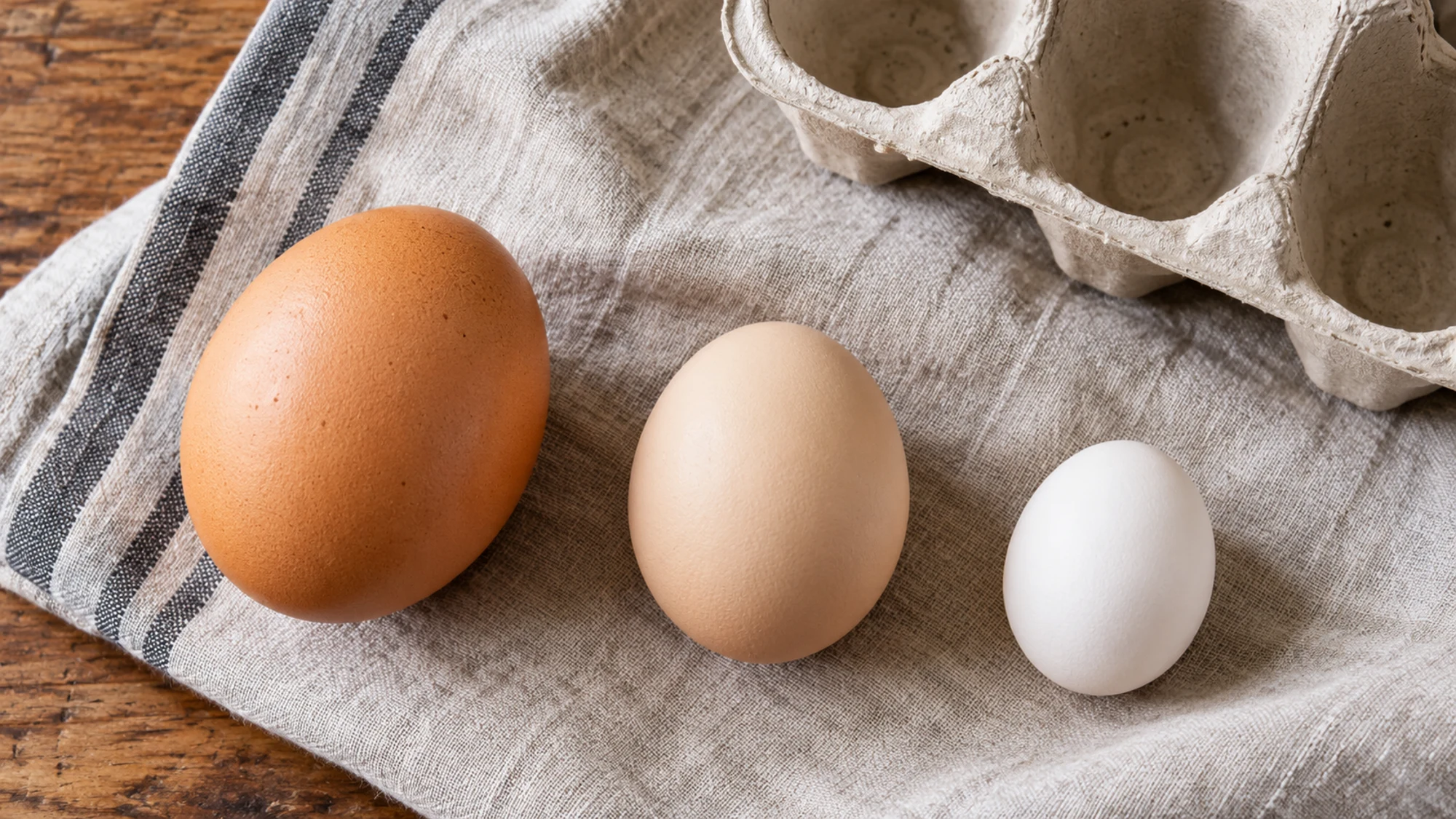
How Much Protein in an Egg Depends on Size
The USDA Standard Reference egg data list about 6.28 grams of protein in a large raw whole egg, based on 50 grams of edible egg without its shell. The table rounds the same reference values to one decimal place. These are food-composition averages, not a laboratory result for your individual egg.
| Whole egg size | Edible weight | Approximate protein |
|---|---|---|
| Small | 38 g | 4.8 g |
| Medium | 44 g | 5.5 g |
| Large | 50 g | 6.3 g |
| Extra large | 56 g | 7.0 g |
| Jumbo | 63 g | 7.9 g |
The size printed on the carton is more useful than judging an egg by eye. When comparing a package label with a database, check whether both describe one egg, the same size and the same preparation. Small differences can reflect rounding rather than a meaningful nutritional disagreement.
The White Is Not the Whole Protein Story
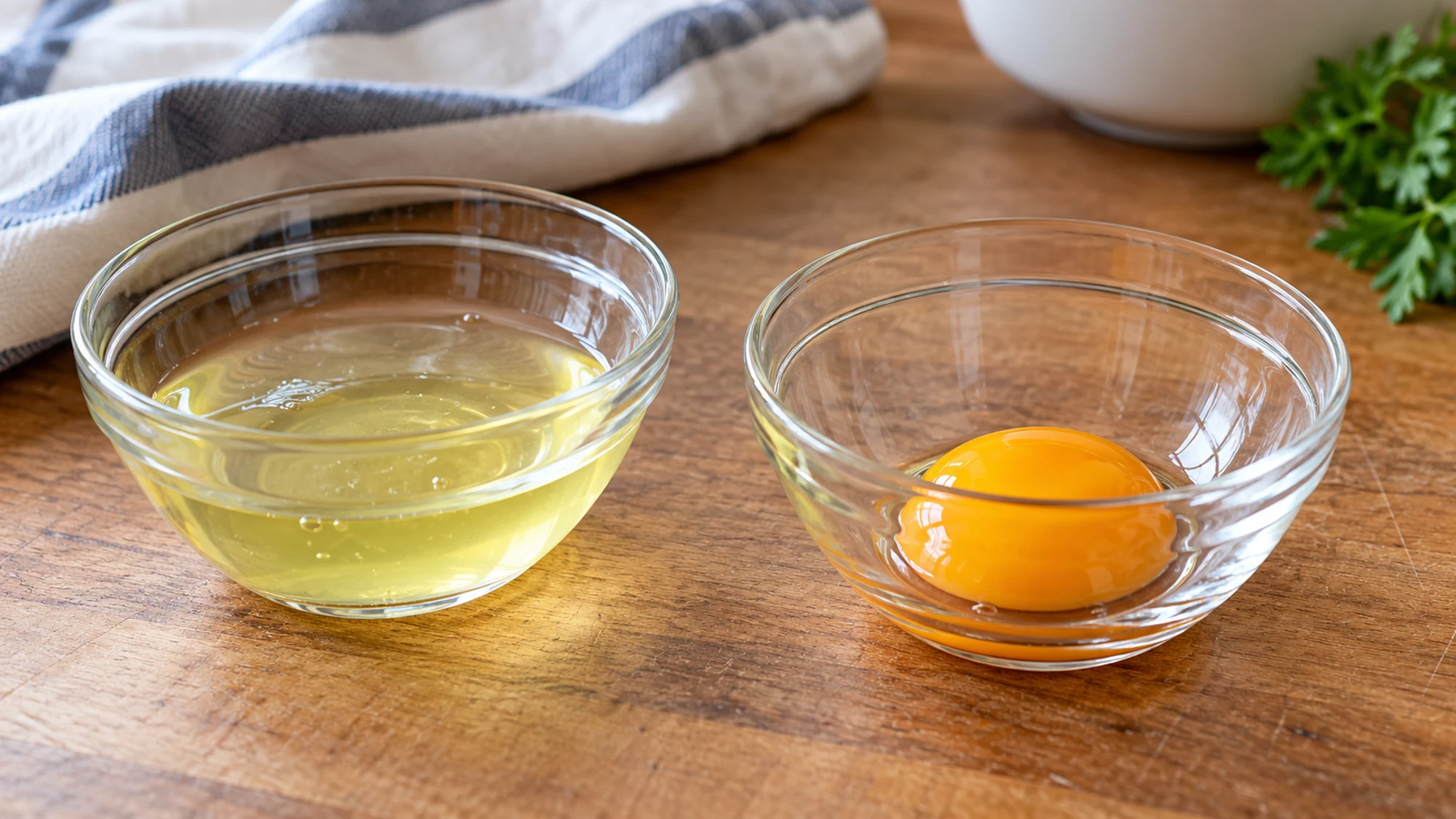
The USDA protein reference gives about 3.6 grams for the white of one large egg compared with 6.28 grams for the whole large egg. Discarding the yolk therefore removes some protein along with other egg components. The white supplies more of the whole egg’s protein, but not all of it.
I’d choose whole eggs, whites or a mixture according to the dish and your dietary needs, not because one part needs a moral label. Yolks help make scrambled eggs rich and custards smooth; whites behave differently in the pan.
- Using a carton of whites: Read its serving size and protein amount. A poured portion is not automatically equivalent to one shell egg.
- Mixing whole eggs and whites: Count each component separately, using the label for packaged products.
- Replacing whole eggs in a recipe: Expect texture and richness to change; equal protein does not mean equal cooking behavior.
Cooking Changes the Dish, Not Just the Number
Boiling an egg does not add another protein ingredient. Scrambling it with cheese or milk does, while butter and cooking oil change other parts of the meal. For a mixed dish, count the ingredients and the portion served rather than copying a value for a plain egg.
Comparisons per 100 grams can also be confusing: preparation and moisture change the weight of food. For a home breakfast, starting with the number and size of eggs you used is often clearer than weighing the finished scramble and treating it as raw egg.
- Keep the recipe together: Divide the nutrition for the whole batch by the actual number of comparable servings.
- Include the extras: Toast, beans, yogurt and cheese contribute their own nutrition; a plate total is not an egg-only total.
- Use a matching entry: A restaurant omelet is not the same food as a plain hard-boiled egg, even when both contain eggs.
Build a Meal You Actually Want to Eat
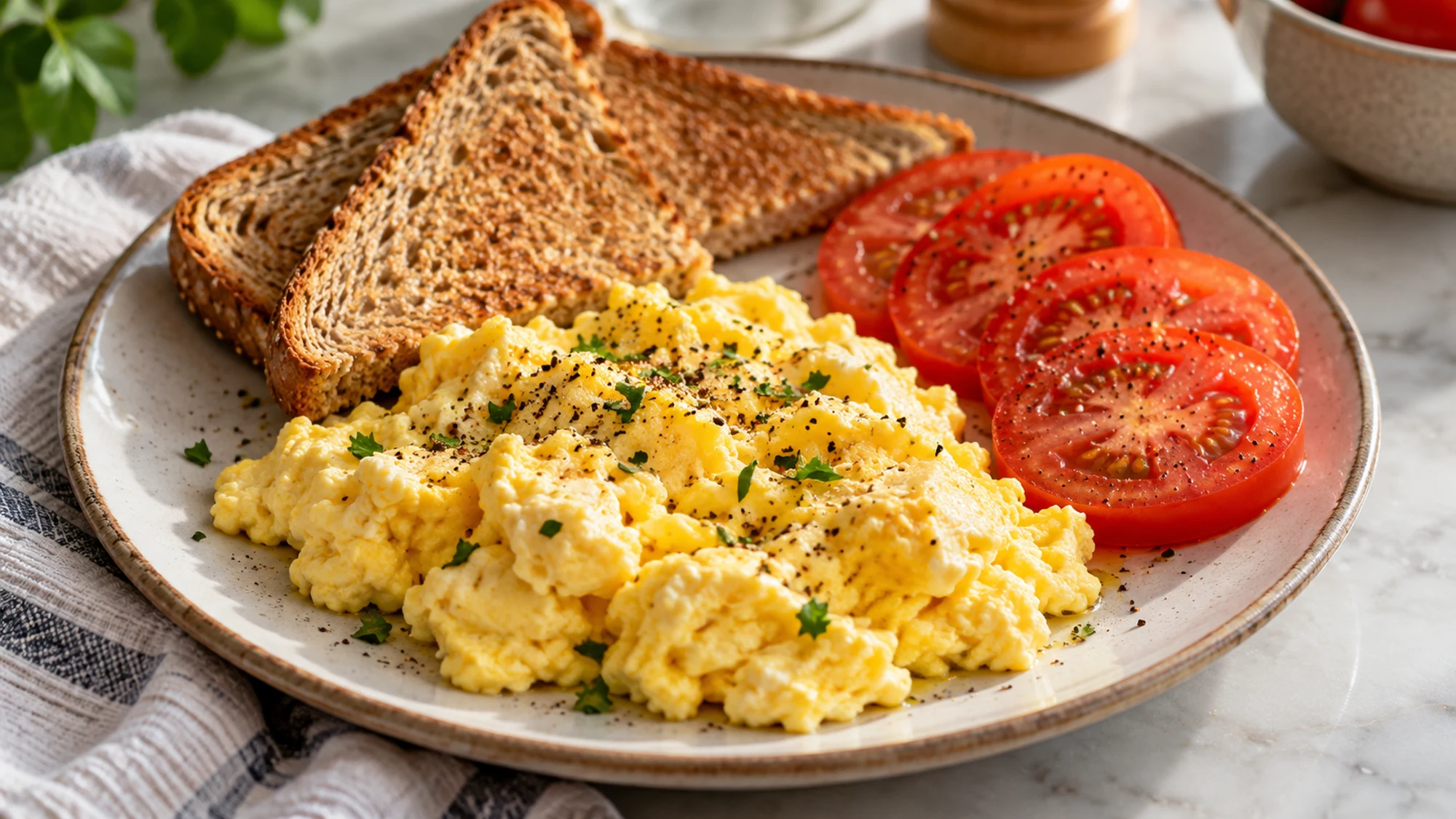
Two large eggs supply roughly twice the protein of one, about 12–13 grams before additions. Whether that fits your needs depends on the rest of your day and your circumstances; a breakfast does not become inadequate simply because it misses an internet rule.
For a savory idea, the chili oil eggs recipe uses two eggs per serving and adds the spicy finish after cooking. Its nutrition estimate includes oil, so it should not be substituted for an egg-only figure. I like that separation between the ingredient number and the whole-plate number.
- Pair eggs with foods you enjoy, such as wholegrain toast, fruit or vegetables, rather than asking eggs to provide every part of breakfast.
- If you need an individualized protein target—for example, because of a medical condition—use advice tailored to you instead of scaling up eggs indefinitely.
- Follow FDA egg-safety guidance: cook whites and yolks until firm, and keep scrambled eggs from remaining runny. Use pasteurized eggs or egg products for preparations served raw or undercooked.
Bottom Line
Remember about 6 grams for a large whole egg, then adjust for size, egg count and the parts you actually use. For a recipe or packaged egg product, its stated serving size is the detail that keeps the comparison honest.
In the video below, Dr. Hazel Wallace discusses eggs and protein after exercise. The video comes from British Lion Eggs, an egg-industry source; the amounts in this guide come from USDA food-composition data, not a promotional serving claim.