
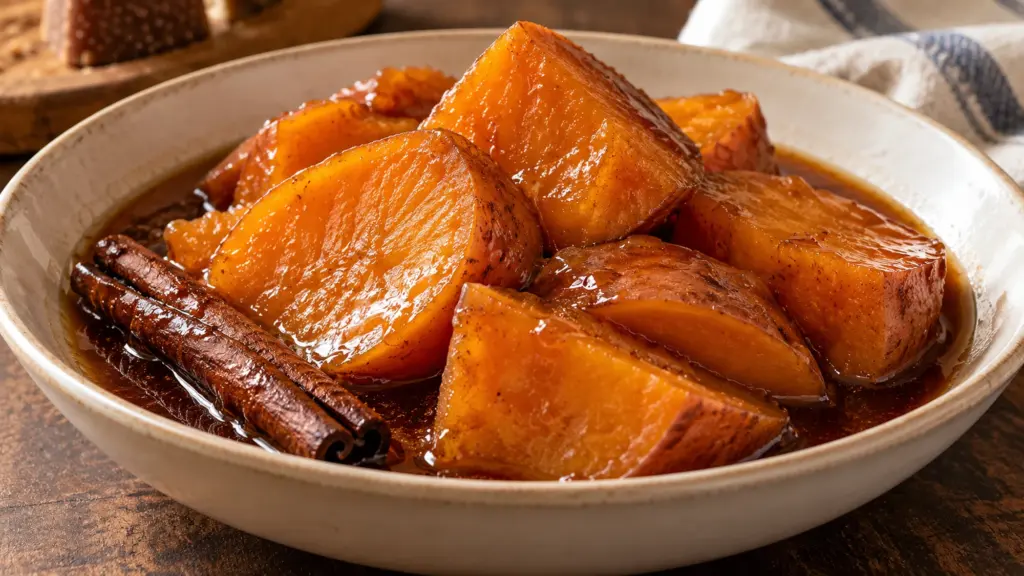
Sweet potato pieces can turn from tender to falling apart while you wait for a syrup to thicken. For these camotes en dulce, the potatoes and syrup do not have to finish at exactly the same moment. Simmer the pieces gently, then lift them out if the liquid needs a little more time.
Cut the sweet potatoes into similar-sized pieces and cook at a gentle simmer. Once a knife enters easily, stop cooking the potatoes; reduce the syrup separately if needed, then spoon it over them to serve.
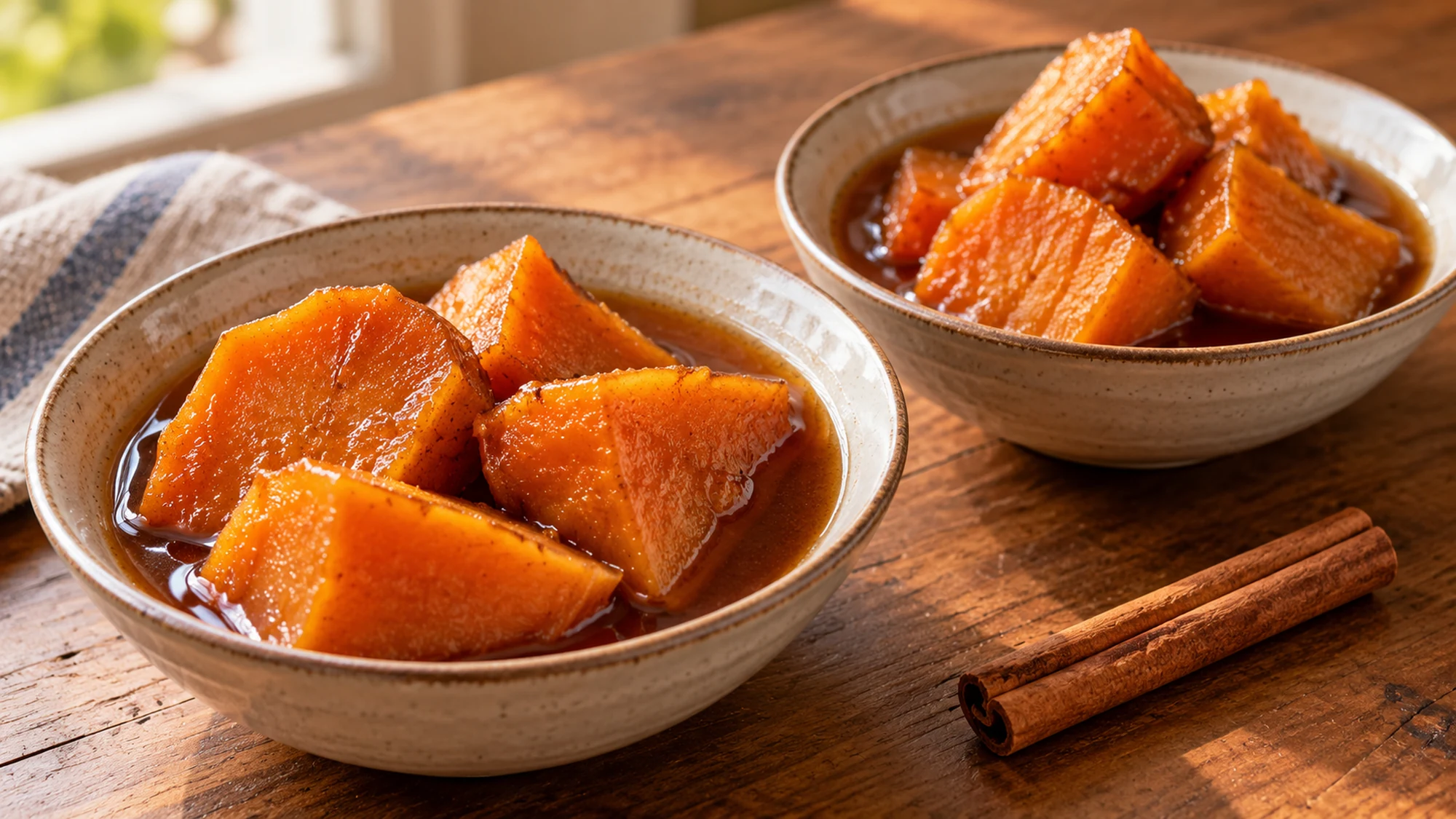
This version keeps the flavor focused on sweet potato, piloncillo and cinnamon rather than adding a whole spice cupboard. I’d choose a shallow bowl for serving, so the syrup stays around the pieces instead of disappearing across a flat plate.
Serving Camotes en Dulce Warm or Chilled
Let the dish settle briefly before serving. Hot syrup can be much hotter than it looks, and a short pause makes the dessert easier to enjoy. Divide the sweet potato pieces first, then add syrup to suit each portion rather than automatically emptying the pan over them.
- Keep it simple: Serve a few warm pieces with their cinnamon syrup. Their soft texture and deep sweetness do not require another topping to make sense.
- Add a creamy contrast: A small spoonful of plain yogurt or a splash of milk changes the balance. Add it only to the portion being eaten, not to the storage container.
- Try a chilled serving: Refrigerated pieces will feel firmer and the syrup thicker. Let a portion stand briefly while you set the table if you prefer it less cold, keeping normal food-safety limits in mind.
Let the sweet potatoes set the portion and the syrup finish it. You can always offer a little extra liquid at the table.
Variations and Syrup Troubleshooting
Piloncillo is unrefined cane sugar often sold in firm cones. Break or grate it carefully so it dissolves more easily, rather than trying to force a knife through a hard block on an unstable board. Packaged grated piloncillo is convenient when available.
Judge the potatoes and syrup separately.
| What happens | Useful response | What to avoid |
|---|---|---|
| Potatoes tender, syrup thin | Lift out the pieces and reduce the liquid | Boiling the potatoes until they disintegrate. |
| Syrup thickens too soon | Add a small splash of water | Letting sugar catch on the pan. |
| Pieces cook unevenly | Cut similar sizes next time | Judging every piece by the smallest one. |
| Flavor is too heavily spiced | Use fewer whole spices in the next batch | Adding more sugar as a cure. |
- Choose your texture: Peeling gives a smooth surface; leaving well-scrubbed skin on adds structure and a different bite. This recipe uses peeled pieces for a consistent dessert texture.
- Keep the simmer gentle: Move the pan or spoon syrup over the pieces rather than stirring vigorously. Fragile cooked edges can break even when the centers are just right.
- Use brown sugar knowingly: It can provide a practical substitution by weight, but its flavor is not identical to piloncillo. I prefer naming that difference instead of promising an exact match.
- Remove the cinnamon: Take the stick out before portioning. Whole spices flavor the syrup but are not a pleasant surprise to bite into.
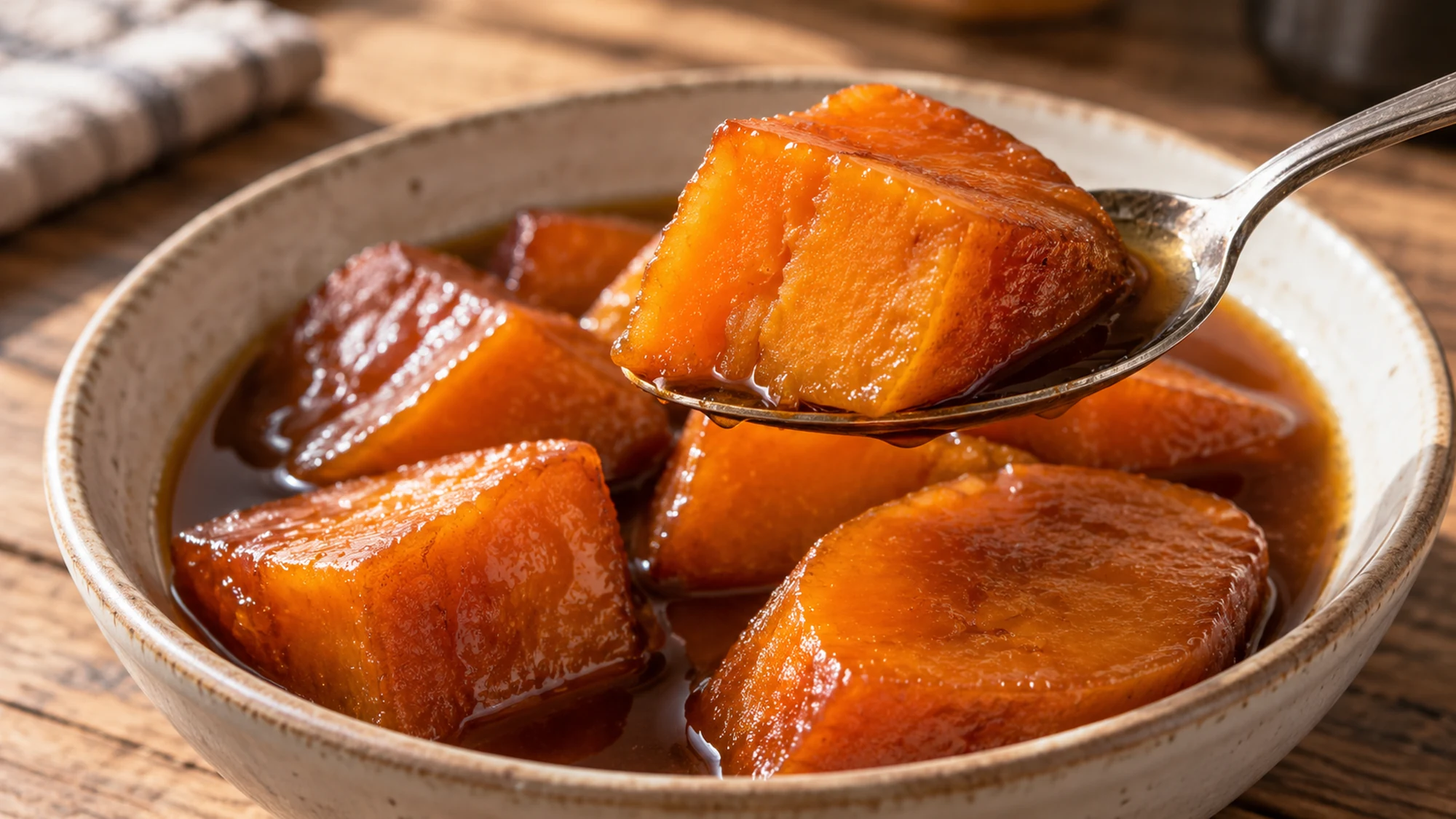
A glossy syrup is useful; a pan of hard candy is not the goal. The finished liquid should coat the potatoes while remaining spoonable.
Health Benefits in a Dessert Portion
Sweet potatoes contribute fiber and potassium, as the USDA sweet potato fact sheet explains. Adding piloncillo changes the dish substantially, however. These syrup-coated pieces are dessert, not nutritionally the same as plain cooked sweet potato.
- Keep sugar claims honest: Piloncillo is still added sugar. Its less-refined form does not make the syrup sugar-free or establish a special health benefit.
- Know what the estimate includes: The nutrition estimate assumes all the measured syrup is divided among six servings. Leaving syrup behind changes what you actually eat.
- Check additions separately: Milk, yogurt and other toppings change both nutrition and allergens. The basic recipe has no dairy ingredient, but an added topping may.
- Chill leftovers promptly: Use shallow covered containers and refrigerate within two hours, or one hour above 90°F (32°C). Use within three to four days.
Enjoy the ingredient for its flavor and texture without asking it to cancel out the syrup. The portion and the rest of the meal still matter.
Bottom Line
Camotes en dulce needs patient simmering, not aggressive stirring. Follow FoodSafety.gov’s leftover guidance for cooling and reheating. If reheating, warm portions to 165°F (74°C), adding a splash of water if the chilled syrup has become too thick.
Keep the pieces even, test their centers and give the syrup its own finishing time when necessary. Tender potatoes and a spoonable glaze are worth treating as two separate goals.
Camotes en Dulce Recipe

Ingredients
- 2 lb peeled sweet potatoes 900 g prepared, cut into even 1 1/2-inch pieces
- 180 g piloncillo about 6 1/3 oz, grated or broken into small pieces
- 2 1/2 cups water 600 ml, plus small splashes if needed
- 1 cinnamon stick about 3 inches long, removed after cooking
Equipment
- Wide saucepan with lid
- Slotted spoon
- Knife and peeler
Instructions
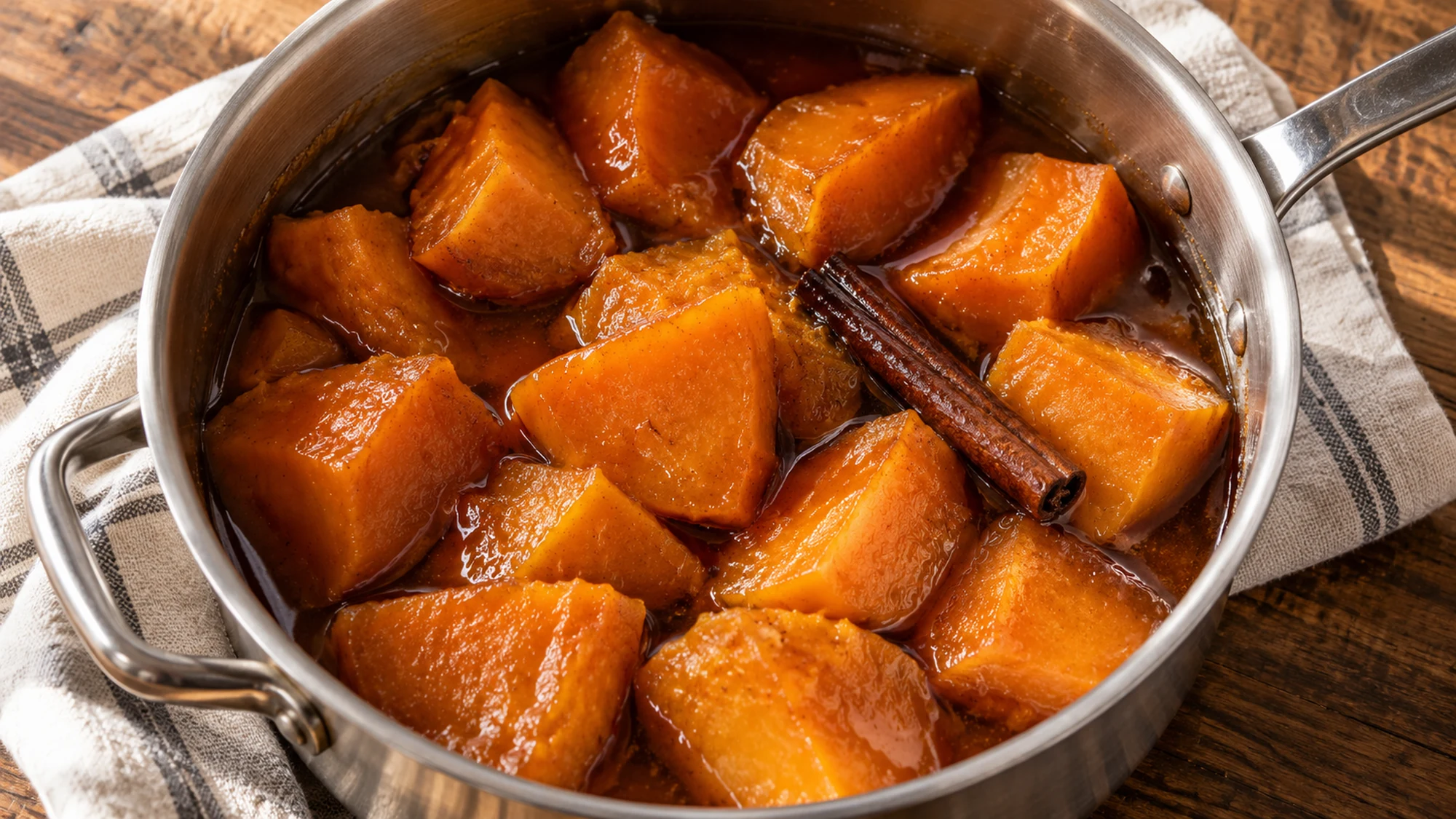
- Place the water, piloncillo and cinnamon in a wide saucepan. Warm over medium heat, stirring, until the piloncillo dissolves. Do not handle hot syrup with bare fingers.
- Add the sweet potato pieces and bring to a gentle simmer. Cover partially and cook for about 25–35 minutes, turning the pieces carefully once, until a small knife enters the centers easily. Add a small splash of water if the syrup thickens before the potatoes soften.
- Lift the tender pieces out with a slotted spoon. If the syrup is thin, simmer it uncovered for 5–10 minutes until lightly syrupy and spoonable; it thickens further as it cools. Do not cook it to a hard-candy stage.
- Remove the cinnamon stick. Return the sweet potatoes to the syrup gently or spoon the syrup over six portions. Rest for 10 minutes before serving warm, or refrigerate promptly for chilled servings.