
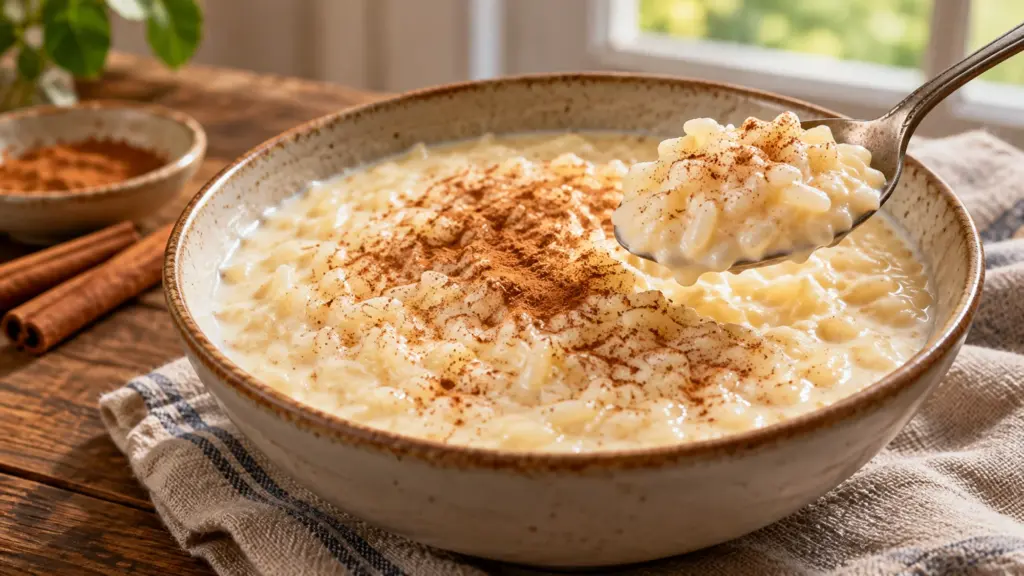
Rice pudding can look perfect in the saucepan and turn stiff by the time dessert reaches the table. For creamy arroz con leche, stop cooking while there is still a little movement in the milk around the grains. The rice keeps absorbing liquid as it rests, so the final spoonful depends on what you do before the heat goes off.

Start the rice in cinnamon-scented water, then finish it gently with milk and sugar. Stir across the bottom of the pan, keep the simmer quiet, and leave the pudding slightly loose. Vanilla goes in at the end so its aroma stays clear.
This version uses whole milk rather than condensed milk, giving you control over sweetness. Expect soft grains in a creamy sauce, not a smooth custard. I prefer a light cinnamon dusting so the milk-and-vanilla flavor stays clear.
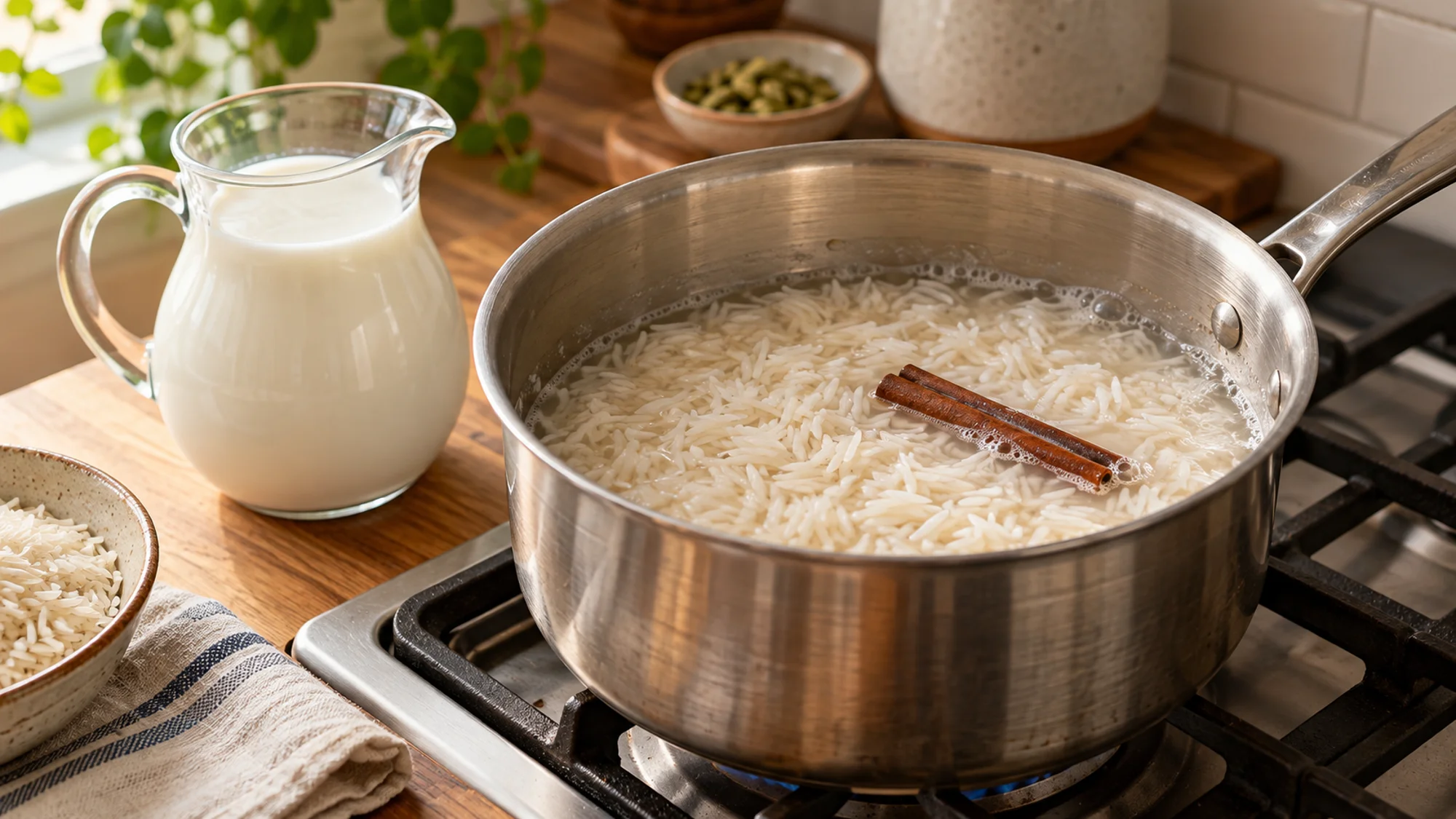
Serving Arroz con Leche Warm or Chilled
Warm pudding is softer; chilled pudding feels thicker. Spoon warm portions into small heatproof bowls, or cool promptly in shallow containers for later. Do not leave a large pot on the counter until completely cold.
A small bowl is plenty after a substantial meal. If you enjoy cinnamon and milk in a different form, atole de pinole offers a pourable toasted-corn drink rather than a rice dessert. Choose the texture you want instead of expecting the two to behave alike.
- For a simple finish: Dust with a little ground cinnamon just before serving, keeping the milk flavor easy to taste.
- For contrast: Offer fresh berries on the side rather than stirring a large amount of juicy fruit into the whole batch.
- For chilled portions: Stir gently before serving and loosen with a small splash of cold milk if needed.
- For reheating: Warm only the portion you plan to eat, stirring in a little milk to restore its creamy consistency.
I’d serve the first bowl warm and keep any planned leftovers unadorned. It is easier to adjust the thickness and add a fresh topping when you know how the pudding will be eaten.
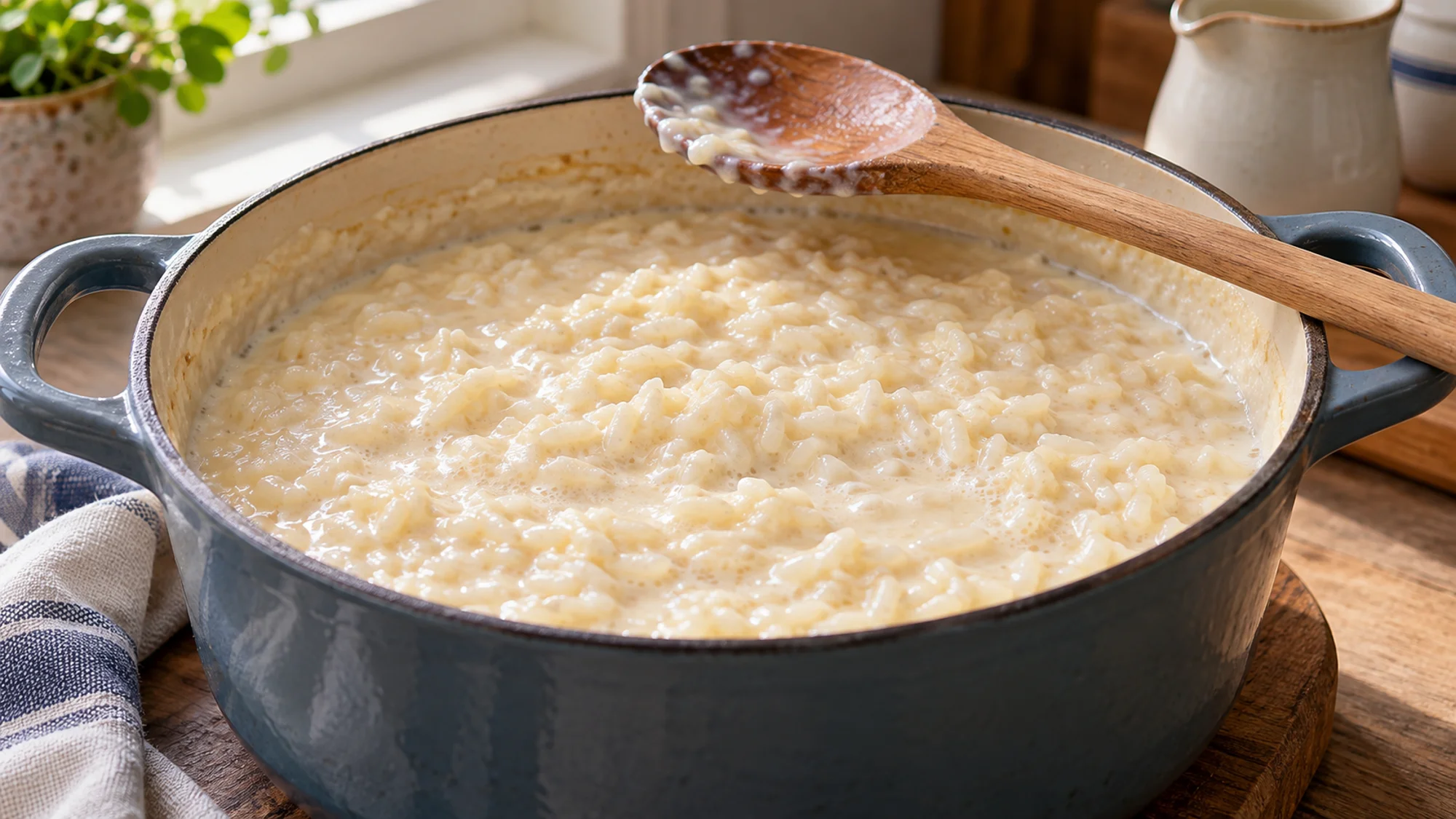
Arroz con Leche Variations and Consistency Cues
Long-grain white rice gives distinct, tender grains. Brown rice, instant rice and already-cooked rice are not direct swaps in this method: their water needs and timing differ. Use a heavy saucepan with room for the milk to bubble gently without climbing over the rim.
The spoon should sweep the bottom and corners of the pan, where milk can catch first. If you smell scorching, transfer the unburned pudding to a clean pan without scraping the scorched layer into it. Turning up the heat to hurry thickening usually creates more trouble than it saves.
| Preference or problem | Adjustment | What changes |
|---|---|---|
| Lighter milk base | Use 2% milk in the same volume | Less rich, still dairy-based |
| Gentle citrus note | Infuse one wide strip of orange peel | Remove the peel before serving |
| Pudding too thick | Stir in milk a little at a time | Looser texture without more sugar |
| Rice still firm | Continue gently with extra liquid as needed | Grains soften before final thickening |
Taste a grain before deciding the pudding is done. A thick sauce cannot disguise a hard rice center, and fully tender rice does not need to be cooked until the pan looks dry.
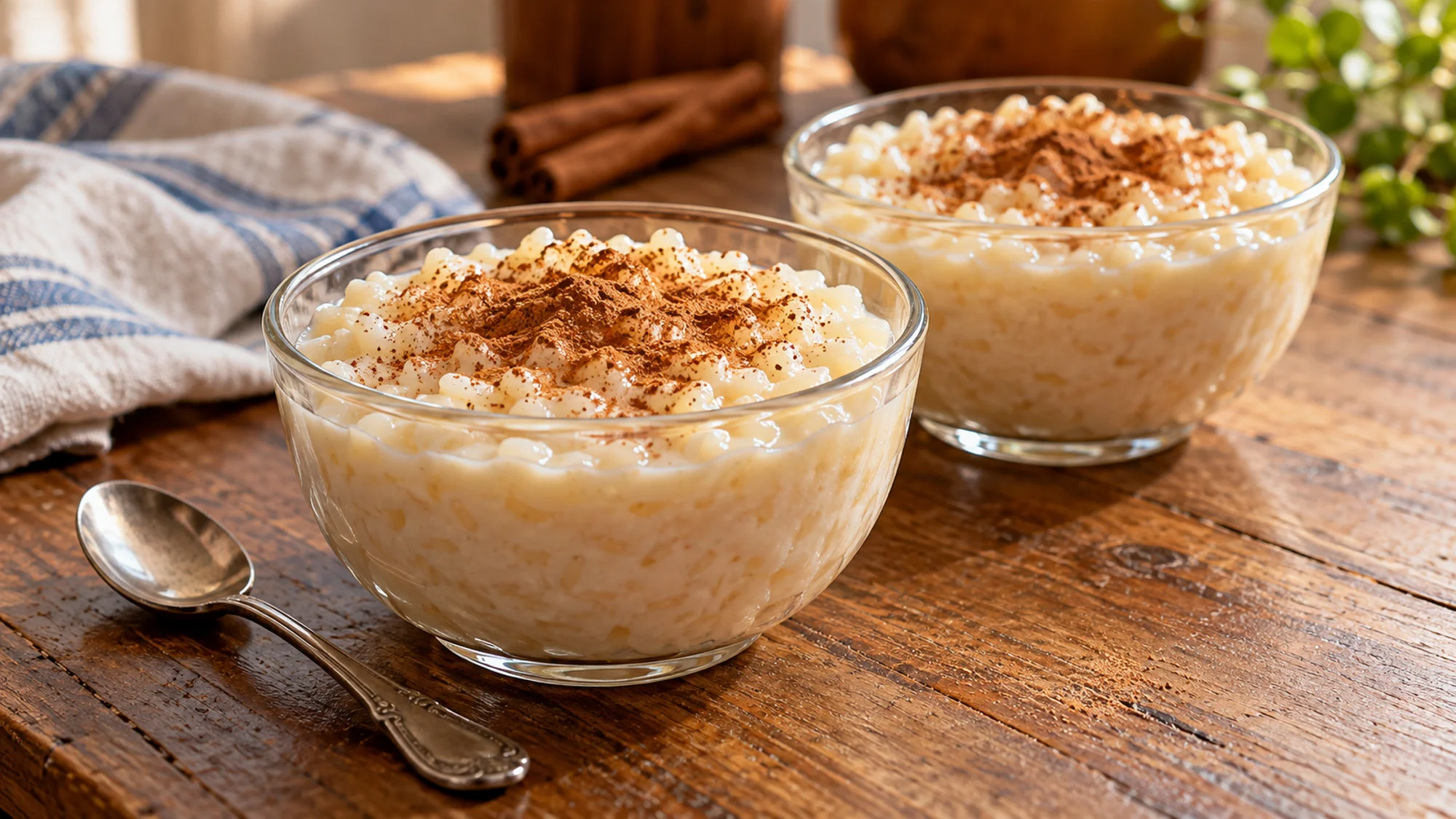
Health Benefits in a Realistic Dessert Portion
Milk contributes protein and calcium, while rice and sugar supply carbohydrate. That is a useful description of the ingredients, not a reason to present rice pudding as a treatment or a complete meal. The card estimate is for one-sixth of this batch, without fruit or other toppings.
The NHS guide to dairy foods explains the nutrients milk provides and the differences between higher- and lower-fat choices. Using a lower-fat milk changes richness; it does not remove the added sugar in this dessert.
- The recipe contains milk. Lactose-free dairy milk may suit lactose intolerance, but it is not appropriate for a milk allergy.
- A plant beverage changes flavor and nutrition. Check fortification and protein rather than treating every carton as equivalent to milk.
- Serve the amount you enjoy, and keep the rest of the meal varied rather than asking one dessert to provide everything.
The pleasure here is warm cinnamon, tender rice and a creamy spoonful. A modest serving lets those qualities stand on their own without adding nutritional promises the recipe cannot support.
Bottom Line
For leftovers, follow the rice-specific approach in the Food Standards Agency home food guidance: cool quickly, ideally within one hour, refrigerate and use within 24 hours. Reheat only once, until steaming hot throughout. Divide the pudding into shallow containers rather than cooling it in the cooking pot.
Good arroz con leche stays creamy because you watch the grains, the heat and the resting time together. Leave a little extra milk around the tender rice, then adjust each serving gently instead of overcooking the entire batch.
Arroz con Leche Recipe


Ingredients
- 1 cup long-grain white rice 185 g, uncooked; not instant rice
- 2 cups water
- 1 cinnamon stick About 3 inches long
- 4 cups whole milk Plus a little more if needed to adjust thickness
- 0.5 cup granulated sugar 100 g
- 0.125 teaspoon fine salt
- 1 teaspoon vanilla extract
- ground cinnamon Optional, a light dusting for serving
Equipment
- Heavy medium saucepan
- Wooden spoon or silicone spatula
- Measuring cups and spoons
- Shallow storage containers
Instructions
- Combine the rice, water and cinnamon stick in a heavy medium saucepan. Bring to a boil, then reduce to a gentle simmer. Cover loosely and cook about 15 minutes, until the rice is nearly tender and most water is absorbed; check that it does not boil dry.
- Stir in the milk, sugar and salt. Bring back to a gentle simmer, then cook uncovered over low to medium-low heat for 25–30 minutes. Stir frequently across the bottom and corners, more often as the pudding thickens.
- Taste a grain carefully. It should be fully tender, with no hard center, and surrounded by creamy milk. If the rice needs more cooking but the pan looks dry, add a splash of milk and continue gently. Stop while the pudding is slightly looser than your desired serving consistency.
- Remove from the heat and discard the cinnamon stick. Stir in the vanilla. Rest for 10 minutes, then stir and add a little milk if needed. Serve warm in small bowls with an optional light dusting of cinnamon.
- For chilled portions or leftovers, divide promptly into shallow containers, cool quickly and refrigerate ideally within one hour. Keep at 40°F (4°C) or below and use within 24 hours. Reheat only once until steaming hot throughout, stirring in a splash of milk to loosen.