

A wrap that tears the moment you fold it is not much help at lunchtime. Cottage cheese flatbread works best when you treat it as a thin baked egg-and-cheese sheet, not a miniature loaf. Blend the base, spread it evenly, and let it cool before asking it to hold a filling.

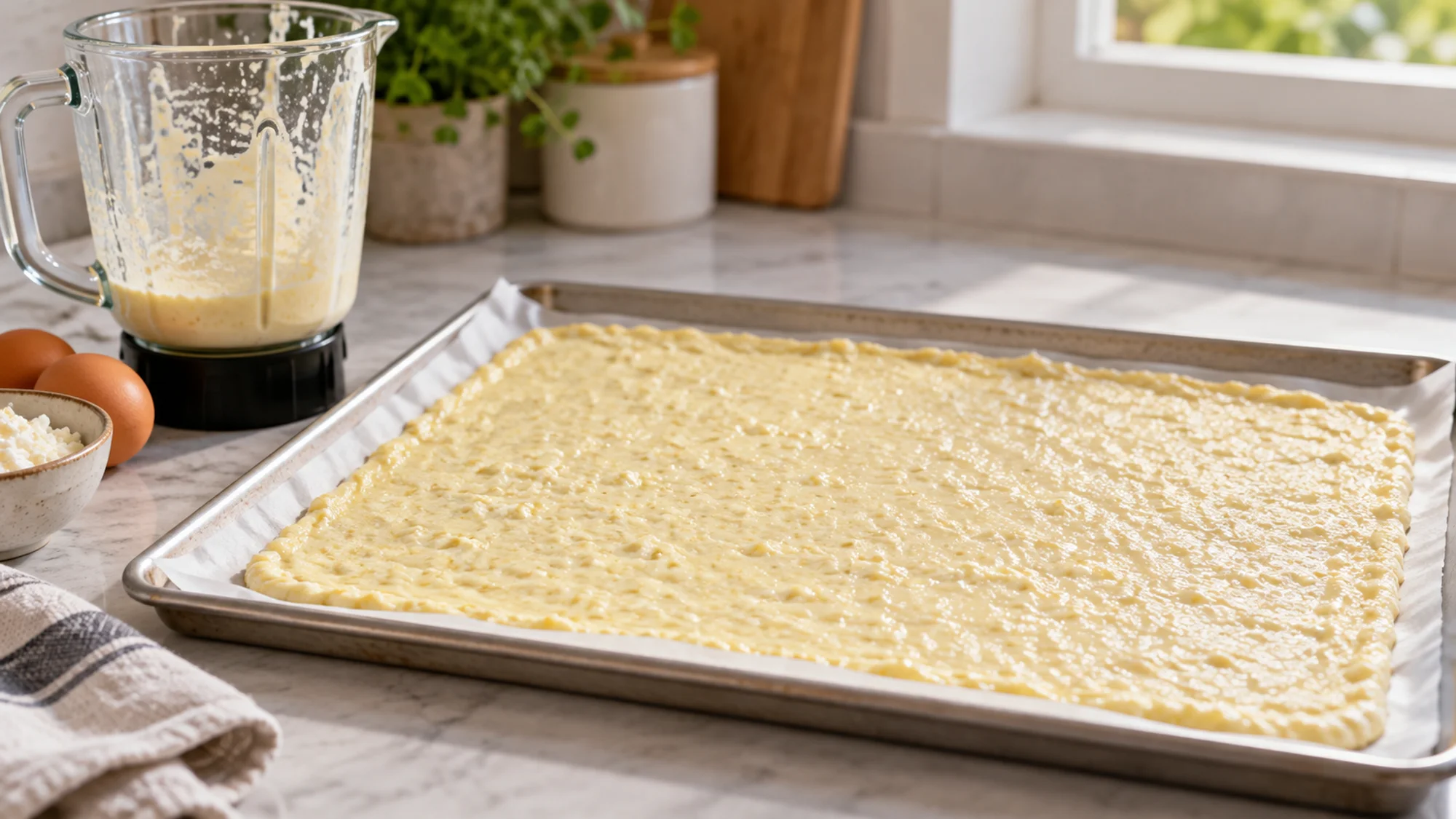
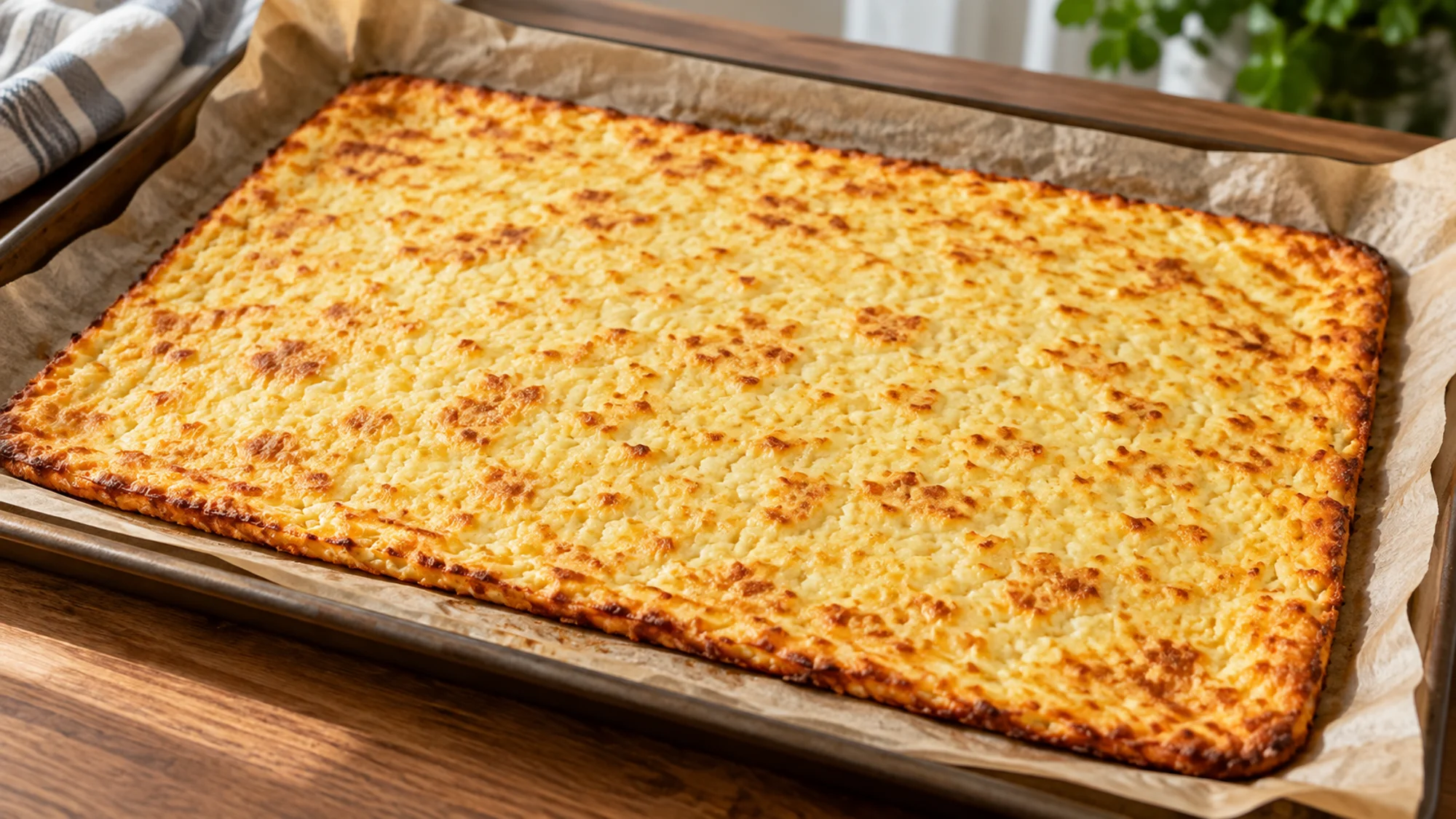
Cottage cheese and eggs bake into a tender, flexible flatbread without flour. Keep the layer even, bake until the center is set, and cool on the parchment before peeling. A dry, deeply browned sheet is more likely to crack than fold.
The flavor is gently tangy and unmistakably egg-and-cheese based, with golden edges rather than a chewy bread crust. I’d choose this for a vegetable-filled lunch when that flavor sounds appealing—not because ordinary bread needs replacing. The two main ingredients do the structural work; the seasonings simply make them more interesting.
Serving Cottage Cheese Flatbread Without a Soggy Wrap
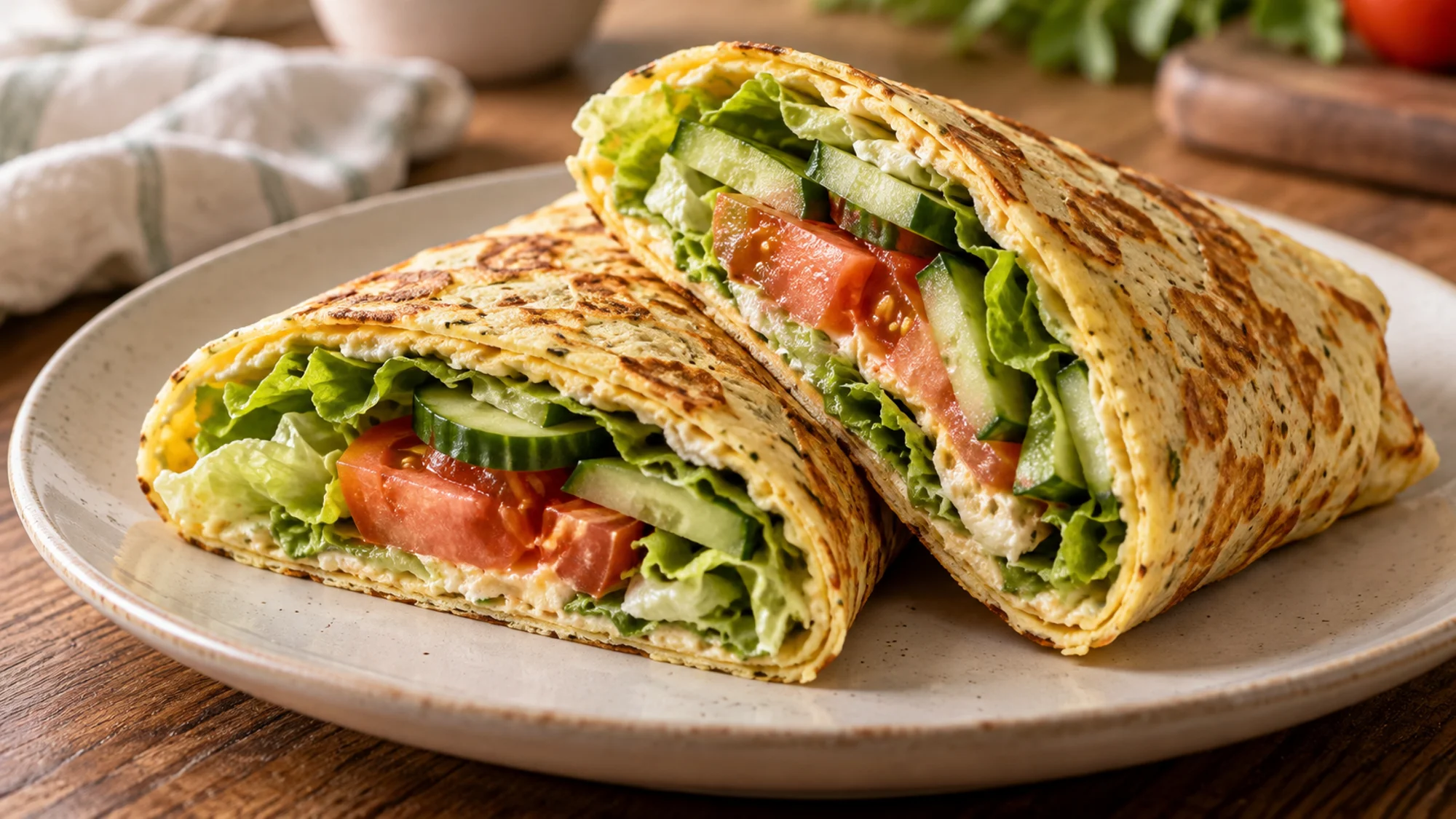
Let the flatbread lose its oven heat before filling. Warm steam trapped under lettuce turns a tender wrap damp, while a heavy layer of wet sauce can soften the center before you reach the last bite. Pat washed vegetables dry and keep the filling in a modest strip rather than covering every inch.
For a different cottage-cheese texture, try the thin baked cottage cheese chips. Those are meant to dry into delicate crisps; this sheet should remain supple. The same ingredient can behave quite differently depending on thickness, eggs and how long it stays in the oven.
- Fresh and simple: Use lettuce, thin cucumber and tomato slices. Blot especially juicy tomato slices first.
- A more substantial lunch: Add cooked chicken or a small portion of mashed chickpeas, keeping large chunks from pressing through the wrap.
- Serving warm: Add warm fillings just before eating rather than packing the assembled wrap for later.
- For packing: Carry sauce separately and keep the wrap chilled with an ice pack until lunchtime.
I prefer a light filling and a loose fold here. Think of the flatbread as a soft envelope, not a stretchy tortilla you can pull tightly around an oversized lunch.
Cottage Cheese Flatbread Variations and Texture Fixes
Start with regular 4% cottage cheese and large whole eggs. Brands vary in moisture, so stir the tub and avoid pouring an extra pool of whey into the blender. A few tiny curd flecks are harmless, but a mostly smooth batter spreads more evenly than a lumpy mixture.
Parchment matters: it gives you a surface you can peel away gradually after cooling. Grease it lightly even if your baking sheet is nonstick. Do not substitute wax paper, and do not spread the batter to transparent, ragged edges that will brown long before the middle sets.
| Change or problem | What to do | Expected result |
|---|---|---|
| More savory flavor | Use dried oregano and garlic powder | Seasoning without extra liquid |
| Lower-fat cottage cheese | Keep the same amount; watch doneness | Texture may be less rich and moisture may differ |
| Wet center, dark edge | Spread more evenly next time | More consistent cooking across the sheet |
| Tearing during removal | Cool longer and peel paper away slowly | Less stress on the delicate surface |
The best stopping point is a set center with light golden color. More browning is not automatically better when flexibility is the goal.
Health Benefits and What the Ingredients Actually Add
Eggs and cottage cheese contribute protein; leaving out flour does not make the recipe nutritionally complete by itself. The estimate in the card is for half the plain sheet, not a finished sandwich. Vegetables, spreads and other fillings change the final portion, so count them separately when that matters to you.
The NHS overview of dairy foods explains their protein and calcium contribution while noting differences in salt and fat. Check your cottage cheese label rather than assuming every tub has the same sodium or nutrient values.
- This recipe contains milk and eggs. Lactose-free cottage cheese is still a milk product and is not suitable for a milk allergy.
- The plain flatbread contains little fiber. Vegetables, beans or fruit alongside it bring variety that the egg-and-cheese base does not.
- The base uses no wheat flour, but anyone avoiding gluten should check seasoning labels and prevent cross-contact.
Choose this flatbread for its taste, texture and useful protein—not a promise of weight loss or a claim that one kind of lunch is better for everyone.
Bottom Line
Follow USDA egg-handling guidance: cook the center to 160°F (71°C), refrigerate promptly, and use leftovers within 3–4 days. Store the unfilled sheet flat with parchment between portions; keep moist fillings separate. Reheat leftovers to 165°F (74°C), then fill just before eating.
An even layer, a fully set center and a patient cool-down make cottage cheese flatbread easier to handle. Keep the filling light, fold gently, and enjoy the tender golden sheet for what it is.
Cottage Cheese Flatbread Recipe


Ingredients
- 1 cup 4% cottage cheese 226 g; stir before measuring
- 2 large eggs
- 0.25 teaspoon garlic powder
- 0.25 teaspoon dried oregano
- 1 teaspoon olive oil For greasing the parchment
Equipment
- Blender or food processor
- Rimmed baking sheet
- Parchment paper
- Spatula
- Food thermometer
Instructions
- Heat the oven to 350°F (175°C). Line a rimmed baking sheet with parchment and brush the paper evenly with the olive oil.
- Blend the cottage cheese, eggs, garlic powder and oregano until mostly smooth. Scrape the blender sides as needed; do not add water.
- Spread the batter on the prepared paper into an even rectangle or oval about 9 by 12 inches. Avoid very thin edges and a thick center.
- Bake on the center rack for 30–35 minutes, checking from 25 minutes. The sheet should be set throughout and lightly golden, with the center reaching 160°F (71°C). Continue briefly if needed; do not bake until brittle.
- Cool on the pan for 10 minutes. Lift an edge and peel the parchment away slowly. Cut the sheet into two portions and fill lightly with your choice of ingredients just before serving.
- Refrigerate unfilled leftovers within 2 hours, or 1 hour above 90°F (32°C), at 40°F (4°C) or below. Use within 3–4 days. Reheat leftovers to 165°F (74°C); keep wet fillings separate until serving.