
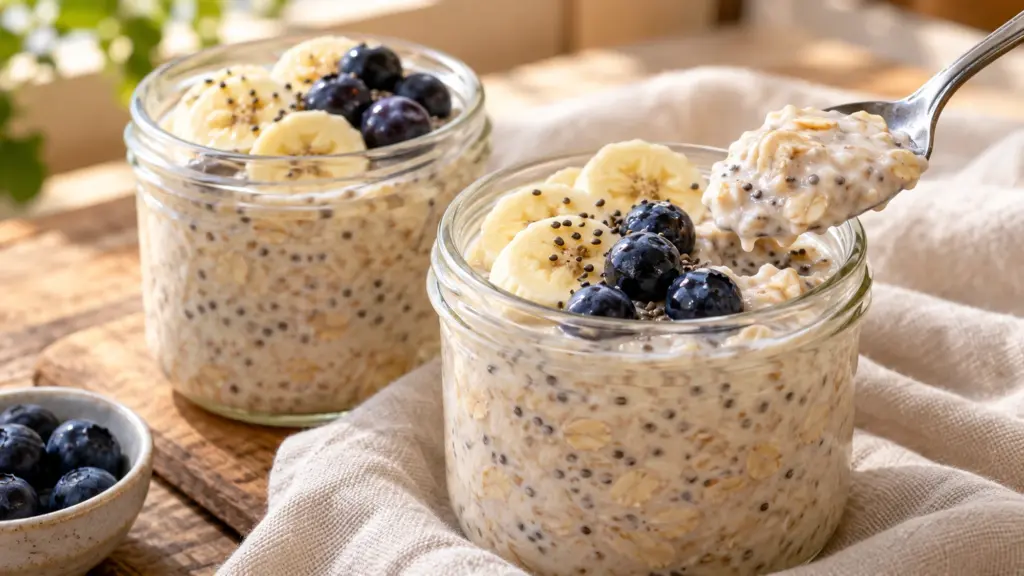
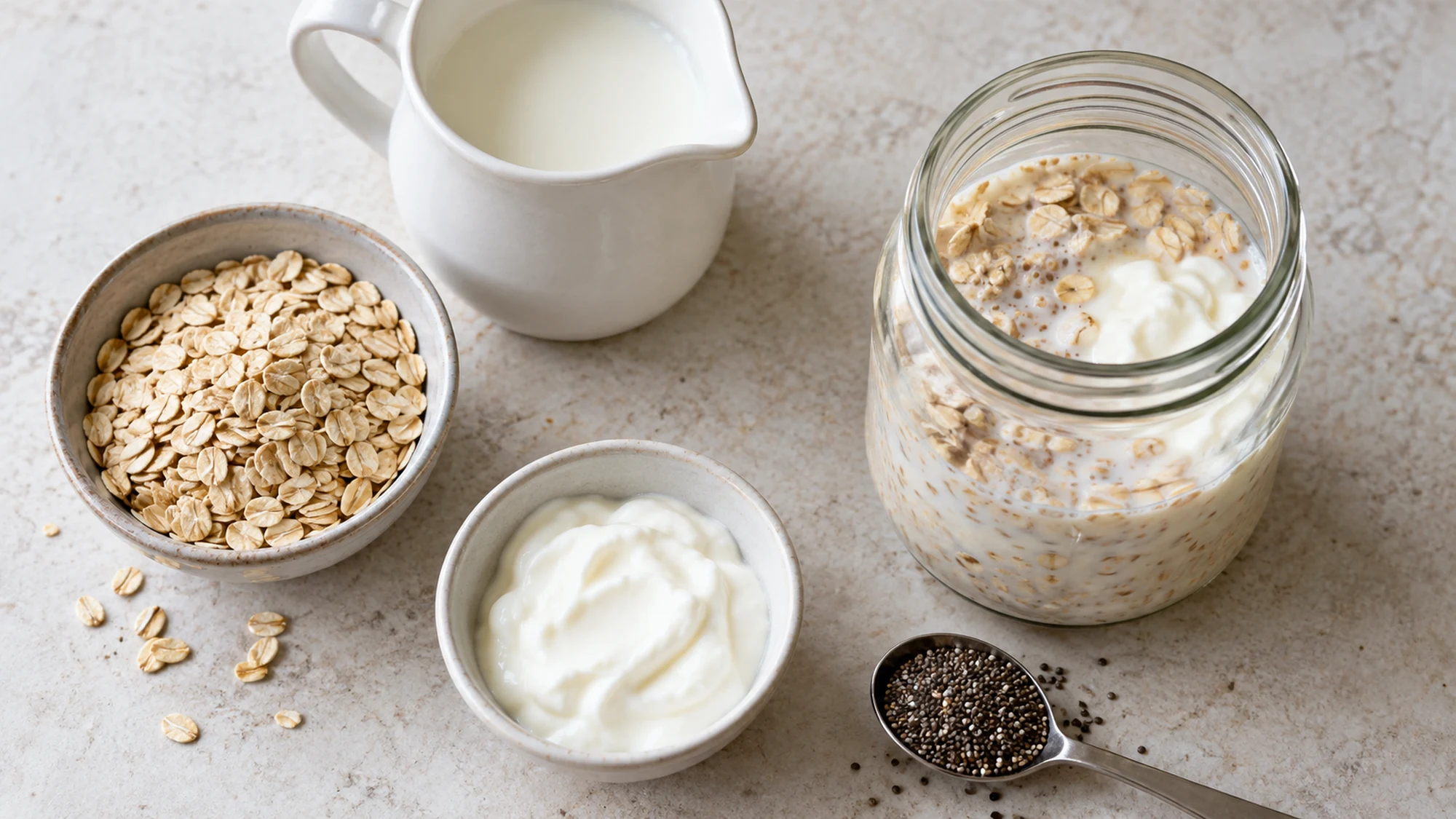
Breakfast is easier to face when the oats are already soft and the spoon is the only equipment you need. This overnight oats recipe uses rolled oats, milk and plain Greek yogurt for a creamy base that still has a little chew. A small amount of chia helps it thicken without turning the jar into seed pudding.
Use old-fashioned rolled oats, mix them thoroughly with the milk and yogurt, and refrigerate overnight. In the morning, stir from the bottom and loosen with a splash of milk if needed. Add fruit and crunchy toppings just before eating.
The yogurt gives a gentle tang rather than a dessert-like sweetness. I prefer a modest amount of maple syrup in the base, then taste again after adding ripe fruit. You can always add more at breakfast; taking sweetness back out is the tricky part.
Serving This Overnight Oats Recipe
A wide-mouth jar is convenient, but any clean covered food container works. Use one with room above the oats so you can stir without spilling. For another chilled option, vanilla chia pudding skips the oats and gives a more evenly seed-speckled texture.
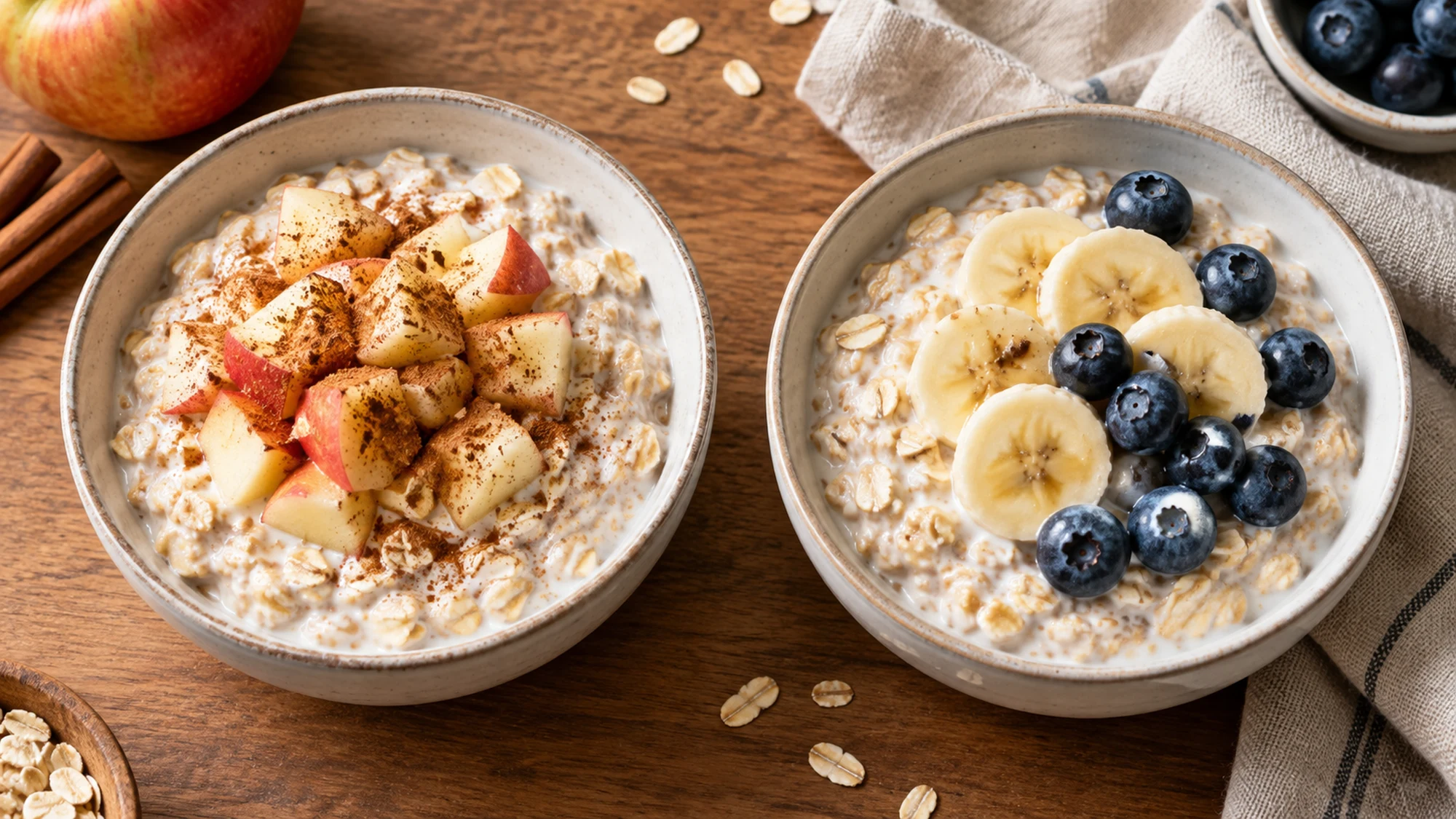
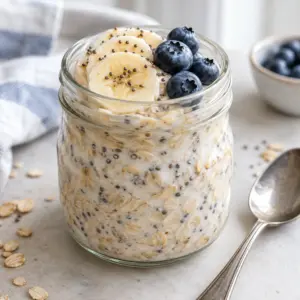
- Banana and blueberries: Add freshly sliced banana and a small handful of berries after stirring. Banana browns when cut ahead.
- Apple and cinnamon: Fold in diced apple at serving time for a crisp contrast, then add a light dusting of cinnamon.
- Something crunchy: Sprinkle nuts or granola on last. Keeping them separate prevents them from becoming soft overnight.
These oats are designed to be eaten cold, not left out to warm for hours. If you want a warm breakfast, transfer a portion to a microwave-safe bowl and heat gently, stirring and adding milk as needed. The yogurt may become less smooth when heated; a chilled serving keeps its creamiest texture.
I like toppings that add a different texture rather than more of the same softness. Crisp apple or a few chopped nuts can make a simple jar feel more complete.
Overnight Oats Recipe Variations and Oat Choices
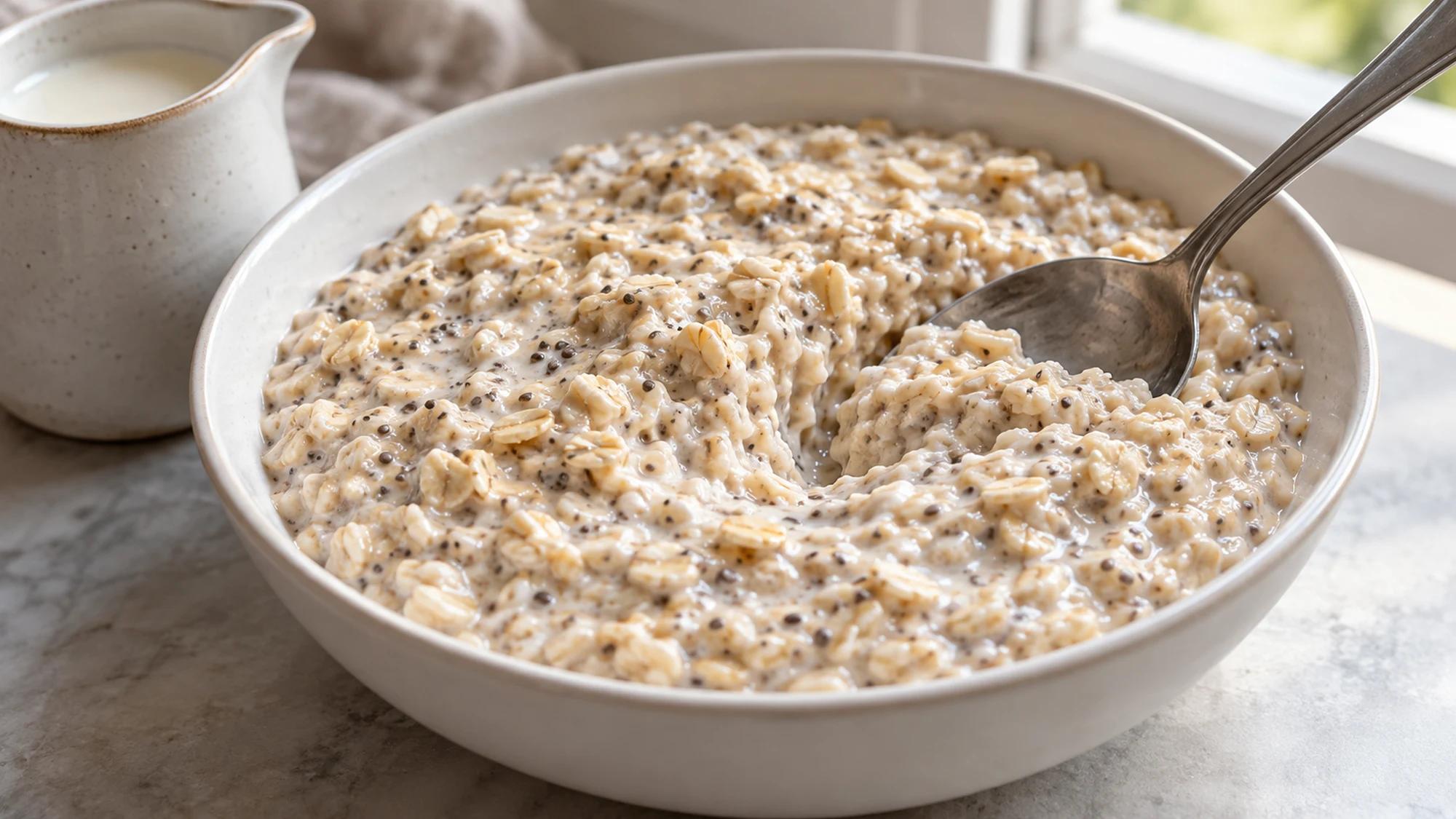
Start with plain old-fashioned rolled oats. Quick oats absorb liquid readily and make a softer mixture; steel-cut oats stay noticeably firmer and need a different approach. Switching the oat type changes more than the label, so it is worth getting the first batch right before experimenting.
Plain Greek yogurt thickens the base and adds tang. A sweetened yogurt changes both flavor and added sugar, while regular yogurt is thinner. Dairy-free yogurt can work with a suitable plant beverage, but the result will depend on the products rather than matching the dairy version exactly.
| Choice | Likely result | Best approach |
|---|---|---|
| Old-fashioned rolled oats | Tender flakes with some chew | Use for this recipe’s starting batch. |
| Quick oats | Softer, less distinct flakes | Choose only if you like a smoother texture. |
| Steel-cut oats | Much firmer pieces | Use a recipe designed for steel-cut oats. |
| Thicker yogurt or extra chia | A denser mixture | Loosen with milk after chilling, a little at a time. |
Do not judge the final thickness immediately after mixing. The oats and chia need time to absorb liquid; make your last adjustment in the morning.
Health Benefits Without Breakfast Promises
Oats contribute whole grains and fiber, including beta-glucan. Harvard’s guide to oats explains their different forms and nutrition. Soaking is a preparation method, not proof that one jar will produce a particular health result.
Milk and Greek yogurt add protein, while fruit contributes its own nutrients and flavor. The card’s calorie estimate is for the plain base only. Different milk, sweetened yogurt, nut butter or a generous granola topping can change that estimate substantially.
- For a gluten-free requirement, choose oats labeled gluten-free and check every topping; ordinary oats can have cross-contact with gluten-containing grains.
- The written base contains milk. Lactose-free milk alone does not remove the yogurt’s lactose or make the recipe safe for a milk allergy.
- Keep the sweetness flexible: fruit may provide enough for your taste without extra syrup.
A useful breakfast is one you enjoy and can prepare consistently. Whole grains, dairy and fruit offer different things; none needs a dramatic claim to earn its place.
Bottom Line
Refrigerate the oats promptly in a covered container at 40°F (4°C) or below, and use within three days for this small batch. FDA cold-storage guidance applies to the milk and yogurt mixture. For a carried breakfast, use an insulated bag with an ice pack rather than leaving the jar on a desk.
Start with rolled oats, leave room to stir and let the refrigerator do the overnight work. Keep the toppings separate and adjust the final thickness with milk. The reward is a ready breakfast with tender flakes, not a jar you have to wrestle with.
Overnight Oats Recipe

Ingredients
- 1 cup old-fashioned rolled oats 80 g
- 1 cup 2% milk 240 ml, plus extra to loosen if needed
- 0.5 cup plain nonfat Greek yogurt 120 g
- 2 teaspoons chia seeds About 9 g
- 2 teaspoons maple syrup
- 0.5 teaspoon vanilla extract
- Sliced banana and blueberries Or diced apple and cinnamon; excluded from nutrition estimate
Equipment
- Mixing bowl
- Spoon
- Two covered containers, at least 12 ounces each
Instructions
- In a clean bowl, stir the milk, yogurt, maple syrup and vanilla until smooth. Stir in the rolled oats and chia, scraping the bottom so every flake is moistened.
- Divide between two covered containers with room to stir. Refrigerate promptly at 40°F (4°C) or below for about 8 hours or overnight, until the oats are tender.
- Stir each portion from the bottom. Add extra milk a tablespoon at a time if the mixture is thicker than you like.
- Top with optional freshly sliced banana and blueberries, or diced apple and cinnamon. Add nuts or granola only at serving time if desired.
- Keep refrigerated and use within 3 days. For travel, carry in an insulated bag with an ice pack. Discard if left out longer than 2 hours, or 1 hour above 90°F (32°C).