
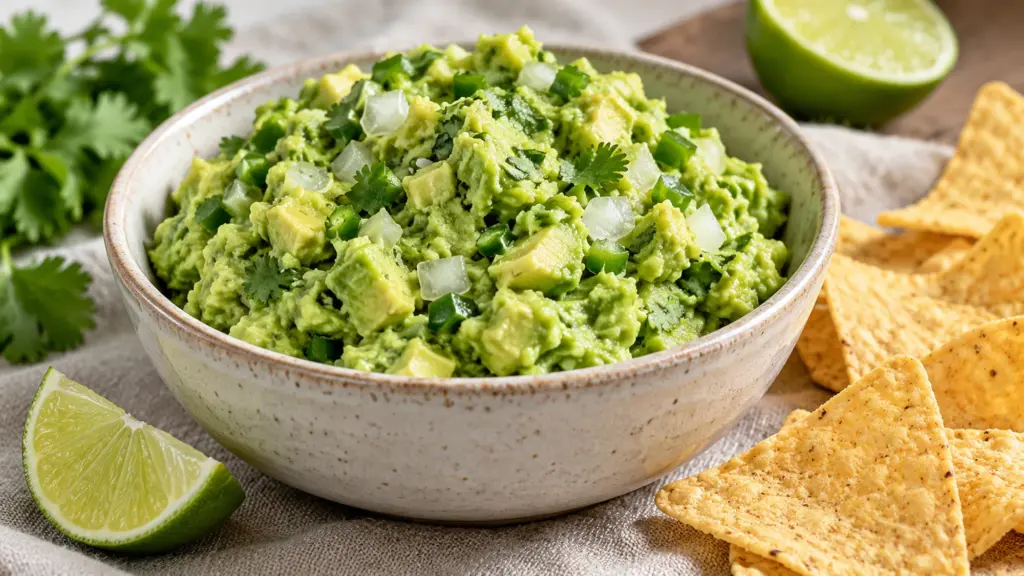
A ripe avocado needs very little help, but a heavy squeeze of lime can make it disappear behind the sourness. This guacamole starts with a coarse mash, a modest amount of citrus and finely chopped vegetables, so the avocado still tastes like the main event.
For chunky guacamole, use avocados that yield gently to pressure, mash them with a fork and season gradually. White onion adds crunch, cilantro brings freshness and jalapeño supplies adjustable heat without turning the bowl into a complicated project.
I’d pay more attention to ripeness than to a special mixing tool. Hard fruit will not become creamy because you work harder, while fruit with a fermented smell or extensive dark, damaged flesh is not a useful shortcut. Choose evenly soft avocados, and prepare the dip close to serving time.
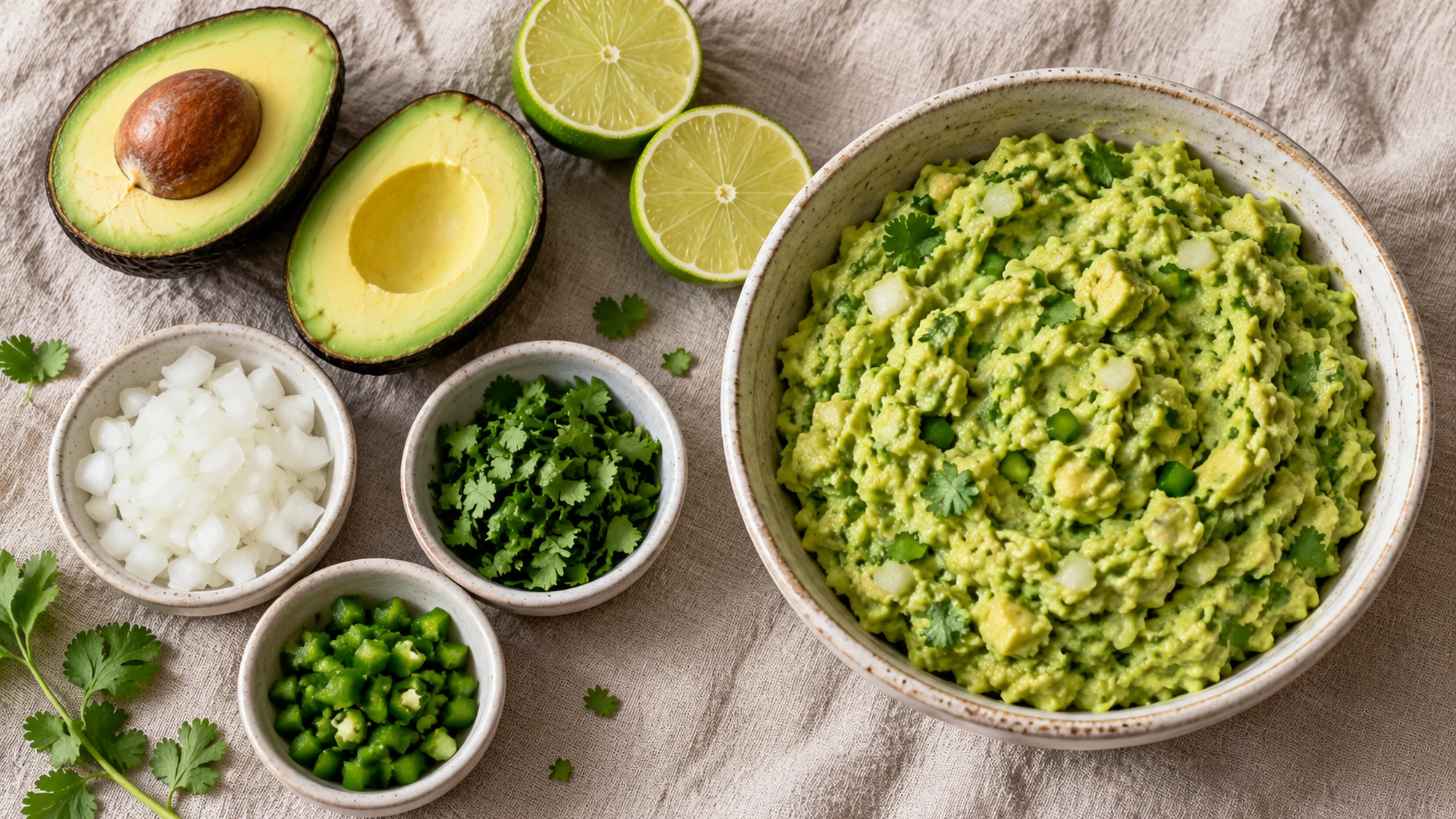
Serving Suggestions for Guacamole
This batch makes six modest portions for dipping or spooning over dinner. It works especially well beside baked cod tacos, where the creamy avocado contrasts with the cabbage and warm fish. Add it after cooking rather than warming it with the filling.
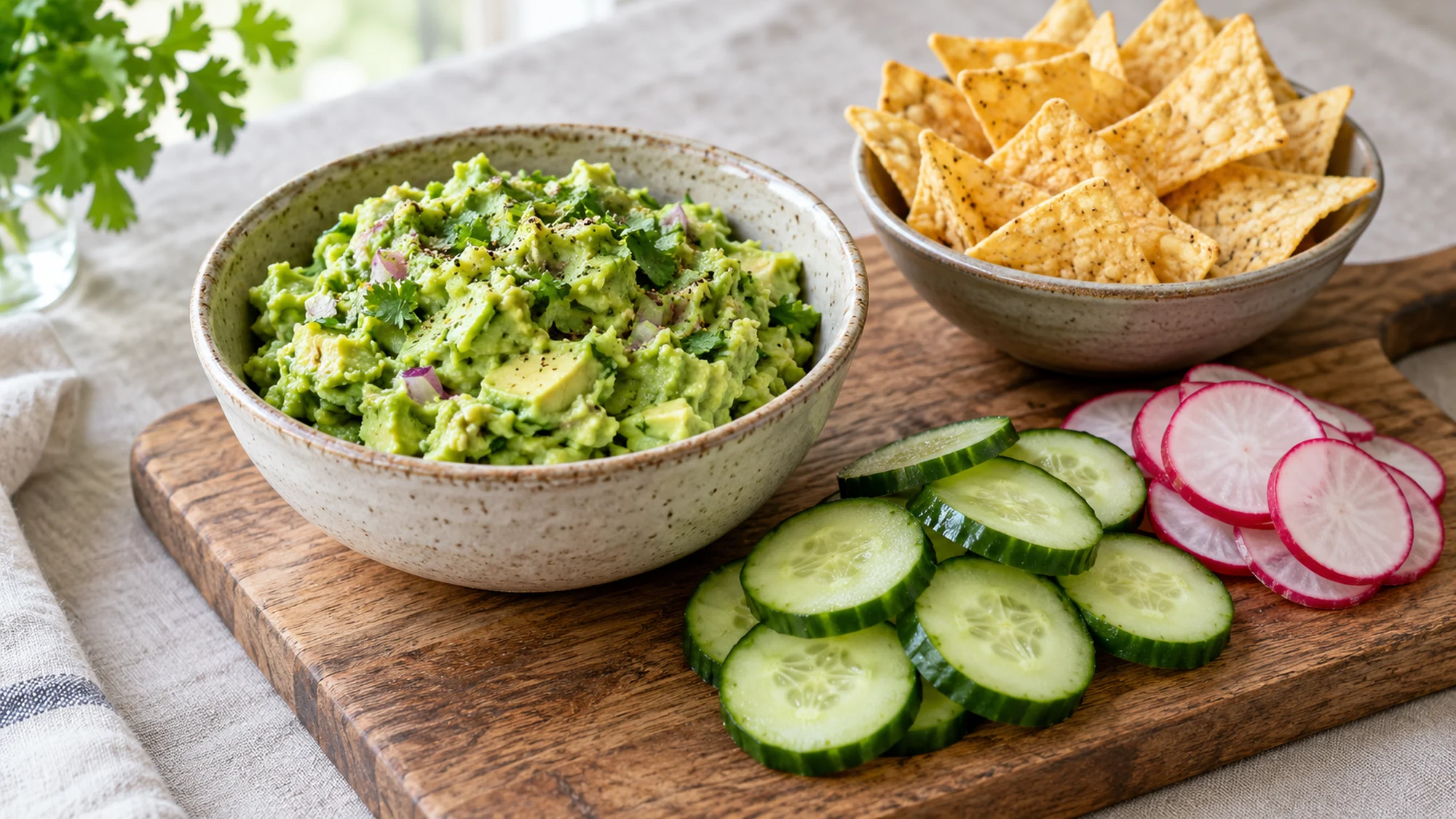
- For a snack: Offer tortilla chips alongside crisp cucumber rounds and radish slices. Different dippers give the same bowl a different balance of salt and crunch.
- For a meal: Spoon it onto a bean bowl, tuck it into a quesadilla after heating or serve it beside grilled vegetables. Keep wet toppings separate until you eat.
- For a gathering: Put out a smaller bowl and keep the rest refrigerated, replenishing with a clean spoon. Guacamole is not improved by a long afternoon on a warm table.
- For leftovers: Press food-safe wrap against the surface, then cover and refrigerate promptly. Use it the next day for the best color and texture; a pit sitting in the middle does not protect the exposed surface.
Taste the dip with its intended partner. A salty chip and an unsalted cucumber slice ask for different things, so the bowl alone does not tell the whole seasoning story.
Guacamole Variations and What They Change
There is room to adjust this dip without pretending every addition gives the same result. Chef Rick Bayless explains the roles of onion, chile, lime and other additions in his guacamole guide. Here, the base stays tomato-free to keep its texture thick and straightforward.
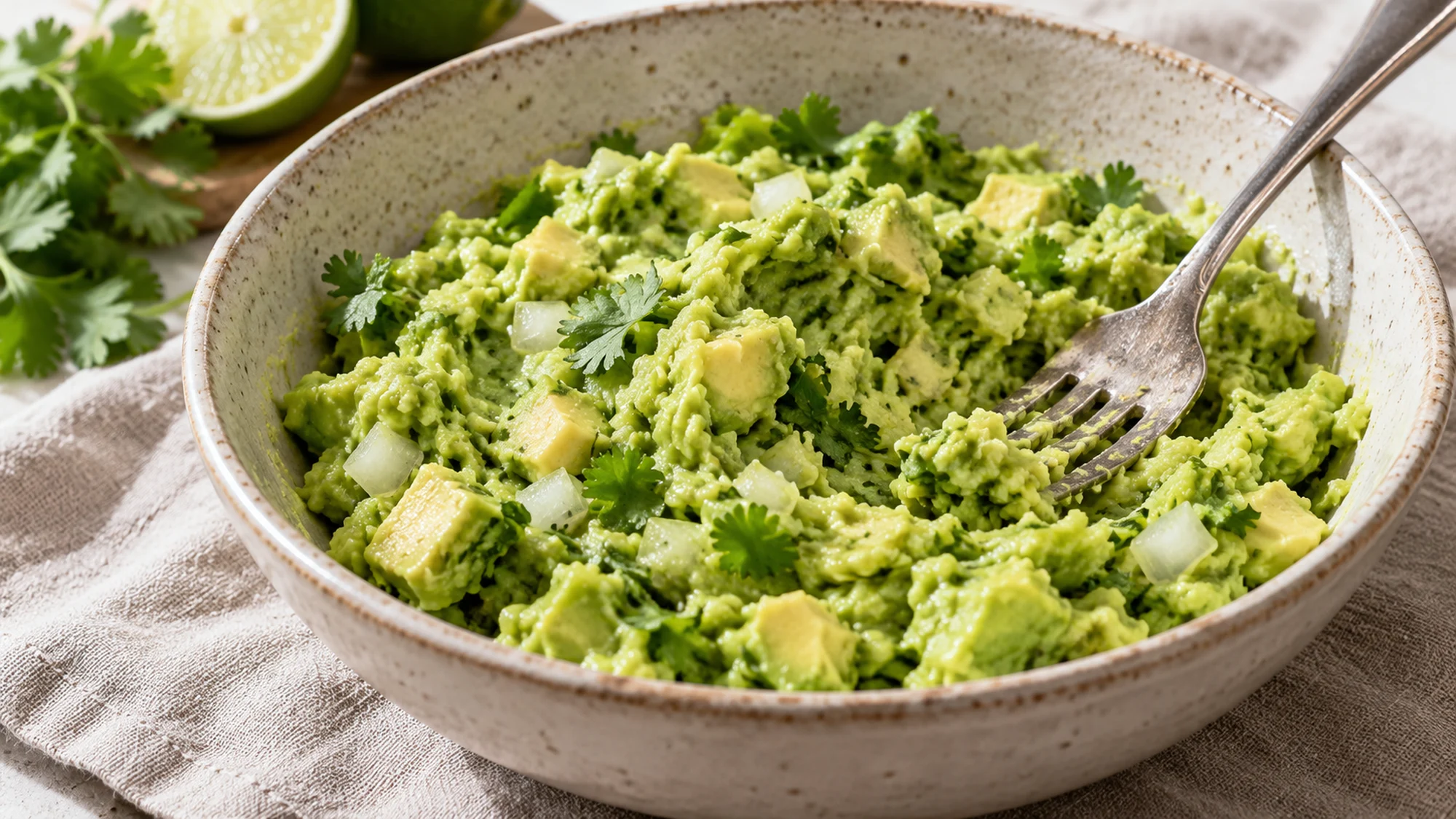
Make small changes and taste again before adding another ingredient. I prefer a few distinct avocado pieces to a completely smooth purée; a fork gives you that control without another appliance to wash. The table offers practical choices rather than a list of compulsory extras.
| Change | How to use it | Result |
|---|---|---|
| Red onion | Replace the white onion with the same amount | Pink flecks and a different onion bite |
| Less heat | Remove chile ribs and seeds; begin with less | Milder dip, though individual chiles vary |
| Tomato | Fold in a little diced, drained tomato | Sweeter and juicier; serve promptly |
| No cilantro | Leave it out rather than forcing a substitute | A simpler avocado-and-lime flavor |
Add lime by taste, not by the size of the fruit. A large, juicy lime can overwhelm a small batch long before its last drop reaches the bowl.
Health Benefits and Practical Balance
Avocado contributes fiber and predominantly unsaturated fat; it also makes the dip satisfying without dairy. The California Department of Education’s avocado reference provides useful nutrient context. That does not turn an unlimited bowl of chips into a balanced meal or make one food a treatment for a health condition.
- Look at the full plate: Beans, vegetables or fish add variety beyond the dip. Guacamole contributes mostly avocado, not a substantial serving of protein.
- Adjust thoughtfully: The card’s nutrition estimate excludes chips and other dippers. Their portions and salt content can change the meal considerably.
- Handle produce carefully: Rinse avocados before cutting, even though you discard the skin. Use a clean board and scoop out the pit with a spoon instead of striking it while holding the fruit.
- Keep it cool: Refrigerate at 40°F (4°C) or below. Discard after more than two hours at room temperature, or one hour above 90°F (32°C).
Fresh flavor and safe handling belong together. Clean produce, a clean spoon and a cool holding place matter more than a trick that promises permanently green guacamole.
Bottom Line
Let ripe avocado lead, keep the mash a little chunky and add lime and salt in small steps. This guacamole is ready in about fifteen minutes and works just as well as a dinner topping as it does beside a bowl of chips.
Guacamole Recipe

Ingredients
- 3 medium ripe avocados About 450 g flesh after removing skin and pits.
- 1/4 cup finely chopped white onion 40 g; red onion may be used.
- 2 tablespoons chopped cilantro 6 g
- 1 tablespoon fresh lime juice 15 g, plus more to taste if needed.
- 1 tablespoon finely chopped jalapeño 10 g; remove seeds and ribs for less heat.
- 1/2 teaspoon fine salt 3 g; adjust to taste.
Equipment
- Mixing bowl
- Fork
- Knife and cutting board
- Citrus juicer
Instructions
- Wash your hands and rinse the avocados, lime, chile and cilantro under running water. Dry well. Cut the avocados on a stable board, twist apart and lift out the pits with a spoon.
- Scoop the avocado flesh into a bowl and weigh approximately 450 g. Mash with a fork, leaving some small chunks rather than making a completely smooth purée.
- Fold in the onion, cilantro, lime juice, jalapeño and salt. Taste with the chips or other food you plan to serve; add a little more lime or salt only if needed.
- Serve immediately, divided into six portions. If holding briefly, press food-safe wrap directly onto the surface, cover and refrigerate at 40°F (4°C) or below. Use within one day for best color and texture; do not leave out longer than two hours, or one hour above 90°F (32°C).