
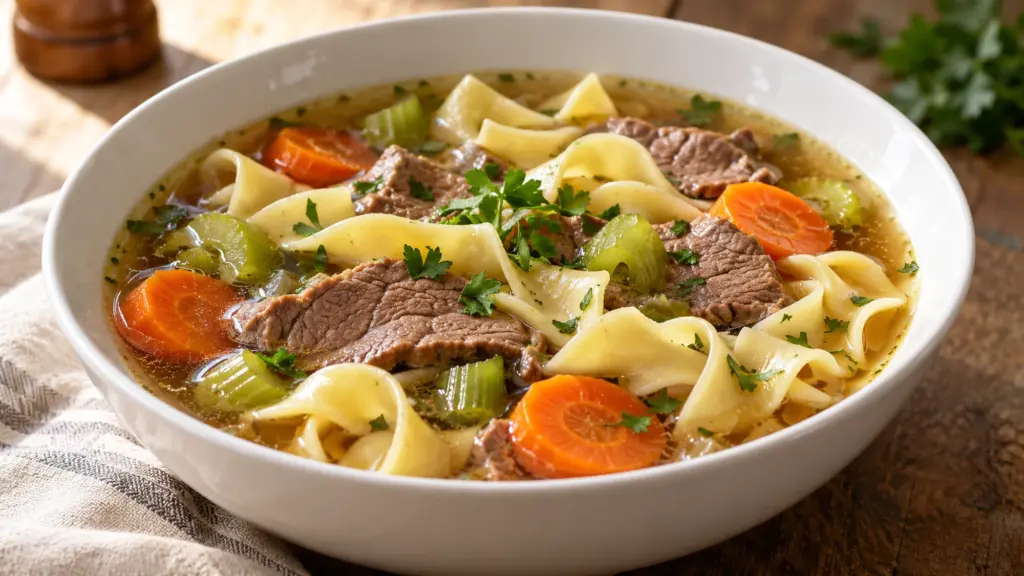
The first bowl of noodle soup can be lovely, while the next day’s pot seems to contain hardly any broth. Noodles keep soaking up liquid as they sit. This beef noodle soup avoids that problem by cooking egg noodles separately, then adding them to individual bowls of vegetables, sliced sirloin and savory broth.
Keep noodles and soup separate until serving, especially if you expect leftovers. Slice the beef thinly across the grain and add it near the end, rather than simmering a tender steak as though it were a stew cut.
This is a straightforward beef-and-vegetable soup, not a shortcut labeled as pho or another specific regional noodle dish. I prefer the separate-noodle approach here because it lets each person choose the balance of broth and noodles without changing the whole pot.
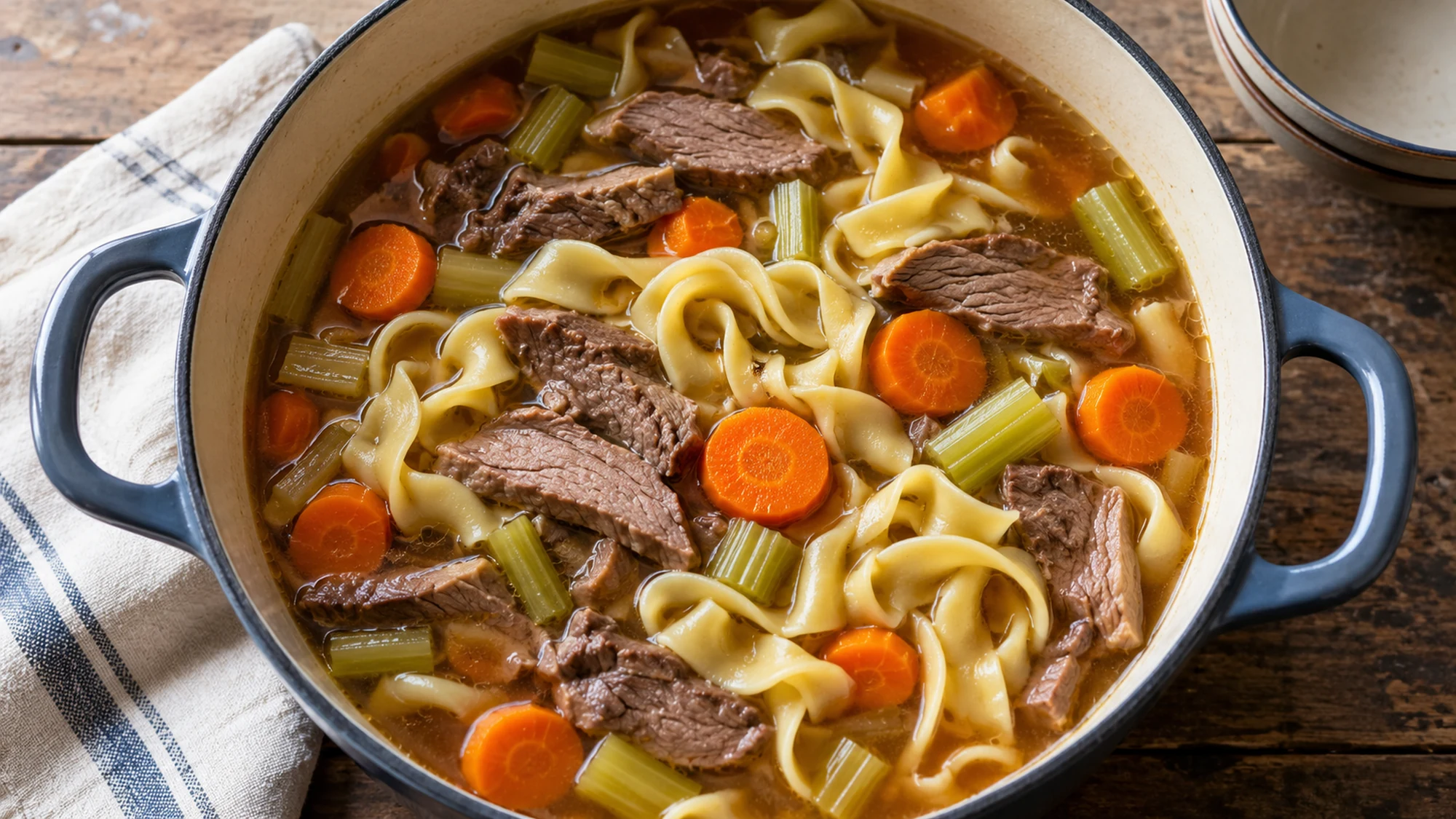
Serving Beef Noodle Soup Bowl by Bowl
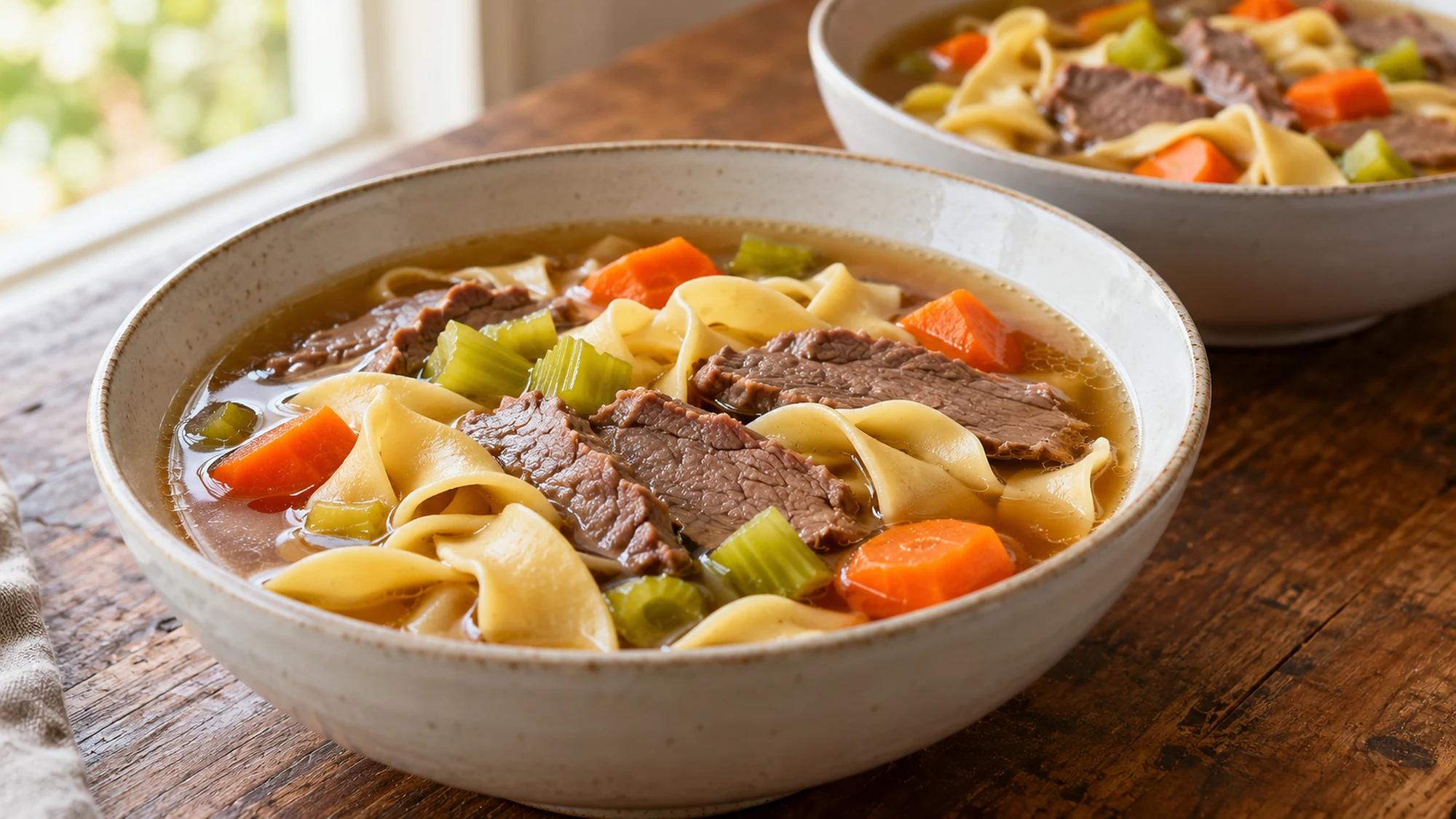
Divide cooked noodles among warm bowls, then ladle the beef, vegetables and broth over them. Turn the beef strips with the ladle so they do not stay tangled together. The noodles should have room to move in the broth rather than forming a tightly packed nest.
- Keep the side light: A green salad or sliced cucumber adds a cool, crisp contrast. The soup already includes beef and noodles, so another substantial starch is optional.
- Choose bread for dipping: A small piece of crusty baguette can catch the last broth. Serve it beside the bowl instead of letting it soften in the soup before anyone sits down.
- Finish with freshness: Chopped parsley or a little black pepper is enough if you want a final touch. Taste the broth first rather than automatically adding salt at the table.
Build each bowl just before eating. Keeping control over the noodles makes the soup more flexible without changing its simple character.
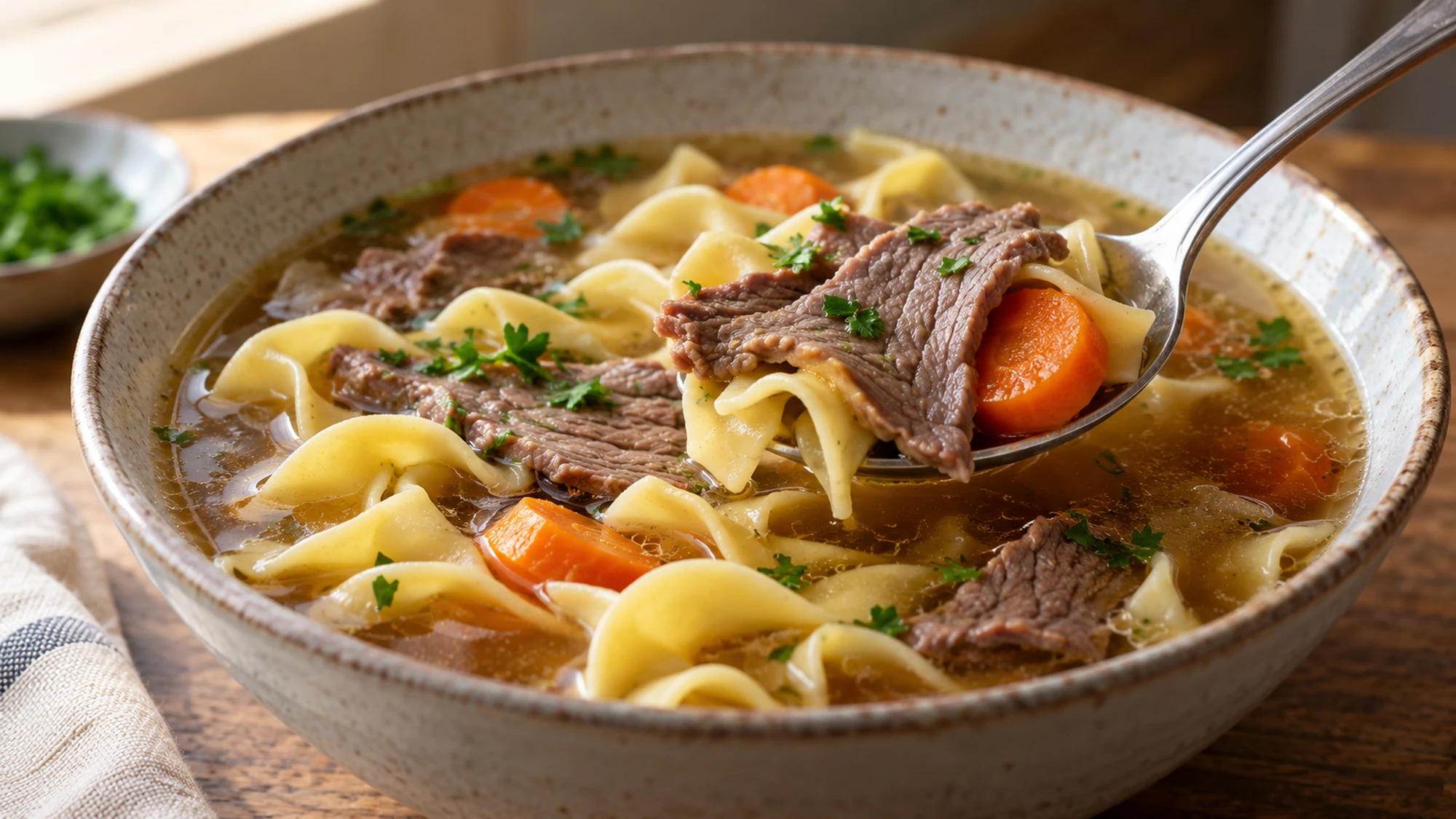
Variations That Preserve the Broth
A quick soup needs beef suited to brief cooking. Sirloin cut across the grain works differently from chuck, which needs a longer braise to soften. Changing the cut therefore means changing the method, not merely waiting an extra minute after the noodles go in.
Match a substitution to the part of the soup it changes.
| Choice | Useful adjustment | Watch for |
|---|---|---|
| Another noodle shape | Cook separately to its package directions | Different shapes need different times. |
| Extra vegetables | Cut firm vegetables small and cook before the beef | Large carrot pieces can stay hard. |
| More concentrated broth | Dilute a spoonful before adjusting the pot | Soy sauce also contributes salt. |
| Stewing beef | Choose a long-braised soup method instead | Brief simmering will not tenderize it. |
- Slice evenly: Thin, similar strips cook more predictably than a mixture of thick chunks and little scraps. Cut across the visible muscle fibers for an easier bite.
- Avoid a rolling boil: Cook the steak separately to its safe finish temperature, then rest and slice it. Add the cooked strips at the end so they warm without prolonged boiling.
- Hold the noodles properly: Drain them well after cooking. If preparing ahead, refrigerate them promptly rather than leaving a warm colander on the counter.
One small separation does a lot of work: noodles in one container, soup in another. Their textures will be easier to judge when they meet in the bowl.
Health Benefits and Broth Choices
Beef contributes protein and iron, while carrots, celery and onion add vegetables to the meal. Broth and soy sauce can also contribute substantial sodium, even when the broth is labeled reduced-sodium. I would compare labels rather than assuming that phrase means the finished soup is low in salt.
- Look at the serving size: A broth label may describe one cup, while a large soup bowl contains more. Compare equal amounts when choosing between products.
- Consider the noodles: Whole-grain noodles can change fiber and flavor; they still need their own cooking time. The standard recipe uses egg noodles and contains wheat and egg.
- Handle beef safely: Keep raw beef and its cutting board separate from ready-to-eat food. The safe-temperature chart is a useful reference for meat and reheated leftovers.
- Chill the extra portions: Use shallow containers and refrigerate within two hours, or one hour above 90°F (32°C). Store the noodles separately and use both within three to four days.
The vegetables and protein are useful parts of this bowl, but the broth deserves attention too. A clear soup can still carry a considerable amount of sodium.
Bottom Line
Beef noodle soup is easiest to enjoy when the beef stays tender and there is still broth around the noodles. For leftovers, follow FoodSafety.gov’s cooling and reheating guidance. Reheat soup and noodles thoroughly to 165°F (74°C), adding a little water if the broth tastes concentrated.
Cut the steak across the grain, let the vegetables soften first and keep the noodles separate until serving. The next bowl deserves the same care as the first.
Beef Noodle Soup Recipe

Ingredients
- 1 lb lean sirloin steak 450 g, about 3/4 inch thick
- 1 tablespoon olive oil 15 ml, divided
- 1 medium onion 150 g, diced
- 2 medium carrots 150 g, thinly sliced
- 2 celery stalks 100 g, thinly sliced
- 2 garlic cloves 6 g, minced
- 6 cups reduced-sodium beef broth 1.44 liters
- 6 oz dry egg noodles 170 g
- 1 tablespoon soy sauce 15 ml
- 1 teaspoon dried thyme 1 g
- 1/4 teaspoon black pepper
Equipment
- Soup pot
- Saucepan for noodles
- Skillet
- Instant-read thermometer
- Colander
Instructions
- Heat half the oil in a skillet over medium-high heat. Pat the steak dry and cook for about 4–6 minutes per side, adjusting to its thickness, until the center reaches at least 145°F (63°C). Transfer to a clean board and rest for at least 3 minutes. Slice thinly across the grain.
- While the steak cooks, heat the remaining oil in a soup pot over medium heat. Cook onion, carrots and celery for 6–8 minutes, stirring, until the onion softens. Add garlic and thyme and stir for 30 seconds.
- Add broth, soy sauce and pepper. Bring to a simmer and cook gently for 12–15 minutes, or until the vegetables are tender.
- Meanwhile, cook the egg noodles in a separate saucepan of boiling water according to their package directions. Drain well. Do not add the whole batch to the soup pot if saving leftovers.
- Add the cooked sliced beef and its resting juices to the hot soup just long enough to warm through. Divide noodles among four bowls and ladle the beef, vegetables and broth over them. Taste before adding any additional salt.