
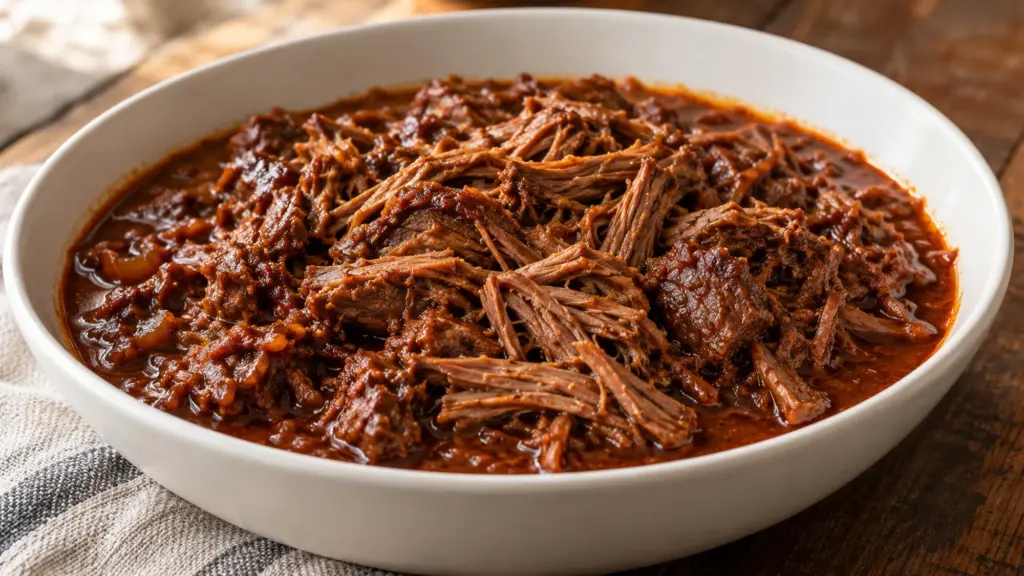
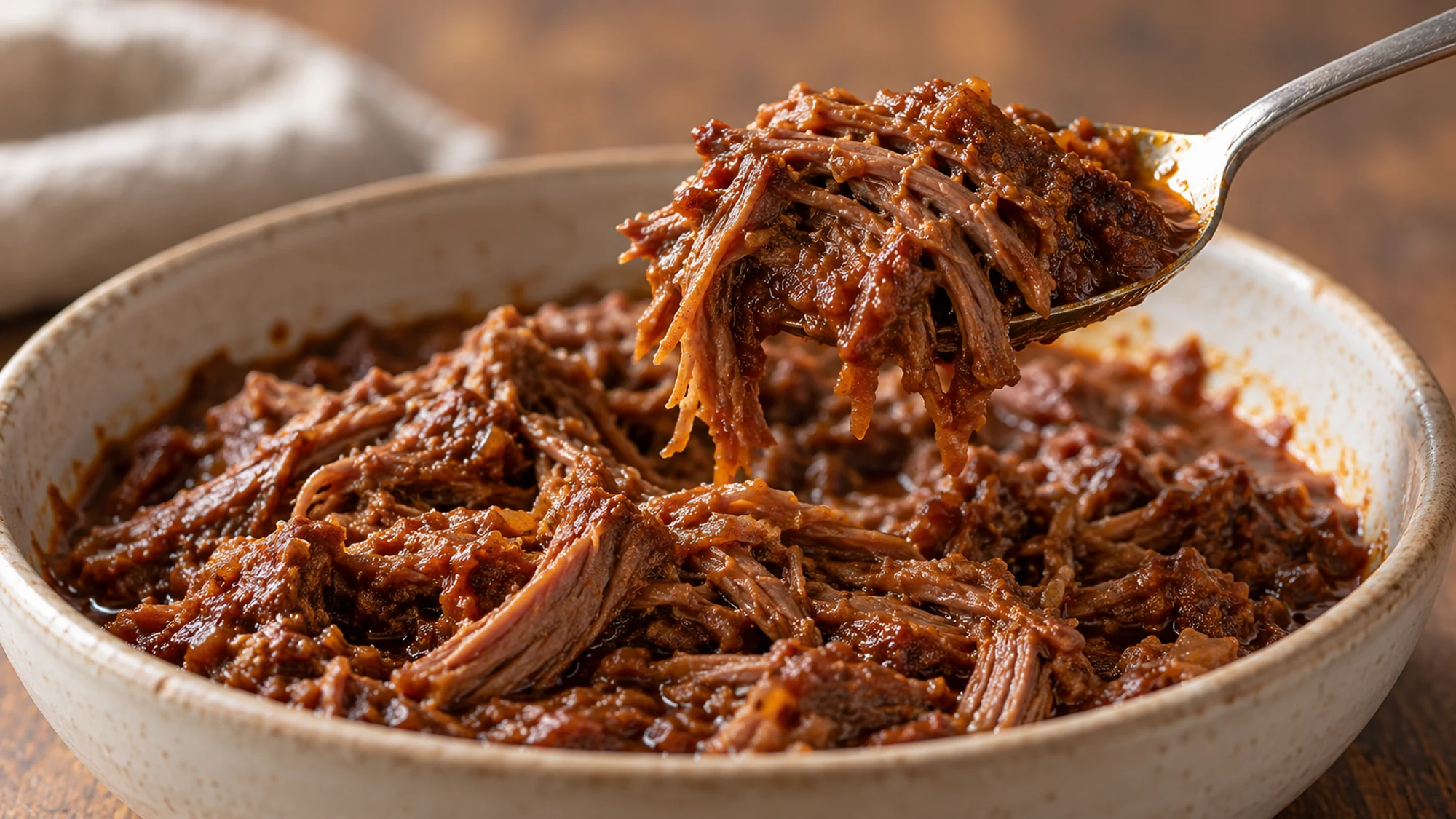
Beef that resists the fork is not ready to become a good taco filling, however inviting the sauce smells. This barbacoa uses a covered oven braise to turn chuck into tender shreds, with ancho chiles for depth and a little chipotle for smoky heat. The useful finish line is texture, not simply the end of a timer.
Braise the beef gently until a fork can separate it without a struggle. Shred it after a short rest, then add enough of the cooking sauce to keep the meat moist without making every tortilla soggy.
Barbacoa describes a wider tradition than one beef recipe. This is a home-oven adaptation, not a claim to reproduce pit cooking or every regional version. I’d choose it when the oven can do the patient work and the table can stay simple.
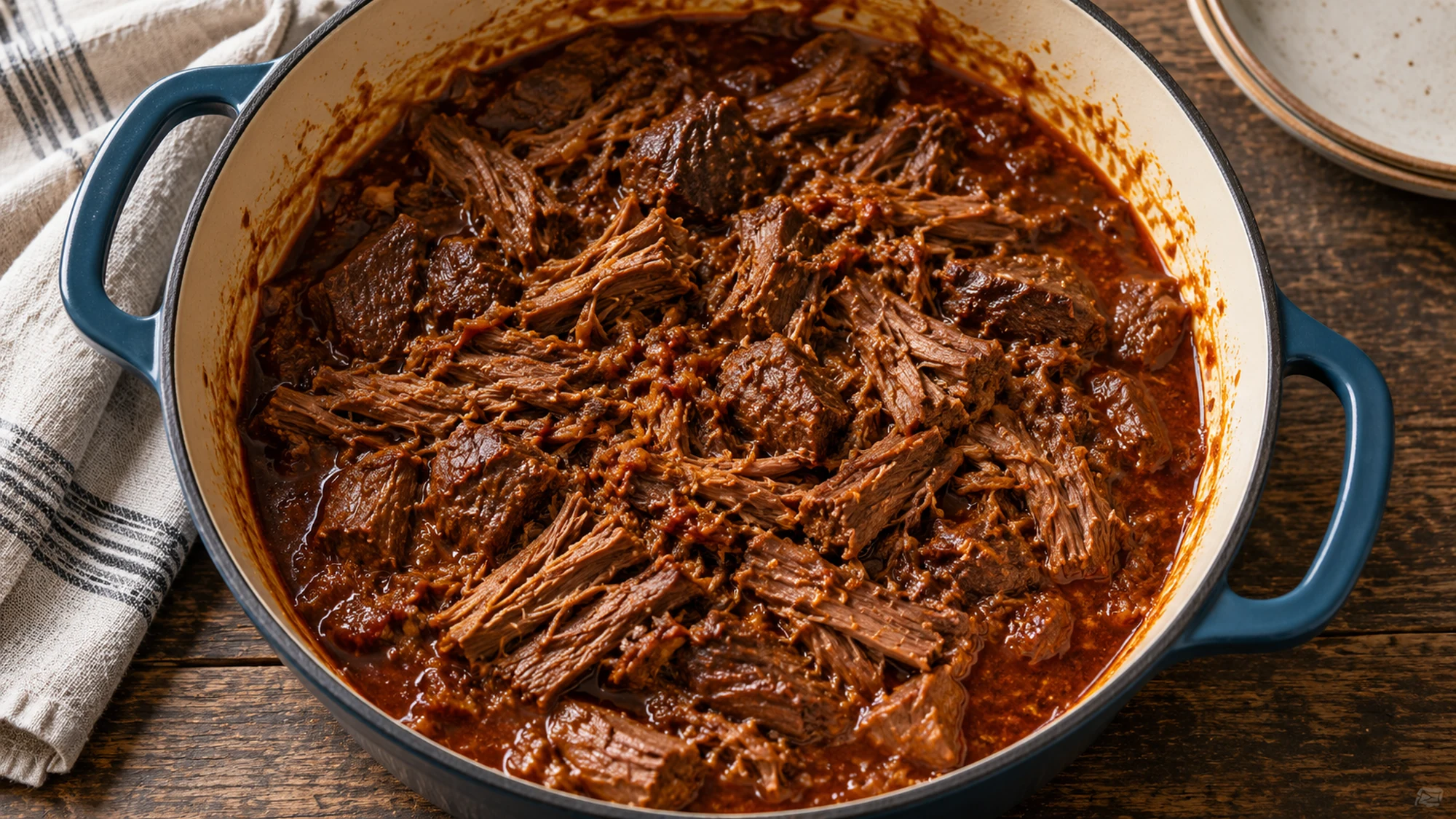
Serving Barbacoa Without Losing the Sauce
Warm tortillas are an easy starting point, but decide how much liquid belongs in each serving. Lift the meat with tongs and let excess sauce drip back into the dish. A little gloss is welcome; a puddle can make a tortilla fall apart before the second bite.
- Tacos: Add chopped onion, cilantro and a squeeze of lime if you enjoy them. Keep each addition modest enough that the chile-and-beef flavor remains noticeable.
- Rice bowls: Spoon the meat beside rice and beans, then add a crisp vegetable. Put extra sauce in a small bowl so everyone can choose how much they want.
- A potato supper: A split air-fryer jacket potato can hold a spoonful of beef. Start with less sauce than you would use over rice.
- For a group: Keep the beef hot while serving, rather than leaving the whole pot at room temperature. Set out toppings separately and replenish small amounts.
Treat the sauce as part of the filling, not an afterthought. Save any extra separately so the next serving can be as juicy as the first.
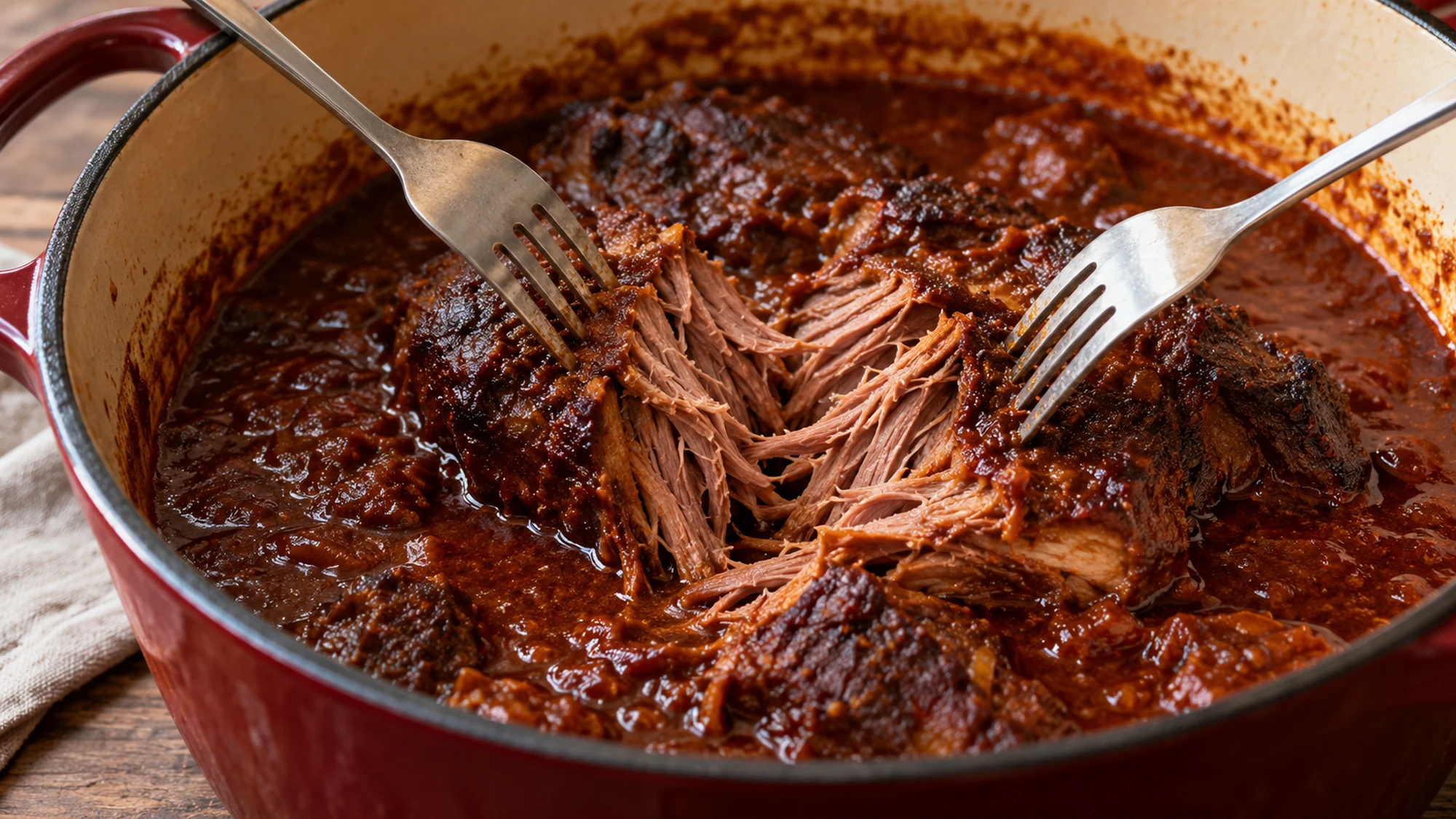
Variations and the Fork-Tender Test
Chuck suits a slow braise; a lean steak is not an interchangeable shortcut. Ancho chiles contribute a rounded dried-chile flavor, while chipotle changes both heat and smokiness. The El Guapo barbacoa example illustrates another oven-braised chile combination; this version keeps its own simpler sauce.
Adjust one part of the braise at a time.
| What you notice | What to do | Why it helps |
|---|---|---|
| Beef still resists shredding | Cover and cook longer | Tenderness develops gradually. |
| Liquid evaporating quickly | Add a small splash of broth | The covered braise should stay moist. |
| Sauce tastes flat | Taste a little lime or vinegar in a spoonful | Acidity can sharpen a rich sauce. |
| Sauce is hotter than expected | Serve mild toppings alongside | More salt will not remove chile heat. |
- Handle dried chiles carefully: Remove stems and seeds before soaking, and avoid rubbing your eyes. Blend only after the soaking mixture has cooled enough for your appliance.
- Skip the hard boil: A gentle braise gives more control than vigorous bubbling. Keep the lid well fitted and check liquid when you check tenderness.
- Finish the sauce separately: If it is thin after the meat softens, remove the beef before reducing the liquid. I prefer that to cooking already-tender shreds until they become stringy.
Let the meat tell you when it is ready. The sauce can be adjusted at the end; under-tender beef cannot be fixed by pulling harder.
Health Benefits and a Balanced Plate
Beef supplies protein, iron and vitamin B12, but the cut, portion and accompaniments still matter. This is a rich main dish, not a reason to make broad health promises. Vegetables, beans or another fiber-containing side can provide a useful contrast to the meat.
- Trim selectively: Remove large exterior pieces of fat before cooking. Some fat will still render into the sauce; skim what you do not want before combining it with the meat.
- Taste before salting again: Broth and canned chipotles differ in sodium. The same measured salt can taste different with another brand.
- Cool leftovers promptly: Divide meat and sauce into shallow containers rather than refrigerating one deep, slowly cooling pot. Use refrigerated portions within three to four days.
Make the portion and the whole plate work together. A smaller helping with satisfying sides can still deliver plenty of the flavor that brought you to the pot.
Bottom Line
Barbacoa rewards a little planning more than constant attention. Follow USDA reheating guidance for leftovers, bringing them to 165°F (74°C). Add a small splash of water if the chilled sauce has thickened, and warm gently enough to preserve those soft shreds.
Choose a braising cut, keep the pot covered and wait for easy shredding. Then finish with enough sauce to coat the beef and enough acidity to keep it lively.
Barbacoa Recipe

Ingredients
- 2 lb beef chuck roast 900 g, large exterior fat trimmed, cut into 3-inch chunks
- 1 tablespoon olive oil 15 ml
- 1 medium onion 150 g, chopped
- 4 garlic cloves 12 g
- 2 dried ancho chiles about 20 g, stems and seeds removed
- 2 tablespoons chipotle peppers in adobo 30 g, chopped; reduce for less heat
- 2 teaspoons ground cumin 4 g
- 1 teaspoon dried oregano 1 g
- 2 tablespoons apple cider vinegar 30 ml
- 2 cups reduced-sodium beef broth 480 ml
- 1/2 teaspoon fine salt 3 g
- 2 tablespoons lime juice 30 ml
Equipment
- Heavy oven-safe Dutch oven with lid about 5 quarts
- Blender
- Tongs and two forks
Instructions
- Heat the oven to 300°F (150°C). Cover the ancho chiles with hot water and soak for 15 minutes. Drain; discard the soaking water. Let the chiles cool enough for safe blending, then blend with the onion, garlic, chipotle, cumin, oregano, vinegar and broth until smooth. Follow your blender’s precautions for warm liquids; never seal boiling liquid in a closed blender.
- Pat the beef dry and season with the salt. Heat the oil in the Dutch oven over medium-high heat. Brown the beef in batches on several sides, about 8–10 minutes total, without crowding.
- Return all beef to the pot and pour in the chile sauce. Bring just to a simmer, cover tightly and transfer to the oven.
- Braise for about 3–3 1/2 hours, checking after 2 1/2 hours. Add a little water if the sauce is drying out. The beef is ready when a fork separates it easily; if still firm, cover and continue in 20-minute intervals. Timing depends on the cut and chunk size.
- Rest covered for 10 minutes, then move the beef to a plate and shred with two forks. Skim excess fat from the sauce. If the sauce is thin, simmer it uncovered briefly on the stove before returning the beef. Stir in the lime juice and enough sauce to coat the shreds; divide into six servings.