
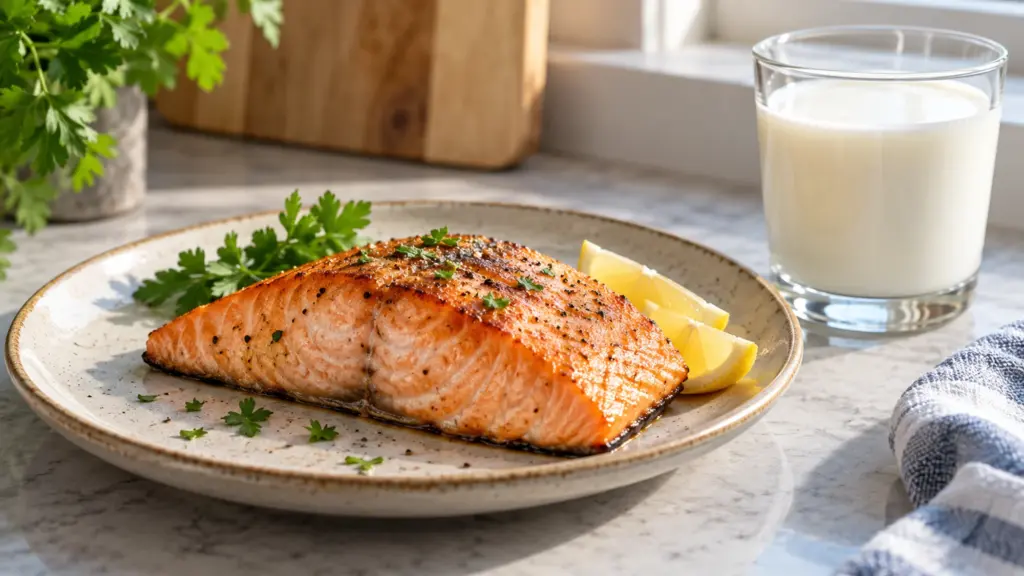
A milk carton may list vitamin D, a cereal box may advertise added nutrients, and an online symptom list may suddenly make an ordinary tired afternoon feel suspicious. These are three different kinds of information, and mixing them together can lead to the wrong conclusion.
Vitamin D deficiency cannot be diagnosed from a meal, a symptom checklist or how much sunshine you remember getting. Food can contribute vitamin D; a clinician can decide whether testing or an individualized treatment plan is appropriate.
I’d separate two questions at the start: “What foods contain this nutrient?” and “Do I have a deficiency?” The first belongs comfortably in the kitchen. The second needs your health history, not a more persuasive breakfast label.
What Vitamin D Deficiency Means
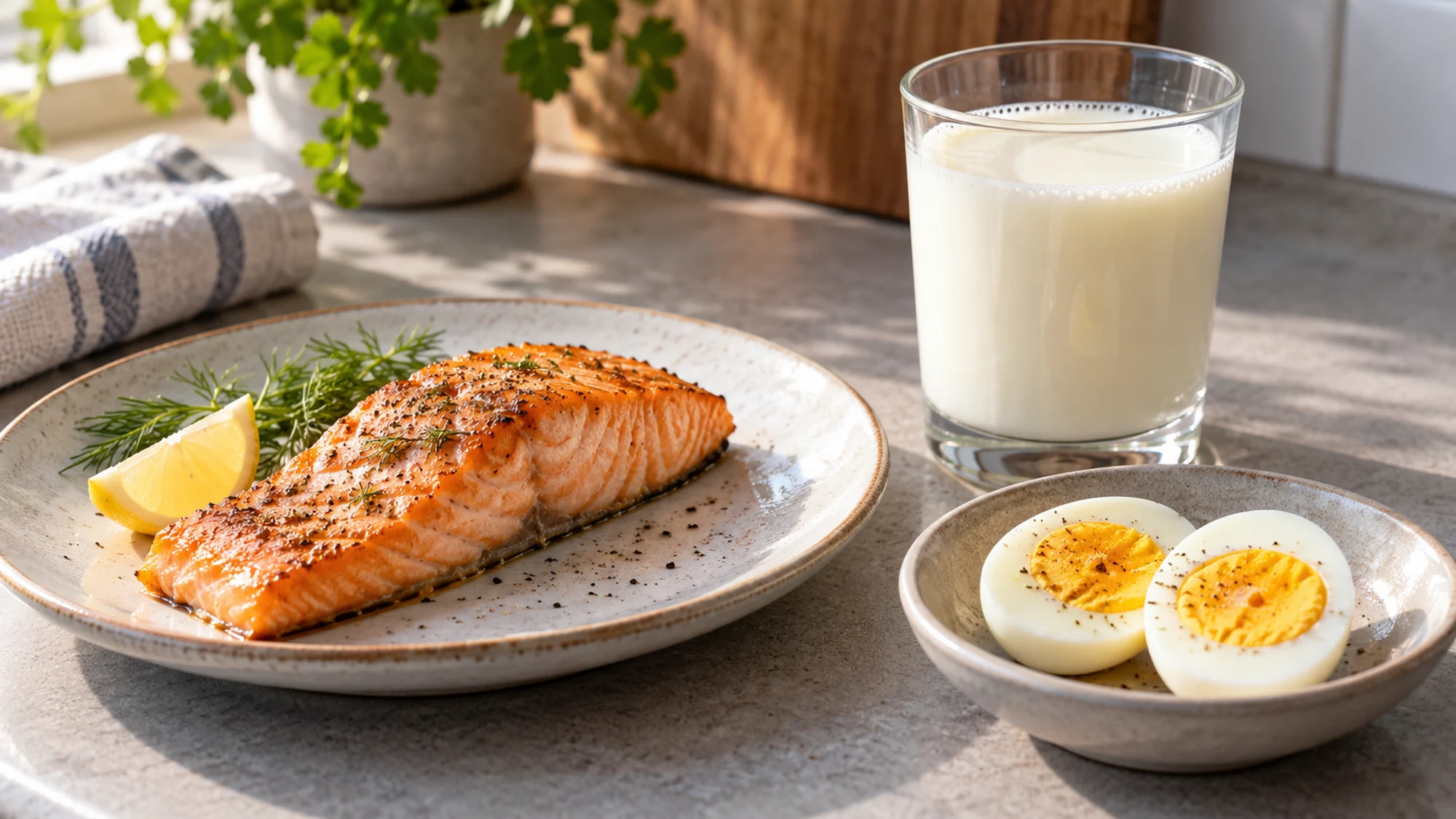
Vitamin D helps the body absorb calcium and supports normal bone health. MedlinePlus explains that severe deficiency can cause rickets in children and osteomalacia—soft, weakened bones—in adults. Those are medical conditions, not labels to apply to yourself because a food diary looks imperfect.
A low intake is one possible contributor, but absorption problems, some medicines, and conditions affecting the liver or kidneys can also matter. This is why eating one particular food is not a universal answer, and why deficiency is not evidence that someone has failed at healthy eating.
- A food source tells you that an ingredient contributes vitamin D.
- A risk factor gives a clinician context; it does not establish a diagnosis.
- A confirmed deficiency calls for an individual plan and follow-up, not a borrowed supplement schedule.
Symptoms and Testing Need Context
Bone pain and muscle weakness can be reasons to discuss vitamin D status, but they are not a home diagnostic test. The MedlinePlus vitamin D test guide explains that clinicians usually assess blood 25-hydroxyvitamin D, written as 25(OH)D. Routine testing is not recommended for everyone.
If you have a result, ask the person who ordered it what the value means in your circumstances. Laboratory units, the reason for testing and your other health information matter more than comparing a screenshot with somebody else’s number.
- Describe symptoms in ordinary language, including when they began and how they affect your day.
- Bring a list of medicines and supplements, including products that contain several nutrients.
- Ask whether testing would change your care, rather than assuming that more testing always provides a useful answer.
- Do not stop prescribed medicines or start a high-dose supplement while trying to interpret a result yourself.
Foods That Contribute Vitamin D
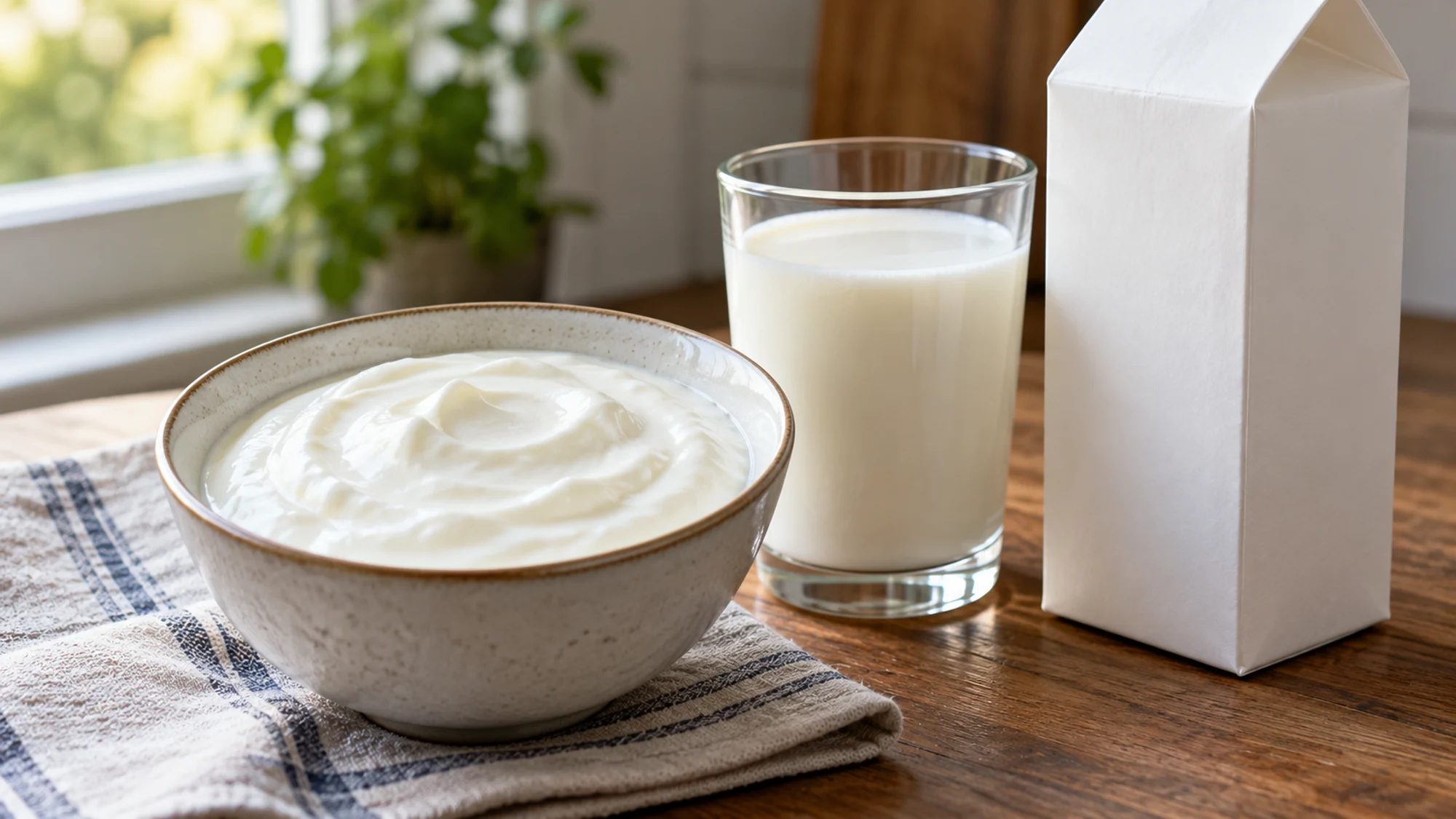
According to the NIH Office of Dietary Supplements, relatively few foods naturally provide vitamin D. Fatty fish are useful natural sources, while fortified foods supply much of the vitamin D in American diets. Fortified means the nutrient has been added; it is not a promise that all similar products contain it.
| Food or drink | What to know | Useful label check |
|---|---|---|
| Salmon, trout and other fatty fish | Natural sources of vitamin D | Species and serving affect the amount. |
| Milk or plant-based beverage | Many products are fortified | Check the specific product, not just its category. |
| Breakfast cereal or yogurt | Some products have added vitamin D | Compare the stated serving and vitamin D amount. |
| Egg yolks | Provide smaller amounts | Do not treat one egg as a complete solution. |
| Mushrooms | Amounts vary; UV-exposed products can contain more | Check the package information. |
If salmon already fits your meals, the guide to gently oven-roasted salmon offers a straightforward dinner method. I prefer useful meal ideas over a list of “superfoods”; enjoying a food does not require promising that it will correct a blood result.

Make a Practical Plan Without Megadosing
Start by checking the foods you already buy. Look at the vitamin D line and serving size on the label; a fortified drink you use regularly is more relevant to your food routine than a product you would never choose again.
More vitamin D is not automatically better. MedlinePlus warns that excessive supplements can cause harm, including high blood calcium and kidney problems. If deficiency is confirmed, ask your clinician which product, amount, frequency and review plan apply to you. This guide does not provide a replacement dose.
- Keep a short record of your usual foods and existing supplements if it helps you prepare for an appointment; there is no need to turn every meal into a score.
- Do not stack a multivitamin, a vitamin D product and another combination supplement without checking their combined contents with a professional.
- Do not use tanning or deliberate unprotected sun exposure as a treatment strategy. NIH notes that ultraviolet exposure carries skin-cancer risk.
- For infants, children, pregnancy or conditions affecting absorption, seek advice specific to that life stage or condition rather than adapting an adult internet plan.
Bottom Line
Use food labels to make informed food choices, not to diagnose yourself. If you are concerned about vitamin D deficiency, bring the question to a clinician and keep any supplement plan specific to your needs.
The Mayo Clinic video below introduces food sources of vitamin D alongside calcium, potassium and iron. It provides general nutrition background, not a test for deficiency or an individualized supplement plan.