
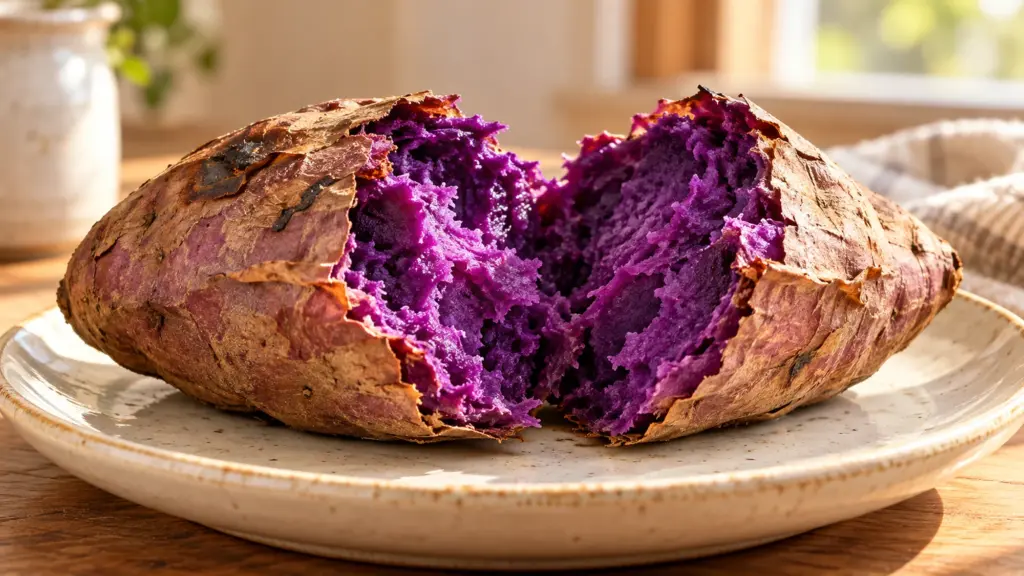
A purple-skinned sweet potato can hide a surprise: the inside may be purple, cream or something in between. Before planning a violet mash, check the variety rather than trusting the skin. That small shopping detail matters more than an impressive-looking produce display.
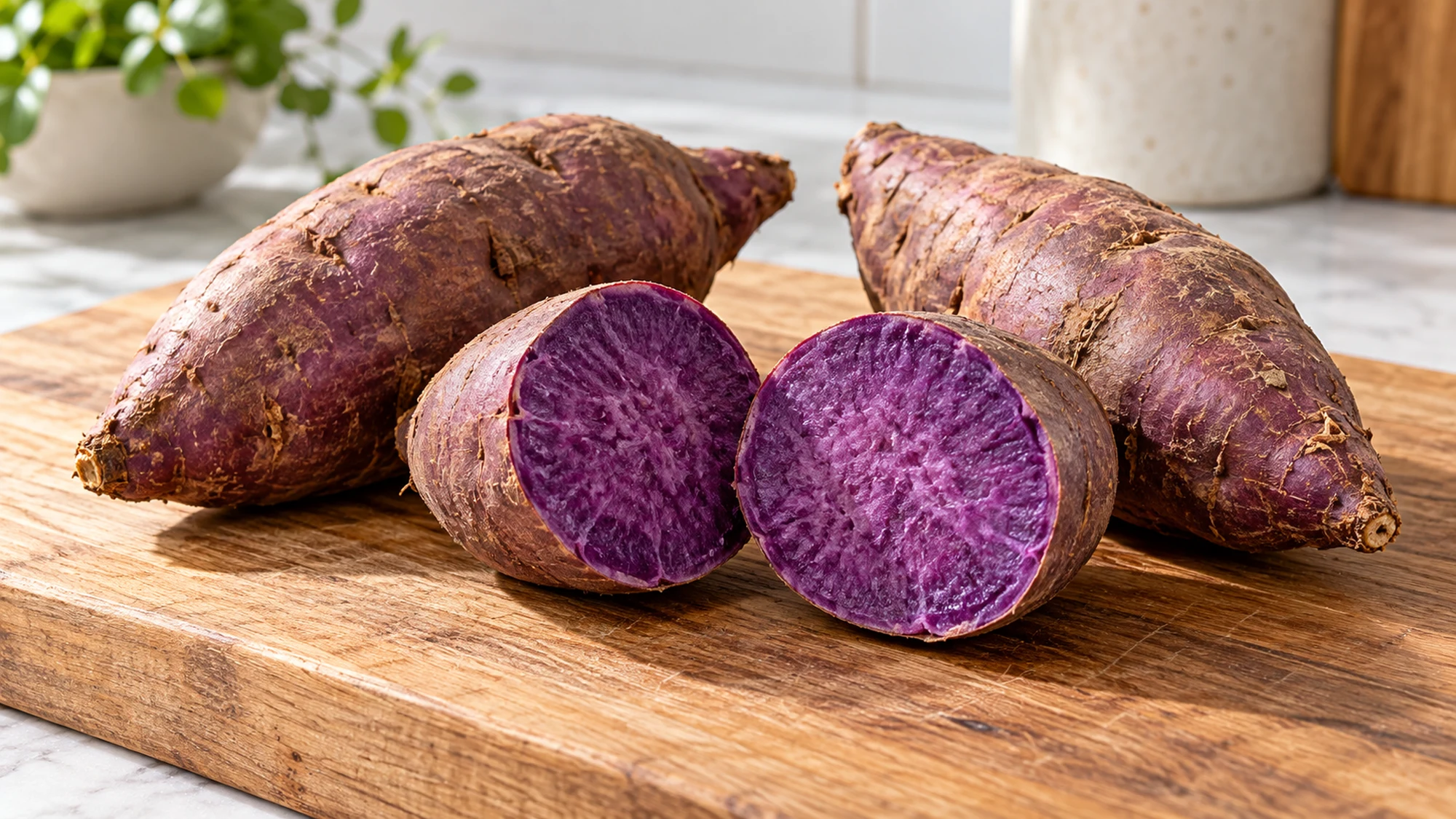
Purple sweet potato means a sweet potato with purple flesh, not simply purple skin. Choose a firm root, keep it in suitable cool, dry storage, and cook until the center is tender. Different varieties do not all have the same sweetness, moisture or cooking time.
I’d start with a simple preparation the first time you buy an unfamiliar variety. A baked half or a few steamed pieces let the potato’s own texture guide the next meal, without hiding it under a mountain of toppings.
What Is a Purple Sweet Potato?
Sweet potatoes belong to Ipomoea batatas. As Illinois Extension explains, they are different plants from true yams, which belong to Dioscorea. A store label that loosely says “yam” is not enough to establish what you are buying.
- Check the flesh: Look for a variety described as purple-fleshed, or ask the produce seller.
- Read the recipe: A recipe calling for a particular yam, puree or powder may not work the same way with a fresh sweet potato.
- Expect variation: Size, variety and preparation affect the finished texture. Purple is a color description, not a cooking timetable.
One recognizable example is Stokes Purple sweet potato, whose supplier describes both purple skin and purple flesh. That description belongs to that product; it should not become a rule for every purple-looking root.
Choosing and Storing Purple Sweet Potato
For whole raw sweet potatoes, Illinois Extension recommends firm roots without soft spots, cracks or blemishes. Choose similar sizes if they will cook together. A thin root and a hefty round one are unlikely to finish at the same moment.
- Keep whole raw roots in a cool, dry, dark location rather than the refrigerator.
- Follow the supplier’s storage guidance and check condition before use; a calendar is not a guarantee against spoilage.
- Wash and scrub before preparing, and remove damaged portions. Discard a root that is extensively moldy or decayed.
- Treat cooked potatoes as leftovers, not pantry produce: cool and refrigerate promptly rather than leaving them out with the raw roots.
My shopping priority would be sound condition and a clearly identified variety. The prettiest skin is less useful than knowing what is inside.
Cooking for the Texture You Want
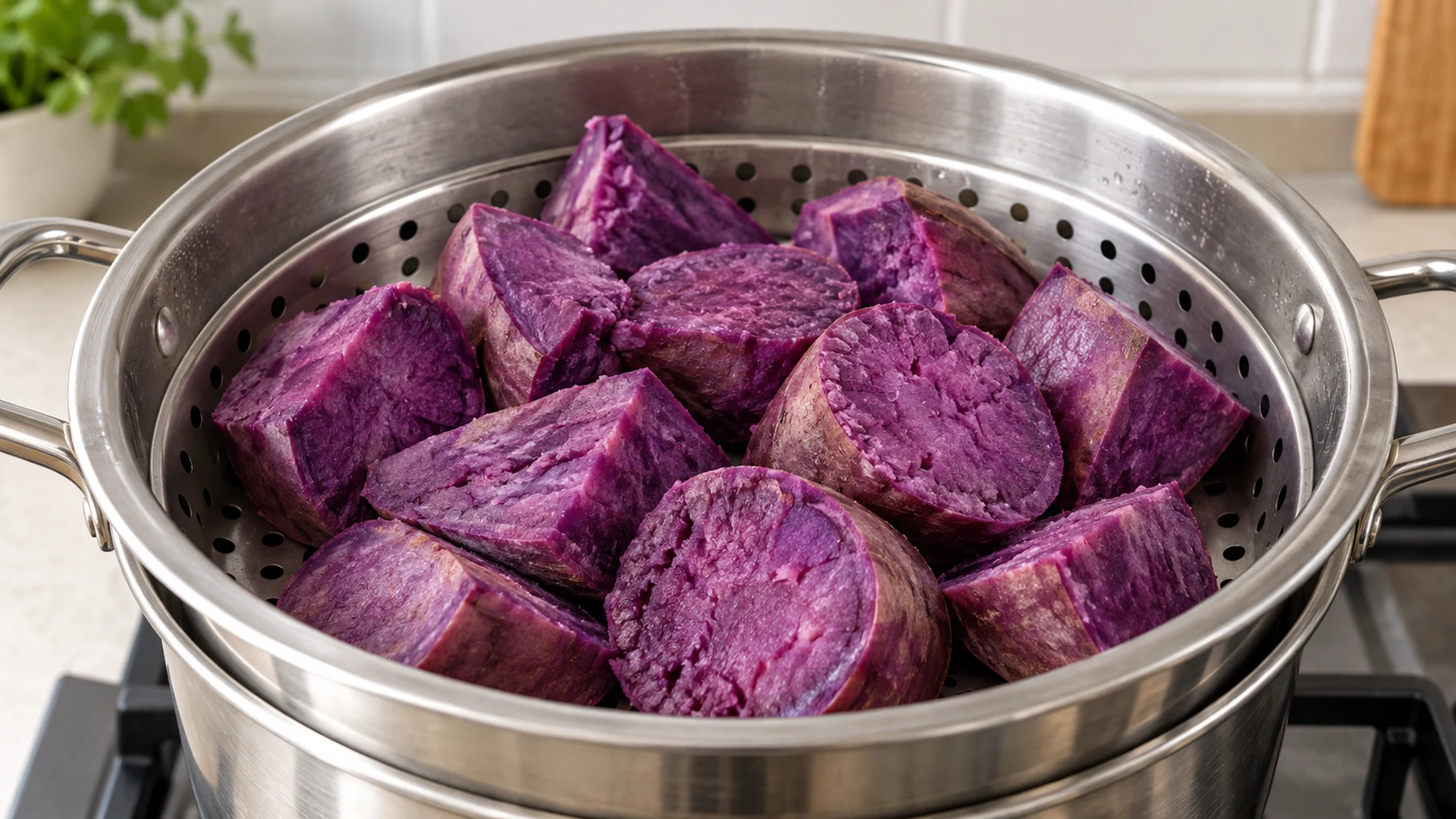
Choose the cooking method around dinner. Moist heat suits pieces you plan to mash; exposed surfaces matter more when you want browned edges. Use the thickest piece to check tenderness, because a browned outside can still surround a firm center.
| Method | Useful for | What to check |
|---|---|---|
| Bake whole | A split potato served as a side | The center yields easily to a fork or skewer |
| Steam pieces | Mash or a soft addition to a bowl | Similar-size pieces soften throughout |
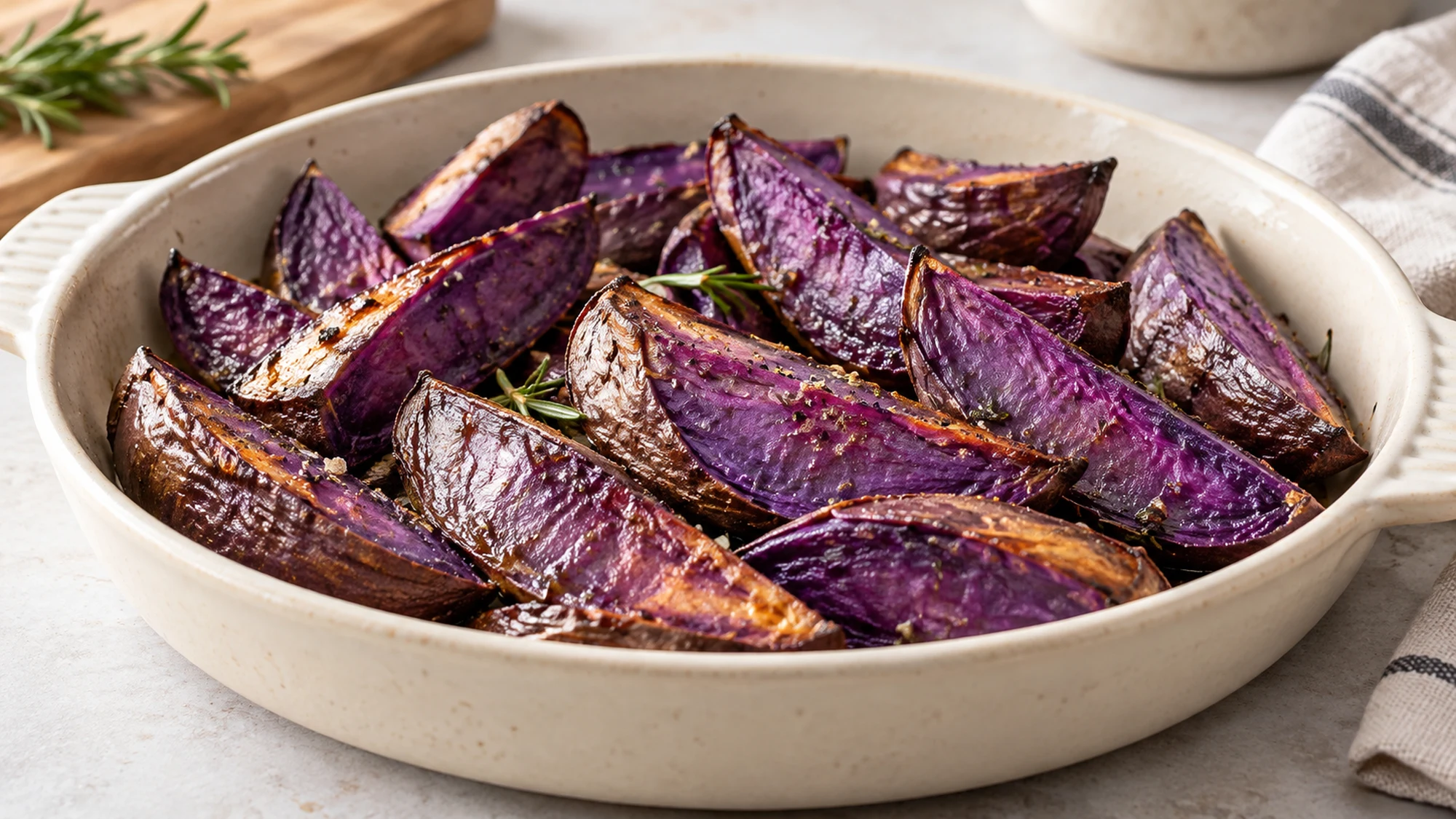
| Roast wedges | Tender interiors with browned edges | Allow space on the pan; check both edge and center |
For its Stokes Purple variety, Frieda’s gives a whole-potato baking range of one to two hours at 350°F, wrapped in foil. Treat that as product-specific guidance, not a promise for every root or method. If you are roasting uncovered wedges instead, use a recipe written for that shape and preparation.
- For a savory plate, try olive oil, a little salt and herbs; add a tangy topping after cooking.
- For mash, add liquid gradually so a dense potato does not become unexpectedly loose.
- For baking into cakes or pies, use the specified cooked puree and measure it as directed. A raw root is not a direct substitute.
I’d choose tenderness over a fixed minute count. The fork gives you information the timer cannot.
What the Purple Color Does—and Does Not—Tell You
Purple-fleshed cultivars contain anthocyanin pigments. A 2019 sweet potato cultivar study measured these compounds and other characteristics in roots grown in Hawaiʻi. That is evidence about plant composition, not a clinical trial proving that eating purple sweet potatoes prevents disease.
Enjoy the color without asking it to carry a medical promise. Portion, preparation and the rest of your meal still matter. For a savory contrast, our guide to choosing feta cheese can help you pick a salty, tangy topping; add it deliberately rather than burying the potato.
Bottom Line
Buy purple sweet potato for its appealing color and useful place in the kitchen. Verify the flesh and variety, store raw roots appropriately, and cook for the texture you want. Start simply, check the center, and let the vegetable—not a superfood claim—earn its place on the plate.
Frieda’s Specialty Produce introduces its Stokes Purple variety in the video below.