
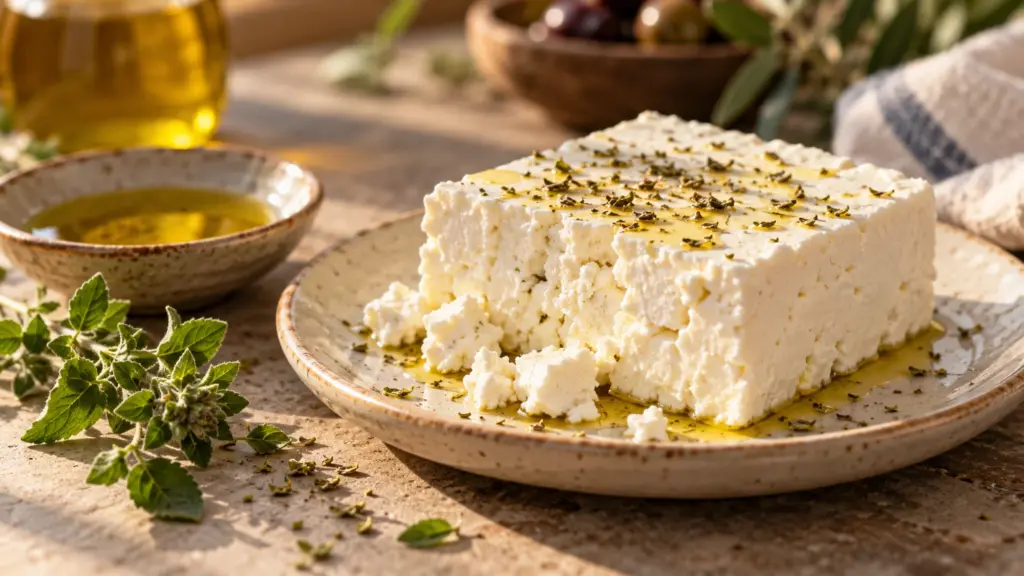
A few crumbles of feta can change a bowl of tomatoes and cucumber before you reach for the salt. That is its appeal: a tangy, briny flavor that does useful work in a small part of the dish. Choosing the right package starts with knowing what is inside it.
Feta cheese is a white, brined cheese with a salty, tangy flavor and a texture that can be sliced or crumbled. Check the milk, origin, pasteurization statement and nutrition label rather than assuming every package has the same ingredients or salt content.
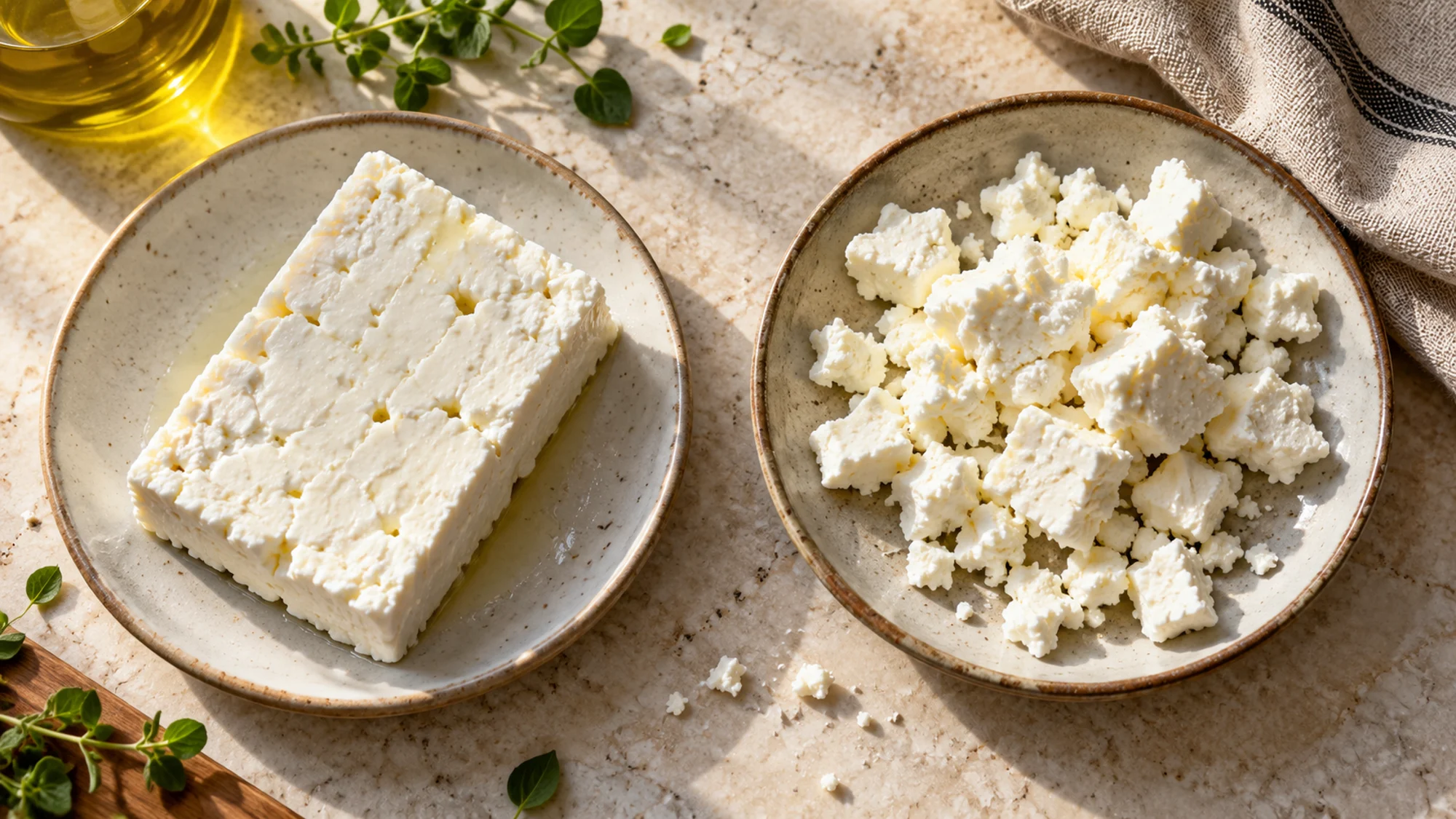
I’d choose a block when I want both larger pieces and fine crumbles from the same purchase. Precrumbled feta has a different advantage: it is ready when the salad is. Neither format needs a dramatic verdict to earn a place in the refrigerator.
What Makes Feta Cheese Distinctive?
The European Commission’s Feta PDO guide describes a Greek cheese made from sheep’s and goat’s milk, ripened with brine and matured for at least two months. PDO means Protected Designation of Origin; it identifies a specific origin and production standard, not a health rating.
If you want that protected Greek product, look for its origin and PDO identification. For any cheese in the supermarket, read the actual milk ingredients rather than inferring them from a familiar white block. The Commission also notes that PDO feta can be made with pasteurized or unpasteurized milk, so origin does not answer the food-safety question.
| What to check | Why it matters | A practical choice |
|---|---|---|
| Block or crumbles | Changes how you portion and use the cheese | A block gives control over the size of the pieces. |
| Milk ingredients | Identifies the dairy used | Read the label instead of assuming all feta is the same. |
| Pasteurization statement | An important safety distinction | Choose feta made with pasteurized milk. |
| Sodium and serving size | Salt content varies by product and amount | Compare equal weights when comparing labels. |
| Storage instructions | Opening can change handling requirements | Keep the package directions with the cheese. |
What Does Feta Contribute Nutritionally?
Feta supplies protein and calcium, but also sodium and saturated fat. Health Canada’s reference table lists 50 grams of feta with about 7 grams of protein, 247 milligrams of calcium, 558 milligrams of sodium and 7.7 grams of saturated fat. These are food-composition reference values, not the exact label for every brand or a recommended serving.
The useful question is how much you are using and what else is in the meal. Feta can add a distinctive finish to vegetables, beans or grains without needing to supply all of the meal’s protein. If you have been advised to limit sodium, compare labels and follow your individual plan.
- Taste the finished dish before adding salt, particularly when olives or other salty ingredients are present.
- Distribute crumbles through the food for flavor in more bites instead of leaving one large salty mound.
- Compare products using the same weight; different serving sizes can make a label comparison misleading.
Use Its Tang Rather Than Hiding It
Feta works especially well where its saltiness meets juicy vegetables, sweet roasted produce or plain grains. I would keep the other seasoning restrained at first. You can always add more lemon or herbs after tasting; you cannot easily remove a generous extra pinch of salt.
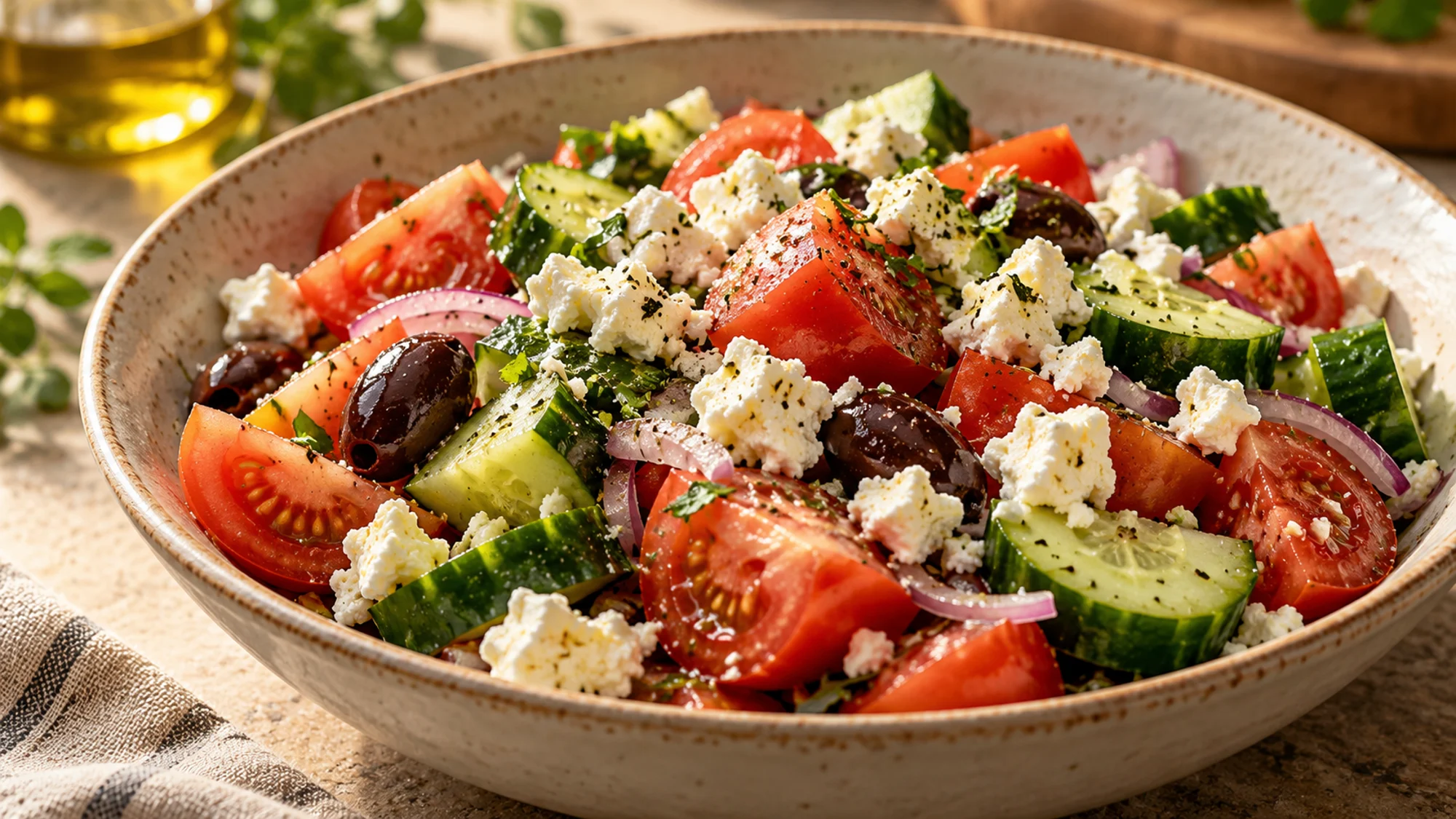
- Scatter crumbles over tomatoes and cucumber, then add herbs for a fresh finish.
- Add small pieces to a warm bowl of beans or grains for contrast.
- Pair it with roasted vegetables, where the browned edges and salty cheese bring different flavors.
- Use a block when a recipe calls for baking the cheese; follow that recipe’s method rather than expecting the behavior of a stretchy melting cheese.
For a full cooking example, baked feta pasta uses softened feta and tomato juices, then adjusts the sauce with reserved pasta water. It shows why moisture and stirring matter as much as heat when turning this cheese into a sauce.
Keep It Cold and Check the Milk
The CDC lists feta made with pasteurized milk as a safer choice than cheese made with raw milk for people at increased risk of Listeria infection. That includes pregnant people, adults 65 and older, and people with weakened immune systems. Pasteurization does not mean a product can never be contaminated, so recalls and careful handling still matter.
- Refrigerate promptly at 40°F (4°C) or below, following the package’s directions after opening.
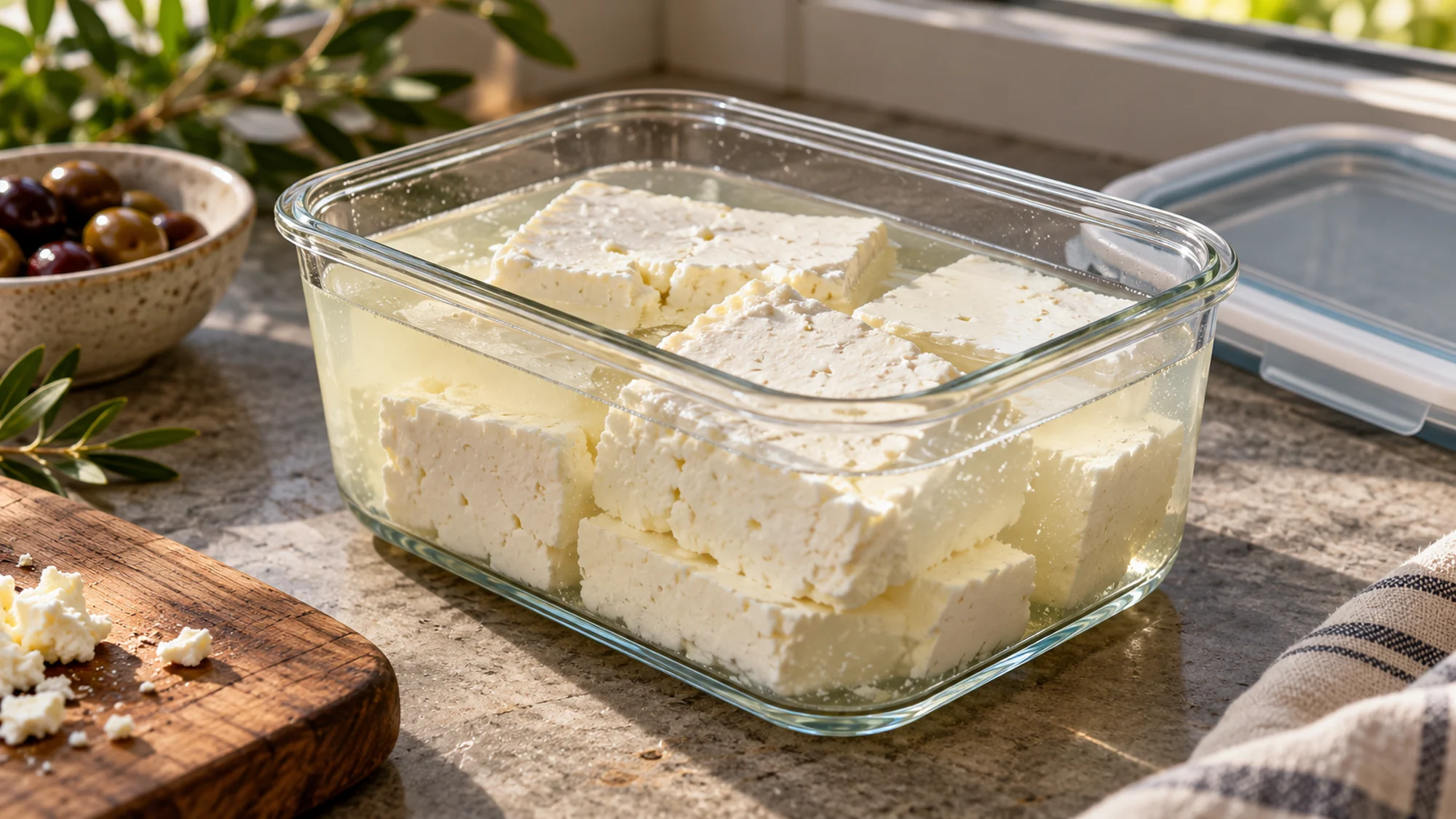
- Use clean utensils, keep the container covered and retain the supplied brine when the product instructions call for it.
- Do not assume salty brine makes feta shelf-stable or safe after poor refrigeration.
- Follow recalls and discard spoiled cheese. Do not rely on a normal smell alone to prove safety.
The FDA’s storage guidance limits perishable food at room temperature to two hours, or one hour above 90°F. For an open container, use the manufacturer’s instructions rather than treating every feta package as having the same shelf life.
Bottom Line
Choose feta for its tang and texture, read the label, and let it season the dish before adding extra salt. Pasteurized milk and careful refrigeration matter just as much as whether you buy a block or crumbles.
The Feta PDO Authentic video below gives a promotional look at Greek PDO feta production. It provides ingredient background, not independent evidence of health benefits or a home cheesemaking safety guide.