
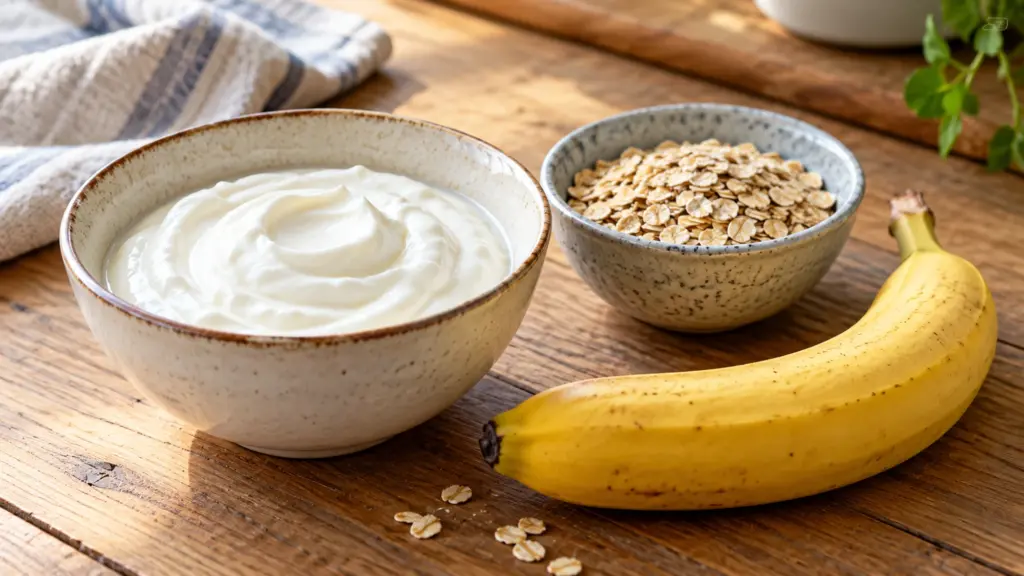
A yogurt tub, a bag of oats and a supplement bottle can all arrive in the same conversation about gut health. Yet “prebiotic” and “probiotic” describe different things, and neither word tells you everything you need to know about a food.
The simplest prebiotic vs probiotic distinction is food for certain microbes versus the live microbes themselves. A product’s benefits still depend on what it contains, the amount and the evidence—not just the word on the front.
I’d rather build a breakfast I enjoy than turn it into a collection of impressive-sounding labels. Understanding the terms makes that easier: you can separate ordinary food choices from claims that need a closer look.
Prebiotic vs Probiotic: What Each Term Means
The National Center for Complementary and Integrative Health distinguishes prebiotics, which are nondigestible food components used by desirable microbes, from probiotics, which are live microorganisms. In the scientific definition, a probiotic must provide a health benefit when consumed in an adequate amount; simply being alive is not enough.
| Term | What it describes | What not to assume |
|---|---|---|
| Prebiotic | A substance selectively used by microbes that provides a health benefit | Every dietary fiber qualifies. |
| Probiotic | Live microbes with evidence of benefit at an adequate amount | Every strain has the same effects. |
| Fermented food | Food made through microbial growth and related transformations | The finished food contains proven probiotics. |
| Live cultures | Microbes that remain alive in a product | The label establishes a specific health benefit. |
The ISAPP prebiotic explainer notes that most prebiotics are dietary fibers, but not all fibers are prebiotics. Fiber remains a useful food characteristic even when a particular ingredient does not meet the narrower scientific definition.
Fermented Does Not Automatically Mean Probiotic
The ISAPP consensus statement on fermented foods explains why the categories differ. Fermentation is a process, while “probiotic” makes an evidence-based claim about live microbes and benefit. Some fermented foods are heated or otherwise processed so the microbes are no longer alive when you eat them.
Yogurt and kefir can contain live cultures, but the exact product matters. A tangy taste, a rustic jar or a prominent “gut” message is not a substitute for clear information. I would read the back of the package before paying extra for the front.
- Look for live-culture information: Check what the manufacturer says is present in the finished product.
- Check the intended benefit: Evidence for one organism or product does not automatically apply to every fermented food.
- Keep the whole food in view: Serving size, added ingredients, taste and how you will use it still matter.

Start With Foods, Not a Shopping List of Promises
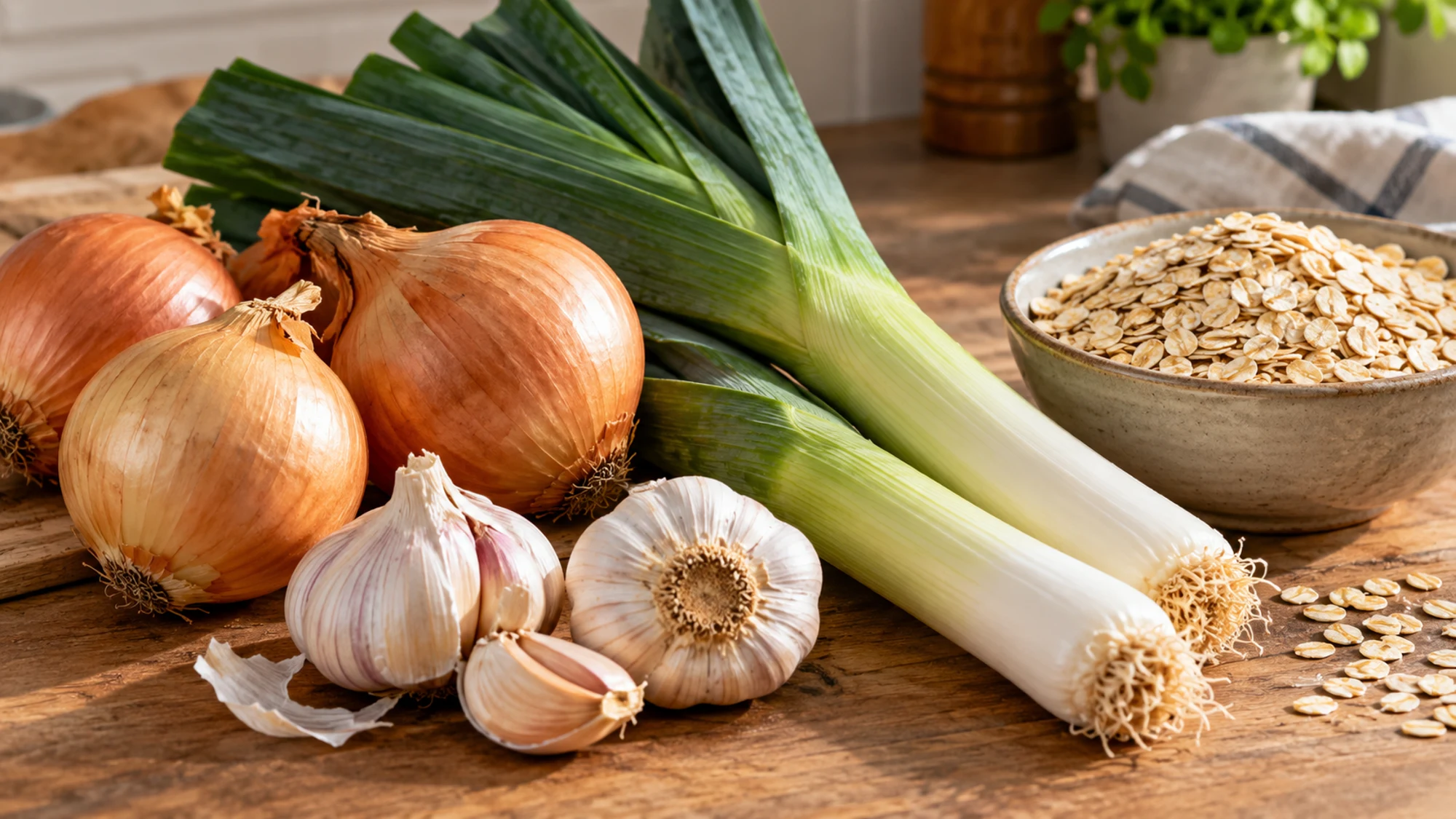
ISAPP identifies foods including beans, onions, garlic, chicory and whole grains as sources of prebiotic components, often in relatively small amounts. That does not give every serving a standardized supplement dose, and a kitchen bowl is not a clinical trial.
For an ordinary food-first approach, consider what you already cook. The black bean burgers combine beans, oats and onion in a practical meal; they are not presented as a measured prebiotic treatment. The point is variety you can actually use, not a promise that one recipe changes your microbiome.
- Add a spoonful of plain yogurt to a breakfast you already like, if it suits your dietary needs and tastes.
- Use onions or garlic for flavor in a meal rather than forcing large amounts into food solely for a label.
- Keep a familiar fiber-containing staple, such as oats or beans, in the rotation. There is no need to buy a specialized bar to make a useful meal.
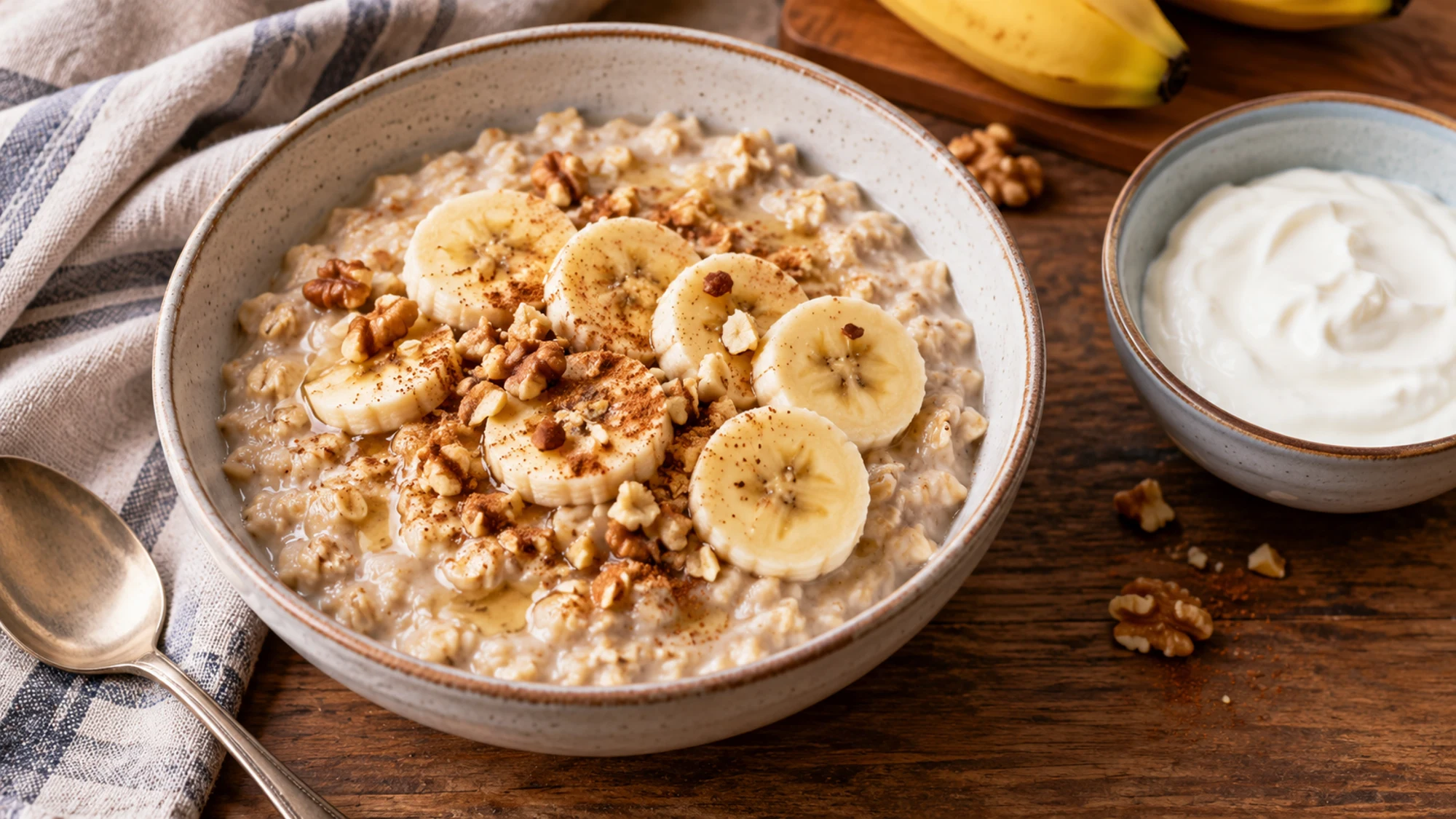
- Treat a yogurt-and-oats bowl as food, not as proof that you have assembled a clinically tested synbiotic product.
When Supplements Need a More Specific Question
NCCIH emphasizes that probiotic effects differ, and that research has not established the best products, doses or users for many proposed applications. A benefit reported for one strain and condition is not evidence that a different bottle will help an unrelated symptom.
For persistent digestive problems, the useful question is what is causing them, not which supplement has the largest number on the label. People who are seriously ill or have weakened immune systems should discuss probiotic use with their clinician because risks can be greater.
- Ask which exact product or strain was studied, for which outcome and in which people.
- Do not use a supplement claim as a reason to stop prescribed treatment or postpone an assessment.
- Avoid treating more organisms, more strains or a higher price as automatic evidence of a better choice.
Bottom Line
Prebiotics and probiotics are related, not interchangeable. Enjoy a varied set of foods that works for you, read product claims carefully and reserve treatment decisions for evidence that matches the specific product and situation.
ISAPP’s short video below explains prebiotics and where they occur. Its examples provide background, not a personalized supplement prescription.