
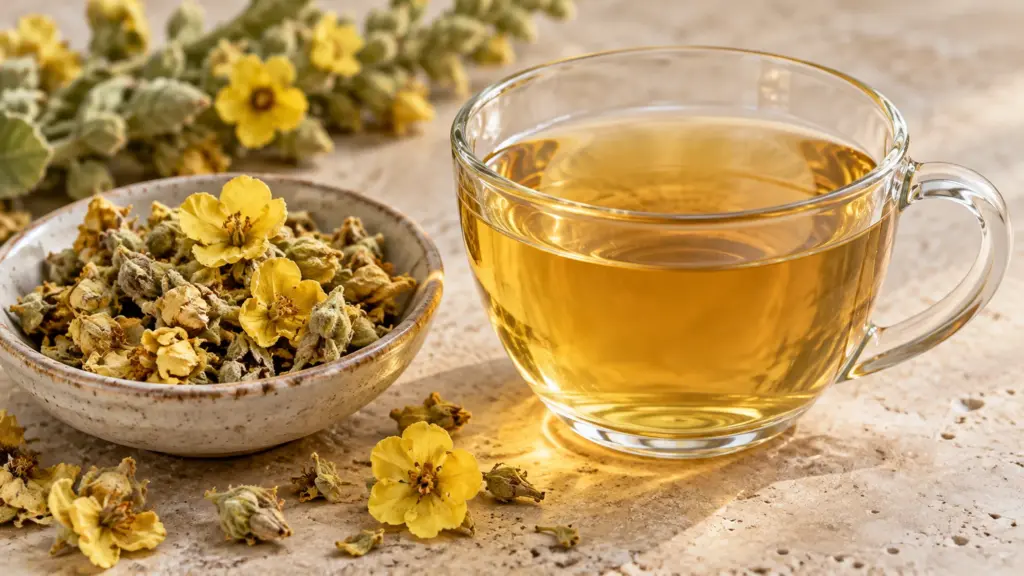
A pouch of mullein tea can look like an easy answer to a scratchy throat, especially when the label makes sweeping promises about breathing. The useful first question is simpler: does it contain flowers, leaves, or a blend—and what evidence actually applies to that product?
Mullein tea is an herbal infusion, not a proven lung cleanser. European guidance recognizes traditional use of specific mullein flower preparations for sore throat with dry cough and colds, while clinical evidence remains limited.
I’d start with the ingredient panel, not the biggest claim on the front. Knowing the plant part helps you read both the tea label and the research more carefully.
What is mullein tea made from?
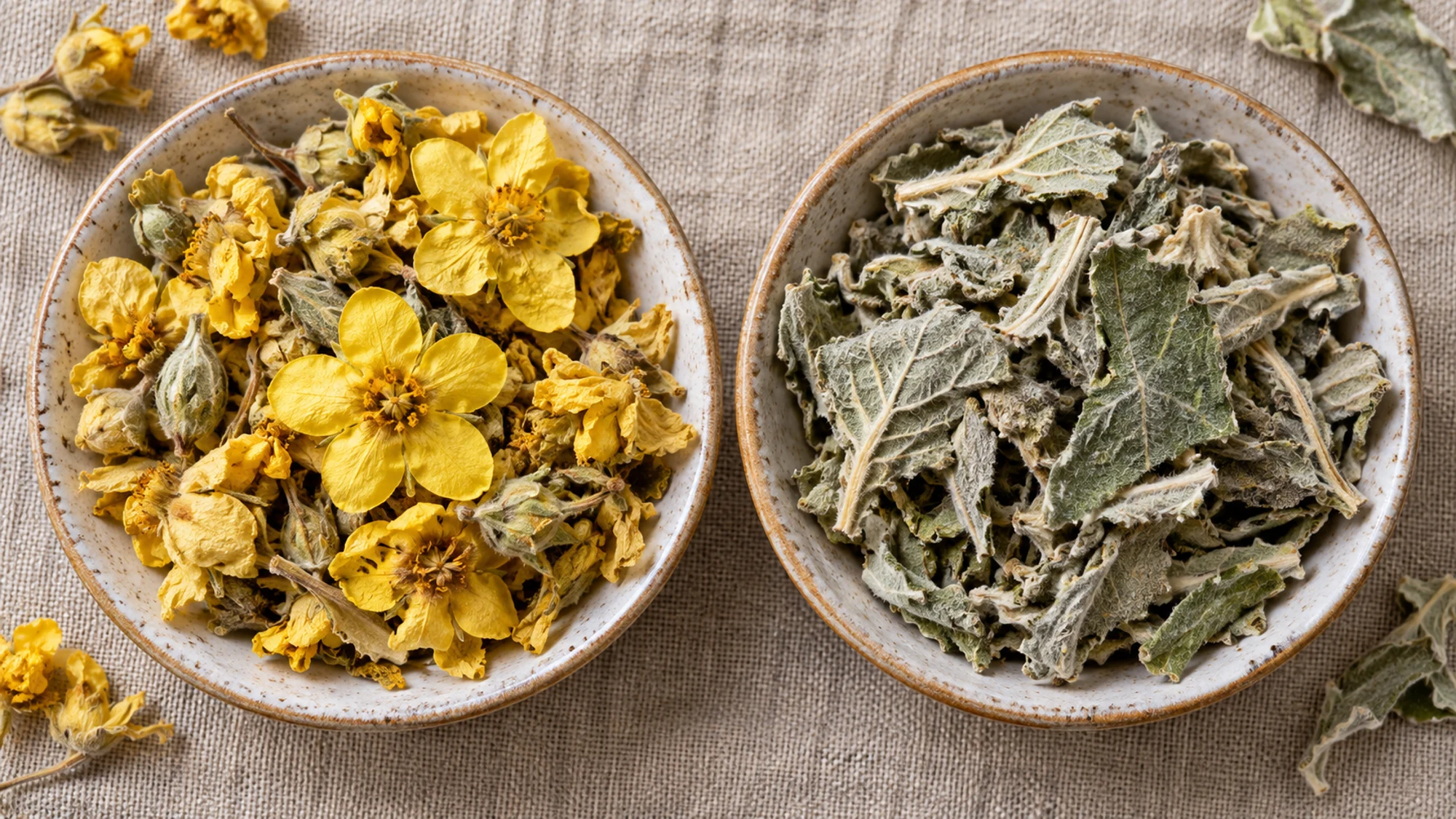
Mullein tea products may contain leaves, flowers or both. The European Medicines Agency’s mullein assessment concerns the flowers of specified Verbascum species, including Verbascum thapsus. That is not a blanket endorsement of every product sold under the name mullein.
| Label wording | What it identifies | What it does not establish |
|---|---|---|
| Mullein flower | The flowering part | Proven treatment for lung disease |
| Mullein leaf | A different plant part | The same evidence as flower preparations |
| Herbal blend | Several ingredients | Which ingredient causes an effect |
| Extract or tincture | A different preparation | Equivalence to brewed tea |
- Look for the plant part. “Mullein” alone leaves an important question unanswered.
- Read the full ingredients. Added herbs bring their own cautions; they are not merely flavor notes.
- Choose clear labeling. I’d favor a product that identifies its contents and provides preparation instructions over one built around dramatic wellness language.
What evidence supports mullein tea?
The EMA public summary describes a traditional-use role for flower medicines in sore throat associated with dry cough and a cold. It explicitly notes insufficient clinical-trial evidence. Long-standing use and proven effectiveness in controlled trials are different kinds of information.
- Traditional use: Describes an established history of use under specified conditions; it does not prove every advertised benefit.
- Laboratory findings: Do not show that drinking a household infusion produces the same effects in a person.
- Personal stories: Cannot separate the tea’s effect from rest, other treatments or an illness improving naturally.
- Broad lung claims: The cited guidance does not establish that mullein removes toxins, repairs smoking damage or treats asthma or COPD.
A warm drink can be pleasant when your throat feels uncomfortable. That experience does not tell you why a cough started, whether an infection needs treatment, or whether a respiratory condition is controlled. Keep those questions separate.
Buying and preparing a cup thoughtfully
Use a commercially labeled product intended for drinking, and follow its instructions rather than borrowing a medicinal dose from an unrelated website. A concentrated extract, a loose-leaf blend and a flower infusion should not be treated as interchangeable preparations.
- Check the packaging. Look for a named supplier, ingredient list, plant part and clear directions. Skip damaged, damp or visibly moldy material.
- Do not identify wild plants from a tea photo. An attractive botanical image is not enough to establish species, cleanliness or suitability for drinking.
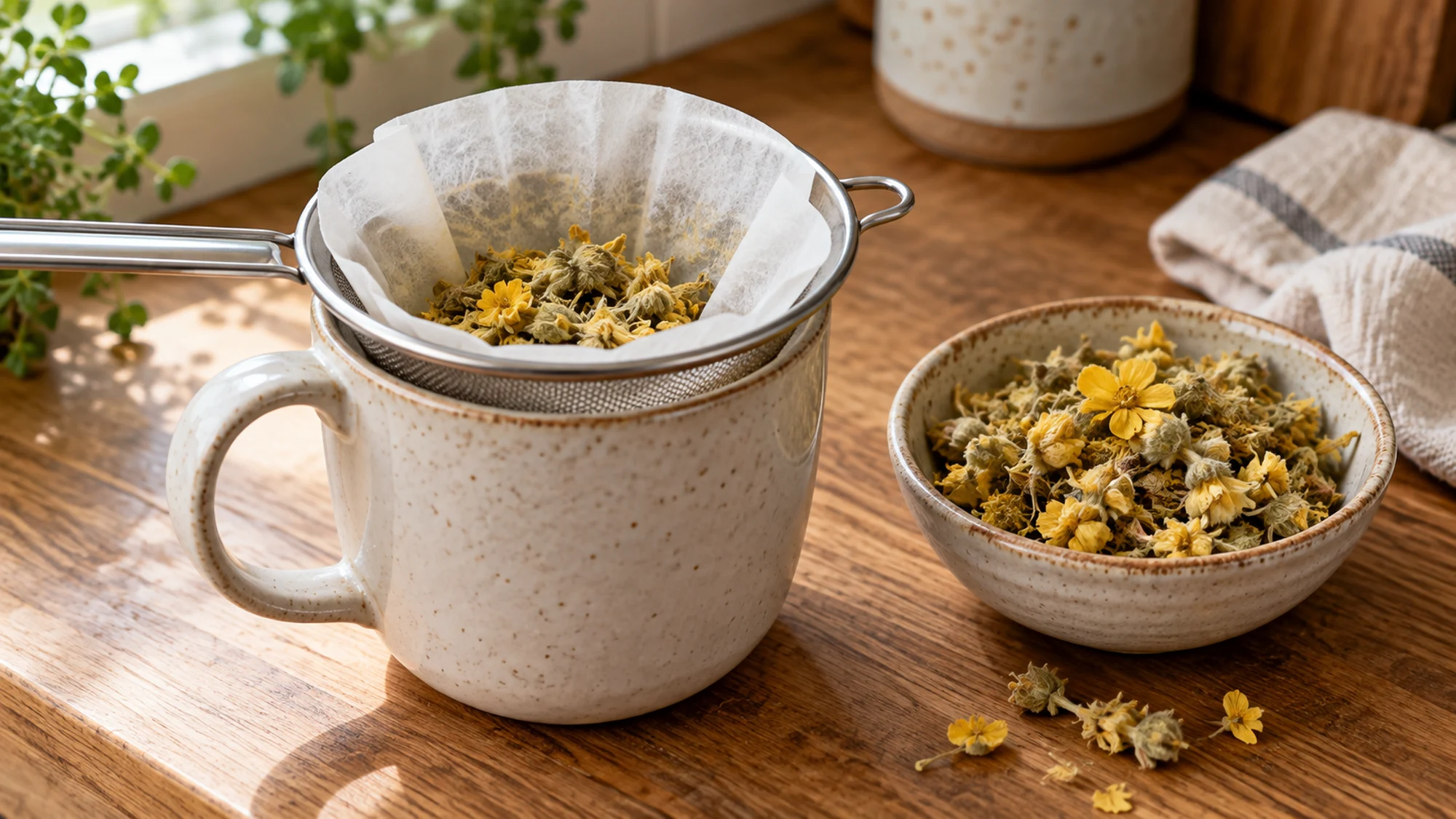
- Strain out plant particles. Use the product’s recommended filter; a paper tea filter can help keep loose material out of the cup.
- Let it cool. Choose a comfortably warm drink rather than trying to make it more effective by drinking it very hot.
- Avoid escalating strength. A stronger infusion is not evidence of a better result, and an unpleasant reaction is a reason to stop, not push through.
The pictured yellow flowers and gray-green leaves illustrate why the ingredient distinction matters. They are not instructions to harvest either one. For everyday shopping, a legible label is far more useful than a dramatic promise about detoxing.
Safety checks before trying mullein tea
The EMA flower monograph does not recommend use during pregnancy or breastfeeding because safety is unestablished, and does not establish use in children under 12. These limits concern the specified flower preparations, not proof that other forms are safer.
- Medication or ongoing illness: Ask a pharmacist or clinician about your exact product. Limited interaction reports do not establish that every combination is safe.
- Allergy or a new reaction: Avoid a known allergen and stop a product that causes symptoms. Severe breathing trouble or throat swelling needs urgent help.
- Cough getting worse: Do not keep substituting tea for assessment. EMA advises consultation if symptoms worsen or continue beyond one week during use.
- Fever or breathing difficulty: Get medical advice promptly; the monograph also flags pus-like sputum. Severe symptoms warrant urgent care.
Use the actual ingredient list when discussing safety. A product name is not enough to identify the herb, plant part, blend or concentration.
Bottom Line
Mullein tea deserves a careful label check, modest expectations and clear safety limits. Traditional flower use is not proof of lung cleansing or disease treatment. Do not let a soothing cup delay care for a persistent or worsening cough.