
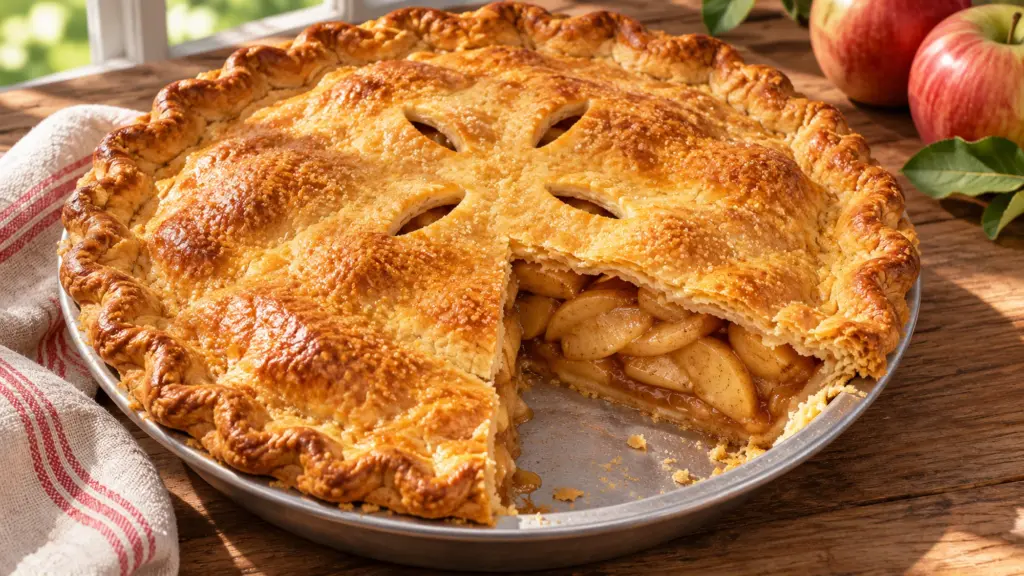
The first slice of apple pie can look beautiful on top and still spill a puddle onto the plate. If you’re wondering how to make apple pie with tender fruit and a golden double crust, start with evenly sliced apples, keep the pastry cool, and give the baked filling time to settle before cutting.
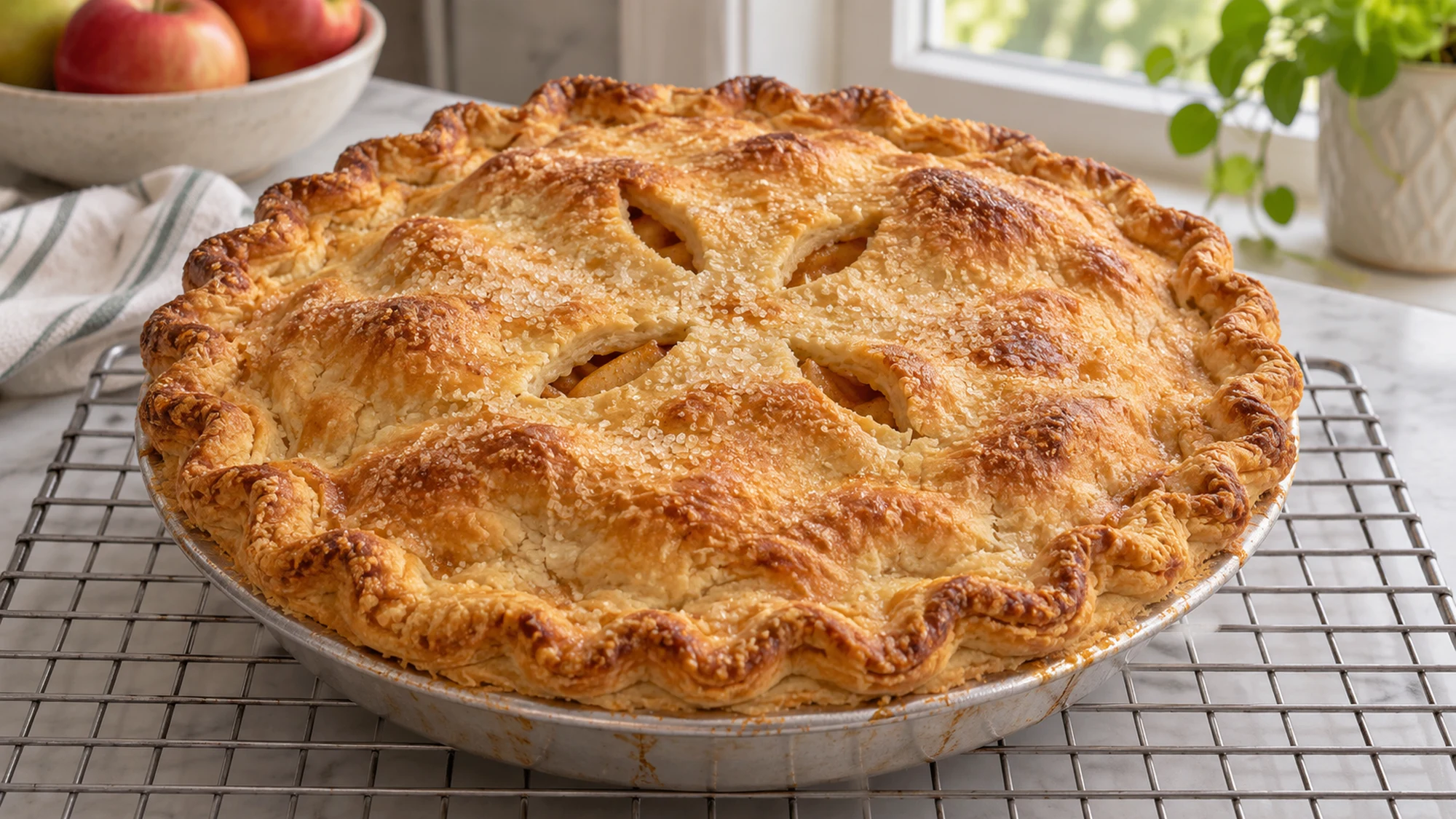
Look for bubbling filling as well as browned pastry. A golden lid is only half the story; the apples underneath need enough time to soften, and the pie needs a proper cooling rest.
I’d choose a mixture of Granny Smith and Pink Lady apples for a filling that tastes bright without becoming one-note sharp. This version uses prepared double-crust pastry, so you can put your attention into the fruit and the bake rather than juggling two projects. Homemade pastry works too, provided you already have enough chilled dough for a 9-inch double-crust pie.
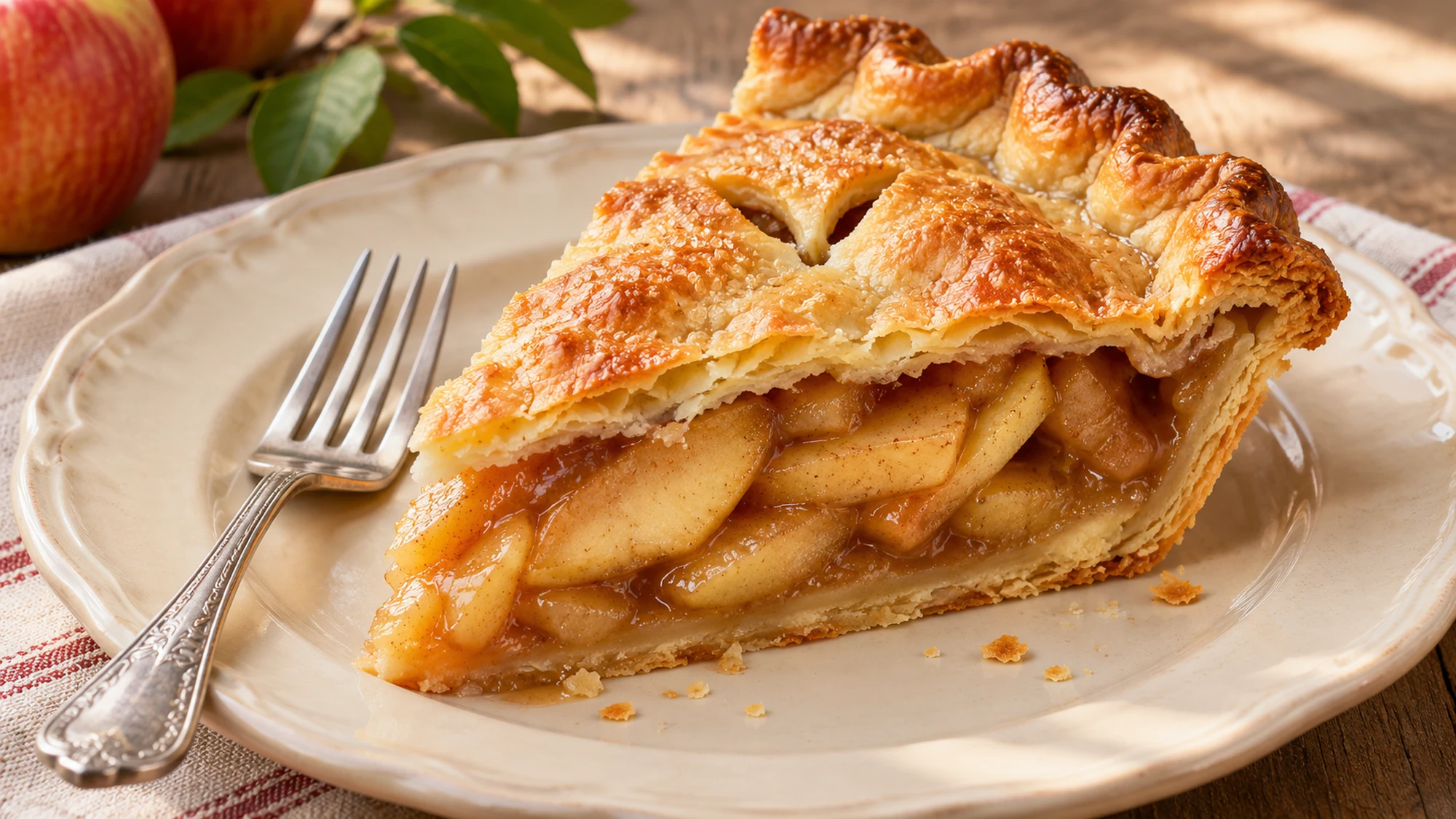
Serving suggestions: let the filling settle
Serve the pie after it has cooled completely, then gently warm individual slices if that is how you enjoy them. Cutting too early releases the juices before they have thickened enough to stay with the fruit. A slightly warm slice and a very hot, freshly baked pie are not the same thing.
- Keep the first serving simple. A plain slice lets the apple flavor and flaky edges stand out. Add vanilla ice cream or lightly whipped cream at the table rather than soaking the whole pie.
- Use a thin, sharp knife. Cut through the top crust first, then slide a pie server under the bottom. Wipe the blade between portions if the filling starts clinging to it.
- Plan ahead. Bake early enough to allow several hours of cooling. The fragrance is persuasive, but it is not a reliable signal that the pie is ready to slice.
- Refrigerate covered leftovers. Let the pie cool before covering so trapped steam does not soften the pastry unnecessarily. Rewarm only the pieces you want to serve.
For tidy slices, patience helps more than an elaborate garnish. Cool the pie first and add any creamy topping just before eating.
How to make apple pie your way
Change the flavor in small ways before changing the structure. Apples vary in firmness and juiciness, so swapping all the fruit for a very soft variety can change the filling more than another pinch of spice. Keep the flour in the measured filling: it has a job beyond making the mixture look dusty.
| Choice | What changes | Useful approach |
|---|---|---|
| Granny Smith | A sharper, firmer filling | Mix with sweeter baking apples |
| Pink Lady | Sweet-tart flavor with distinct pieces | Use alongside Granny Smith |
| All cinnamon | A familiar, focused spice flavor | Keep the measured amount |
| Homemade pastry | Flavor and handling depend on the dough | Use a chilled double-crust quantity |
- If the pastry becomes soft: stop and chill it rather than adding repeated handfuls of flour. Too much extra flour can make rolling easier while leaving the finished crust less tender.
- If the edges brown early: shield the rim loosely with foil and continue baking the filling. Do not remove a pale, undercooked center just to save the edge.
- If you want less pastry work: try this apple crumble with a buttery topping instead. It is a different dessert, not a direct swap for the pie’s top crust.
For more detail on apple choice and doneness, King Arthur Baking’s apple-pie tips explain why the fruit, bubbling juices, and cooling stage matter. I prefer a modest cinnamon layer here; the apples should still taste like apples.
Keep the apple pieces even and the pastry cool. Those two practical choices are more useful than chasing a decorative crust.
Health benefits and a realistic dessert portion
Apples contribute fiber, but a slice of pie is not nutritionally identical to a whole apple. Peeling removes some fiber, while pastry, sugar, and butter change the balance of the finished dessert. Harvard’s Nutrition Source overview of apples makes the distinction between whole fruit and processed preparations worth keeping in mind.
- Choose a portion that suits the meal. This pie makes eight slices; you can cut smaller portions when serving several desserts.
- Count toppings as additions. Ice cream, caramel, and whipped cream are optional extras, not included in the recipe.
- Check the pastry label. Wheat, milk, and other allergens depend on the dough you buy; this recipe also uses an egg wash.
Enjoy apple pie as dessert, without asking it to act like a health remedy. A satisfying portion and a balanced overall meal are the useful priorities.
Bottom Line
A good apple pie does not need a complicated finish: even apple slices, chilled pastry, a bubbling center, and an unhurried cooling rest give you the best chance of a golden crust and a filling that stays on the plate.
How to Make Apple Pie Recipe

Ingredients
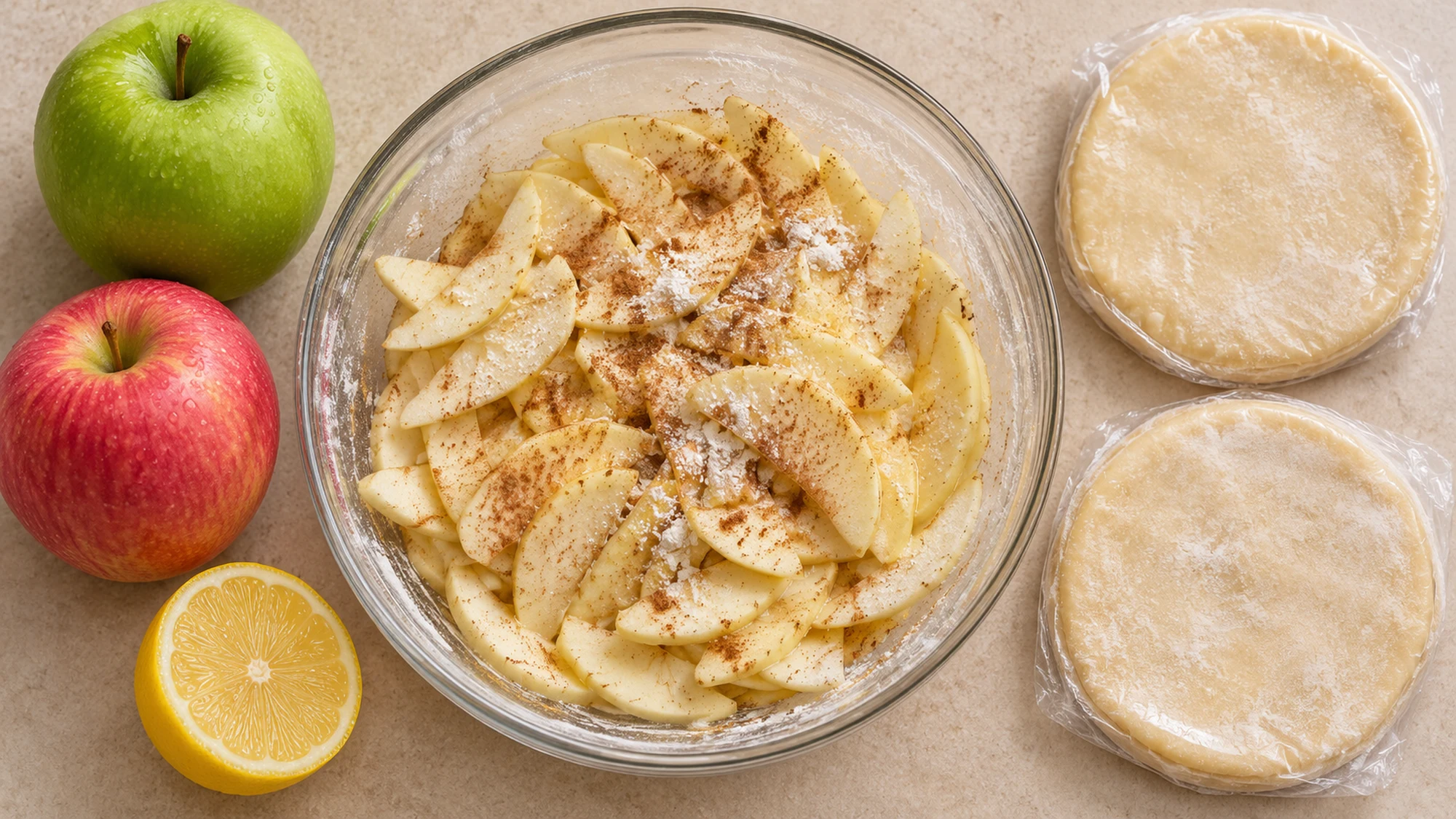
- 3 lb apples about 1.36 kg; a mix of Granny Smith and Pink Lady, weighed before peeling
- 1 tbsp lemon juice
- 0.75 cup granulated sugar 150 g
- 0.33 cup all-purpose flour 40 g
- 1.5 tsp ground cinnamon
- 1 double-crust pastry for a 9-inch pie chilled, homemade or store-bought
- 2 tbsp unsalted butter cut into small pieces
- 1 large egg beaten for brushing
Equipment
- 9-inch pie pan
- Large mixing bowl
- Rolling Pin
- Peeler, knife and cutting board
- Pastry brush
- Rimmed baking sheet
- Wire cooling rack
Instructions
- Wash, peel and core the apples, then cut them into even slices about 1/4 inch thick. Keep the pastry chilled while you prepare the fruit.
- Heat the oven to 425°F (220°C), with a rack in the lower third. Toss the sliced apples with lemon juice, sugar, flour and cinnamon until evenly coated.
- Roll one pastry round large enough to line a 9-inch pie pan. Ease it into the pan without stretching. Add the apple mixture, arranging the slices to limit large gaps, and dot with butter.
- Roll the second pastry round and cover the filling. Trim excess dough, fold the edges together and crimp. Cut four steam vents in the top and brush lightly with beaten egg. Chill for 10–15 minutes if the pastry has softened.
- Set the pie on a rimmed baking sheet. Bake for 20 minutes, then reduce the oven to 375°F (190°C) and continue for about 50–60 minutes, until the crust is deeply golden and the filling bubbles through the vents. Loosely shield the rim with foil if it browns too quickly.
- Move the pie to a wire rack and cool completely, about 4 hours, before slicing into 8 portions. Refrigerate covered leftovers.