
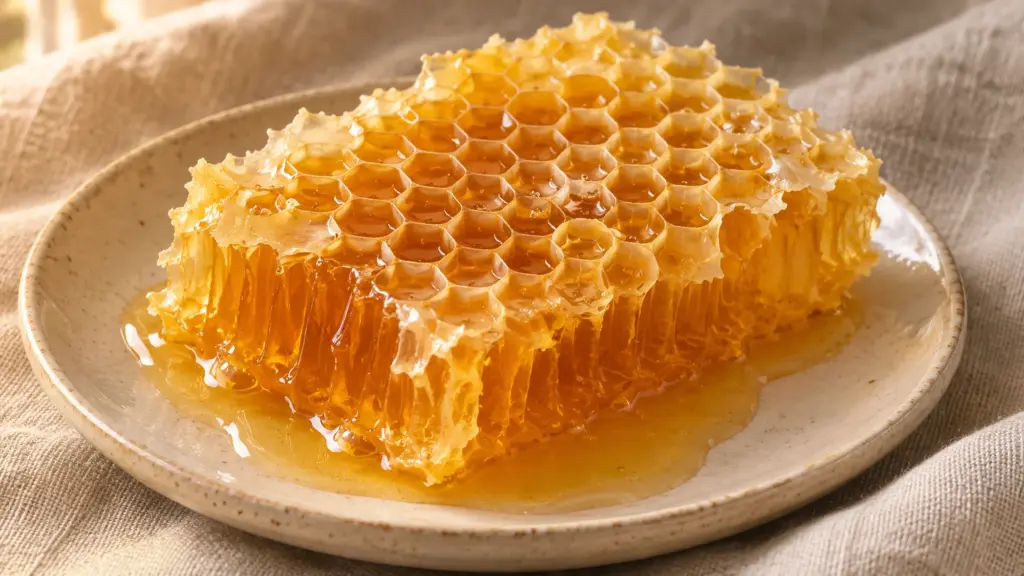
A golden square of honey comb can look like something you should admire rather than eat. You can eat the honey and its delicate beeswax cells together; the surprise is the texture, with flowing sweetness followed by a soft, chewy finish.
Start with a small piece of food-grade honeycomb, also called comb honey. Serve it with toast, fruit or cheese, and remember that honey in any form is not for babies younger than 12 months.
I’d treat it as a finishing ingredient rather than a substitute for every spoonful of liquid honey. The visible cells and gentle chew are the point. When you want honey to disappear smoothly into a drink or batter, the jar is usually the easier choice.
What Is Honey Comb, and Can You Eat the Wax?
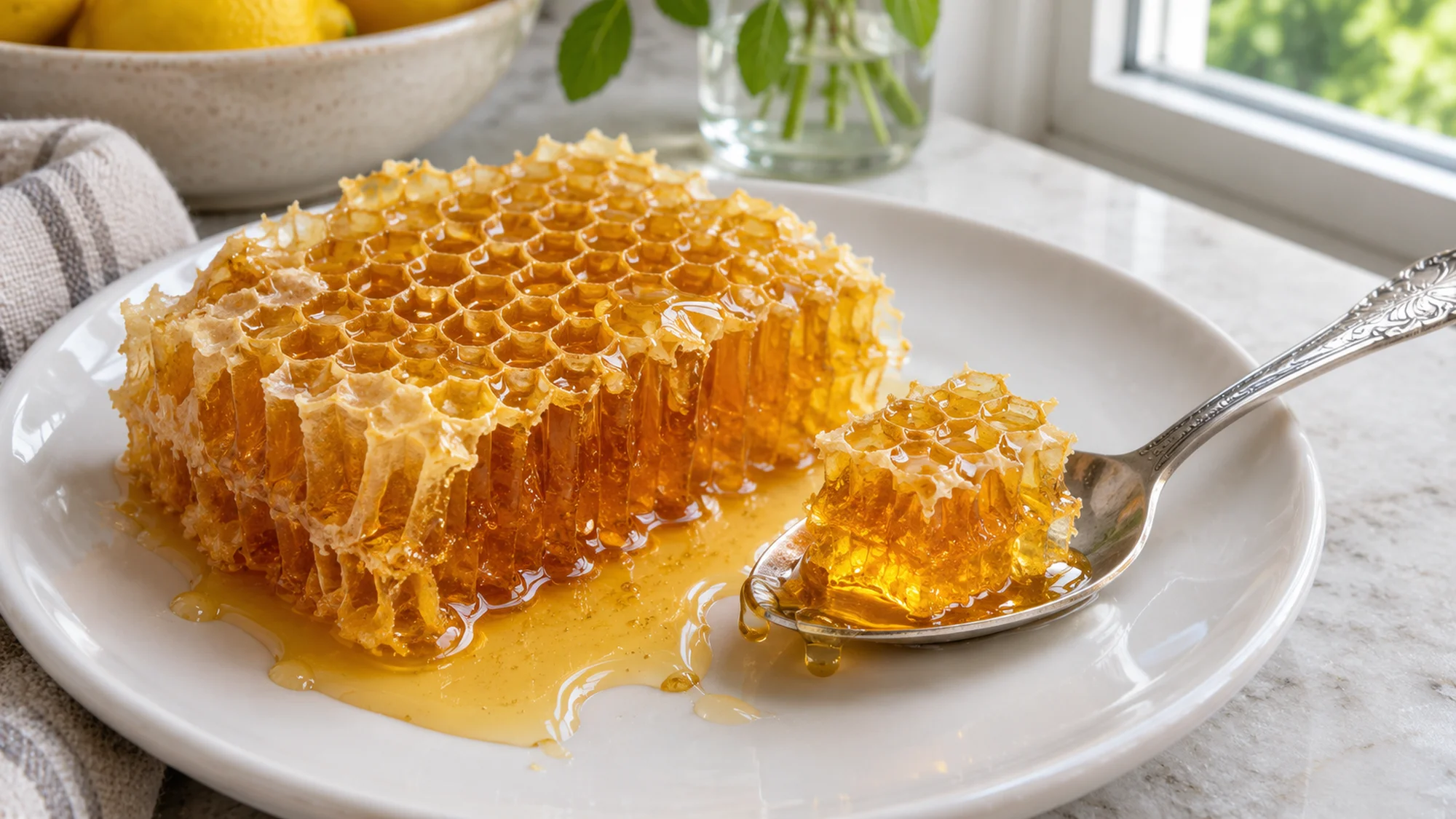
Honeycomb is the beeswax structure that holds honey. Savannah Bee Company describes its edible comb as honey enclosed in wax, with both parts intended to be eaten. Buy a product sold for human consumption, not decorative wax or an unknown piece taken from a hive.
- Expect a change in texture. The honey releases as you bite, while the wax remains chewy. A small piece lets you decide whether that texture appeals to you before adding more.
- Do not confuse it with candy. Honeycomb toffee is a brittle, airy sweet made in a saucepan. It is a different food from honey stored in beeswax cells.
- Read the package. Comb honey may arrive as a section of comb or as a piece surrounded by liquid honey. Check what you are buying rather than judging only the photograph.
There is no need to peel edible comb honey. A small, manageable bite is a better introduction than a thick slab.
Pair Honey Comb With Something Less Sweet
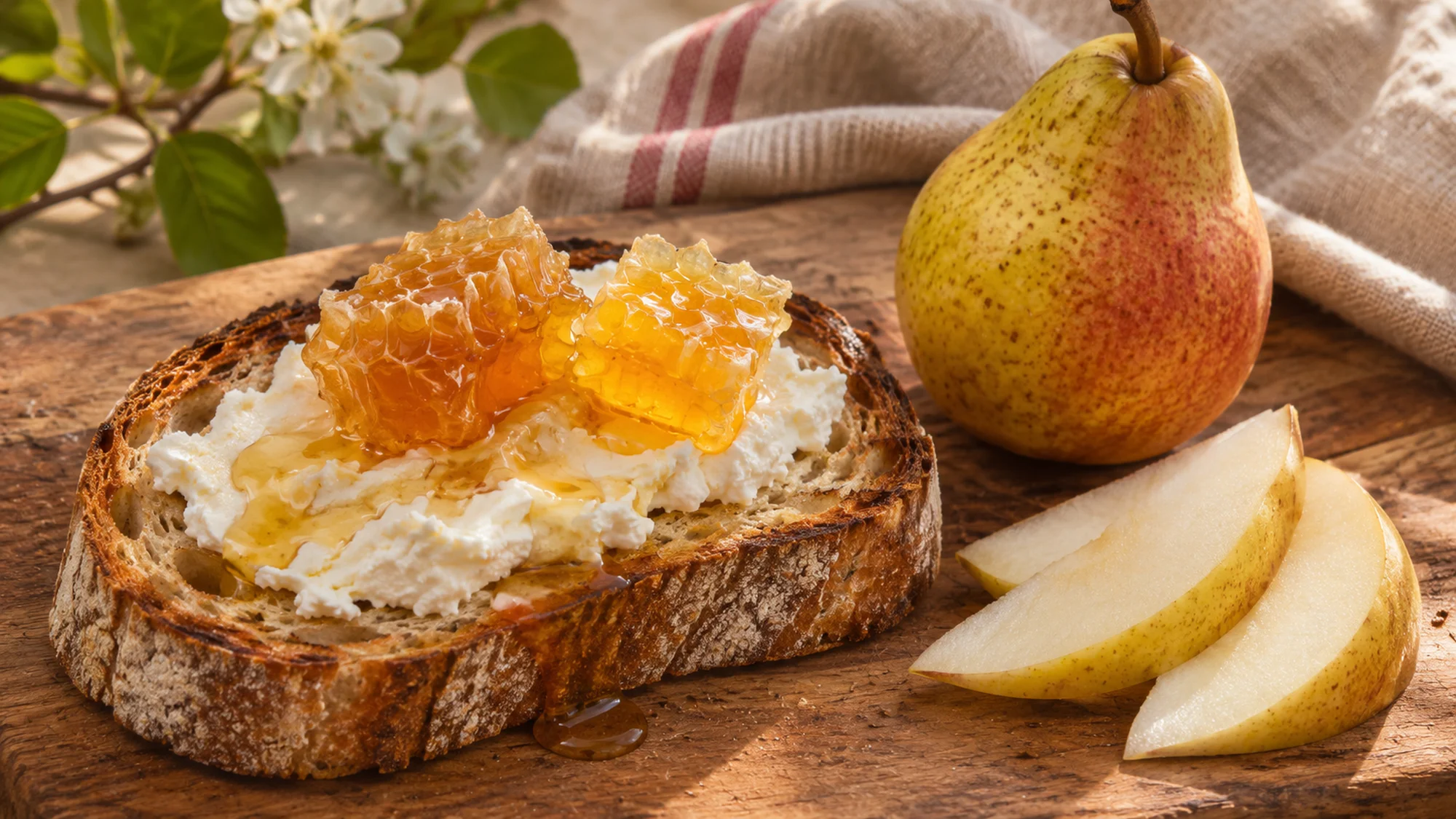
Honeycomb works best when the other food gives your mouth a different texture or flavor to notice. I prefer a simple pairing over a crowded plate: a little tangy cheese, crisp bread and a thin piece of comb are plenty to get started.
| Pairing | What it adds | How to serve |
|---|---|---|
| Toast and soft cheese | Crispness and tang | Spread cheese first; add a thin piece of comb. |
| Pear or apple slices | Juicy contrast | Keep comb pieces small enough for one bite. |
| Plain yogurt | A cool, creamy base | Set a little comb on top rather than stirring throughout. |
| Cheese board | Sweet contrast to savory cheese | Give the comb its own small plate and knife. |
- Portion before serving. Put a small piece on each plate, or provide a separate knife so guests do not have to wrestle with a sticky block.
- Keep the honey in reach. Set the comb on a rimmed plate. Honey escaping from the cut cells is delicious, but less welcome under the cheese board.
- Choose contrast. The salty tang described in our feta cheese guide offers a different direction from mild, creamy cheese. Taste the combination before adding extra honey.
Let honeycomb be the sweet accent, not the entire topping. Thin pieces are easier to balance with bread, fruit and savory foods.
Keep the Nutrition Claims Modest
The honey inside the comb is still a concentrated source of sugars. The National Honey Board’s composition guide identifies fructose and glucose as its main sugars. Being served in wax does not turn it into a low-sugar food or a treatment for a health condition.
- Enjoy the food, not a promise. Choose honeycomb because you like its flavor and texture. Claims about detoxing, immunity or curing seasonal allergies are not a reason to eat more of it.
- Consider the whole serving. A little comb on plain yogurt is a different eating occasion from a large slab on an already sweet dessert. There is no universal portion that suits every person.
- Respect the infant warning. The CDC says not to give honey to children younger than 12 months because of infant botulism risk. Honeycomb is not an exception.
Honeycomb is a sweet food with an interesting texture. You do not need a health claim to enjoy a small amount.
Store It Cleanly and Protect the Texture
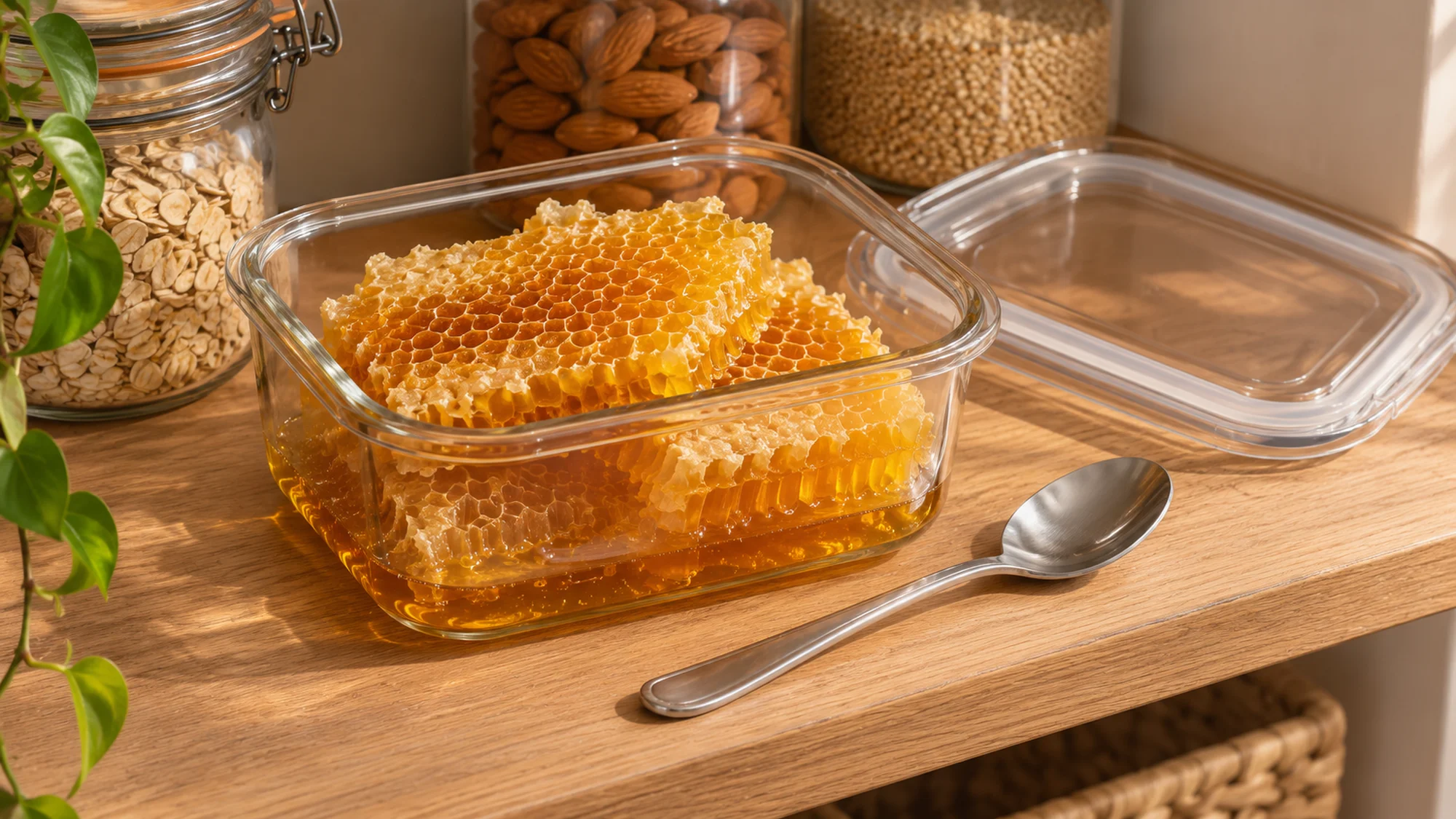
Follow the producer’s instructions for your package. For honey generally, the National Honey Board recommends a sealed container at room temperature; cool conditions encourage crystallization. Keep the original label so you retain any product-specific directions.
- Use a clean, dry utensil and close the container after serving. Avoid introducing crumbs or water into the remaining honeycomb.
- Keep unused comb separate from cheese, yogurt and cut fruit. Once combined, those perishable foods determine the storage needs of the serving.
- Do not assume every change means spoilage: honey can develop crystals naturally. If a product looks contaminated or has an unexpected fermented odor, do not taste it to investigate; consult the producer or discard it.
A dedicated container and a dry spoon make the next serving simpler. Store the comb itself, not the leftovers from a mixed cheese plate.
Bottom Line
Buy edible honeycomb from a food seller, cut a little and pair it with something crisp, tangy or juicy. Use liquid honey when you want smooth mixing, and keep all honey away from infants under one year.
Matthew Cress demonstrates eating honeycomb in the video below, offering a look at the food’s distinctive texture.