
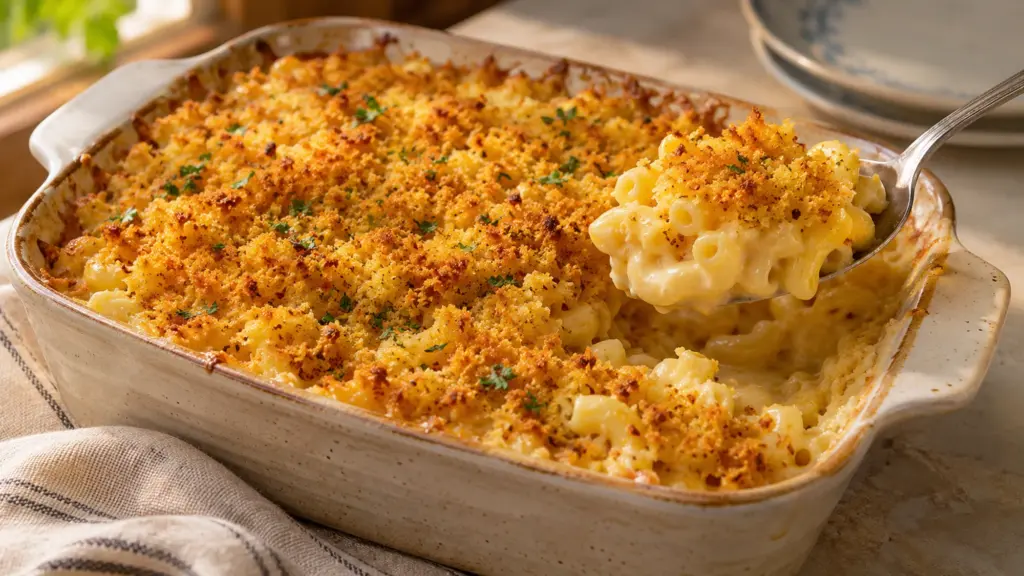
A golden crumb topping is appealing, but the first spoonful tells you whether the pasta underneath stayed creamy. This homemade mac and cheese recipe starts with a generous milk-based sauce, adds the cheese off the heat, and leaves the macaroni slightly firm before it goes into the oven.

Make a smooth roux-based sauce, melt cheddar and Gruyère into it off the heat, then fold in undercooked elbow pasta. A short bake browns the buttered crumbs without leaving the center dry.
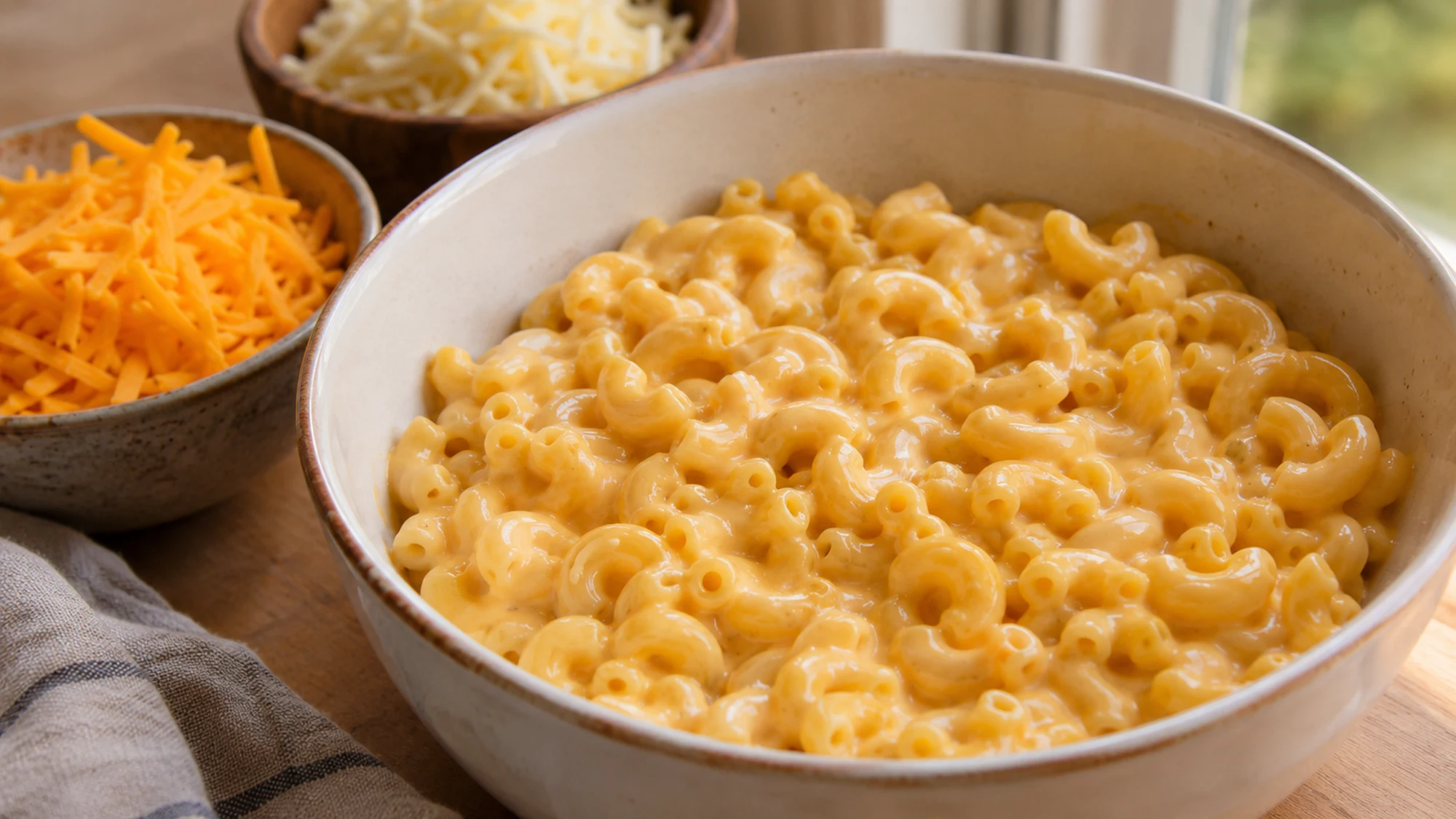
I’d grate the cheese before turning on the saucepan. Once the sauce is ready, everything moves more comfortably if you are not balancing a grater over a hot burner. The combination gives cheddar’s familiar flavor a little nutty depth, without needing a long list of cheeses.
Serving Suggestions for This Homemade Mac and Cheese Recipe
Let the baking dish stand briefly after it leaves the oven. That short pause makes the sauce easier to serve while the crumbs remain crisp. Use a broad spoon so each portion gets some topping and some creamy pasta instead of scraping all the best bits into the first bowl.
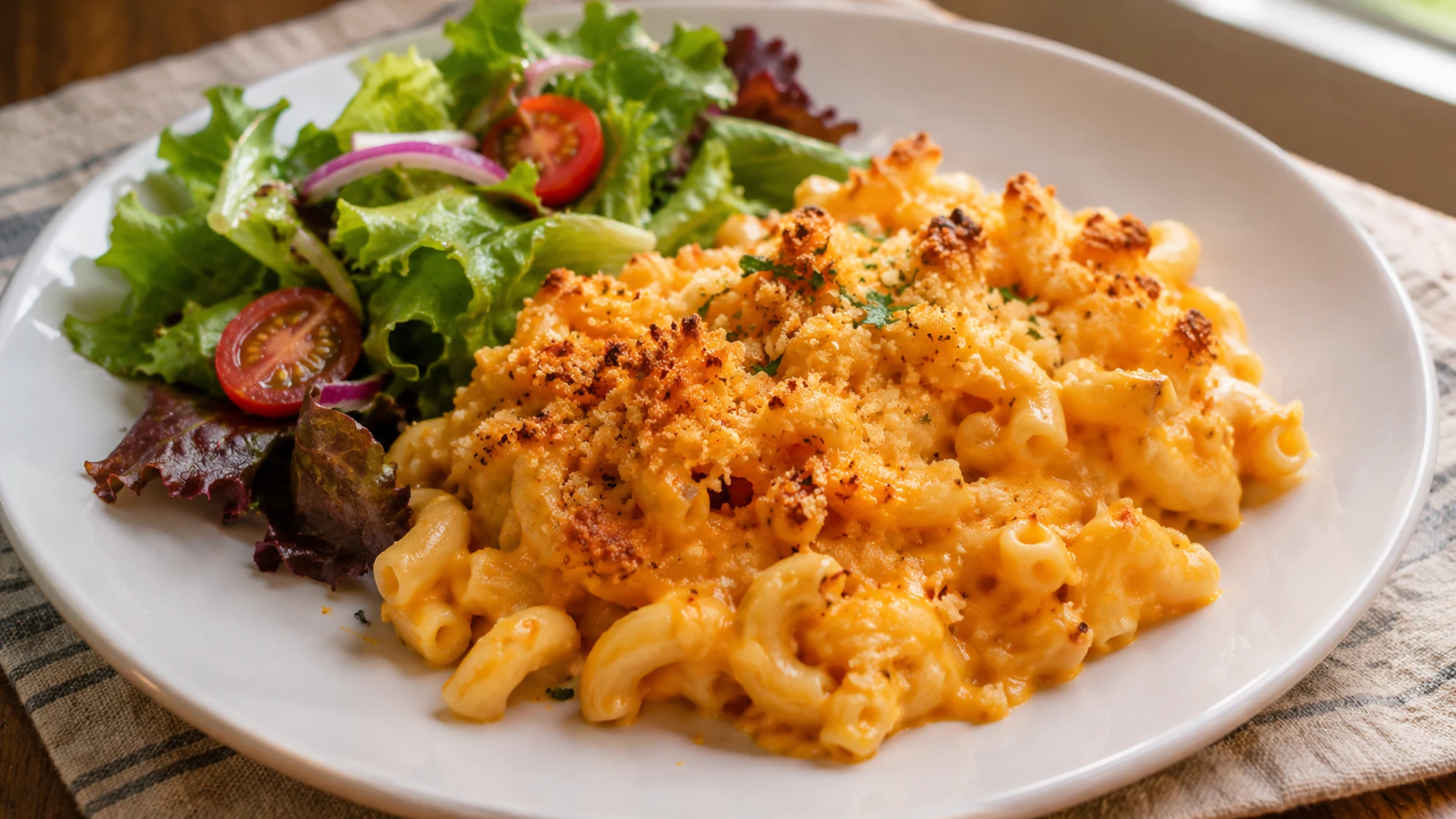
- Serve it as a main dish with a crisp green salad. A simple acidic dressing is a welcome contrast to the cheese sauce.
- Offer smaller portions alongside roast chicken or another main. The six servings in the card are a guide for this batch, not a requirement for every appetite.
- Keep extra garnishes restrained. A little chopped parsley adds freshness without hiding the browned crumbs.
- Bring the baking dish to the table on a heatproof trivet, and remember that ceramic handles can stay hot long after the oven is off.
Our tender-crisp green beans make another practical companion. Their lemon and garlic finish contrasts with the creamy pasta, and the skillet method leaves the oven available for the macaroni. I prefer that kind of useful contrast to adding a second heavy sauce to the plate.
Give every serving a little crisp topping and a generous spoonful from the center. Fresh vegetables alongside make the plate more varied without changing the comfort-food character.
Homemade Mac and Cheese Recipe Variations
Cheese substitutions work best when you think about melting as well as flavor. A stronger cheese does not automatically make a smoother sauce. Keep the total amount close to the recipe and avoid changing the milk, flour and cheese all at once if you want a predictable result.
| Change | What it brings | What to watch |
|---|---|---|
| More cheddar, less Gruyère | A more familiar cheddar flavor | Add off the heat, a handful at a time |
| Small pasta shells | Pockets that hold sauce | Use the package timing as a starting point |
| Plain breadcrumbs | A finer, denser topping | Watch the browning |
| A little smoked cheese | A stronger smoky note | Replace part, not all, of the cheese |
The RecipeTin Eats baked macaroni method also emphasizes a saucy mixture before baking. This card uses its own measured proportions, but the practical goal is similar: let the oven finish the dish rather than use a long bake to compensate for a dry mixture.
- Cook the pasta short of fully tender. It keeps absorbing moisture as it bakes, and very soft pasta can lose its shape.
- Whisk the milk gradually into the butter-and-flour base. Smooth out the early additions before pouring in the rest.
- Turn the heat off before adding cheese. A sauce that is boiling hard is not a helpful place to coax cheese into a smooth texture.
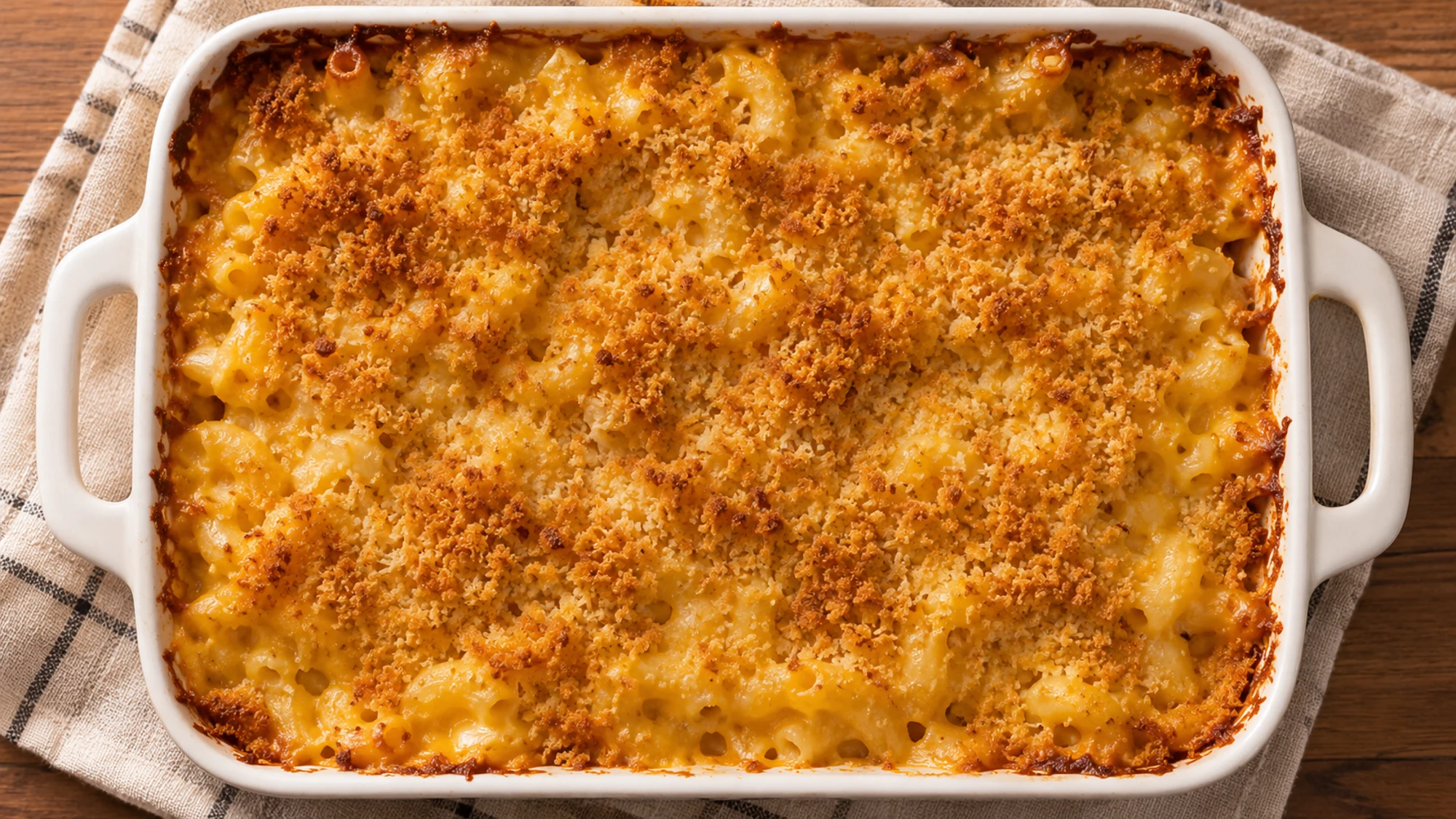
- Spread the crumbs evenly rather than pressing them into a thick cap. Watch for golden edges and bubbling sauce, not a rigid timer alone.
Keep the pasta slightly firm and the sauce generous. The topping needs browning, not a prolonged bake that uses up the moisture underneath.
Health Benefits and Keeping Leftovers Safely
Milk and cheese contribute protein and calcium, while the pasta supplies carbohydrate. The dish also contains saturated fat and sodium, with amounts depending on the dairy products and seasoning. I would enjoy it as part of a varied meal rather than call a cheese-covered casserole a nutritional shortcut.
- This version contains milk and wheat. Check mustard, breadcrumbs and cheeses for any additional allergens relevant to the people you are feeding.
- For vegetarian diners, check the cheese label or manufacturer’s information about rennet. A meat-free ingredient list does not settle every cheese-making detail.
- Follow USDA leftover guidance: refrigerate in shallow containers within two hours, or within one hour above 90°F (32°C). Use within three to four days and reheat to 165°F (74°C).
Leftover pasta usually firms up as it chills. Reheat only the portion needed, adding a small splash of milk if the sauce needs loosening, and check the center reaches the safe temperature. The crumb topping will soften; promising the exact freshly baked texture after refrigeration would be unrealistic.
The practical win is a satisfying dish with clear portions and careful handling. Refrigerate promptly, expect a softer topping later and reheat the center thoroughly.
Bottom Line
This homemade mac and cheese recipe keeps its promise by protecting the sauce: undercook the pasta, melt the cheese gently and bake only until the topping is golden. A creamy center matters more than an extra-dark crust.
Homemade Mac and Cheese Recipe


Ingredients
- 300 g elbow macaroni
- 45 g unsalted butter
- 30 g all-purpose flour
- 750 ml whole milk
- 200 g sharp cheddar freshly grated
- 100 g Gruyère freshly grated
- 1 teaspoon Dijon mustard
- 0.5 teaspoon fine salt plus salt for pasta water, as needed
- 0.25 teaspoon black pepper
- 50 g panko breadcrumbs
- 15 g unsalted butter melted
- 1 tablespoon chopped parsley optional, to finish
Equipment
- Large pot
- Colander
- Medium saucepan
- Whisk
- Box grater
- 2.5-liter baking dish
- Small bowl
Instructions
- Heat the oven to 375°F (190°C). Lightly butter a 2.5-liter baking dish. Bring a large pot of salted water to a boil and cook the macaroni about 2 minutes less than the package’s al dente time. Drain well.
- Meanwhile, melt the 45 g butter in a saucepan over medium-low heat. Stir in the flour and cook, stirring, for 1 minute without browning. Add the milk gradually while whisking to keep the mixture smooth.
- Bring the sauce to a gentle simmer, whisking, and cook for 3–5 minutes until it lightly coats a spoon. Turn off the heat. Stir in the cheddar and Gruyère a handful at a time, then add the mustard, salt and pepper. Taste and adjust the seasoning.
- Fold the drained macaroni into the sauce. Transfer to the prepared dish; the mixture should look generously sauced rather than dry.
- Mix the panko with the 15 g melted butter and scatter evenly over the pasta. Bake for 20–25 minutes, until the edges bubble and the crumbs are golden. Avoid baking longer just to make every spot equally dark.
- Let stand for about 5 minutes, then add the optional parsley and serve. Refrigerate leftovers in shallow containers within 2 hours, or within 1 hour above 90°F (32°C). Use within 3–4 days and reheat to 165°F (74°C).