
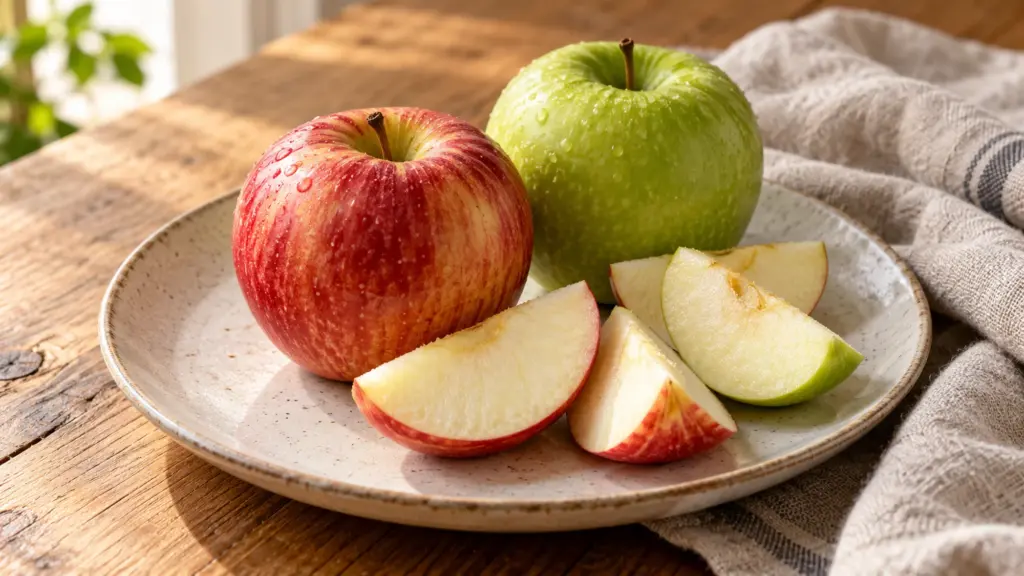
An apple is easy to toss into a bag and equally easy to forget on the counter. Before getting caught in a red-versus-green debate, it helps to ask a simpler question: what makes this familiar fruit useful, and which form will you actually enjoy?
Yes, apples can be a nutritious everyday food. Whole apples provide fiber, naturally occurring carbohydrate and a crisp, convenient way to eat fruit. Juice, applesauce and apple desserts are not nutritionally identical, even when they start with the same ingredient.
I’d choose a variety for its texture and flavor before chasing a supposedly perfect apple. A sharp, juicy bite and a softer, sweeter one have different uses. The apple you want to eat is more useful than an untouched bowl chosen for its color.
Why Are Apples Good for You?
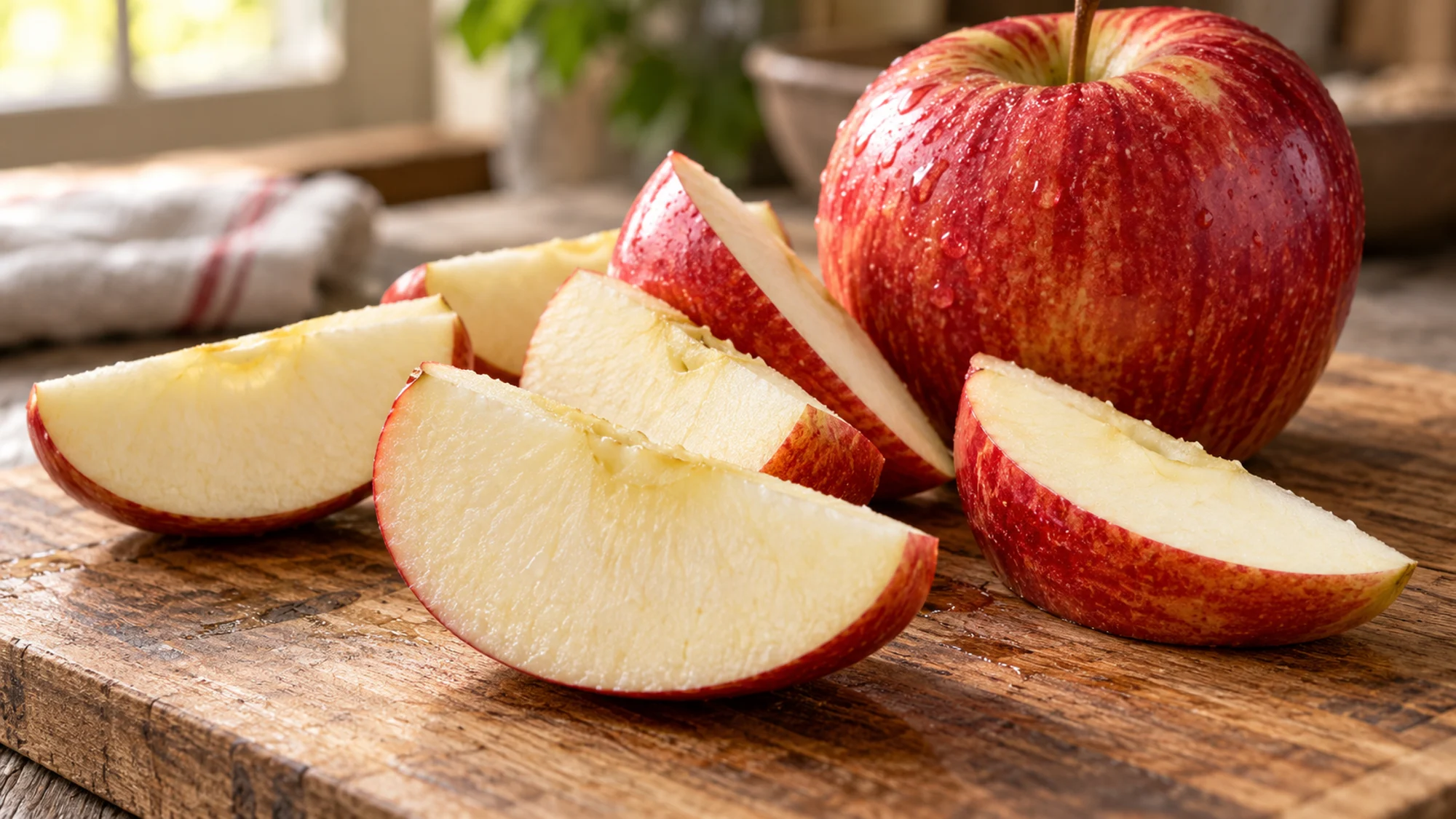
Apples contribute fiber without needing elaborate preparation. Purdue Extension’s reference for a medium, 182-gram apple lists about 95 calories and 4 grams of fiber. Larger apples contain a larger amount of food, so “one apple” is not an exact nutritional unit.
That same reference provides about 19 grams of total sugar. In a plain apple, that is naturally occurring sugar, not an added sweetener. The number is useful context, but it does not make every apple-based food equivalent to whole fruit.
- Apples are one fruit option, not a required food or a substitute for dietary variety.
- They are not a substantial protein food; what you serve alongside them can change the meal.
- The familiar saying about keeping the doctor away is not a literal medical promise. Food choices cannot replace needed care.
Whole Apples, Applesauce and Juice
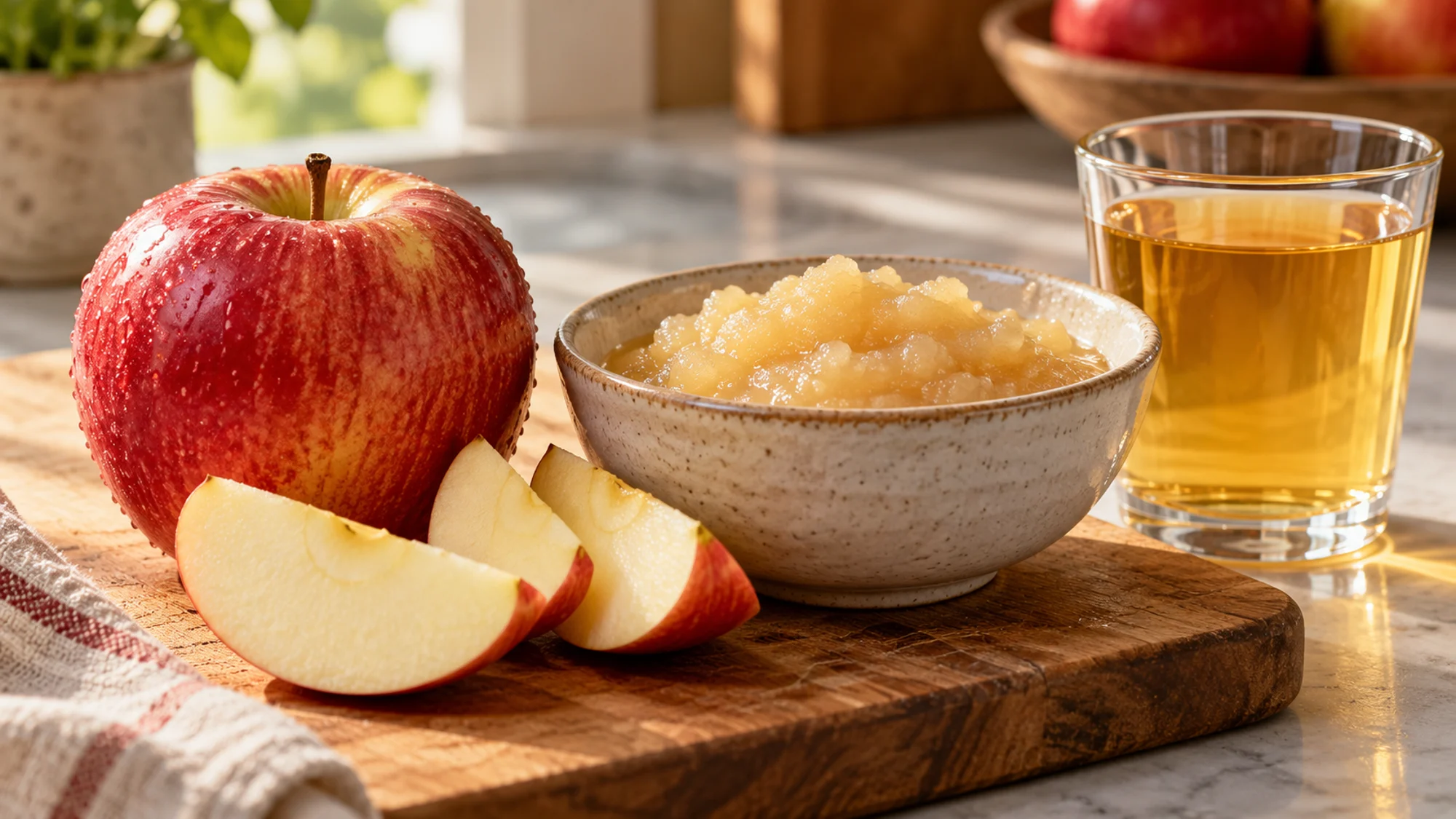
An apple can be crunchy, spoonable or drinkable, and those differences matter at the table. Applesauce can be a practical softer option, while juice is a beverage rather than a replacement for the experience of eating the whole fruit.
| Choice | What it offers | Useful label or kitchen check |
|---|---|---|
| Whole apple with skin | Crunch, chewing and fiber | Wash it before slicing or eating. |
| Unsweetened applesauce | A soft, spoonable fruit option | Check for added sweeteners and compare fiber per serving. |
| Apple juice | A drink with much less fiber than whole apple | Look at the actual serving size and juice percentage. |
| Apple dessert | Fruit within a larger recipe | Consider the topping, sweeteners and serving as well as the apple. |
For perspective, Health Canada lists 1.5 grams of fiber in 125 milliliters of unsweetened applesauce, compared with 0.1 gram in the same volume of its listed ready-to-drink apple juice. These are reference entries, not a guarantee for every brand, and the portions are not equivalent to one whole apple.
Keep the Skin When It Suits the Dish
Leaving the skin on keeps preparation simple and preserves the whole-fruit texture. It is not an all-or-nothing rule: peeled or cooked apples can still be useful foods, particularly when a softer texture is easier to eat.
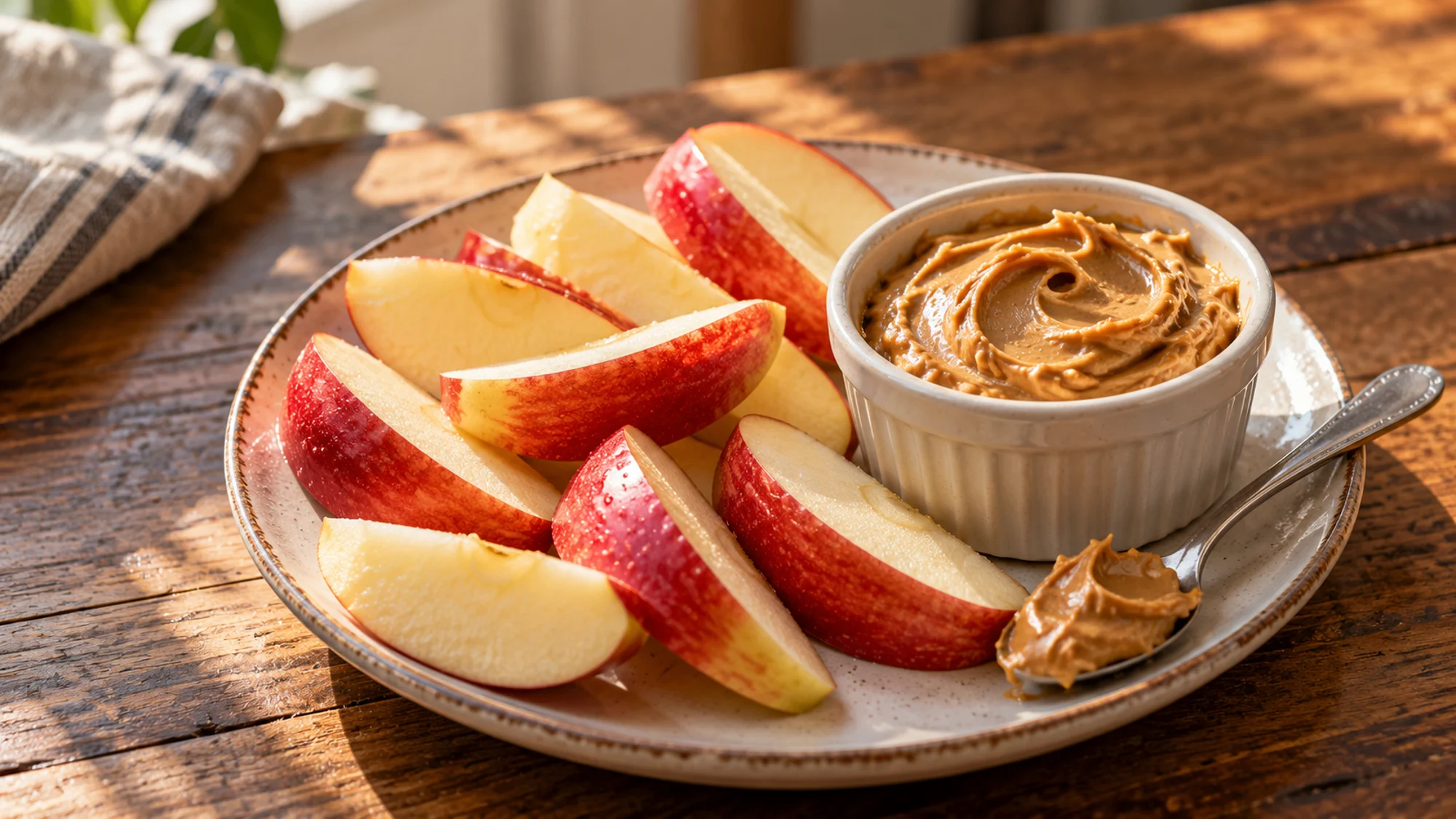
- For a snack: Cut wedges and pair them with peanut butter or yogurt if you want something more substantial. Choose accompaniments appropriate to any allergies.
- For breakfast: Chop apples into oats or use them in a baked breakfast rather than assuming fruit has to be eaten separately.
- For savory food: Add thin slices to a cabbage salad for a crisp, sweet-tart contrast.
- For dessert: Enjoy the finished dish as dessert. Adding apples does not erase the other ingredients, and it does not need to.
The apple cinnamon baked oatmeal is one way to use the fruit in a sliceable breakfast. I like that kind of practical choice more than a long list of rules about the “best” time to eat an apple.
Buy for Texture and Store With Care
Look for firm fruit without damaged areas. Purdue Extension’s apple guide distinguishes fresh-eating varieties from apples suited to cooking; a variety that softens into sauce may not be your favorite crisp snack. Refrigeration is a useful way to keep apples available rather than leaving a large purchase on display.
- Keep apples away from raw meat and its juices during storage and preparation.
- Wash under running water before cutting, even if you plan to peel them. Soap is not recommended for washing produce.
- Use a stable cutting board and remove the core before serving slices.
- Refrigerate prepared slices promptly and follow the storage directions on packaged cut apples.
These handling basics follow the FDA’s produce safety guidance. If raw apple is difficult to chew, choose an appropriately prepared softer form rather than forcing the crunch. Texture is part of making food usable, not a nutritional competition.
Bottom Line
Whole apples are a practical source of fiber and an enjoyable fruit choice. Pick the flavor and texture you like, distinguish fruit from juice and desserts, and build the rest of the meal around your needs.
Purdue Extension’s FoodLink video below offers a visual guide to apple preparation and cutting.