
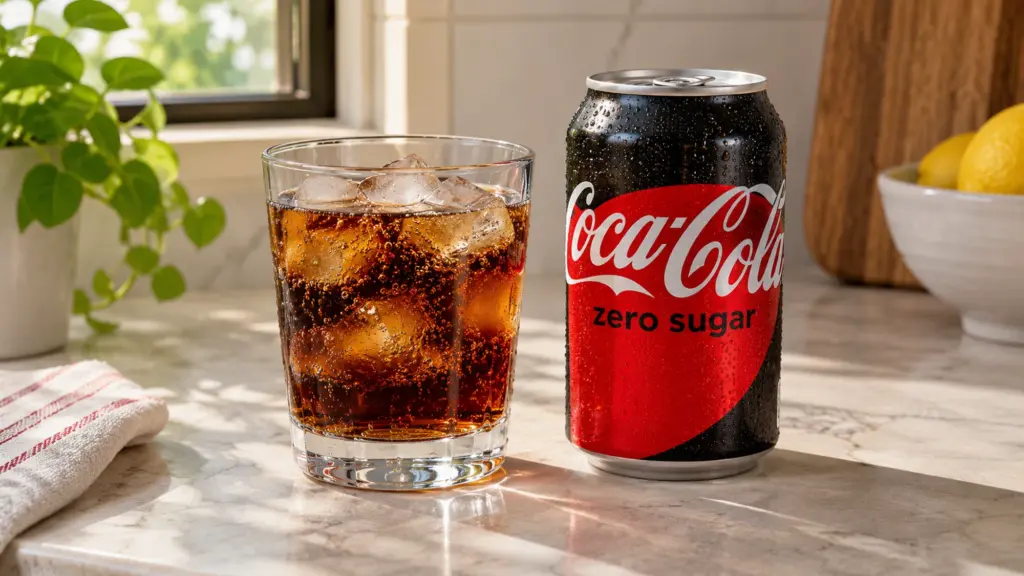
The can says “zero,” but that little word does not answer every question about the drink. If you are wondering, “does Coke Zero have caffeine,” the answer is yes for the regular version—and the serving size is worth checking before you pour.
In the United States, a 12-fluid-ounce serving of regular Coca-Cola Zero Sugar contains 34 milligrams of caffeine. Zero sugar does not mean zero caffeine; look specifically for the Caffeine Free version if that is what you need.
I would check the full product name before the color of the can. Packaging can change, and two drinks sitting beside each other in the cooler can have different caffeine amounts even when both have no sugar.
Does Coke Zero Have Caffeine in Every Version?
The Coca-Cola U.S. product page lists caffeine among the ingredients of regular Zero Sugar and gives the 34-milligram amount for 12 fluid ounces. The company also sells a caffeine-free version; it is a separate choice, not a description of every drink carrying the Zero Sugar name.
This guide uses U.S. product information. If you are buying an imported can or a flavored variation, use that specific package and the manufacturer’s local information rather than assuming every formula is identical. “Zero” is a useful label detail, but it is not the whole label.
- Read the complete name, including words such as Caffeine Free.
- Match the caffeine amount to the stated serving size.
- Check the ingredient list and manufacturer information if the amount is not printed prominently.
Compare the Same Serving, Not Just the Same Brand
A fair comparison starts with the same volume. The company’s ingredient FAQ lists 34 milligrams for a 12-ounce Coca-Cola and 46 milligrams for Diet Coke of the same size. That makes Diet Coke and Coke Zero different caffeine choices, despite their similar place in the soft-drink aisle.
| U.S. cola | Serving | Caffeine |
|---|---|---|
| Coca-Cola Zero Sugar | 12 fl oz | 34 mg |
| Coca-Cola Original | 12 fl oz | 34 mg |
| Diet Coke | 12 fl oz | 46 mg |
| Caffeine Free Coca-Cola Zero Sugar | 12 fl oz | 0 mg |
A bottle and a can are not interchangeable measuring cups. For a larger container, read the amount for the whole bottle or calculate from its clearly stated serving information; do not count it automatically as one 12-ounce can.
Your Daily Total Matters More Than One Can
The FDA’s caffeine guidance cites 400 milligrams daily as an amount not generally associated with negative effects for most adults. It is not a target or a personal guarantee: sensitivity, medicines and health conditions can change what works for you.
Coffee, tea, chocolate and some medicines contribute to the same total. Our guide to coffee serving size and caffeine helps with that comparison; a large café drink can be more relevant than the small cola beside lunch.
- List the caffeinated drinks you actually have, including refills.
- Use each product’s serving information rather than a generic “cup.”
- Notice whether your usual amount coincides with jitters or trouble sleeping.
- Ask a clinician about pregnancy, breastfeeding, medications or a personal caffeine restriction.
Choose for the Evening You Want
If your goal is no caffeine, I would make the choice before opening the can: select the explicitly caffeine-free version or a drink with no caffeine ingredients. A plain sparkling water can keep the cold fizz without requiring a cola comparison.
If you simply want less, choosing a smaller serving is a different decision from choosing a caffeine-free product. Keep that distinction clear when stocking a shared fridge, especially if another person is avoiding caffeine rather than merely cutting back.
- For a shopping list: write the complete caffeine-free product name, not just “zero cola.”
- For a restaurant order: ask which version is being served instead of assuming the fountain option is caffeine-free.
- For a gradual reduction: the FDA suggests cutting back gradually if you regularly consume caffeine.
Bottom Line
Regular Coke Zero has caffeine: 34 milligrams per 12 fluid ounces in the U.S. version. Check the exact product, serving size and your whole-day intake; choose the specifically caffeine-free version when zero caffeine is the goal.
The TED-Ed video below explains how caffeine promotes wakefulness. It is background on caffeine, not a product test or a reason to increase your intake.