
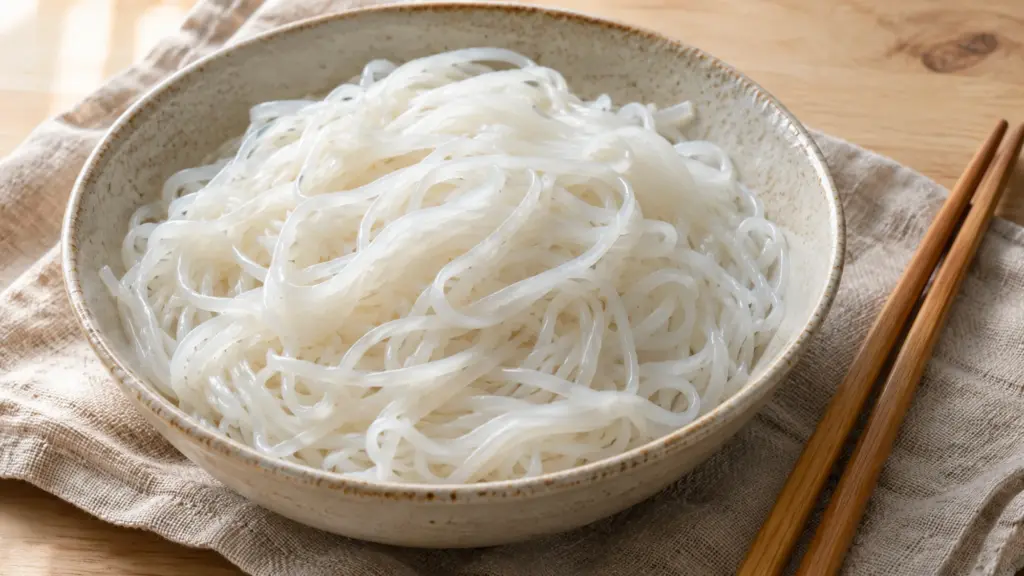
A noodle package can look reassuringly rice-colored and still leave you squinting at the ingredients. Gluten free noodles are not one single product: rice, corn, buckwheat and legume-based versions behave differently, and the name on the front is only the beginning of the decision.
Choose gluten free noodles with a clear gluten-free claim, then match their shape and cooking directions to your dish. Rice noodles and gluten-free pasta can both work well, but ordinary soba, egg noodles and ramen may contain wheat.
Choosing Gluten Free Noodles for the Dish
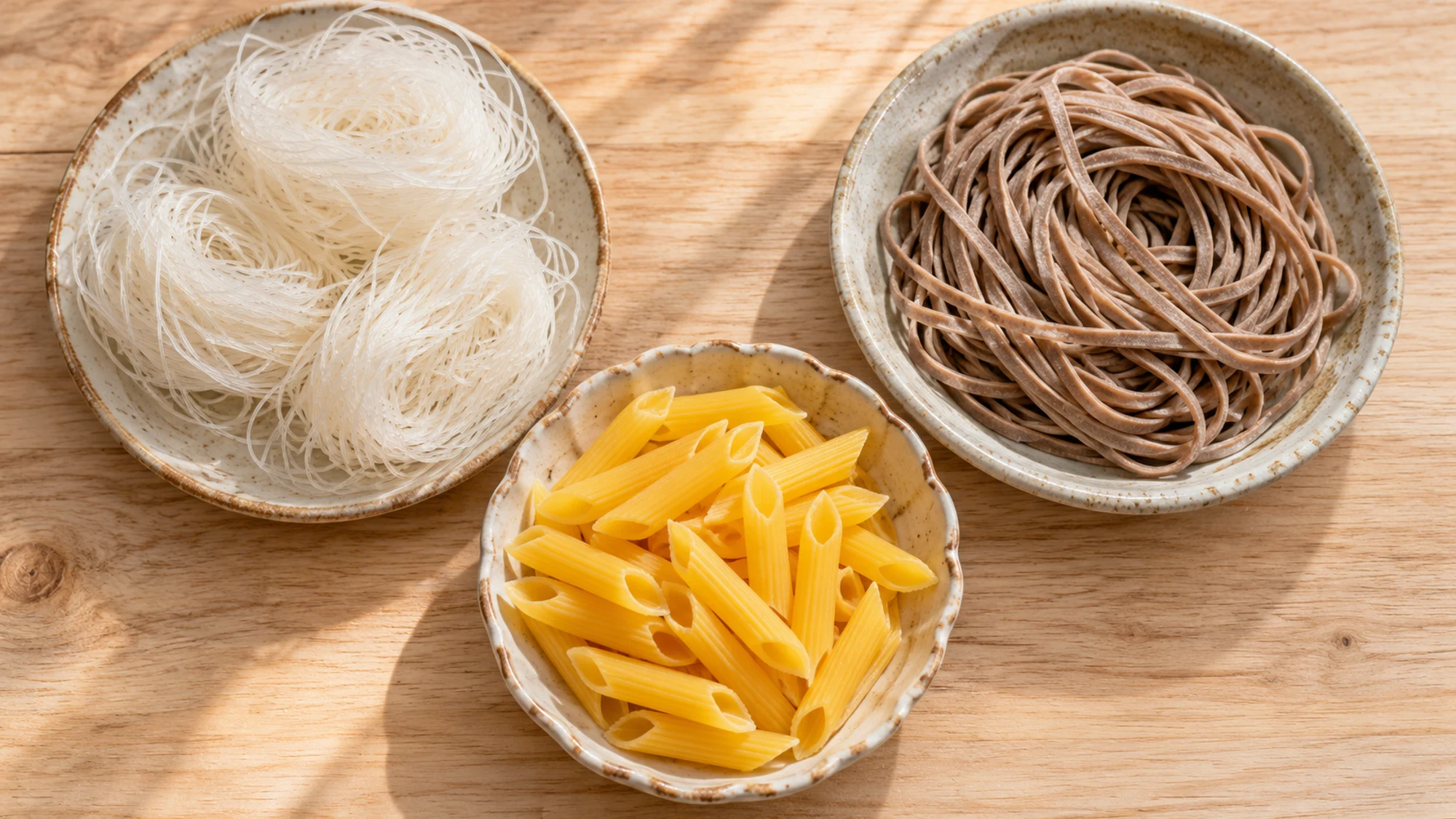
I would start with the meal, not with whichever package promises the closest imitation of wheat. A delicate noodle for a brothy bowl has a different job from a sturdy spiral holding tomato sauce; choosing for that job makes the swap feel intentional.
| Noodle type | Useful starting point | Check before buying |
|---|---|---|
| Rice vermicelli | Light soups, noodle salads and spring-roll fillings | Ingredients, gluten-free claim and soaking directions |
| Rice or corn pasta | Pasta shapes for familiar sauces | Blend, shape and package cooking time |
| Buckwheat soba | Earthier flavor in hot or cold noodle dishes | Whether wheat is included; do not assume |
| Legume-based pasta | A bean- or lentil-based alternative | Ingredient list, allergens and serving-size nutrition |
Plain rice is naturally gluten-free, but a finished noodle is a manufactured food. The FDA gluten-free labeling rule requires foods bearing that claim to meet its conditions, including less than 20 parts per million of unavoidable gluten. That is more informative than a photograph of rice on the bag.
Read Past the Front of the Package
The Celiac Disease Foundation’s ingredient guide lists conventional ramen, udon, egg noodles and some soba among foods that contain gluten. Buckwheat’s name is confusing, but the bigger shopping trap is a soba blend that also includes wheat.
- Check the whole product: Seasoning sachets, sauce packets and toppings need the same attention as the noodles themselves.
- Separate gluten from other allergens: A gluten-free noodle can contain egg, soy or another ingredient you need to avoid. The claim is not an all-allergen promise.
- Compare like with like: Read nutrition panels using the same dry serving weight. Do not compare dry noodles with cooked noodles and call the difference a nutritional advantage.
- Recheck repeat purchases: Packaging and formulations can change. Familiar branding is not a replacement for reading the current label.
If avoiding gluten is medically necessary, choose by the actual label and preparation conditions, not by the noodle’s color, name or country of origin.
Cooking Without a Gummy Finish
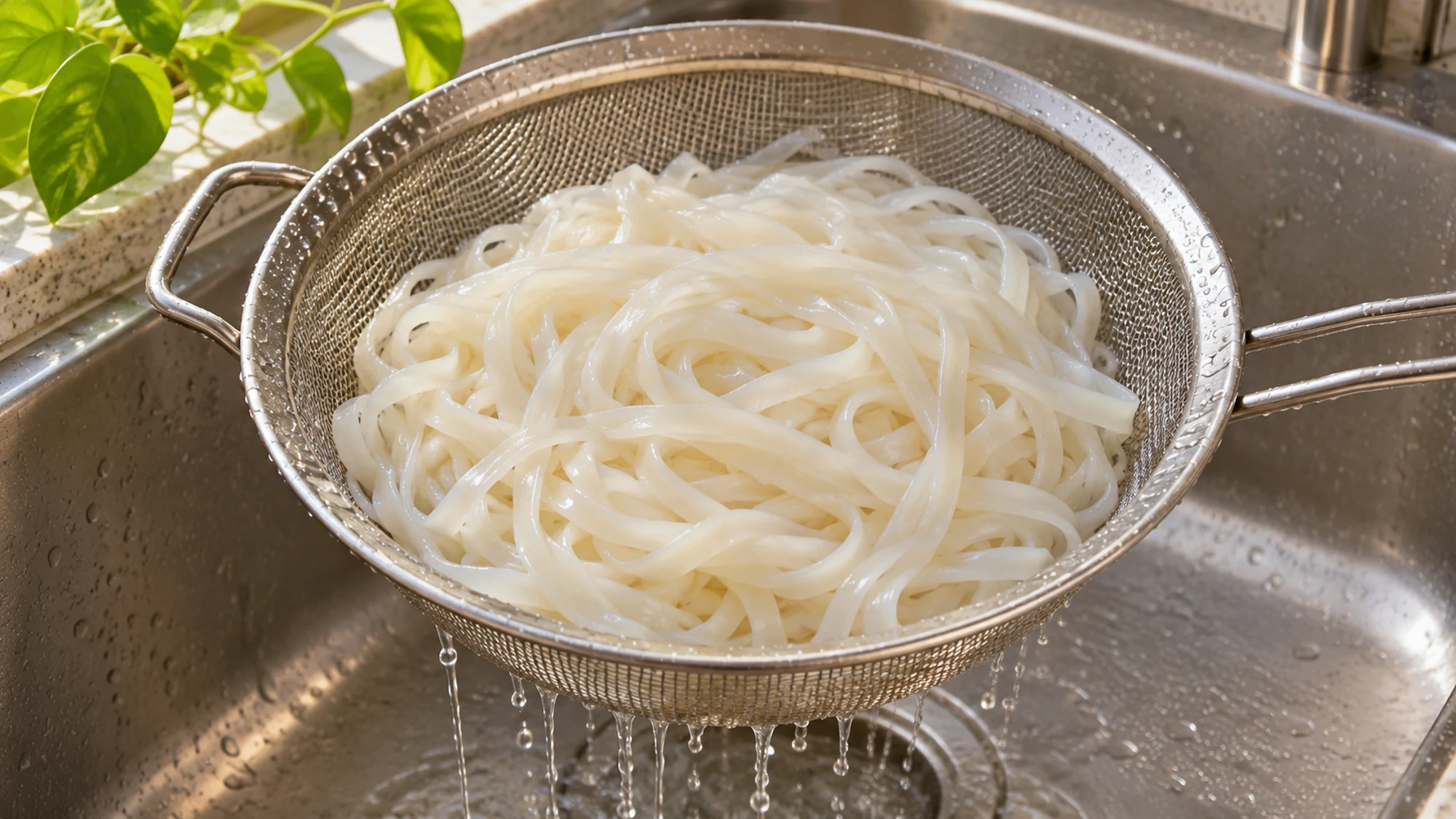
Follow the directions for the exact noodle in front of you. For example, Roland’s rice vermicelli instructions combine soaking, a brief boil and a cold rinse; those directions are for that thin product, not every rice noodle or gluten-free pasta shape.
- Have the sauce ready: Decide where the noodles are going before draining them. A hot pan, a cool salad bowl and a soup pot are different destinations.
- Check texture during cooking: Use the package timing as your starting point, then taste a cooled strand or piece. Look for the texture you need, not just a ticking timer.
- Handle gently: Loosen strands without aggressive stirring. If a noodle is already fragile, vigorous tossing will not make it sturdier.
- Rinse when directed: Some rice-noodle preparations call for rinsing; do not turn that into a universal instruction for every pasta.
- Consider the next cooking step: Noodles going into a hot stir-fry or soup will meet more heat. Follow a recipe intended for that noodle instead of adding a long extra simmer.
I prefer a noodle that suits the dish over one forced to behave like something else. Keep the package nearby until the meal is finished; it is surprisingly useful kitchen reading.
Keep the Whole Bowl Gluten-Free
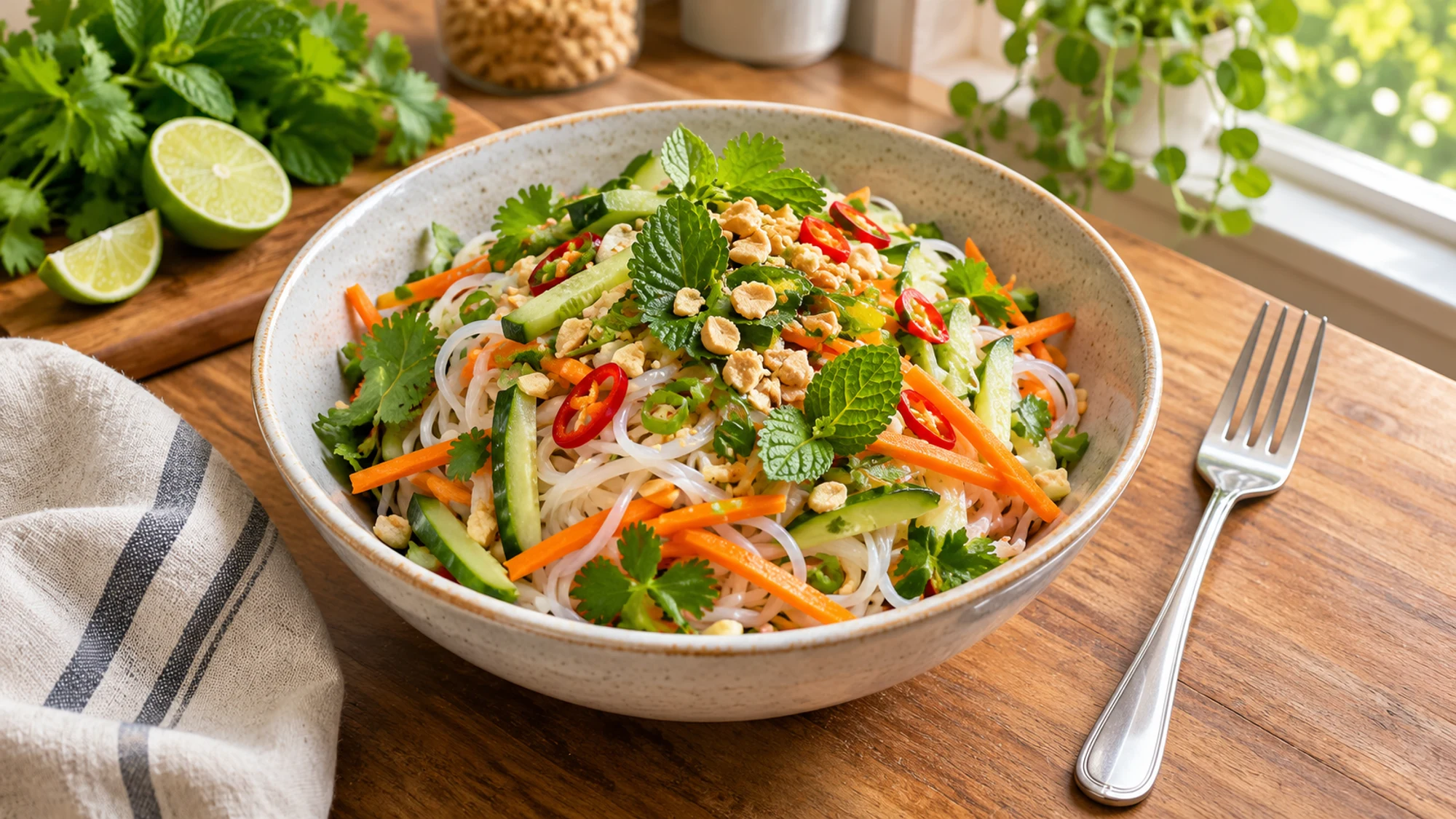
A suitable noodle can pick up gluten from shared cooking water, a wheat-based sauce or crumbs on a work surface. Use clean equipment and fresh water, and check the sauce rather than assuming a small amount does not count.
For a substantial bowl, add vegetables and a protein you enjoy. Crispy baked tofu offers a useful texture contrast, but its soy sauce needs a suitable gluten-free replacement if required; the original recipe is not automatically gluten-free.
- Keep clean serving utensils with the finished dish.
- At restaurants, ask about sauces and shared preparation, not just the noodle ingredient.
- Treat gluten-free as a dietary characteristic, not a guarantee that a meal is more nourishing.
Bottom Line
The best gluten free noodles are the ones that meet your dietary needs and fit the meal. Read the label, follow product-specific directions and give sauces and shared equipment the same care as the noodles.
Marion Grasby’s video below demonstrates fresh rice-noodle making and a finished stir-fry. It is a technique companion, not confirmation that every sauce in that dish meets your gluten-free needs.