
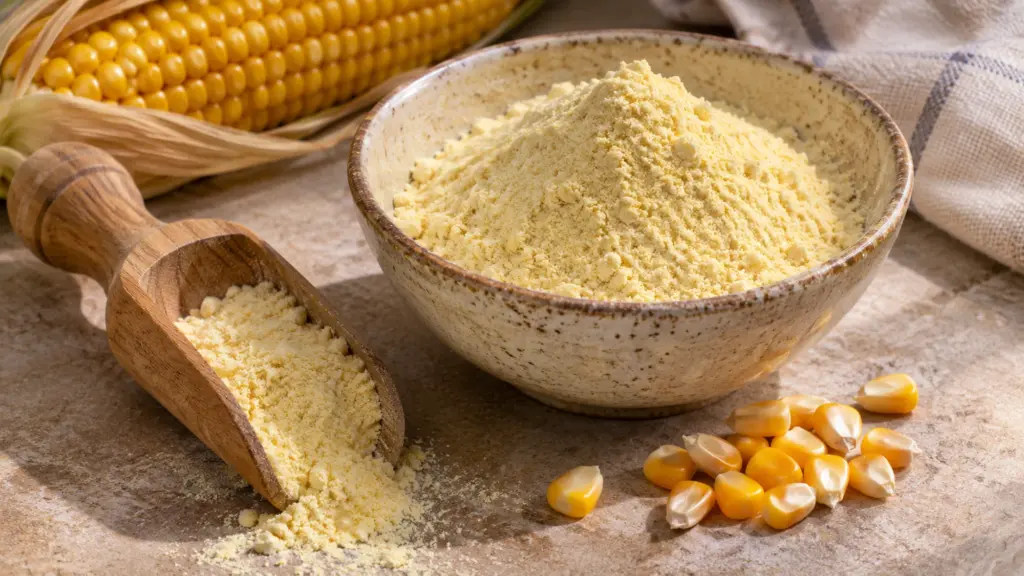
A recipe asks for corn flour, and the bag in your hand looks nothing like the powder in its photograph. Before you substitute, check where the recipe comes from: the same words can describe finely milled corn in one kitchen and nearly white cornstarch in another.
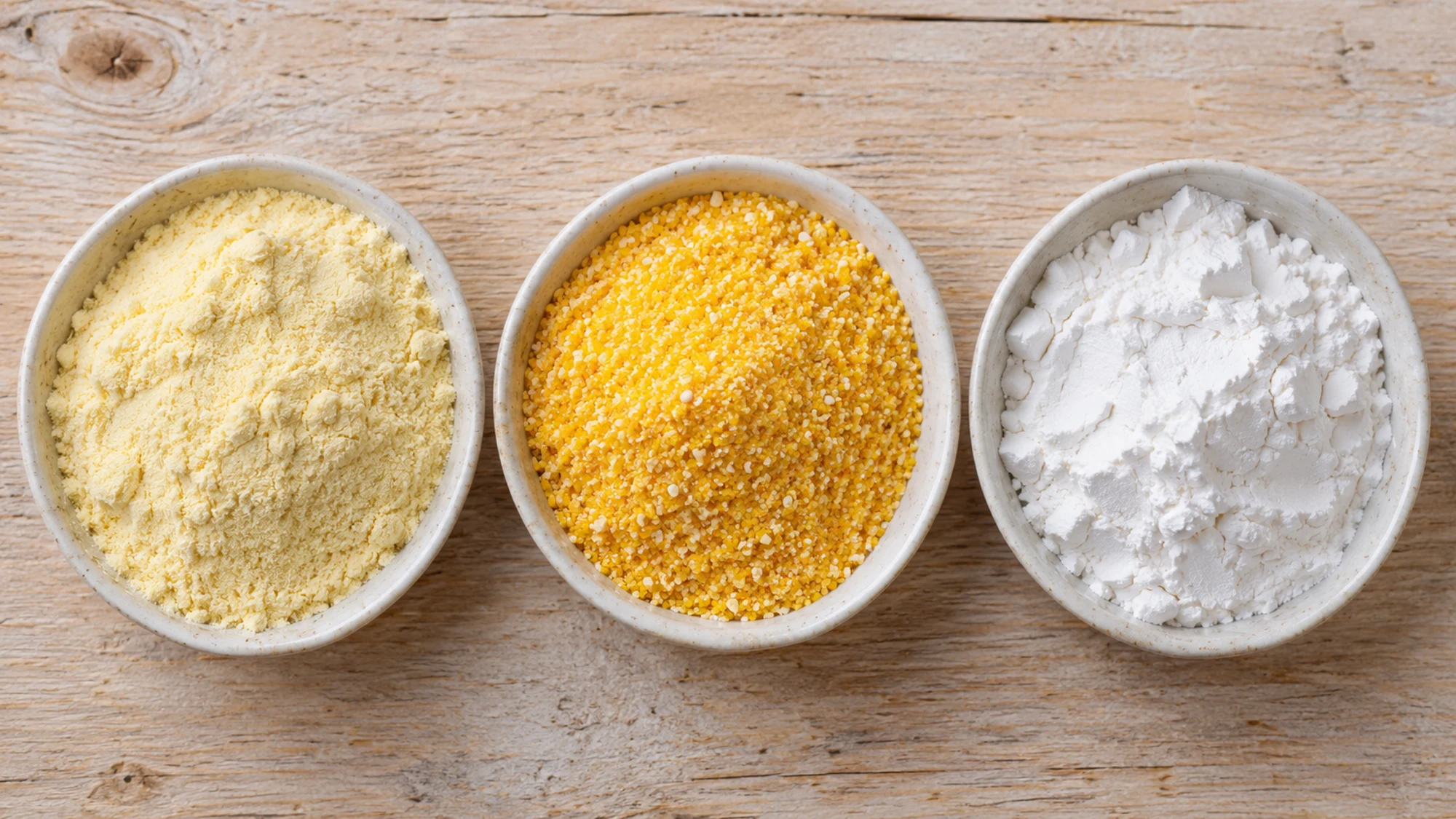
In American recipes, corn flour usually means finely ground dried corn. In many British and Australian recipes, cornflour means cornstarch. Neither is an automatic substitute for masa harina, the treated corn flour used for tortillas and tamales.
What Does Corn Flour Mean Here?
The BC Cook Articulation Committee’s baking textbook distinguishes powder-fine North American corn flour from coarser cornmeal and extracted cornstarch. That regional vocabulary matters more than whether the name appears as one word or two. Read the ingredient list and the recipe’s explanation together.
I’d check the job the ingredient is doing before opening the bag. A spoonful mixed into liquid to thicken a sauce points toward starch; a larger amount supplying corn flavor to a batter suggests milled corn. Those are clues, not permission to ignore a recipe’s specific product instructions.
| Ingredient | What it is | Typical job |
|---|---|---|
| Corn flour, U.S. usage | Finely milled dried corn | Corn flavor and fine texture in suitable batters |
| Cornmeal | More coarsely ground corn | Distinct grainy texture in cornbread or porridge |
| Cornstarch | Starch extracted from corn | Thickening sauces and other liquids |
| Masa harina | Dried flour from lime-treated corn | Dough for tortillas and tamales |
Corn Flour Is Not the Same as Masa Harina
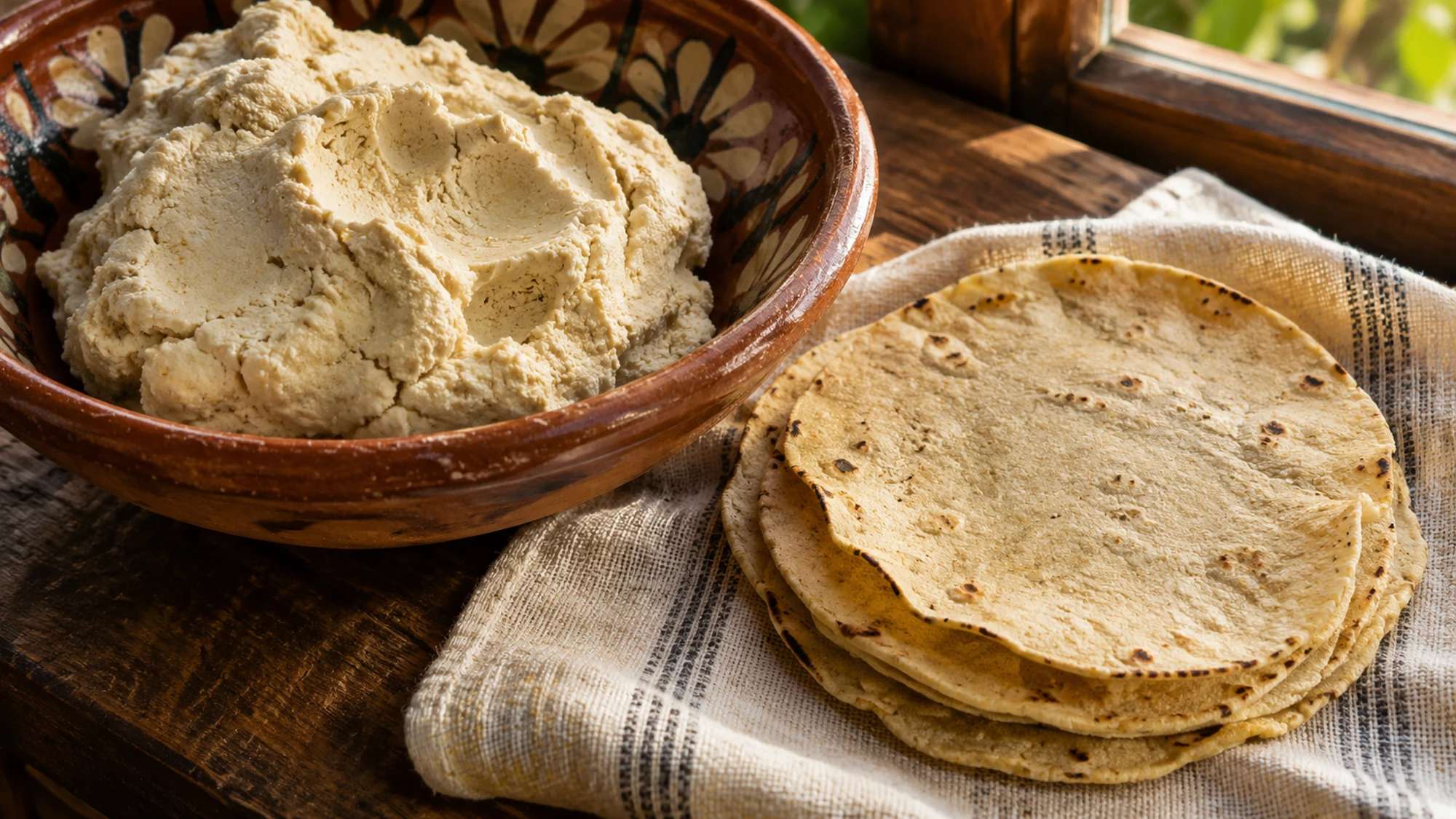
Masa harina starts with corn treated with an alkaline material such as hydrated lime, not lime juice. The process changes how the corn behaves. King Arthur’s masa harina package information describes lime-treated corn intended for tortillas, tamales and pupusas; ordinary finely ground corn is a different ingredient.
- For tortillas, look for masa harina or corn masa flour and follow the product’s dough directions.
- For tamales, use the flour or fresh masa named by the recipe; grind and hydration can vary.
- Do not assume every flour made from corn forms the same workable dough with water.
- Check a mixed product for added ingredients rather than treating it as pure corn flour.
Our chipilín tamales use masa harina, water and a resting period before the dough is filled and steamed. That is a useful example of why the ingredient’s processing matters: exchanging it for cornstarch would not be a small adjustment.
For a masa-based dish, buy the ingredient the dough was designed around. A similar color is not a reliable substitution guide.
Choose a Substitute by Its Job
A successful swap has to preserve more than volume. Texture, absorption and the rest of the flour blend all matter, so there is no universal cup-for-cup replacement that covers a sauce, a tortilla and a cake. I prefer a recipe written for the ingredient already in the pantry over a chain of increasingly hopeful substitutions.
- Thickening a sauce: first establish whether the recipe means cornstarch; then use a tested substitution for that specific thickener.
- Making cornbread: fine flour and gritty meal change the crumb, so choose the grind specified.
- Baking without wheat: use a tested gluten-free formula rather than replacing all the wheat flour with corn flour.
- Making a coating: check whether the intended result is a thin starch crust or a more textured corn coating.
- Working from an international recipe: look for the author’s product photograph, glossary or ingredient note before measuring.
Match the function first, then the amount. If the recipe leaves the ingredient ambiguous, resolve that ambiguity before mixing.
Buying, Storing and Handling Corn Flour
Corn itself does not contain the gluten found in wheat, barley and rye, but a packaged flour can face cross-contact. For someone who needs to avoid gluten, choose an appropriate labeled product and keep preparation tools clean. The FDA’s gluten-free labeling guidance explains the U.S. standard, including the less-than-20-parts-per-million threshold.
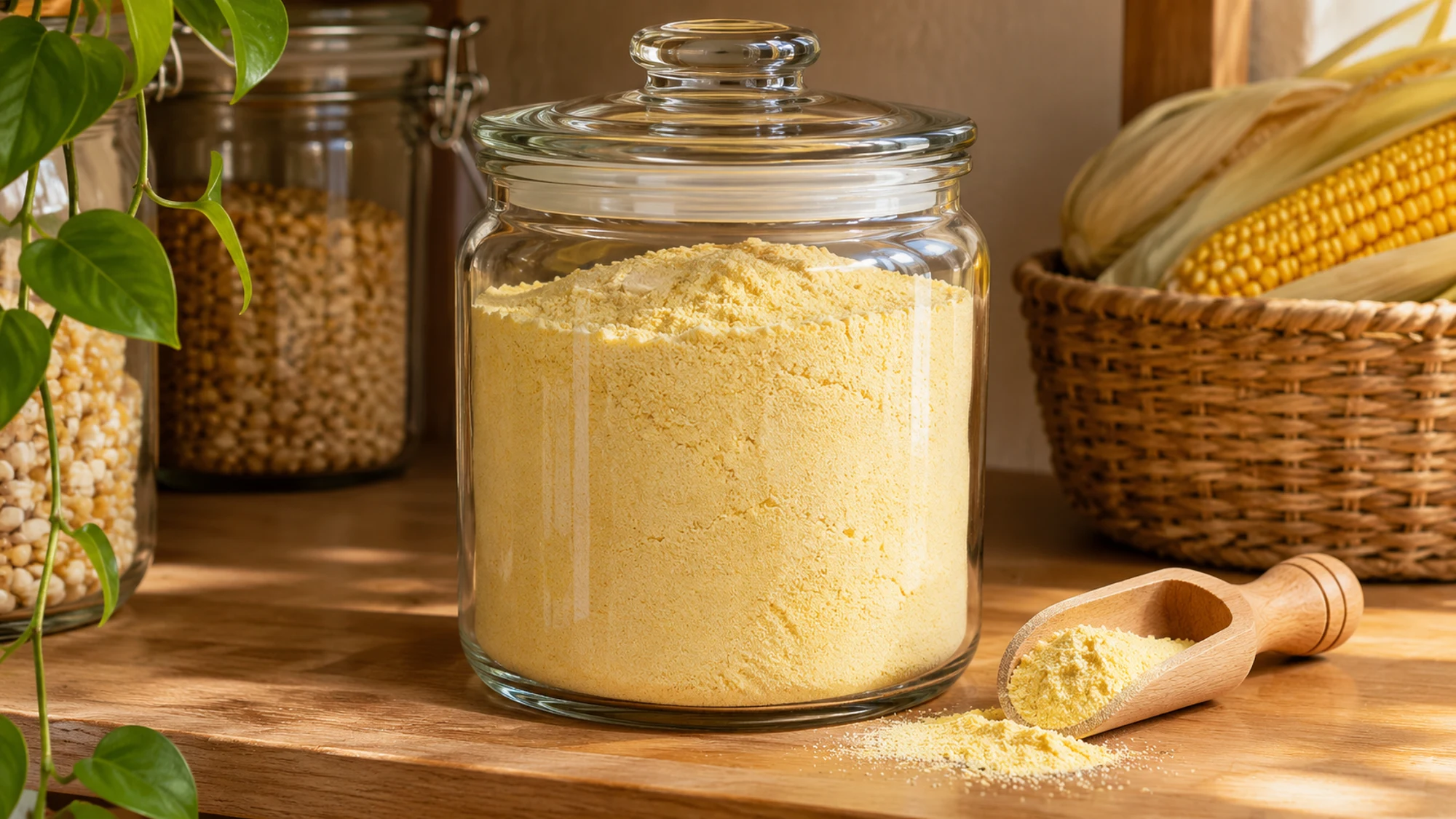
- Keep the original package information, even if you transfer the flour to a sealed container.
- Mark the container with the full product name, not simply “corn.” Your next baking project will thank you.
- Follow the manufacturer’s storage advice and best-quality date; keep the container dry and protected from pests.
- Do not taste raw flour or uncooked batter. Cook according to the recipe and package directions.
- Wash hands, utensils and surfaces after handling flour, and keep loose flour away from ready-to-eat foods.
The FDA’s flour-safety advice notes that milling does not reliably kill harmful bacteria. A fine, dry powder can still be a raw food; a clean-looking spoonful is not a safety test.
Bottom Line
Corn flour becomes much easier to use once you identify the product and its purpose. Check the recipe’s regional wording, distinguish flour from starch and masa harina, and resist a blind one-for-one swap.